
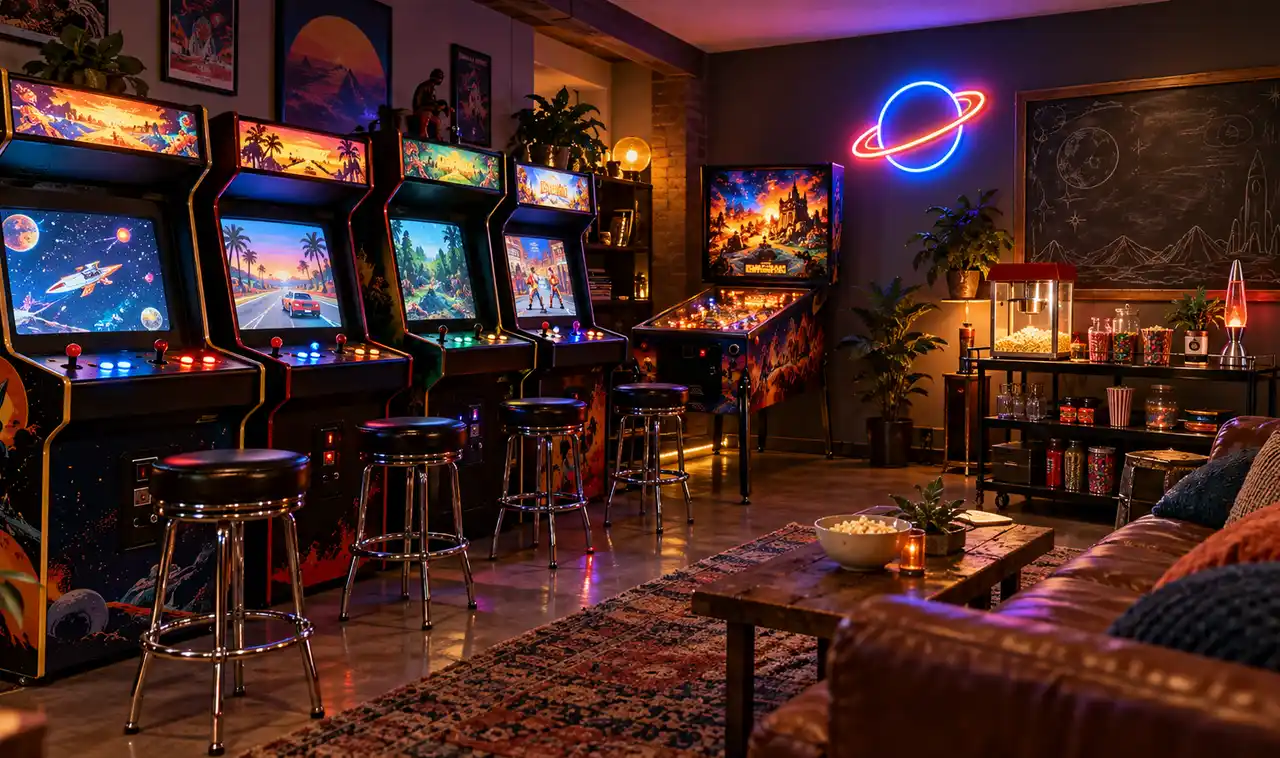
The arcade at the mall had a smell: warm plastic, popcorn from the food court, and carpet that had seen ten thousand sneakers. You could hear it before you saw it. That wall of bleeps and thumps pulled kids in like a tide. The high-score table on the racing game carried initials carved by kids who are parents now. Most of us assumed that feeling stayed in the nineties, locked behind a shuttered storefront.
It does not have to. A home arcade room is one of the most forgiving projects in home decor. You do not need a basement the size of a warehouse or a collector’s budget. You need a corner, a plan, and a few smart choices about light, sound, and layout. These 18 home arcade room ideas cover the big moves and the small details that make a room feel like the real thing instead of a storage unit with a TV in it.
1. Anchor the Room With One Full-Size Cabinet
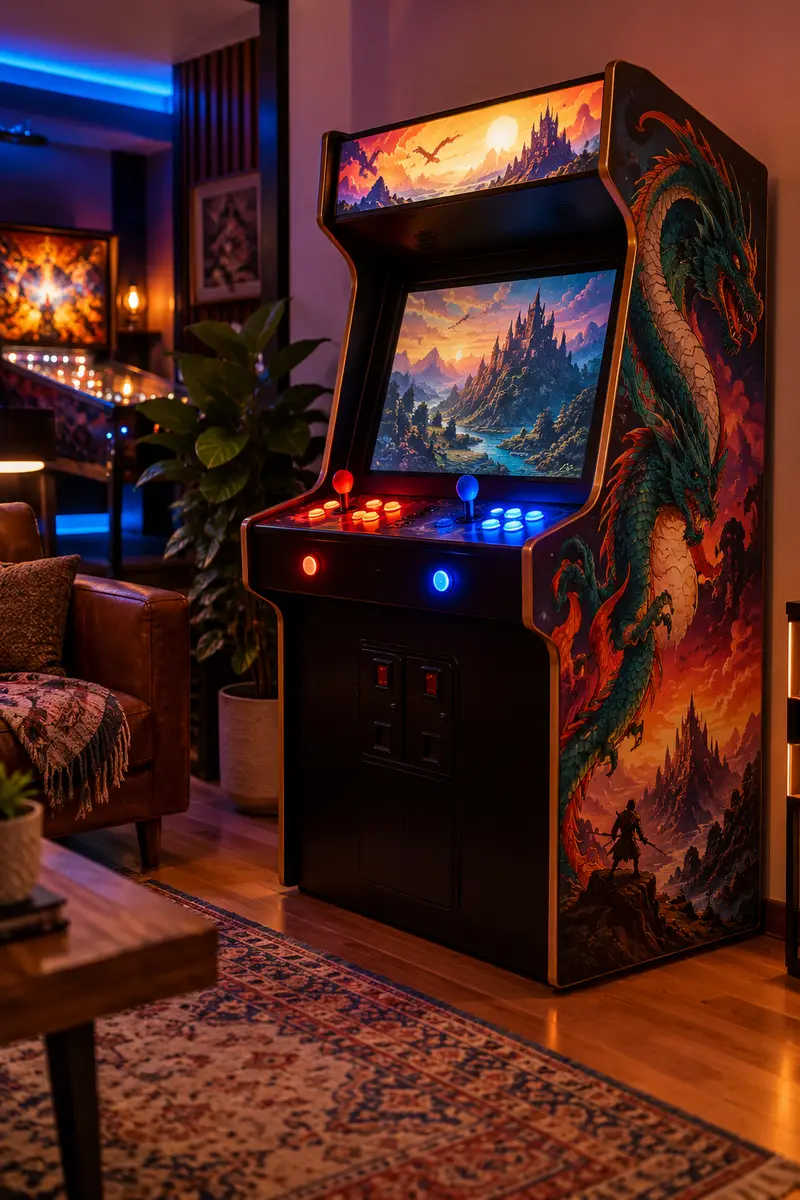
Every arcade room needs a center of gravity, and a full-size cabinet does that job better than anything else. One upright machine against the main wall tells every guest exactly what the room is for before they notice anything else.
Buy the game you actually played as a kid, not the one with the best resale value. You will stand at it far more than you will sell it. Measure your doorways before delivery day. A standard upright is about 76 inches tall and will not forgive a low basement stairwell.
2. Line Up Two or Three Cabinets in a Row
One cabinet is a hobby. A row of them is an arcade. Two or three machines side by side create that shoulder-to-shoulder feeling that made the old arcades electric, and the row reads as intentional instead of accidental.
Leave about four inches between cabinets for ventilation and cable access. Put the tallest or brightest machine in the middle so the row has a visual peak.
3. Add a Pinball Machine as the Loud Centerpiece
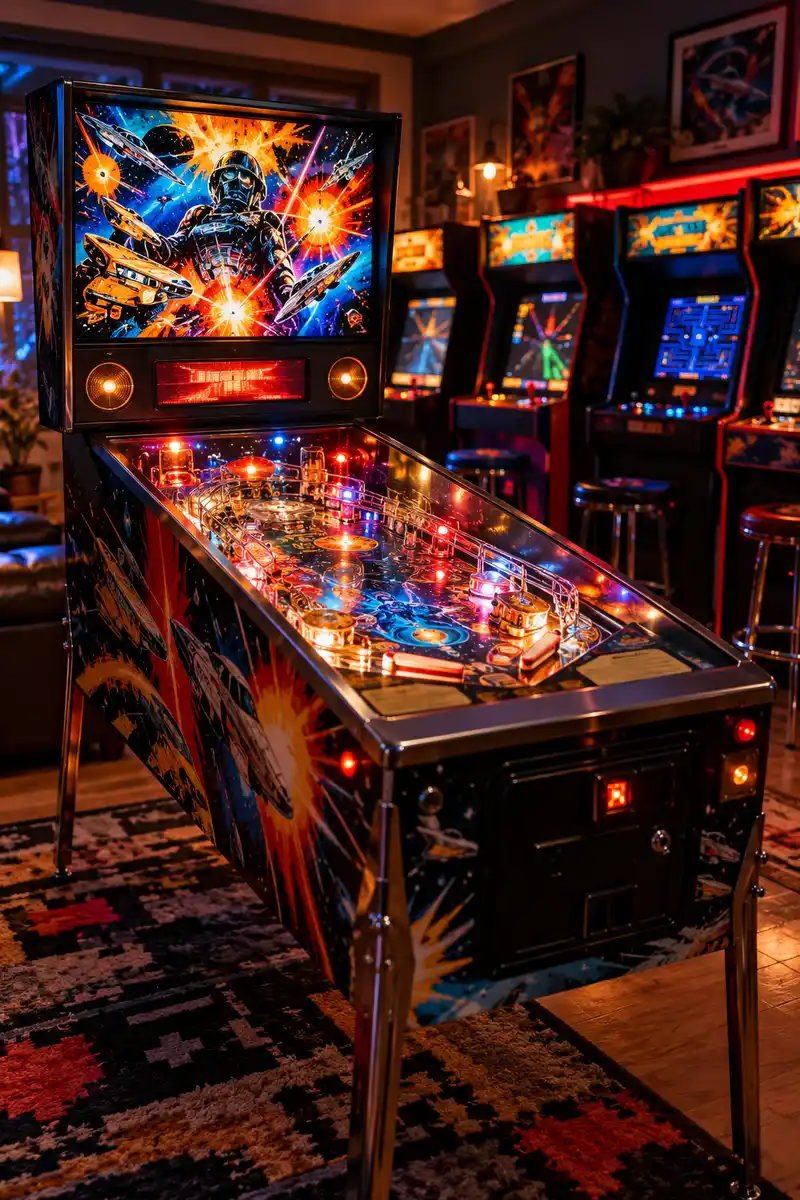
Nothing says arcade like the mechanical clatter of a pinball machine. It brings sound, motion, and flashing lights that no screen can copy, and guests who never touch a joystick will line up for it.
Pinball machines are heavy, often 300 pounds or more, so plan the floor before delivery day. Buy from a local collector group if you can. You will pay less, and the seller can show you basic maintenance.
4. Hang a Neon Sign Over the Main Wall
The eye goes straight to whatever glows. A neon or LED neon sign above your cabinet row gives the room its after-dark identity and photographs beautifully for anyone documenting the build.
Pick a short word or a simple shape. Long phrases turn into a wiring headache and cost far more. Mount it high enough that tall guests will not bump it, and put it on a smart plug so one tap sets the whole room to arcade mode. A layered lighting plan like the ones in these RGB gaming room ideas keeps the glow balanced instead of blinding.
5. Build a CRT Corner for Console Classics
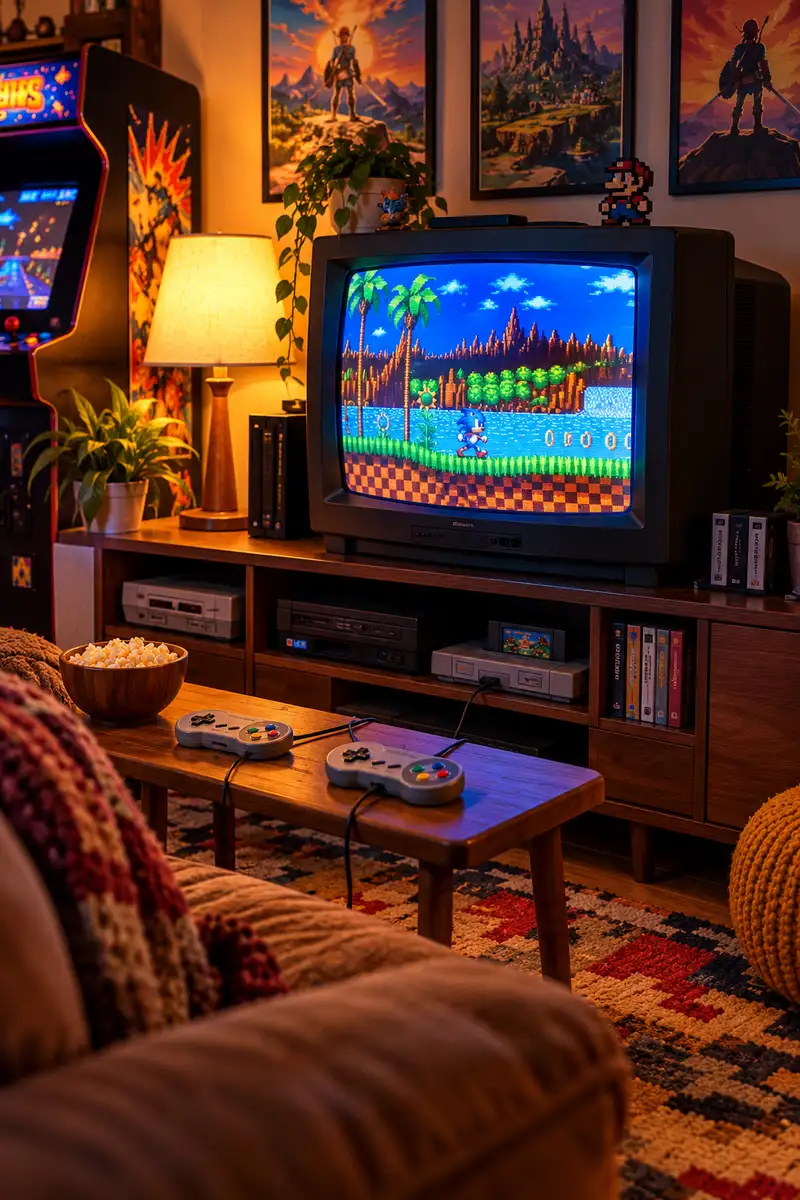
Last Saturday I watched a friend’s kid discover a CRT television for the first time. He knocked on the glass, then sat cross-legged two feet away, exactly like we all did.
A small corner with a CRT, two controllers, and a low bench covers every console generation that looks wrong on a flat panel. Keep it simple: one power strip, one switch box, and a basket for controllers. A clean layout borrows a lot from console gaming setup ideas, just with warmer light.
6. Swap Marquee Art With the Seasons
Real arcades changed their marquees when new games arrived. You can steal that rhythm. Swapping the art above your cabinets a few times a year keeps the room feeling alive instead of frozen.
Print new marquee transparencies at a local print shop, backlit film works best. The swap takes twenty minutes and costs less than any other refresh here.
Measure the marquee retainer on your cabinet and note the exact size.
Order backlit film prints from a local shop, one per season or theme.
Slide the new art in, store the old flat, and enjoy a room that changes.
7. Give Waiting Players a Real Bench
People get this wrong constantly. They fill the room with machines and forget that half the fun is watching. Without seating, guests drift back to the living room and the arcade empties out.
A simple backless bench behind the cabinet row seats three and tucks away when you need floor space. Choose something with a wipeable surface. Spilled soda is not a question of if. The bench also gives younger kids a booster seat for reaching tall control panels.
8. Run a Small Prize Counter
A prize counter turns game night into an event. It does not need to be big: a narrow shelf or a rolling cart with small prizes, a jar of tickets, and a hand-written price list does the whole job.
Stock it with candy, stickers, and silly trophies from a dollar store. Kids will play twice as long when there is a redemption shelf at stake, and adults get surprisingly competitive over a five-dollar prize. Keep the tickets in a visible jar so the running total feels real.
9. Keep a Chalkboard for High Scores
Most home arcades skip this and it shows. Without a visible scoreboard, every game night starts from zero and nobody remembers who won last time.
A framed chalkboard on the wall beside the cabinets fixes that in an afternoon. Write the game, the score, the name, and the date. Use chalk markers so it looks crisp, and keep a small eraser on the tray. Rivalries that live on a wall last years longer than ones that live in memory.
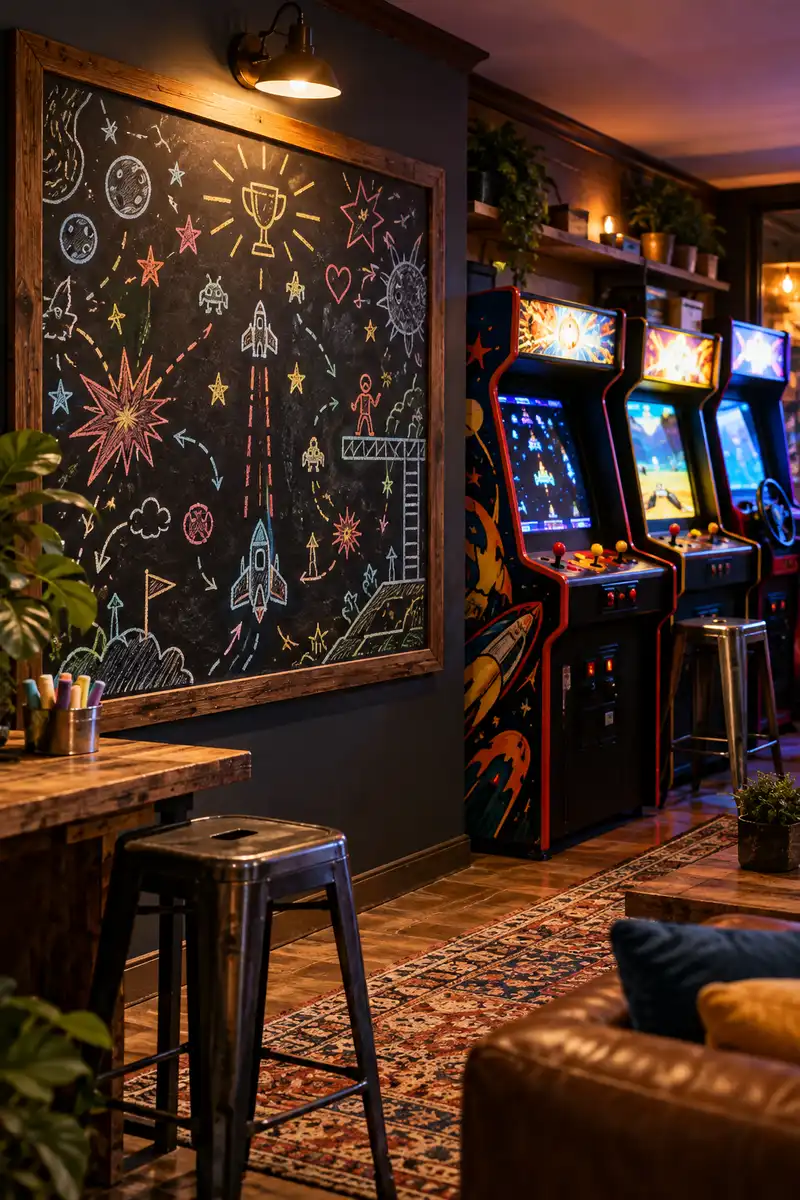
10. Paint One Wall With Blacklight-Reactive Paint
A blacklight wall is the closest thing to a cheat code in room design. Under normal light it looks like a plain accent wall. Flip on a UV bar and the whole room changes character.
Use clear UV-reactive paint over your existing wall color so the daytime look stays calm. Add simple shapes: stars, pixel invaders, lightning bolts. One four-foot UV LED bar mounted above the cabinets is enough to charge a whole wall.
11. Lay Interlocking Carpet Tiles
Concrete and hardwood are loud, cold, and brutal on dropped controllers. Interlocking carpet tiles solve all three problems and you can install them in an evening with a utility knife.
Pick a dark pattern that hides wear, and buy ten percent extra for replacements. When a tile gets stained, you swap one square instead of the whole floor. The slight cushion also saves your feet during long sessions and softens the room’s echo.
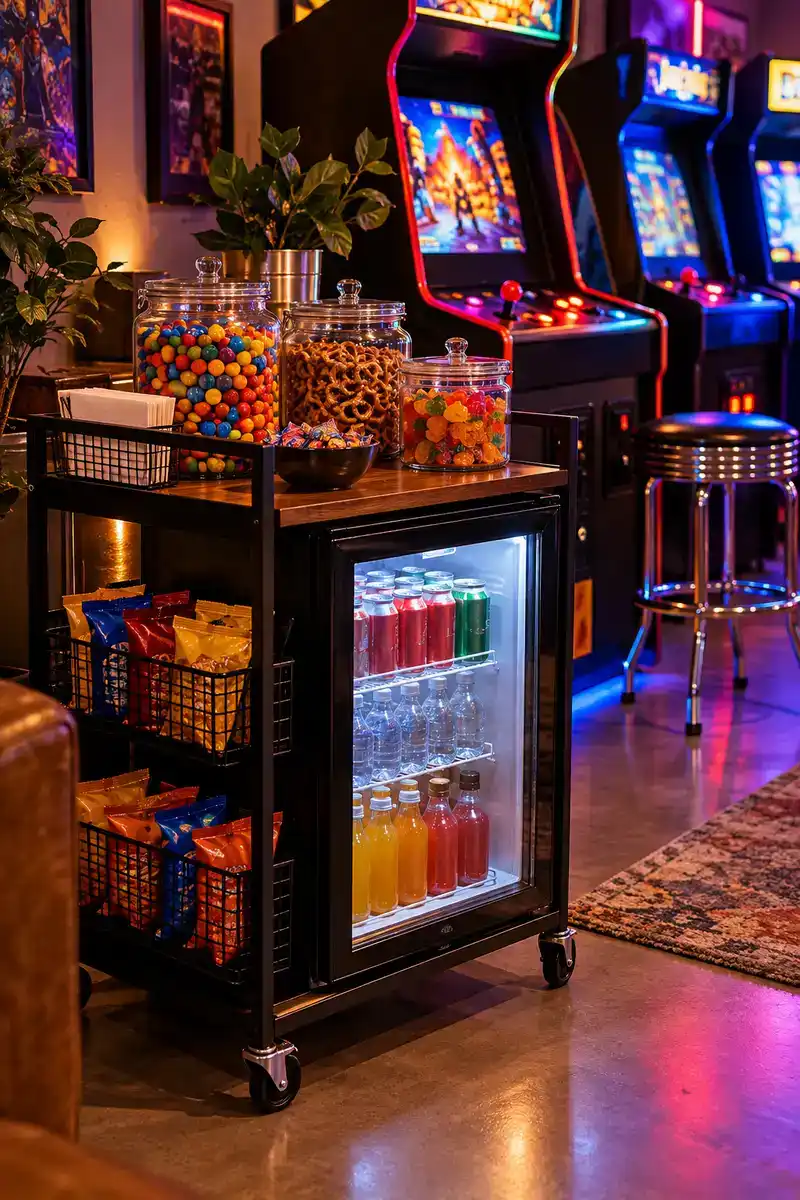
12. Stock a Snack Station That Stays Tidy
The food court was half the arcade experience, so give snacks a proper home. A small cart or a counter section with a mini fridge keeps crumbs and sticky fingers away from your machines.
Choose snacks that do not leave residue on controls: pretzels, gummy candy, and bottled drinks beat powdered cheese anything.
Snack station basics
13. Park a Sit-Down Driving Cabinet
I have noticed that guests ignore half the room until someone sits in the driving cabinet. Then everyone wants a turn. A sit-down racer is a magnet in a way upright cabinets are not.
These take real floor space, so measure twice. You need room to climb in and out plus space behind for the seat to slide. If a full cabinet is too much, a sturdy racing seat with a wheel and pedals in front of a TV gives most of the feeling for a fraction of the footprint.
14. Make a Photo Corner With Props
Look at any arcade photo from the eighties and someone is posing. Give your guests a reason to do the same. A small corner with a backdrop and a basket of props turns game night into something people remember.
Hang a simple dark curtain or a pixel-art tapestry, then fill a crate with oversized foam fingers, fake mustaches, and cardboard speech bubbles. Put a small tripod nearby. The photos become free advertising when friends post them, and the corner costs almost nothing to set up.
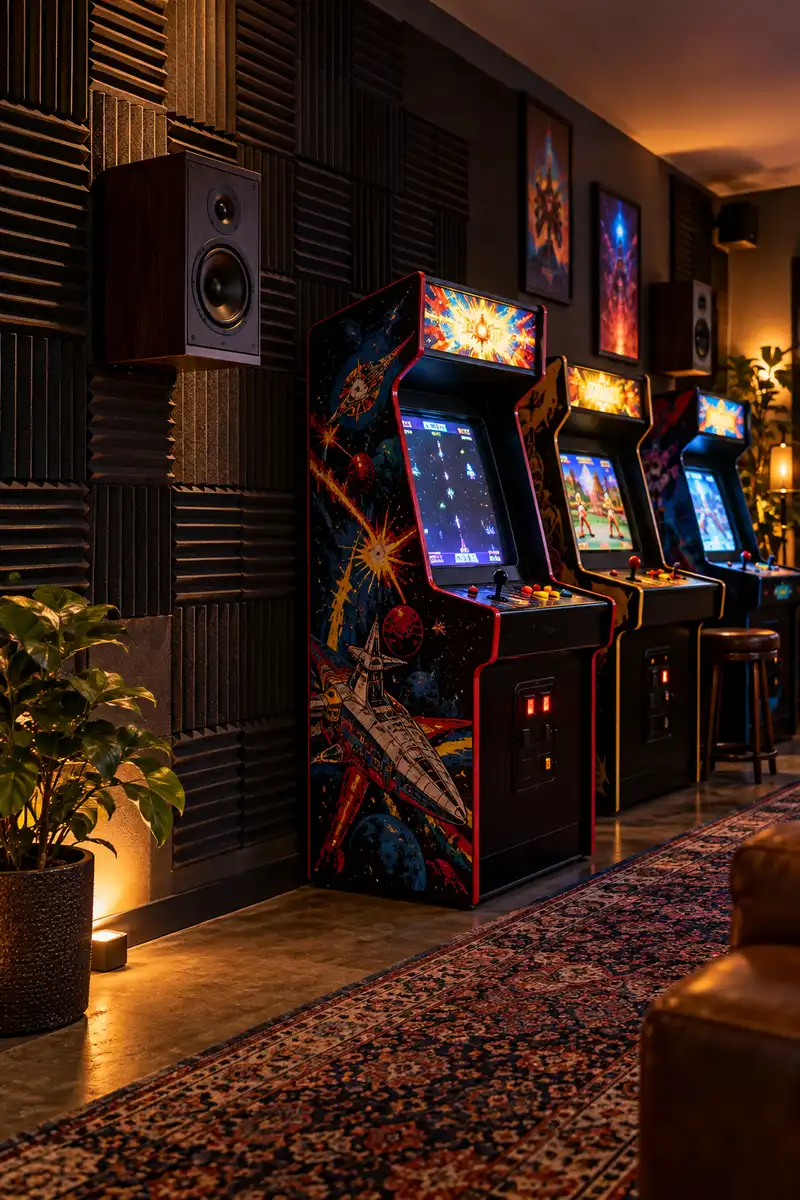
15. Tune the Sound So It Stays in the Room
An arcade is loud by nature, and that noise travels. Without some control, the rest of the house hears every bonus round whether they want to or not.
Start with the cheap fixes: a heavy rug, curtains over any windows, and weatherstripping on the door. If bass still escapes, a pair of acoustic panels on the shared wall makes a bigger difference than most people expect. Keep machine volumes at a level where you can hold a conversation without shouting. Your family will thank you.
16. Frame Your Tokens and Ticket Stubs
The rule is simple: if it meant something to you, it deserves a frame. Old arcade tokens, faded ticket stubs, and wristbands from long-closed arcades are the most personal decor a game room can have.
Shadow boxes from a craft store work perfectly. Arrange tokens by arcade or by year and add tiny labels. Hang the frames in the hallway leading to the room so guests get a little museum walk on the way in.
💡 Quick Tip
Photograph each token before framing it. If you ever sell or trade, you will have a record of the full collection.
17. Shelve a Rotating Game Library
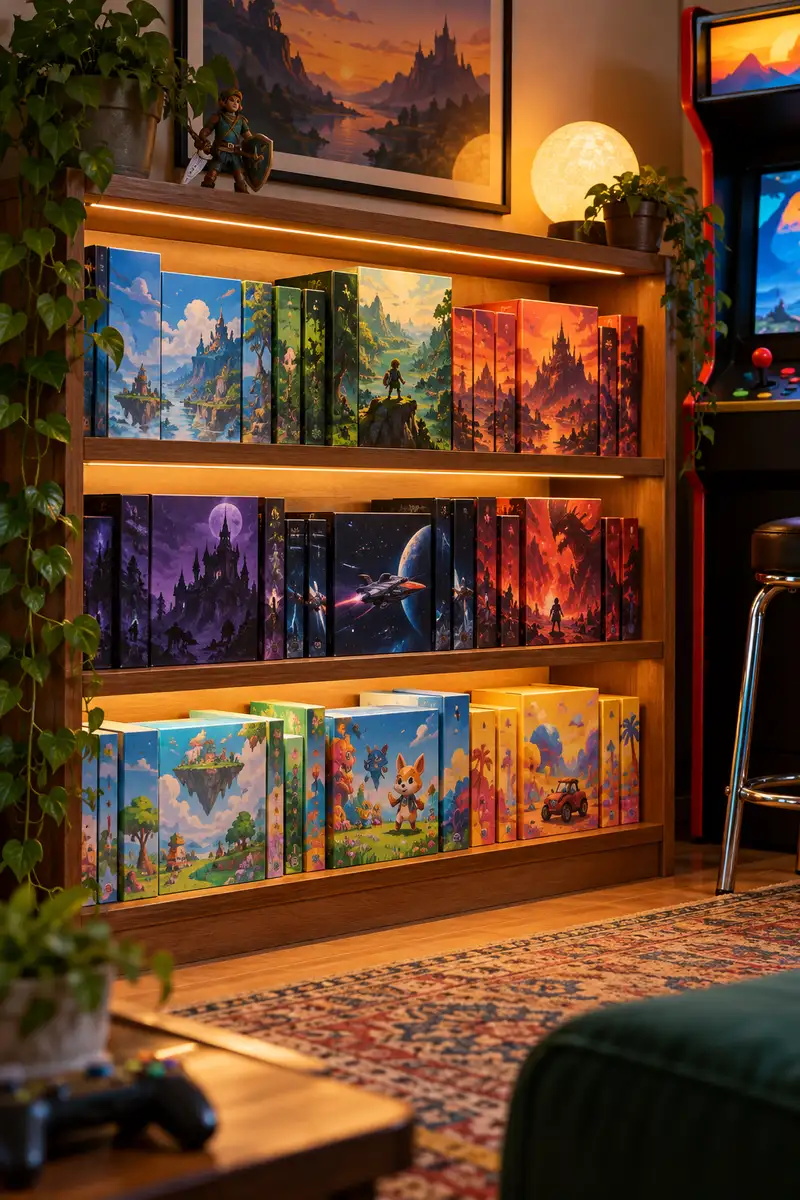
A static shelf of games nobody touches is just storage. A rotating library, ten games out and the rest stored, makes the collection feel fresh every few months without buying anything new.
Use a low bookshelf near the seating area and group games by mood: party games, solo classics, two-player fighters. Swap the lineup when the seasons change. This kind of styled display pairs well with the tricks in retro gaming room ideas, where the shelf itself becomes part of the decor.
18. Mark the Door Like an Arcade Entrance
The best payoff comes before anyone even enters. Treating the doorway like a real arcade entrance builds anticipation and makes the room feel like a destination instead of a spare bedroom.
A simple sign above the door does most of the work: the room’s name in bold letters, maybe with a small arrow. Add a strip of LED above the frame and a “now playing” whiteboard beside it. When guests see the door, they already know something fun is inside.
That is the whole playbook. A home arcade room works because every piece earns its place: the cabinets for play, the lights for mood, the snacks and scoreboard for the social glue that made the old arcades special. Start with one anchor machine and build outward. These home arcade room ideas scale from a single corner to a full basement, so there is no wrong size to begin with. Save this list for the next time you want to bring the classic games back home.



One Response