Somewhere between the third garland and the bag of plastic leaves, a Thanksgiving table stops looking festive and starts looking like a craft store shelf. If that crowded look wears you out, you are not alone. A calmer approach is gaining ground, and it asks for less, not more. Fewer pieces, softer colors, and room for the food and the people to be the main event.
That is the heart of Minimalist Thanksgiving Décor. You keep the parts that actually signal the holiday, warm light, natural texture, one or two autumn shapes, and you let everything else go. The result still reads as Thanksgiving the moment guests sit down. It just breathes. Below are 17 small, specific moves that keep the season visible without filling every surface. Most use things a home already owns, and each one takes minutes, not a weekend of decorating and dusting.
Let One White Pumpkin Be the Whole Centerpiece
One pumpkin can carry an entire table.
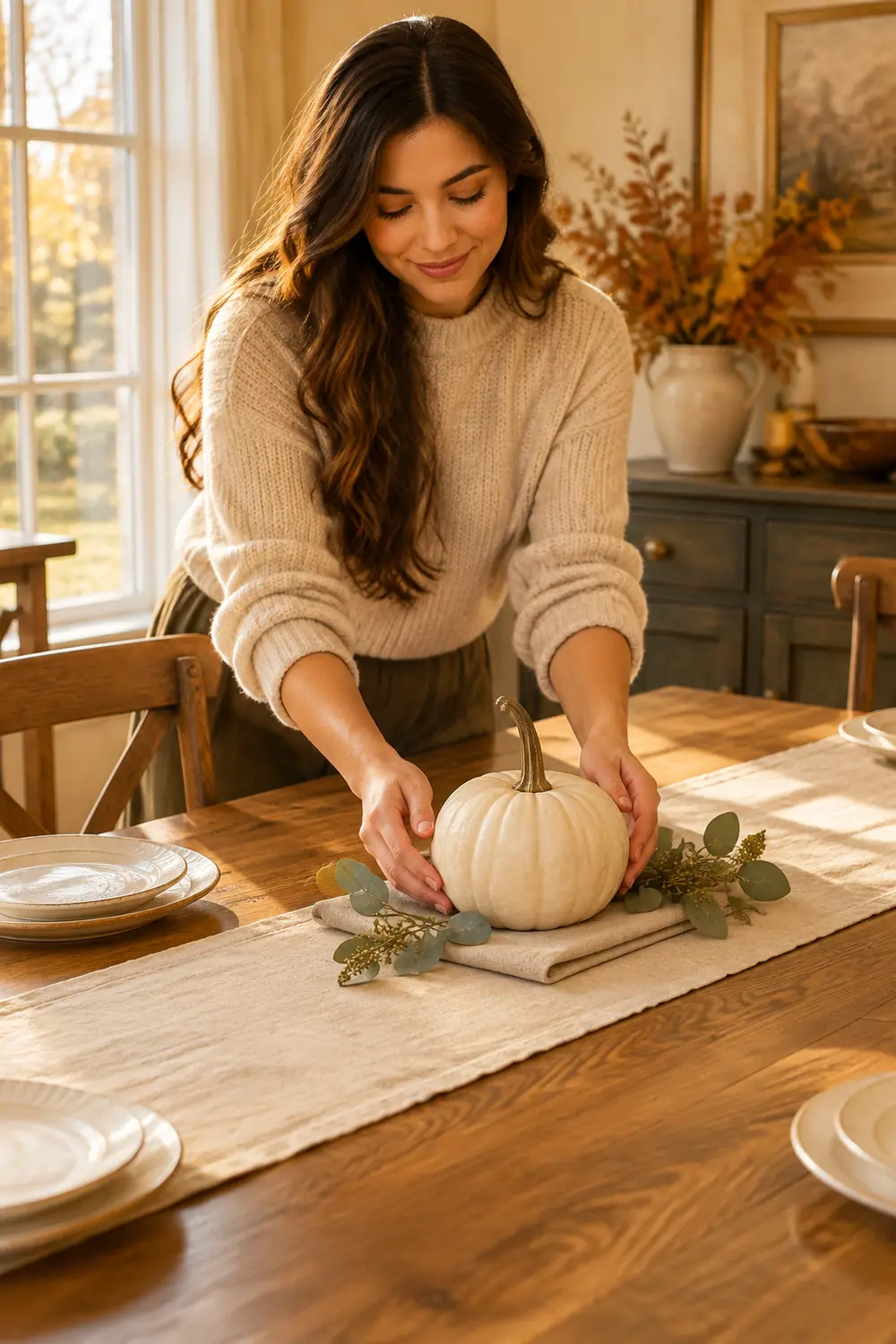
Set a single white or pale pumpkin in the center, straight on the wood or on one folded linen napkin, and then stop. The empty space around it is the point. Guests see the shape, the stem, the season, and nothing competes with it. It also leaves real room for serving dishes, which crowded centerpieces never do.
💡 Quick Tip
Pick a pumpkin with a long, curved stem. On a plain table, that stem does the decorating work all by itself.
Run One Linen Runner Down the Middle and Stop
Layers are where tables start to feel busy. One runner is enough.
Choose a plain linen or cotton runner in cream, flax, or soft grey and let it fall over both ends of the table. Skip the placemats in matching sets, the charger plates, and the second runner crossed over the first. A single strip of natural fabric softens the wood, catches the light, and gives plates and glasses a calm base to sit on.
Line Up Taper Candles in Plain Glass Holders
Candlelight is the cheapest festive signal there is.
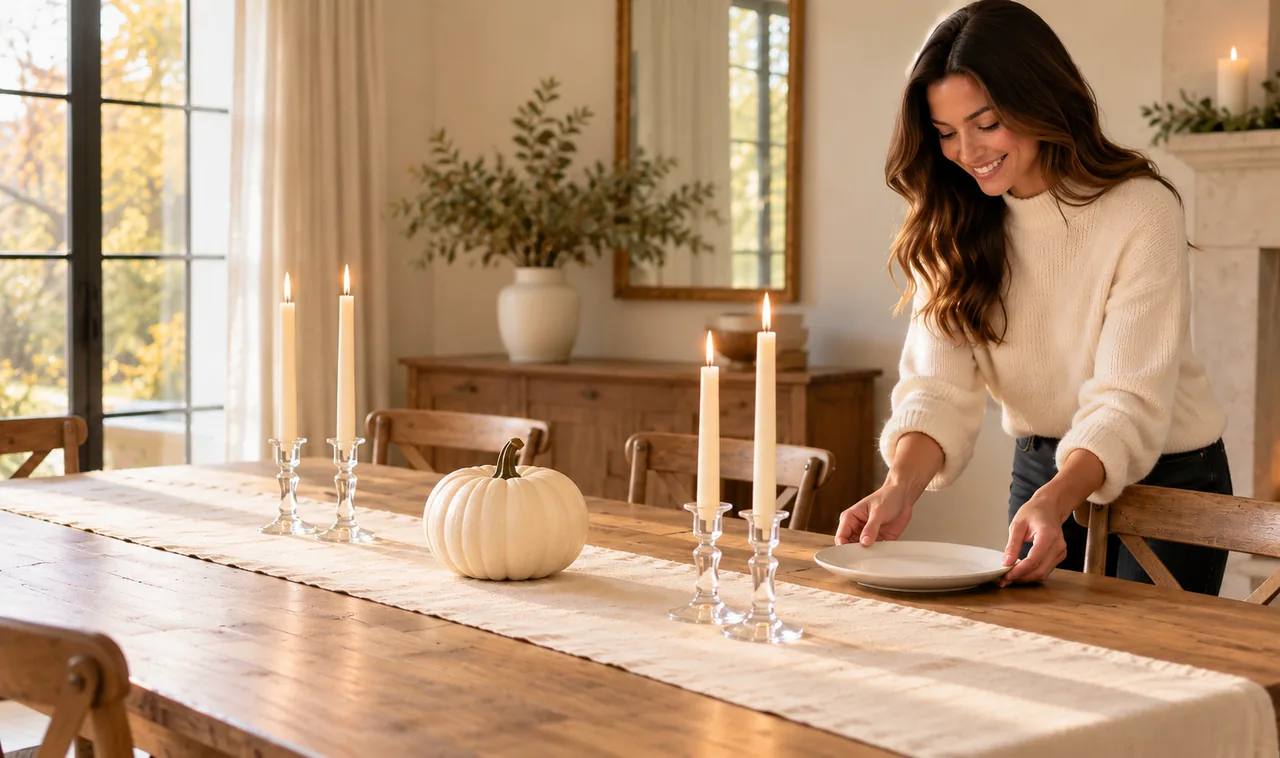
Three or five tall tapers in simple glass holders, set in one straight line, give a table its evening glow without a single themed object. Plain holders matter here. No pumpkin shapes, no printed leaves, just glass and flame. Odd numbers look relaxed rather than matched, and ivory candles keep the palette quiet.
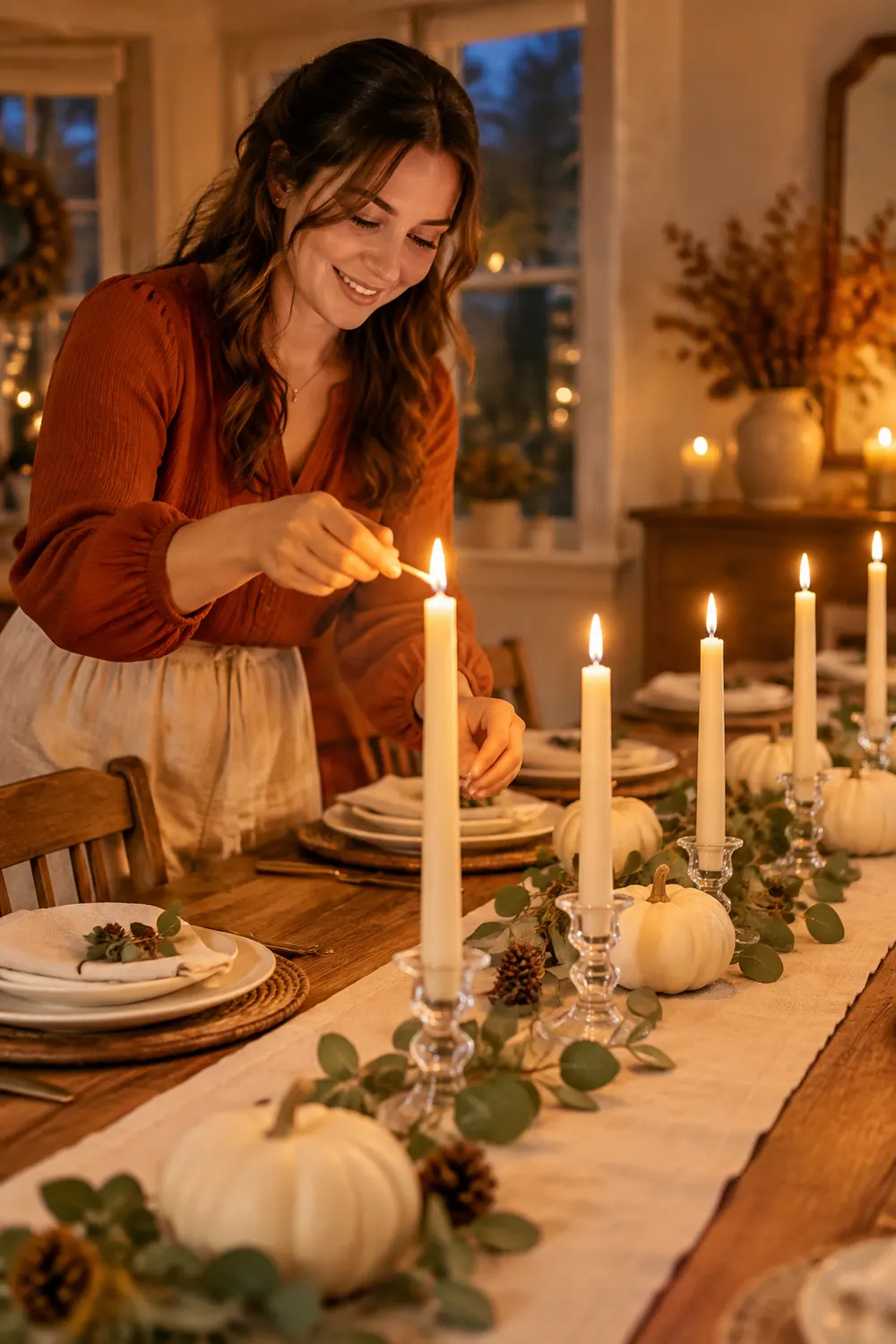
Light them before guests arrive, not after. A lit table changes how the whole room feels when people walk in.
Put a Single Branch in a Tall Vase
A florist is not required for a centerpiece with height.
Cut one branch from the yard, something with a few turning leaves or bare, interesting lines, and stand it in the tallest plain vase you own. Set it at one end of a sideboard or in the middle of the table if the branch is slim. One branch reads as a deliberate choice. A stuffed arrangement reads as effort, and effort is what this style is skipping.
Change the water every two days and the branch will last well past the holiday weekend.
Keep Place Settings Plain, Then Add One Natural Detail
Everyday plates are fine. Really.
White or stoneware plates, plain glasses, and flatware you already own make a clean base. Then each setting gets exactly one natural detail: a sprig of rosemary on the napkin, a single leaf under the fork, or a small pinecone beside the glass. One detail per person feels thoughtful. Three per person feels like a craft project landed on their dinner.
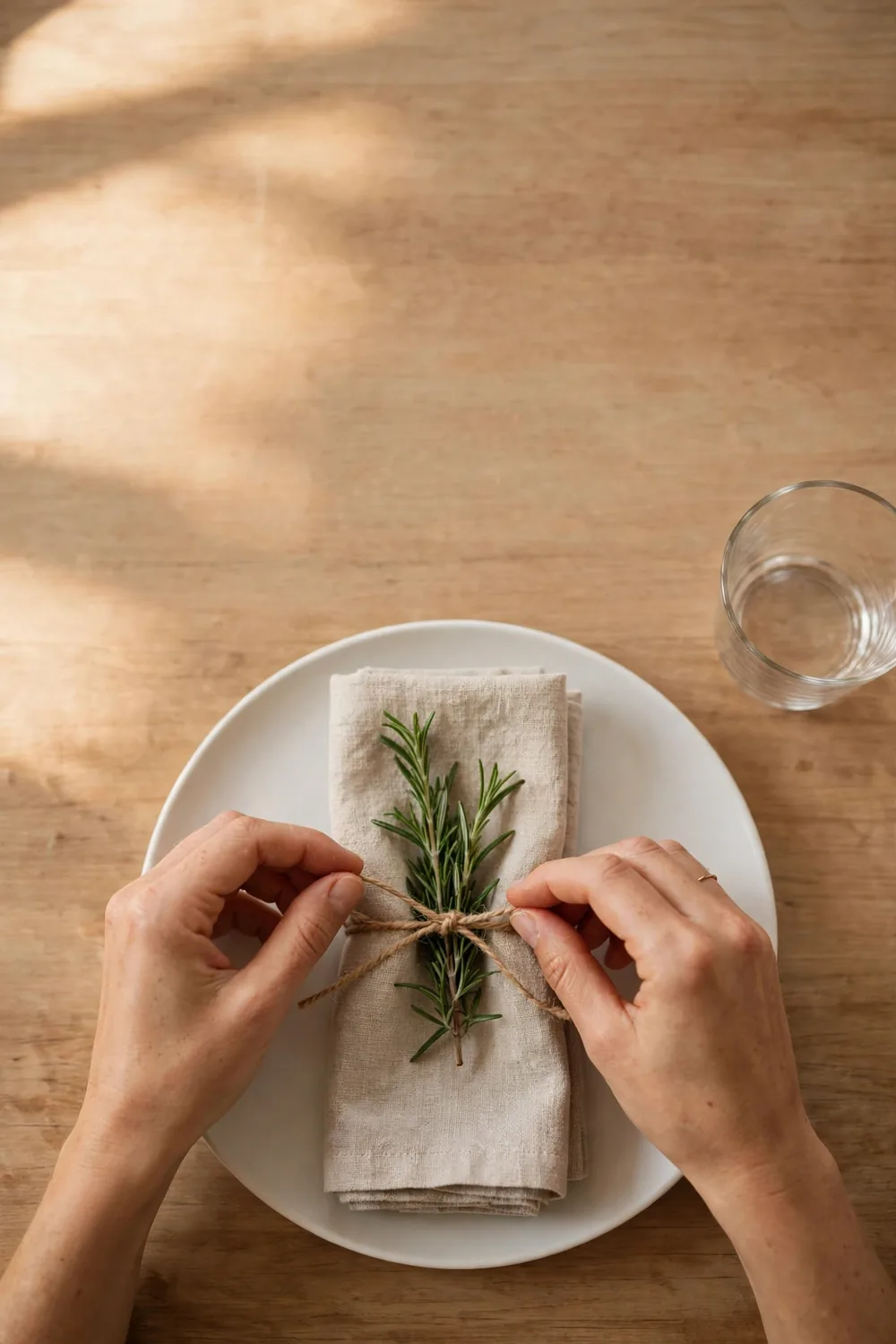
One detail per setting, picked once
Clear the Mantel and Put Back Only Three Things
The fastest minimalist move costs nothing.
Take everything off the mantel. Clean it. Then put back three things only: a pair of candlesticks and one small pumpkin, or a plain wreath and two jars. The hard part is leaving the rest in the box, so pack the extras away properly instead of keeping them nearby where they will creep back.
If the mantel is your favorite decorating spot, our guide to Thanksgiving mantel décor has fuller looks to compare against this stripped back version.
Stand Wheat Stalks in a Plain Ceramic Jug
Wheat does autumn in one gesture.
A bundle of dried wheat or pampas grass in a matte ceramic jug brings in harvest texture with zero color noise. It suits an entry table, a kitchen counter corner, or the floor beside the fireplace. Keep the jug plain and the bundle loose. Tying it tight with ribbon or adding dried flowers turns a quiet piece into a arrangement that needs arranging.
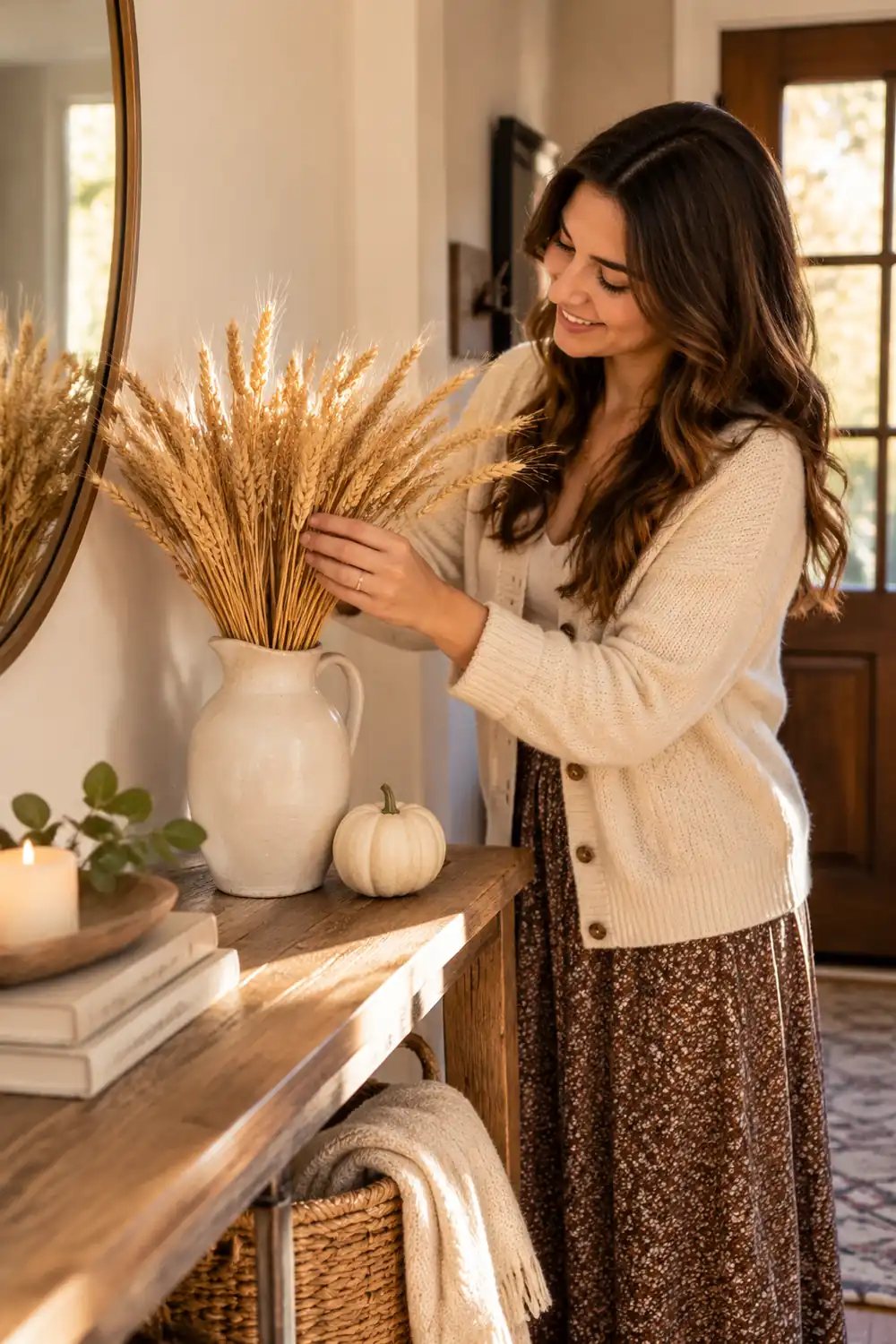
Buy one bundle and split it between two jugs if you want the look in two rooms. Half bundles still read as plenty.
Group Pumpkins in Threes and Leave Gaps Between Groups
Scattered single pumpkins look like clutter. Groups look like decorating.
Wherever pumpkins appear, on a step, a shelf, or the hearth, place them in groups of three with clear empty space around each group. Vary the heights inside the group, keep the colors close, and resist filling the gaps. The gaps are what make the groups read as intentional instead of leftover.
Skip the Tablecloth and Let the Wood Show
A tablecloth hides the best neutral you own.
Bare wood, wiped clean and left uncovered, gives the table warmth that no fabric print can match. It also removes the fussiest item on the table, since nothing needs ironing, centering, or straightening after every course. If the wood is worn, that is fine. Honest wear suits this style better than a stiff cloth.
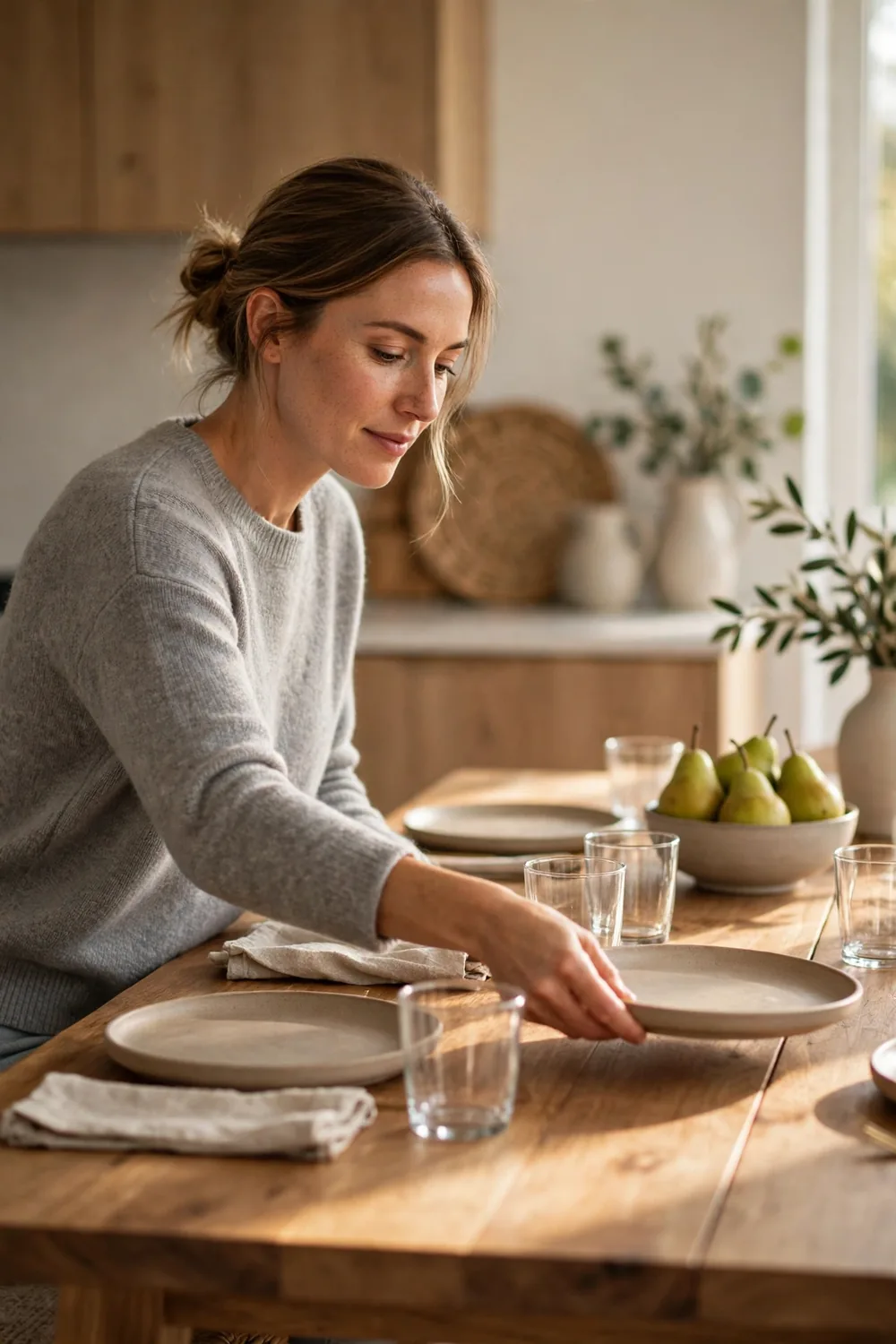
The clean lines here lean modern, and readers who like that direction will find more of it in these modern Thanksgiving décor ideas that skip traditional orange.
Hang One Plain Wreath and Nothing Around It
The front door needs one signal, not a scene.
A plain wreath of greenery, dried grasses, or bare twigs tells arriving guests it is a holiday house. Garland around the frame, bows on the lanterns, and pumpkins stacked on both sides turn that signal into noise. Hang the wreath a little lower than feels normal, centered at eye level, and let the door color do the rest.
Inside, the same wreath works over a mirror or on an empty wall, as long as it hangs alone.
Lay Dried Leaves in a Single Line, Not a Pile
Loose leaves are pretty for about an hour, then they look like the yard blew in.
Collect a dozen flat, dry leaves in similar tones and lay them in one loose line down the runner or along a shelf edge, spaced like stepping stones. The line gives you the color and shape of fall with a tidy edge. Skip handfuls scattered over the whole table, which end up in the gravy and on the floor.
Press leaves under a heavy book overnight so they lie flat.
Stick to two or three leaf colors in the whole line.
Glittered or painted leaves that fight the quiet palette.
Loose piles near candles, plates, or serving bowls.
Set Tea Lights in Plain Jars Along One Windowsill
One windowsill of small flames beats decorations in every window.
Save plain jam jars and small glasses through the year, drop a tea light in each, and line them along the kitchen or dining room sill. From inside, it is a soft row of light behind the table. From outside, it is the warmest looking house on the street. Use battery tea lights on any sill near curtains and keep real flames for open sills.
Pick Three Colors and Refuse Everything Else
A short color list is the rule that holds all the others together.
Choose three: cream, warm wood brown, and one soft accent like sage, rust, or muted gold. Every décor piece you bring out gets checked against the list. If it is bright orange, purple, or shiny, it goes back in the box no matter how cute it is. This single rule is why minimalist rooms feel calm instead of empty.
Our roundup of neutral Thanksgiving décor ideas shows the same palette at work across whole rooms.
Write Place Cards by Hand on Plain Card
Printed place cards look like an event. Handwritten ones look like home.
Cut plain cream card into small rectangles, write each name in your normal handwriting with a good pen, and lean the cards against glasses or lay them on plates. No calligraphy, no gold foil, no tiny easels. Guests keep these more often than fancy ones, because a card in the host’s own handwriting feels personal in a way print never does.
Imperfect and handwritten beats polished and printed at a family table, every single time.
Fill One Bowl with Pears and Call It Done
Fruit is the oldest centerpiece there is, and it still works.
A wooden or ceramic bowl heaped with green pears, red apples, or a mix of both brings real color to a sideboard or table with no craft supplies involved. Buy the fruit a few days early so it is ripe enough to send home with guests or eat over the weekend. Décor that turns into dessert is the most practical kind.
Keep it to one bowl. Two bowls of fruit start to look like a market stall.
Leave One Shelf Completely Bare
The boldest minimalist move is an empty surface on purpose.
Pick one shelf, one counter corner, or the top of one cabinet and clear it fully for the season. No pumpkin, no candle, nothing. That bare patch gives every decorated spot near it more weight, and it gives your eyes a place to rest. Guests rarely notice the empty shelf itself. They just say the room feels calm, and this is a big part of why.
Save the Glow for After Dark with a Cluster of Pillars
Daylight belongs to the simple shapes. Evening belongs to candlelight.
Group three pillar candles of different heights on a plain tray or plate, on the hearth, a side table, or the middle of the coffee table, and light them when the light fades. One cluster is enough. Candles in every room spread the glow so thin it stops feeling special, while one warm cluster pulls people toward it the way a fireplace does.
Set the tray where it can burn for hours without being moved, and blow the candles out before the last guest leaves, not after.
Minimalist Thanksgiving decorating is mostly editing. Start with the one or two ideas here that fit your house, set them out, and then walk away from the décor box. A table with a white pumpkin, plain candles, and room to breathe will look festive in every photo and feel calmer for everyone sitting at it. Save this list to your Thanksgiving board for next year, when the urge to buy one more garland shows up.