
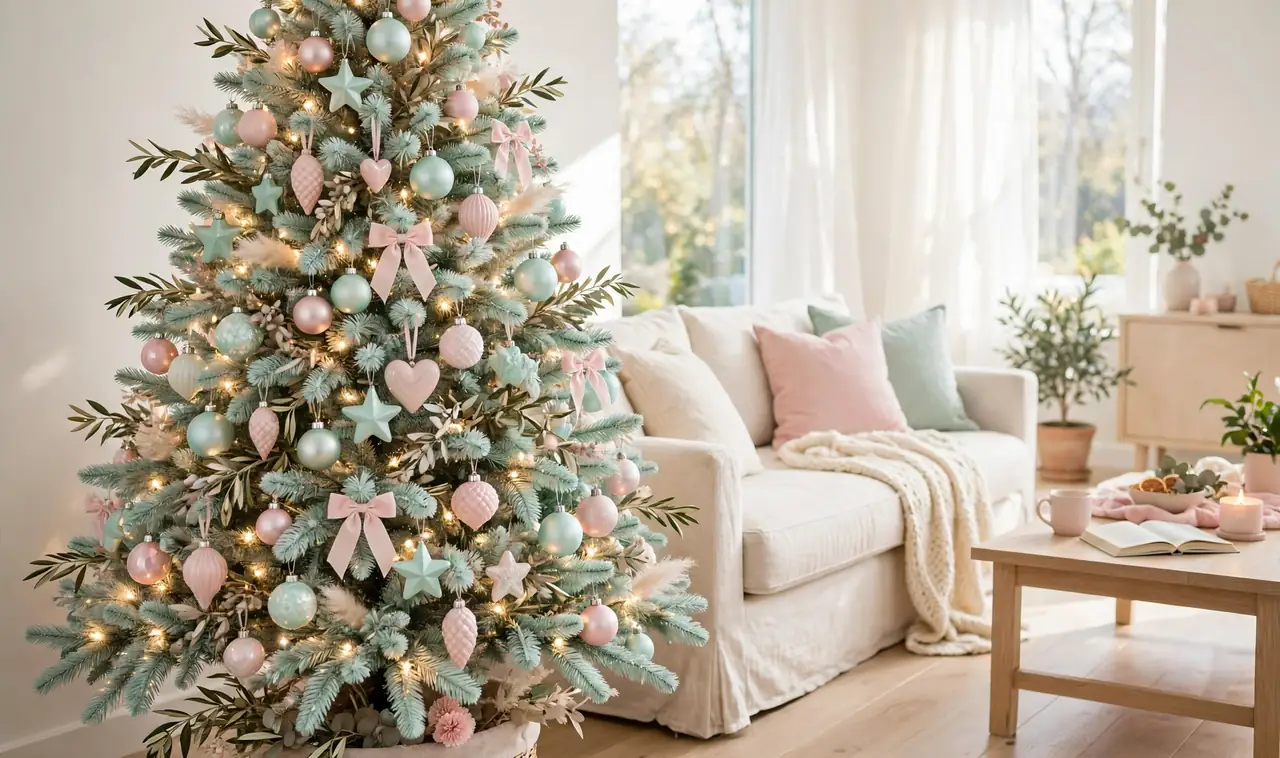
Most Christmas trees shout. Red, green, gold, and a pile of glitter can fill a room fast, and by the second week of December the whole thing starts to feel loud. A pastel tree does the opposite. It stays calm, soft, and light, and it still reads as Christmas the moment you walk in. That is why chic indoor pastel Christmas tree ideas have found such a loyal following. They suit small rooms, bright rooms, and homes where the holiday look needs to sit quietly next to everyday furniture.
The trick is not to buy everything in one shade and hope it works. Pastel needs a plan. Pick a main color, add one supporting color, and keep the rest simple. The 17 ideas below cover mint, lavender, baby blue, blush, butter yellow, and mixed pastels, so you can find the palette that fits your home and build a tree that looks thoughtful rather than thrown together.
1. Mint Green and White Frosted Tree
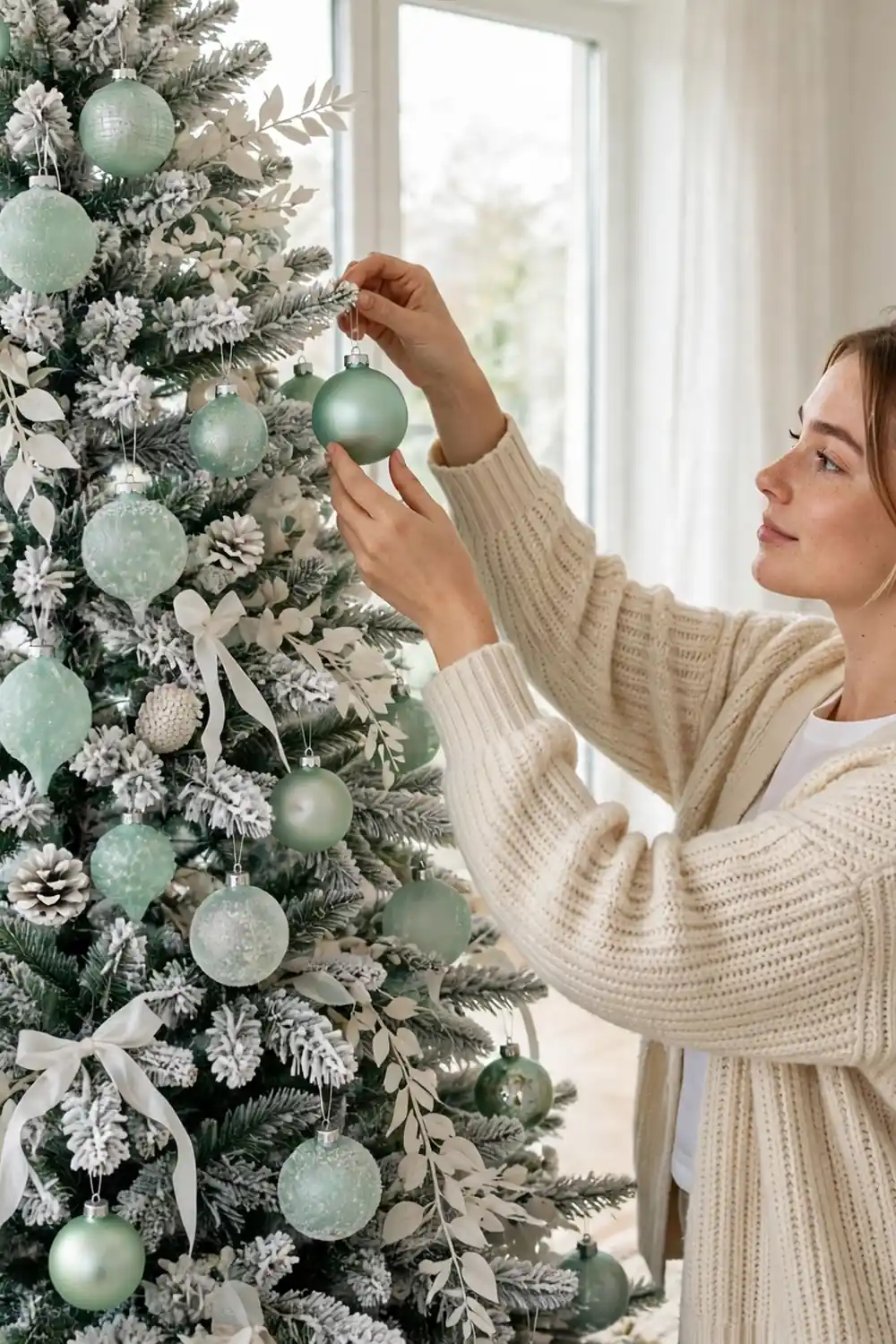
Mint is the easiest pastel to start with because it behaves like a neutral. Pair mint ornaments with plain white ones and let the tree itself do the talking. A lightly frosted tree helps here, since the white tips cool the green down and stop it from looking minty in a candy shop way.
Keep the base simple. A white tree skirt or a plain woven basket keeps the eye on the branches. If you want more general tree styling ideas before you start, this collection of Christmas tree decorating ideas covers shapes, heights, and layouts that work with any color scheme.
2. Lavender and Silver Evening Tree
Lavender looks best after dark, so this tree is built for evenings. Silver ornaments catch the light, lavender baubles soften it, and warm white fairy lights tie the two together. Cool white lights can make lavender look grey, so warm white is the safer pick.
Hang the largest lavender baubles near the bottom and the smallest silver ones near the top. That weight at the base keeps the tree grounded, and the silver at the top catches light from across the room.
💡 Quick Tip
Test one lavender bauble against your lights at night before you buy a full set. Lavender shifts a lot under warm light.
3. Baby Blue and White Snowy Tree
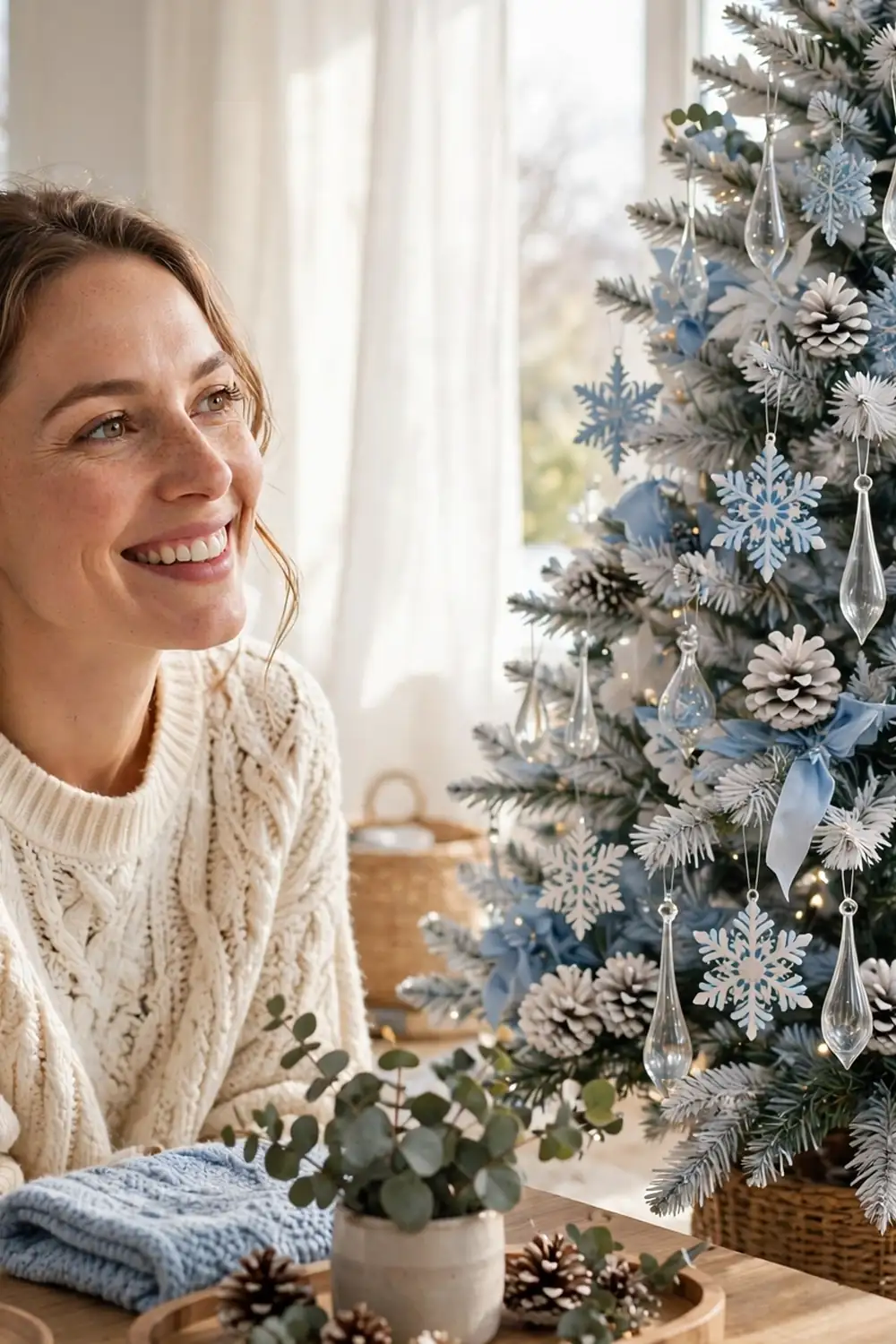
Baby blue is the closest pastel to a classic winter look. It pairs with white snowflake ornaments, clear glass drops, and a dusting of fake snow on the branches. The result feels cold in a good way, like a window view on a snowy morning.
Skip red entirely here. Even one red ornament pulls the eye away from the blue and white story. If you need a third color, use silver, and use it sparingly, on the star or on a few glass icicles.
4. Blush and Cream Soft Tree
Blush and cream is the gentlest pairing on this list, and it works best in rooms that already have warm wood or beige furniture. Cream ribbon, blush baubles, and a few ivory flowers give the tree a soft, layered look without any harsh contrast.
One warning: blush can disappear against a white wall. If your tree stands against white paint, add a few deeper rose ornaments low down so the shape of the tree stays visible from the door. For a blush led room, these pink Christmas tree decor ideas show how far the color can go.
5. Butter Yellow and Ivory Tree
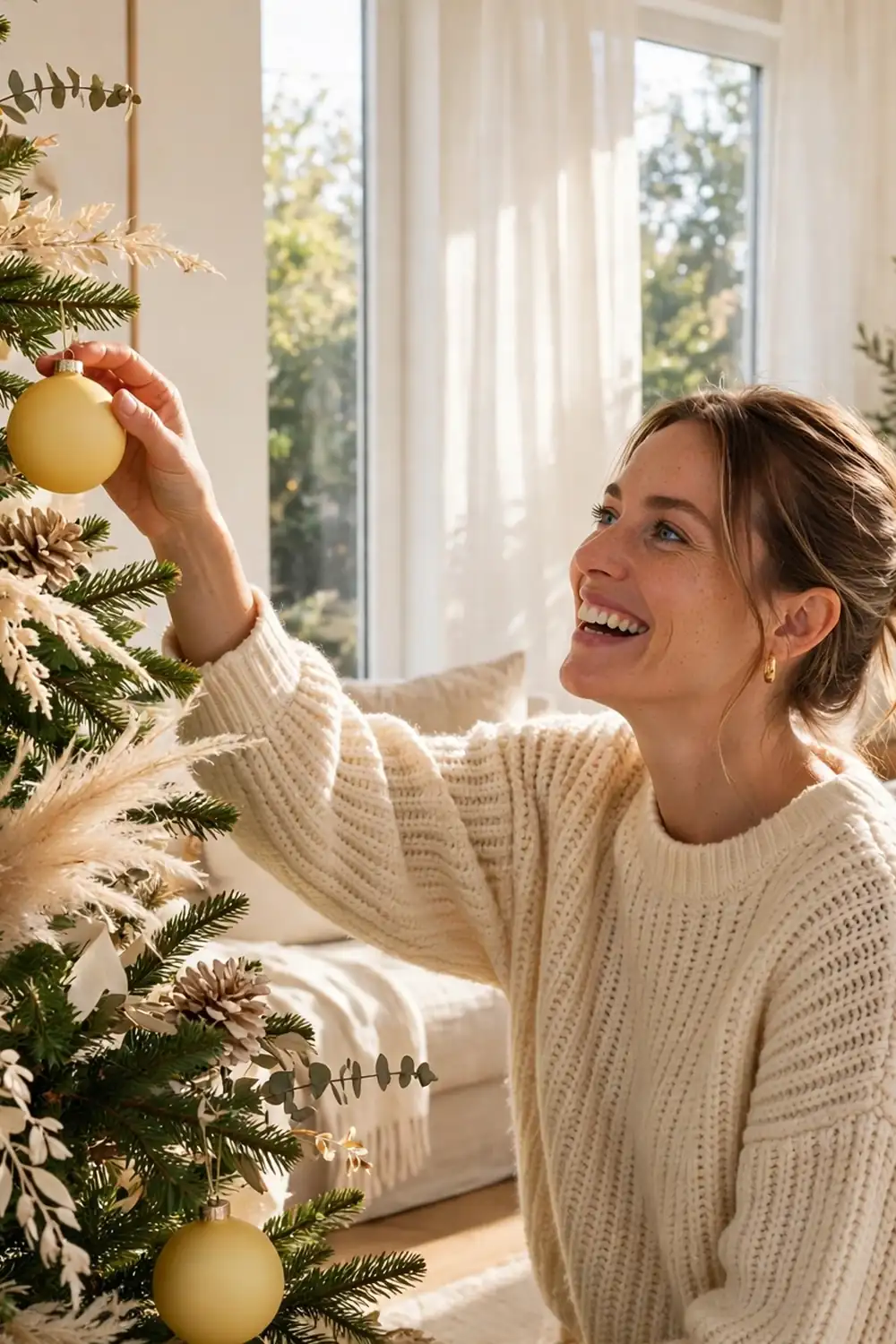
Butter yellow is the most underused pastel at Christmas, which is exactly why it stands out. It reads warm and sunny, and it suits rooms that get little winter daylight. Ivory ornaments keep it from turning brassy, and pale gold ribbon adds warmth without pushing the tree toward a full gold theme.
Use butter yellow on matte baubles rather than shiny ones. Shine makes yellow look loud, while matte keeps it soft. A few dried orange slices fit this palette too, and they add a natural texture that glass cannot.
6. Mixed Pastel Ornament Tree
If picking one pastel feels too limiting, use them all, but with a rule. Choose ornaments in mint, lavender, baby blue, blush, and butter yellow, and keep every ornament the same finish. All matte, or all satin, never a mix of matte, glitter, and shiny in one tree.
One shared finish is what stops a mixed pastel tree from looking like a box of leftover ornaments. Spread the colors evenly rather than grouping them, so no single branch looks like one color took over.
What to grab first
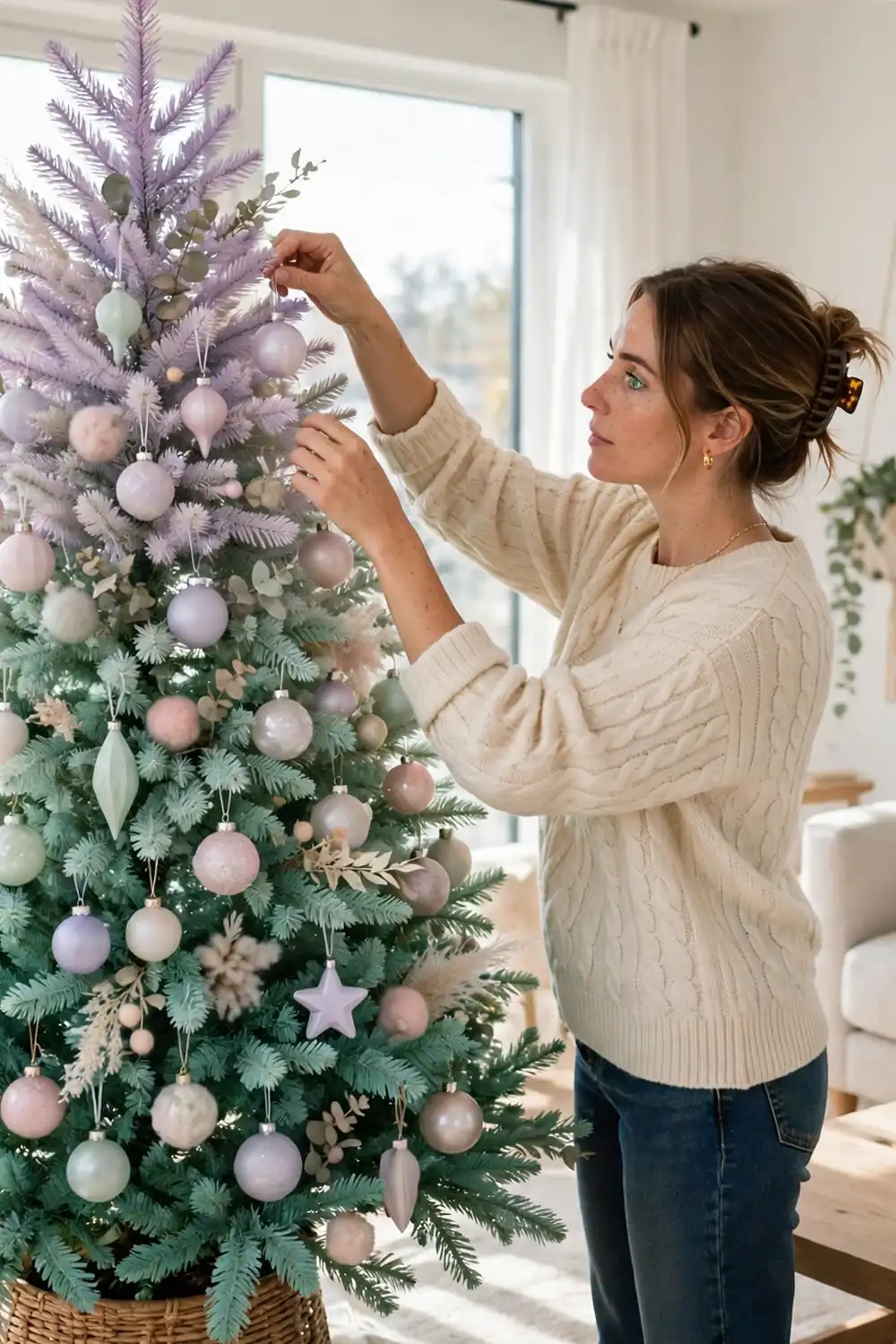
7. Mint to Lilac Ombre Tree
An ombre tree fades from one pastel to another as the eye moves up. Start with mint at the bottom, move through pale blue grey in the middle, and finish with lilac near the top. The fade needs at least three shades to look gradual rather than striped.
Work in horizontal bands of two or three branches each, and let the shades overlap a little where they meet. A hard line between colors breaks the effect, so a few mixed ornaments at each boundary help the fade feel natural.
8. Seafoam and Pearl Tree
Seafoam sits between mint and blue, and pearl ornaments give it a quiet glow. This pairing suits coastal style homes and rooms with a lot of white and natural wood. Pearl beads strung as garland work better than tinsel here, since tinsel would fight the soft finish.
Keep the tree topper simple, a small pearl star or a plain white bow. A large topper would pull attention away from the gentle color story lower down.
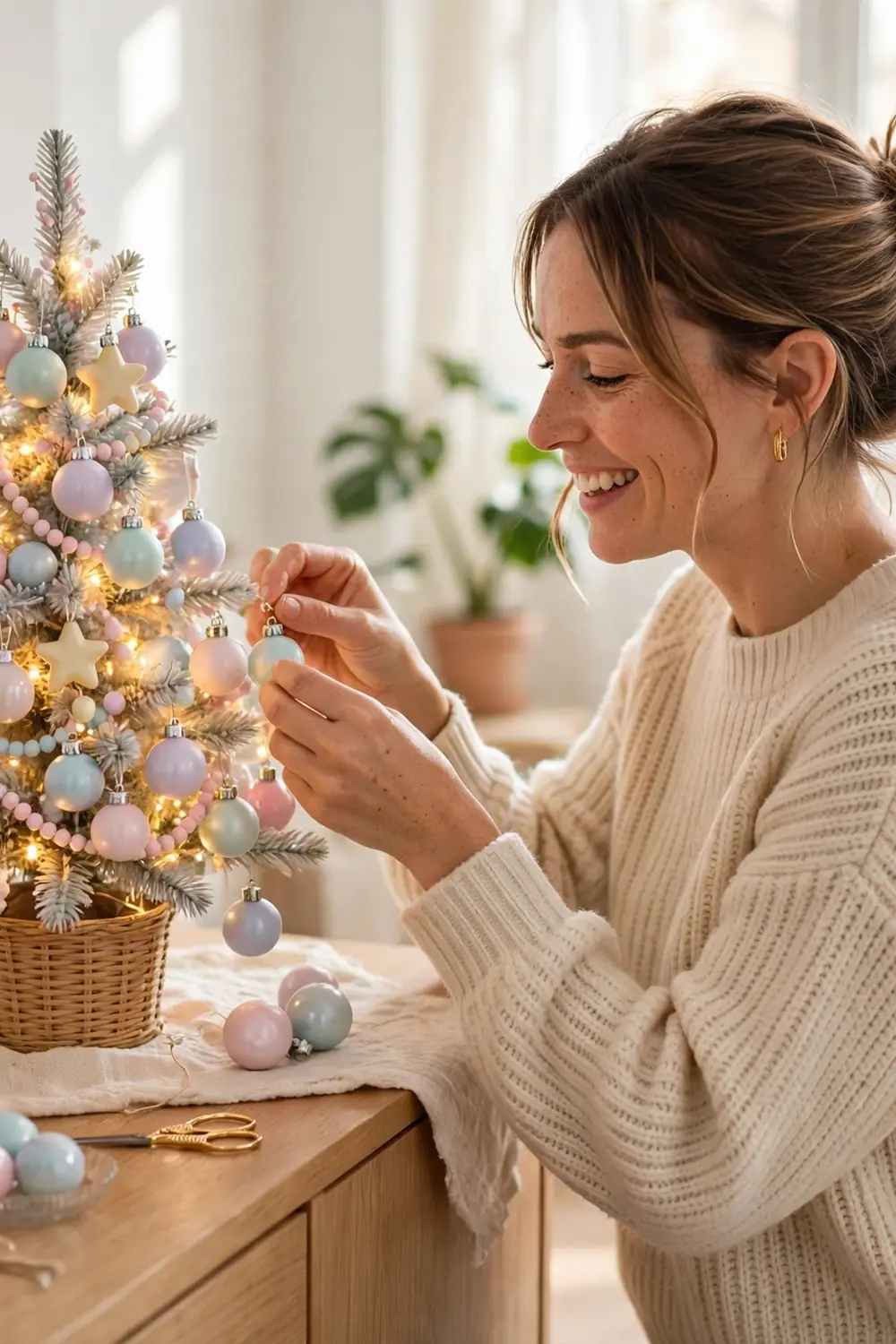
9. Tabletop Pastel Tree for Small Rooms
Not every home has room for a six foot tree, and a tabletop pastel tree solves that without giving up the look. A two to three foot tree on a sideboard, console, or kitchen counter still holds ornaments, lights, and a topper, just at a smaller scale.
Scale the ornaments down too. Standard baubles look oversized on a small tree, so look for mini ornaments in your pastel shade and use fewer of them. Twelve to fifteen ornaments is plenty on a tabletop tree, and the tree will look fuller for the restraint.
10. Dried Flower Pastel Tree
Dried flowers are a natural fit for pastels because they already come in soft, faded tones. Lavender sprigs, dried roses in blush, and small bunches of baby’s breath tuck between branches and add a texture that glass ornaments cannot match.
Attach each bunch with thin florist wire rather than hooks, so the stems sit flat against the branch. Mist the flowers lightly with hairspray before hanging to slow shedding, and keep the tree away from radiators, since dry heat makes dried flowers brittle.
Wire small bunches of dried flowers first, before the tree goes up.
Add lights, then tuck flowers deep into the branches.
Finish with a few pastel baubles at the branch tips.
11. Wide Satin Ribbon Pastel Tree
Wide satin ribbon changes a tree more than any ornament can. Two inch ribbon in a pastel shade, looped loosely down the tree in long vertical falls, gives structure and color at the same time. The ribbon does most of the work, so you need fewer ornaments.
Cut the ribbon into lengths of about three feet rather than wrapping one long piece around the tree. Short lengths are easier to tuck and adjust, and they drape more naturally than a tight spiral wrap.
12. Frosted Flocked Tree with Warm White Lights
A heavily flocked tree is the fastest route to a pastel look, because the white flocking already softens every color hung on it. Pastel ornaments on a flocked tree look lighter than they do on a green tree, so you can use slightly deeper pastel shades and still get a soft result.
Warm white lights matter more on a flocked tree than on a green one. Cool lights make flocking look blue grey, while warm lights keep it snowy. Check the flocking for shedding before you buy.
13. Vintage Glass Pastel Ornaments Tree
Vintage style glass ornaments bring a shape variety that modern bauble sets often lack. Teardrops, finials, and round ornaments in faded pastel glass give the tree an older, collected feel, as if the ornaments came from several decades rather than one store trip.
Mix shapes but keep the palette tight, two pastels at most, or the tree starts to look busy. Hang the most detailed ornaments at eye level, where guests can actually see the glass work, and use plain baubles higher up.
| Ornament shape | Where it works best |
|---|---|
| Teardrop | Branch tips, catches the light |
| Finial | Eye level, shows off detail |
| Round bauble | Fills gaps higher up |
14. Pastel Tree in a Basket Base
Swapping the tree stand for a basket is a small change with a big payoff. A woven seagrass or rattan basket hides the metal stand, adds natural texture, and suits the soft pastel palette better than a shiny stand cover.
Measure the stand before you buy the basket, and check that the basket is wide enough to hold it without tipping. Place a folded towel inside first so the stand sits level, then fluff the lowest branches to hide the rim.
15. Paper and Felt Ornament Pastel Tree
Paper stars, felt baubles, and folded paper snowflakes give a pastel tree a handmade feel that store bought glass cannot copy. These ornaments are light, so they hang well on thin branches, and they cost very little, which makes them a good choice for a first pastel tree.
Stick to one paper craft per tree, either all folded stars or all felt shapes, rather than mixing crafts. One consistent handmade style reads as a deliberate choice, while a mix of crafts can read as a school project.
16. Pastel Tree for a Kids Room
A kids room pastel tree needs to survive small hands, so swap glass for shatterproof ornaments in pastel shades. Felt, wood, and plastic baubles in mint, blush, and baby blue keep the pastel look while removing the breakage worry.
Let kids hang the lower ornaments themselves and keep the fragile or special ones higher up. A small tree in the corner works better than a large one, since it leaves floor space for play.
📌 Good To Know
Battery fairy lights with a timer are the safest pick for a kids room tree, since there is no plug to reach and no cord to trip over.
17. Two Tone Pastel Tree in Pink and Blue
Two tone trees split the tree down the middle, one side blush pink and one side baby blue, and the split itself becomes the feature. It sounds bold, but in pastel shades the effect stays gentle, and it suits a shared room where two people want different colors.
Keep the topper neutral, white or silver, so neither side wins, and run the lights evenly across both halves. If the split line looks harsh, hang a few white ornaments along the boundary to soften it. For more ways to carry pastel color past the tree into the rest of the room, browse these Christmas decor ideas and pick one or two small touches that match your tree.
Pastel trees reward restraint. One main color, one supporting color, and a simple base will take you further than a cart full of mixed ornaments. Start with the palette that fits your room, add lights before ornaments, and step back often while you decorate. The tree should look calm from the doorway, not just from two feet away. Save your favorite idea and use it as your starting point this year.
2 Responses