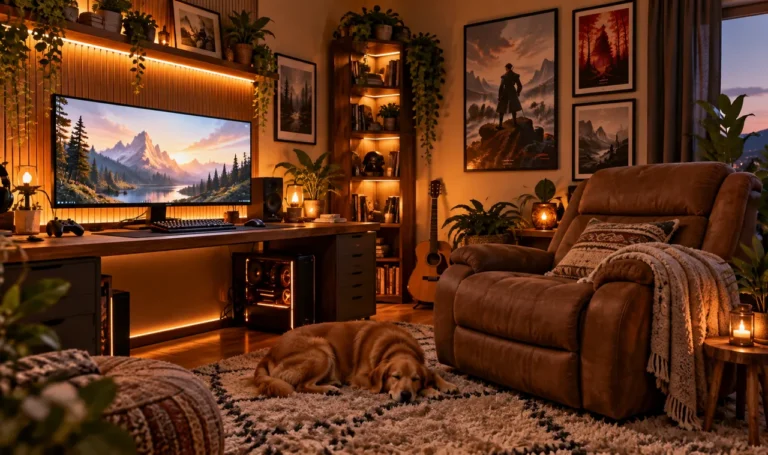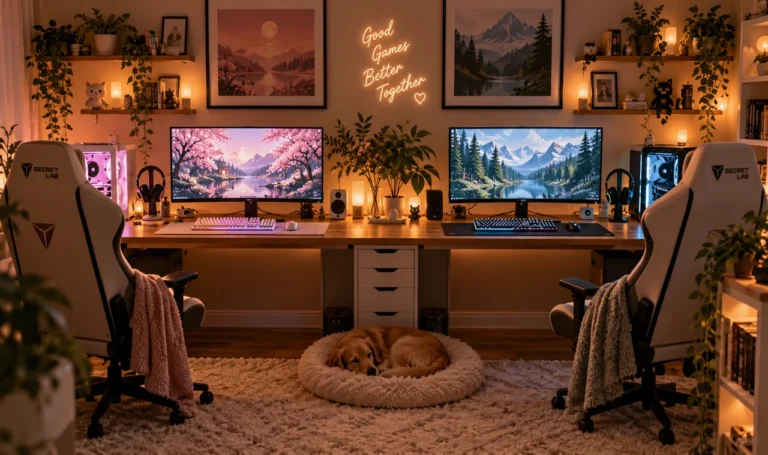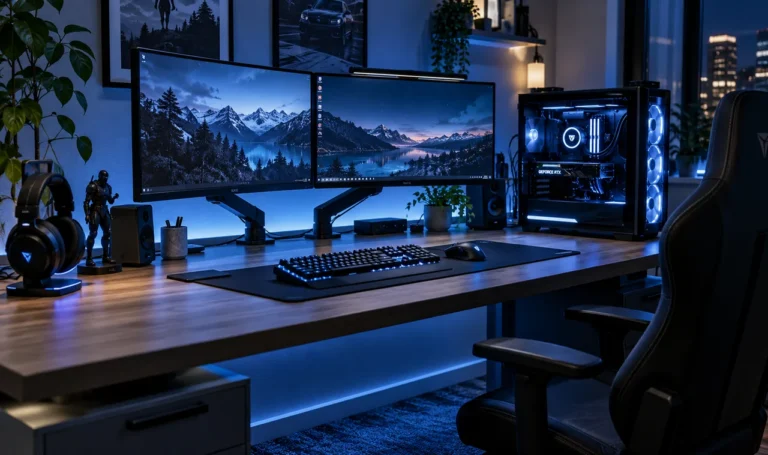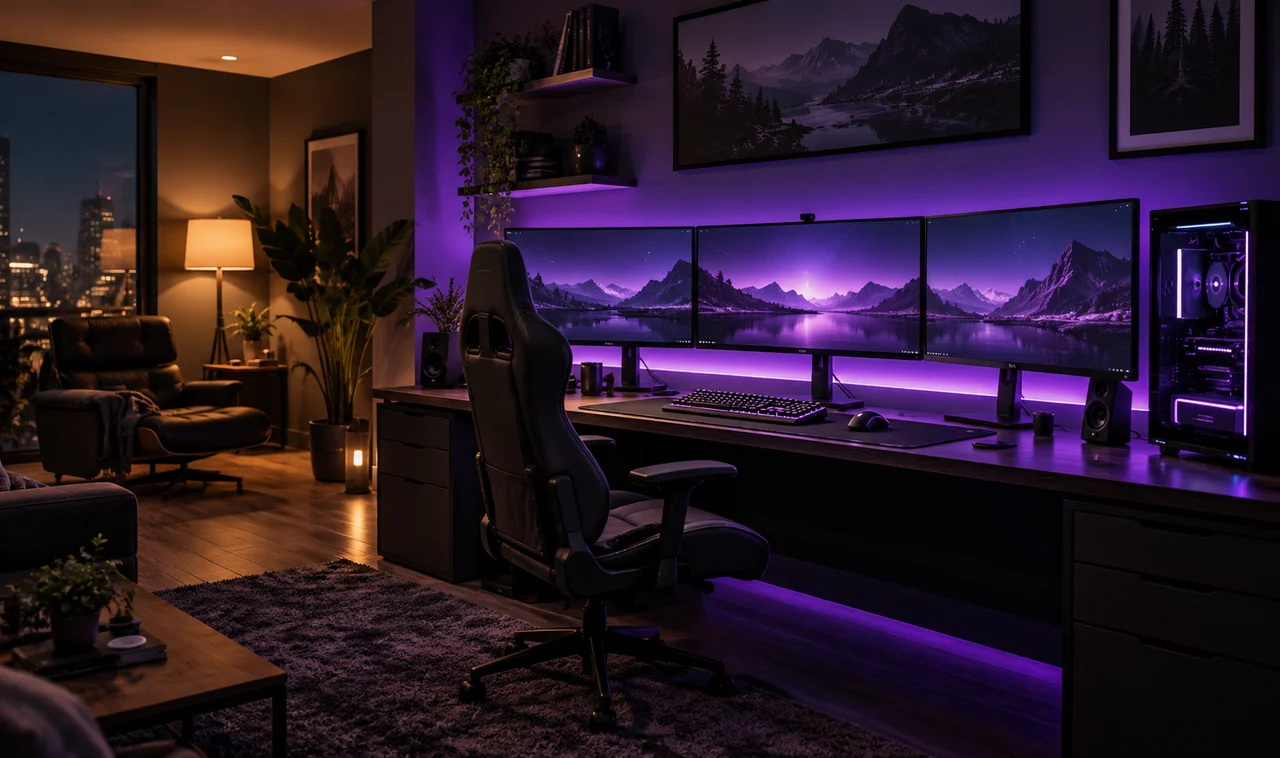
RGB has a reputation problem. Done wrong, it turns a room into a carnival: every color at full brightness, strips on every edge, the whole space shouting at once. Done right, though, RGB is the most flexible lighting a gaming room can have. It can be calm, dramatic, or invisible until you want it.
The difference between tacky and stylish is not how much RGB you own. It is restraint. One color at a time, light placed where it bounces instead of glares, and brightness kept low enough that the room still feels like a room. These 17 RGB gaming room ideas are built on that principle: all the glow, none of the chaos.
You do not need to rebuy your setup. Most of these ideas work with the strips and bulbs you already have, just placed and tuned better. Pick two or three, try them this weekend, and watch your room go from arcade to atmosphere.
1. Use RGB as an Accent, Not the Main Light
Think of RGB the way designers think of art: it should draw the eye, not flood the room. When every strip runs at full brightness, nothing stands out and the room feels flat. Pick one or two accent zones, behind the monitor and under the desk edge, and let the rest of the room stay calm.
Your base lighting should be plain warm white from a lamp or ceiling light. RGB then becomes jewelry on top of a well dressed room instead of the whole outfit. The moment you flip this ratio, the setup starts looking expensive.
2. Pick One Color Scheme and Stick to It
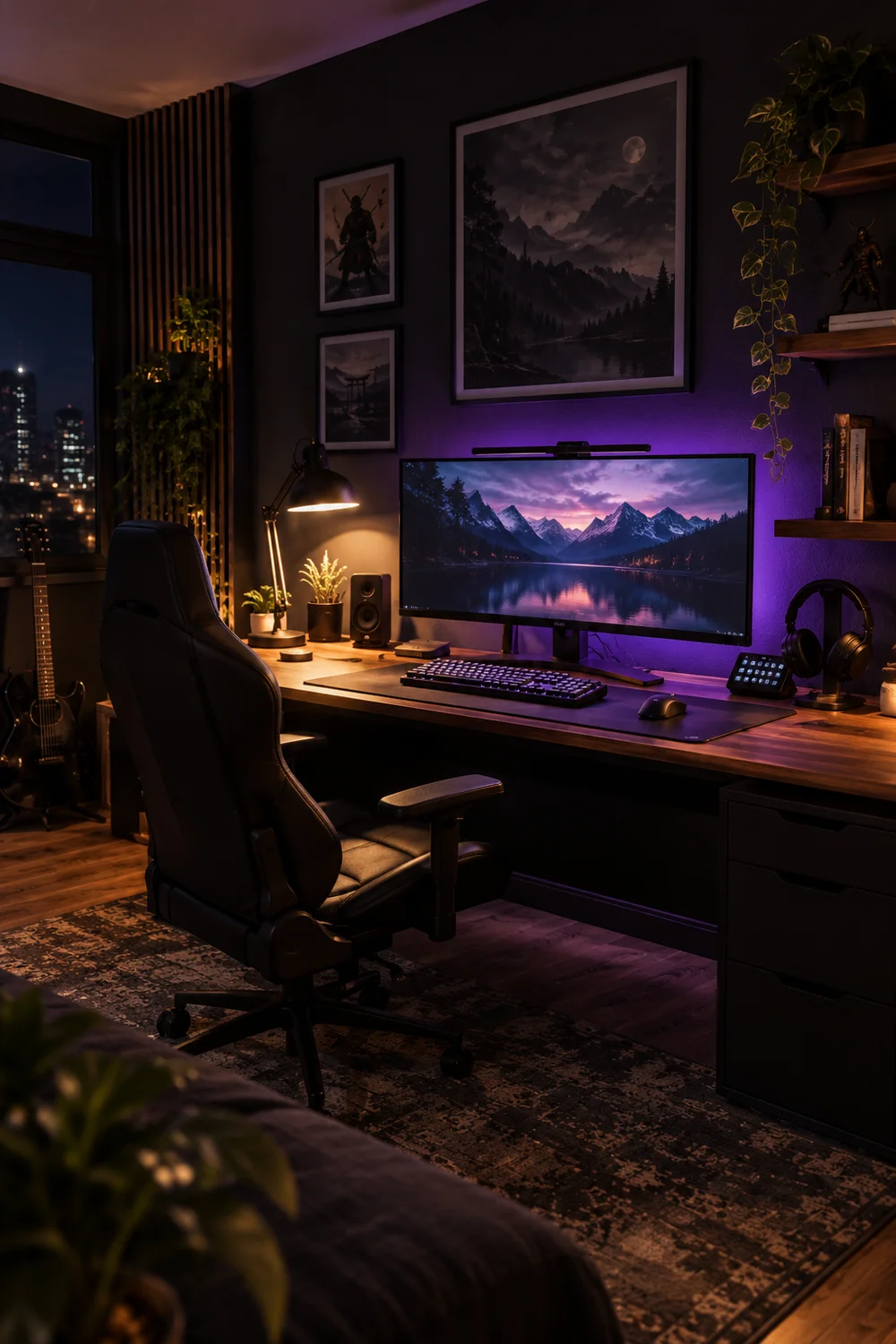
Rainbow wave mode is the fastest way to make RGB look cheap. One color, held across every light in the room, reads as intentional and calm. Deep blue for focus nights, warm amber for relaxed sessions, soft purple when you want drama.
Choose two or three favorite colors and rotate between them, never mixing. Most apps let you save these as presets, so switching the whole room takes one tap. Constraint is what makes color feel stylish.
💡 Quick Tip
Save your favorite colors as presets. One tap should recolor the entire room.
3. Sync Everything Through One App
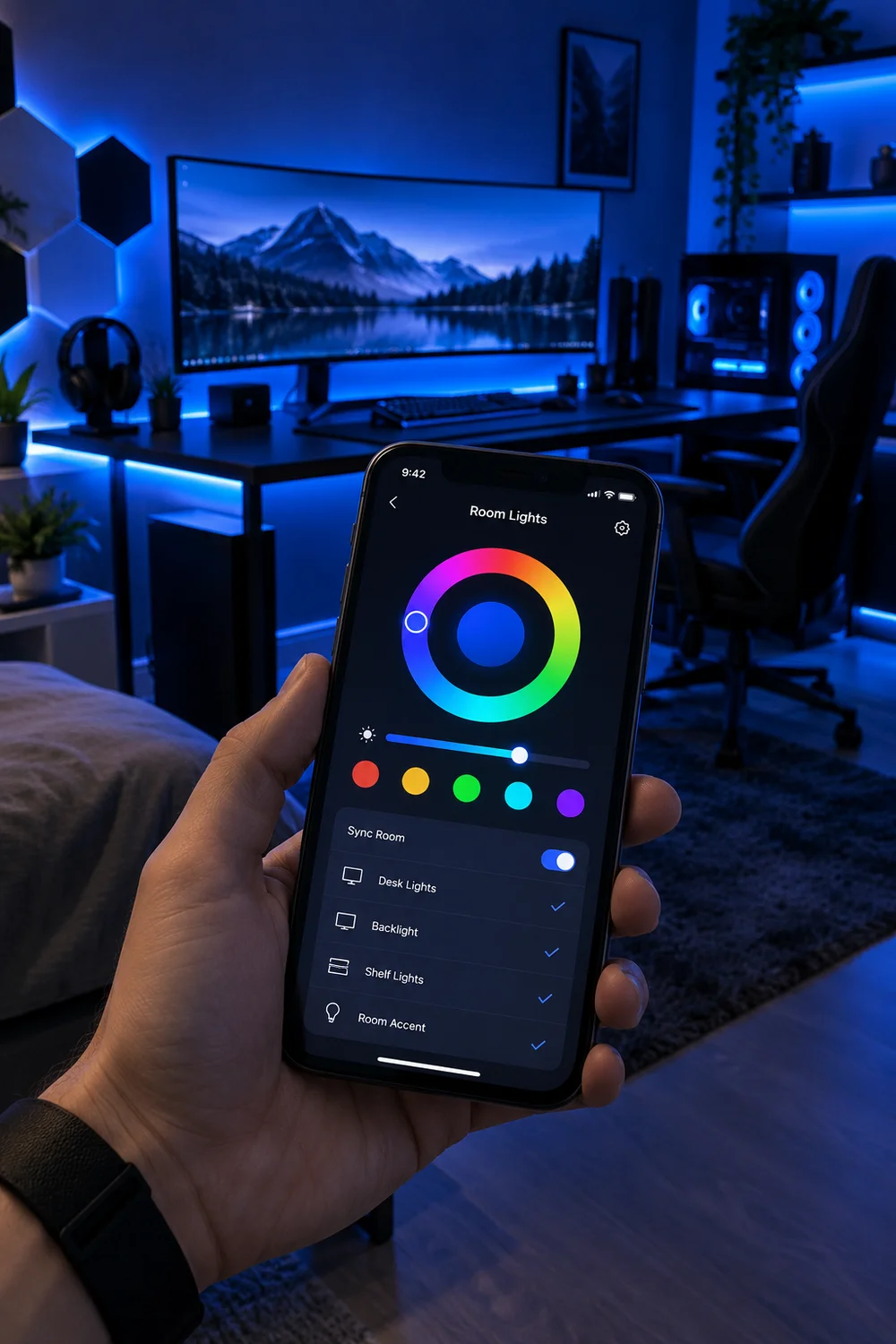
Five lights running five different apps will never look coordinated. They drift out of sync, the colors never quite match, and changing the mood means opening half a dozen apps. Pick one ecosystem and build inside it.
When every strip, bulb, and fan answers to one app, the whole room changes with a single tap. Scenes, schedules, and game integrations all live in one place. It is the least glamorous idea on this list and the one that makes everything else work.
4. Add Bias Lighting Behind the Monitor
A soft glow behind the screen does double duty: it cuts eye strain in dark rooms and makes the whole setup look finished. Set it to a single static color that matches your scheme, not a reactive rainbow.
A simple strip stuck to the back of the monitor is enough. Keep the brightness low, just a halo on the wall behind. It photographs beautifully and your eyes will thank you by midnight.
Stick the strip to the back of the monitor.
Set one static color from your scheme.
Dim it to a soft halo on the wall.
5. Run a Strip Behind the Desk Edge
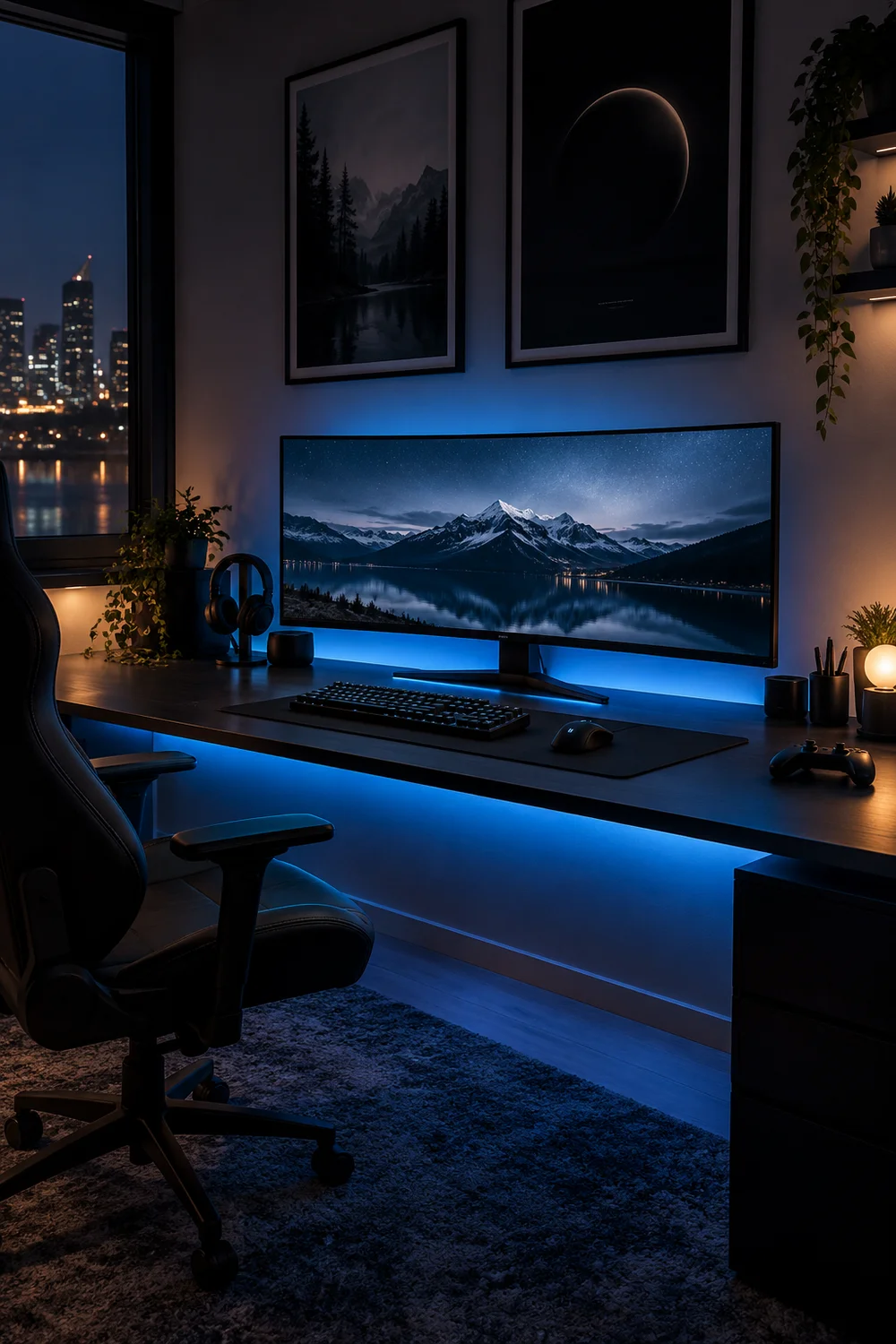
The front edge of your desk is prime real estate for glow. A strip mounted underneath, facing the wall or the floor, throws a soft wash of color without any visible hardware. From your chair you see the light, never the source.
Face it backward toward the wall for the softest effect. This one strip, dimmed low, does more for the room’s mood than three strips glaring from shelves.
Strips facing you. Bright dots, harsh glare, hardware on show.
Strip hidden under the edge. You see the glow, never the source.
6. Bounce Light Off the Wall, Not Your Gear
Light pointed directly at you is glare. Light bounced off a wall is atmosphere. Angle your strips and lamps so they wash a blank wall or the ceiling, and the color spreads soft and even across the room.
This is why behind the desk and behind the monitor work so well: the wall becomes a giant diffuser. Direct light shouts. Bounced light glows.
Direct light shouts. Bounced light glows. Always aim at a surface, never at your eyes.
7. Build Scenes for Different Moods
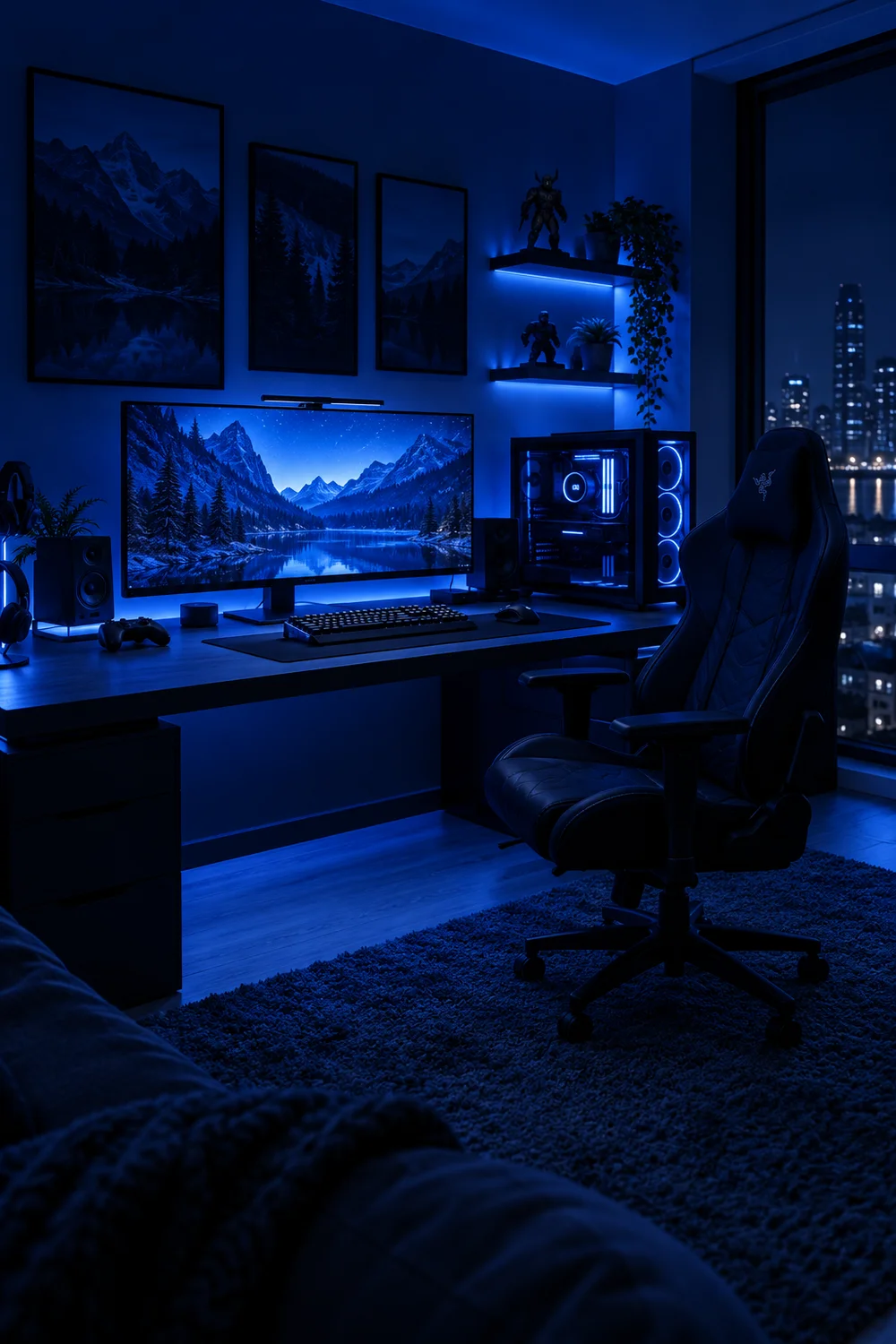
One static color gets boring, but rainbow chaos is not the answer. The middle ground is scenes: saved presets for different moments. A cool blue for ranked nights, a warm amber for story games, a dim red for late horror sessions.
Build three or four scenes and switching the room’s mood becomes a ritual, like picking a playlist. It keeps RGB feeling fresh without ever looking random.
Starter scene pack
8. Hide the Cables So the Light Looks Intentional
Nothing ruins RGB faster than a glowing strip with a black cable dangling beside it. Route every power cable behind furniture, through raceways, or under the desk before you judge how the light looks.
Clean installation is what separates stylish from messy. The light should appear to come from nowhere. Ten minutes of cable routing upgrades a basic strip into a built-in look.
Route cables behind furniture and through raceways.
Leaving power cables dangling next to the glow.
9. Choose Diffused Strips Over Bare Diodes
Bare LED dots scream DIY. A diffuser, a frosted channel or a strip designed with a milky cover, turns those dots into one smooth line of light. It is the single biggest visual upgrade per dollar in RGB.
Aluminum channels with diffusers also protect the strip and make mounting cleaner. If your current strips show individual dots, covers are the fix, not new strips.
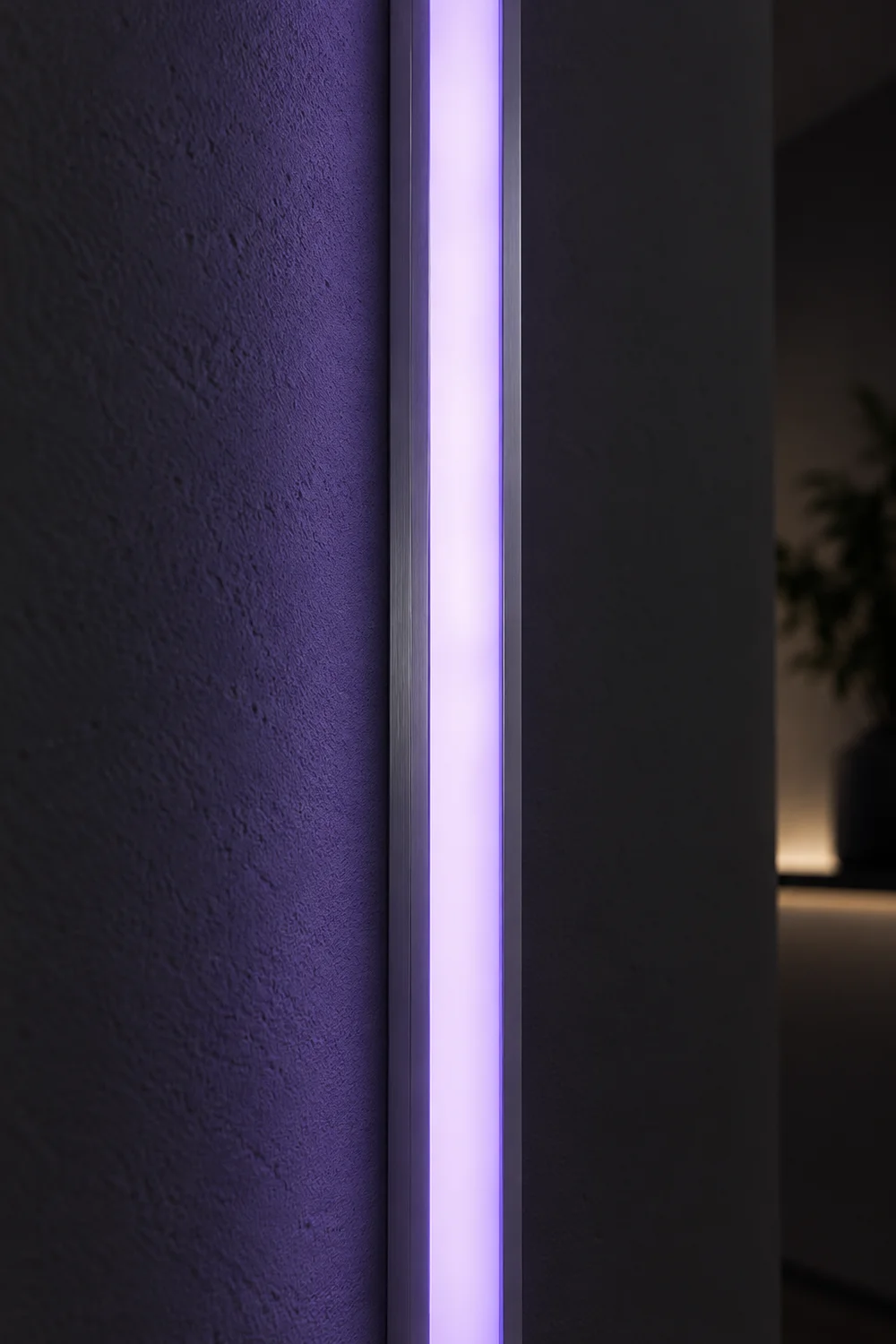
| Bare diodes | Diffused strip |
|---|---|
| Visible dots, harsh spots | One smooth line of light |
| Looks homemade | Looks built in |
| Exposed and fragile | Protected in a channel |
10. Light Your Shelves From the Edge
Shelves full of games and figures look flat under room light. A slim strip along the front edge of each shelf turns the collection into a display. The light grazes across the spines and boxes, and the shelf itself glows.
Keep it to the same single color as the rest of the room. A shelf lit in a matching tone looks curated; one lit in rainbow looks like a toy store.
11. Add a Floor Glow Under the Desk
Light does not have to live at eye level. A strip under the desk, washing the floor, lifts the whole setup visually. The desk appears to float, and the room gains depth without any new furniture.
This works especially well on hard floors where the glow pools softly. Keep it dim. Floor glow is background music, not a solo.
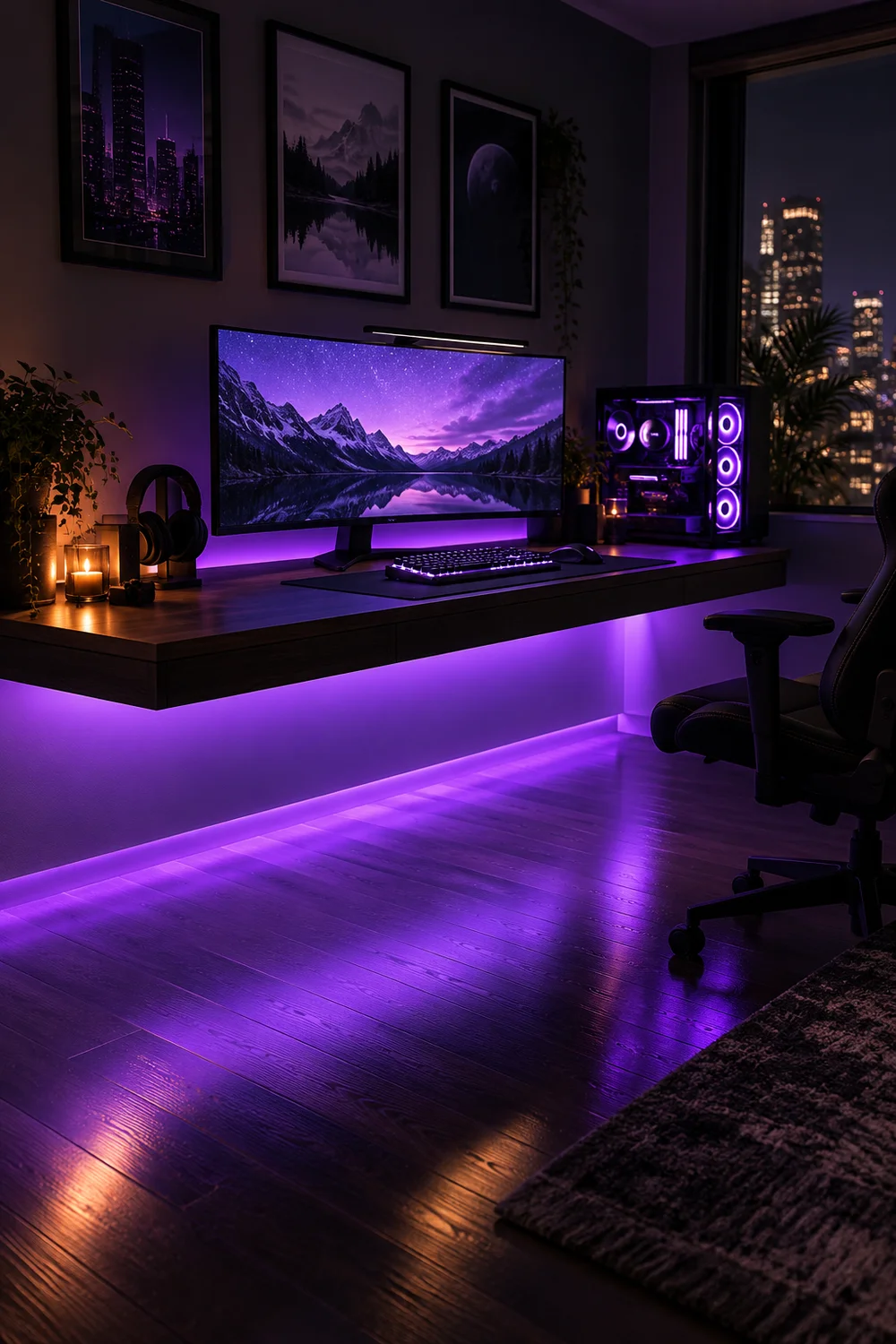
12. Keep One Statement Piece
One hero object gives the room a focal point: a PC with a glass panel, a backlit keyboard, a neon-style sign in your favorite color. Let it be the brightest thing in the room and keep everything else as supporting cast.
The rule is one. Two statement pieces compete; three is a carnival again. Pick the piece you love most and dim the rest around it.
💡 Quick Tip
If everything is the statement, nothing is. Choose one hero and dim the rest.
13. Turn the Brightness Down
Here is the secret most people miss: stylish RGB is dim RGB. Run your strips at thirty to fifty percent and the color turns rich and moody instead of harsh. Full brightness washes out the color and lights the room like a convenience store.
If your app has a global brightness control, set it once and forget it. Every scene inherits the restraint automatically.
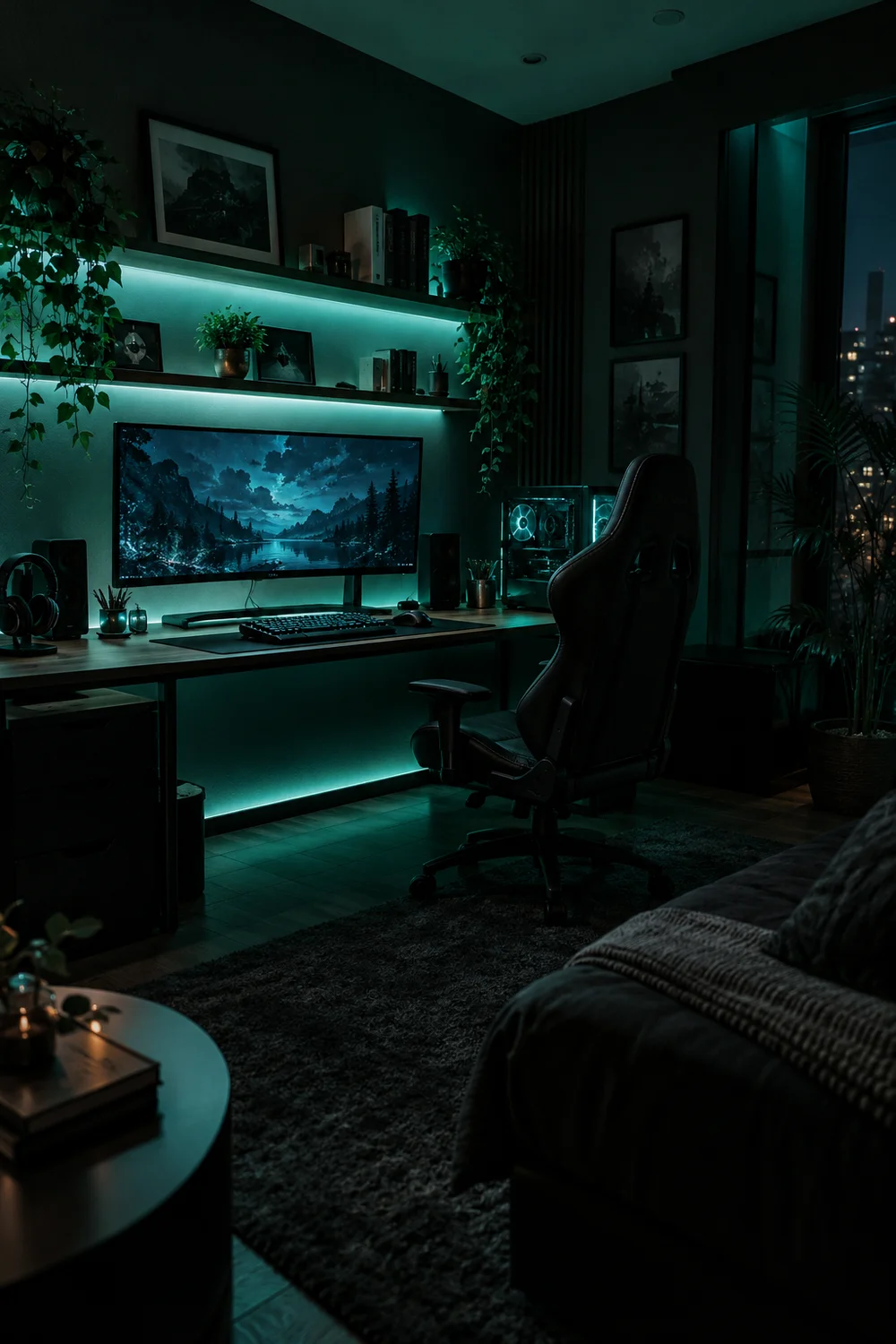
14. Pair RGB With Warm White Base Lighting
RGB alone makes a room feel cold and artificial. A warm white lamp or ceiling light underneath it all keeps the space feeling like a home. The warm base handles visibility; the RGB handles mood.
Think of it as layers: warm white at sixty percent for the room, color at thirty for the atmosphere. Together they look designed. Alone, each looks incomplete.
Warm white lamp for base visibility.
RGB at low brightness for mood.
Balance the two until the room feels layered.
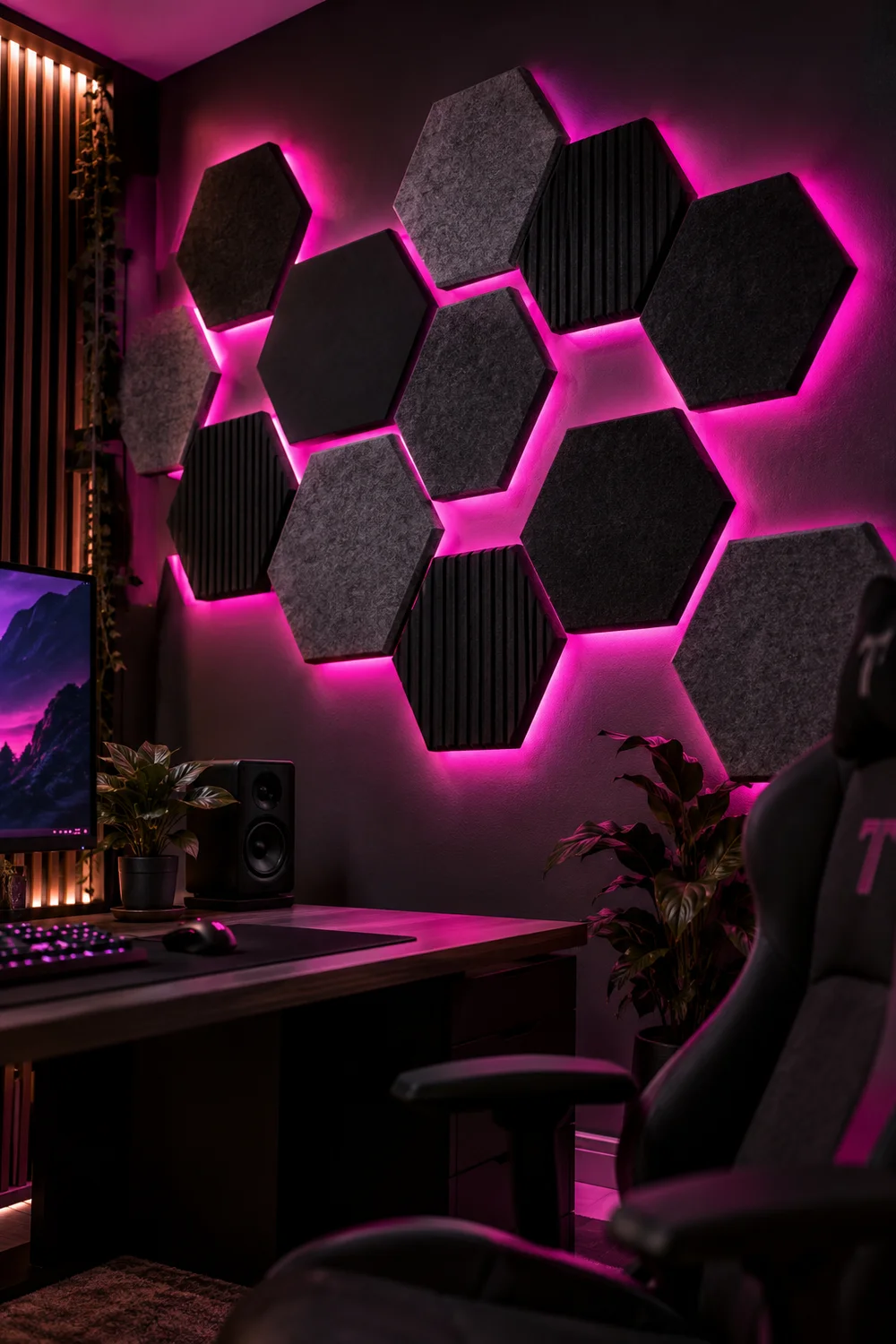
15. Backlight Your Wall Panels
Acoustic or decorative wall panels become twice as striking with light behind them. The glow outlines each panel and throws soft shadows that give the wall depth and texture.
Mount the strip a few inches behind the panel edge so the light spills evenly. One color, low brightness, and a flat wall suddenly has architecture.
Panel backlight checklist
16. Keep the Desk Surface Matte
Glossy desks turn every LED into a smeared reflection. A matte desk surface, wood, matte laminate, or a large desk mat, absorbs the light instead of bouncing it back at your eyes.
This is invisible design: nobody notices the lack of reflections, they just feel the room is calmer. If your desk shines, a big matte mat is the fastest fix.
Nobody notices the absence of reflections. They only feel that the room is calmer.
17. Know When to Turn It All Off
The most stylish RGB move is restraint at the right moment. Movie night, reading, winding down: kill the color and let the room go warm and dark. A room that can be dramatic and calm is more impressive than one stuck on glow.
Put an all-off scene one tap away. The contrast makes the color feel special when it returns, instead of wallpaper you stopped seeing.
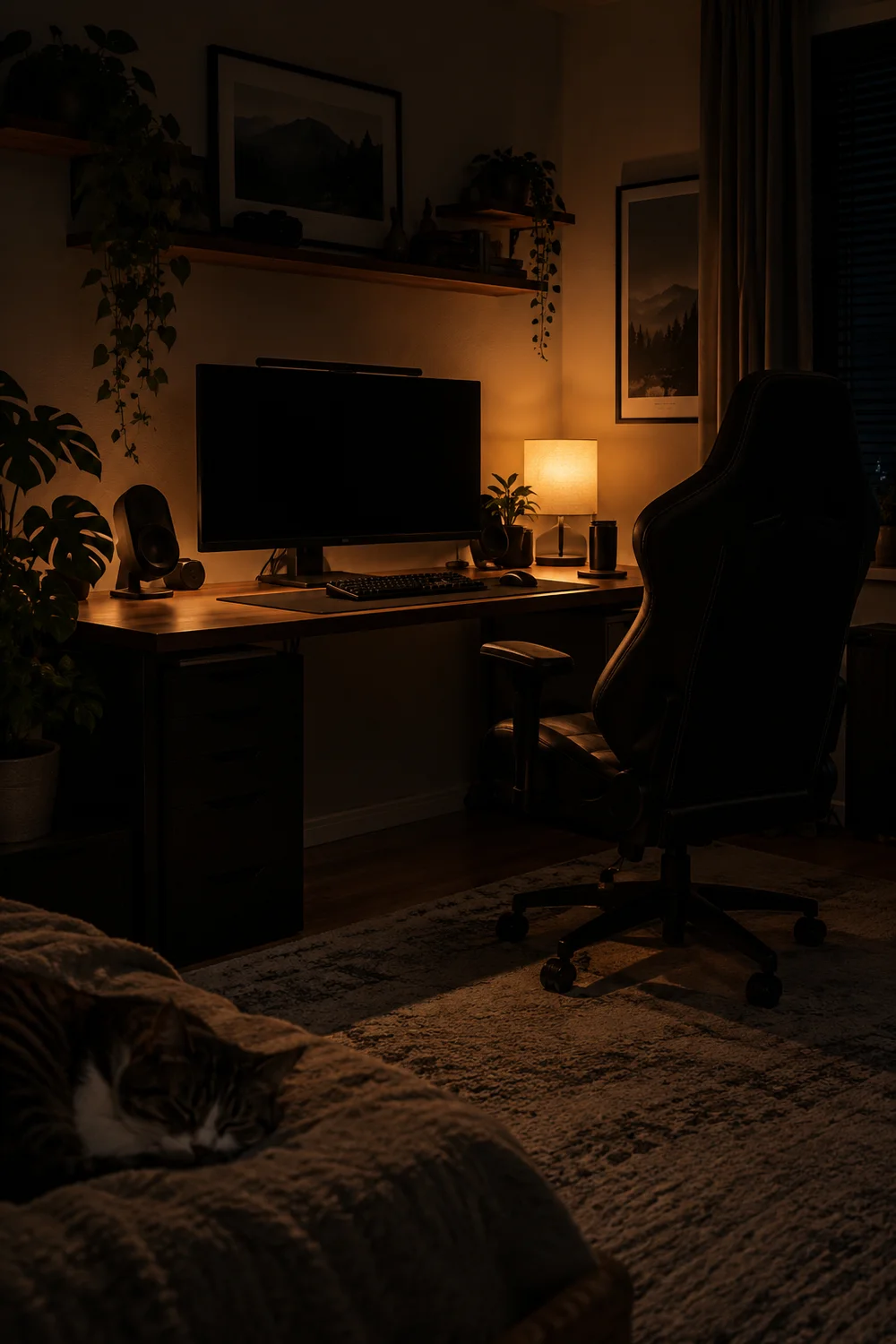
Color becomes wallpaper. You stop seeing it within a week.
Color feels special every time because the room can also be calm.
Wrapping Up
Stylish RGB is quiet RGB. One color, low brightness, light that washes walls instead of stabbing eyes. Once you see the difference, you cannot unsee it, and every future lighting purchase gets easier.
Save this list for the next time your room starts drifting back toward rainbow chaos. Then pick one idea tonight and tune your lights before your next session. Pin your favorite setup for later, and enjoy the glow.
📌 Start tonight