Small bedrooms punish every bad decision. A plant on the floor becomes an obstacle course at midnight, and three pots on the dresser leave no room for the lamp. So most people in tiny rooms give up on plants entirely, which is a shame, because small rooms benefit from greenery more than big ones do.
These 21 small-bedroom plant ideas are built around one rule: not a single square foot of floor lost. Every idea climbs a wall, hangs from something, or fits on a surface you already use. They work for rentals, dark rooms, and people who water only when they remember.
You also do not need perfect light. Most of these ideas use plants that tolerate shade, and the few sun lovers sit exactly where the sun lands, on the sill or by the glass. Pick plants that match the light you have instead of fighting it, and care stays easy.
Start with the wall or window you ignore most. That dead space is about to become the greenest part of your room.
1. Mount a Floating Shelf for Trailing Plants
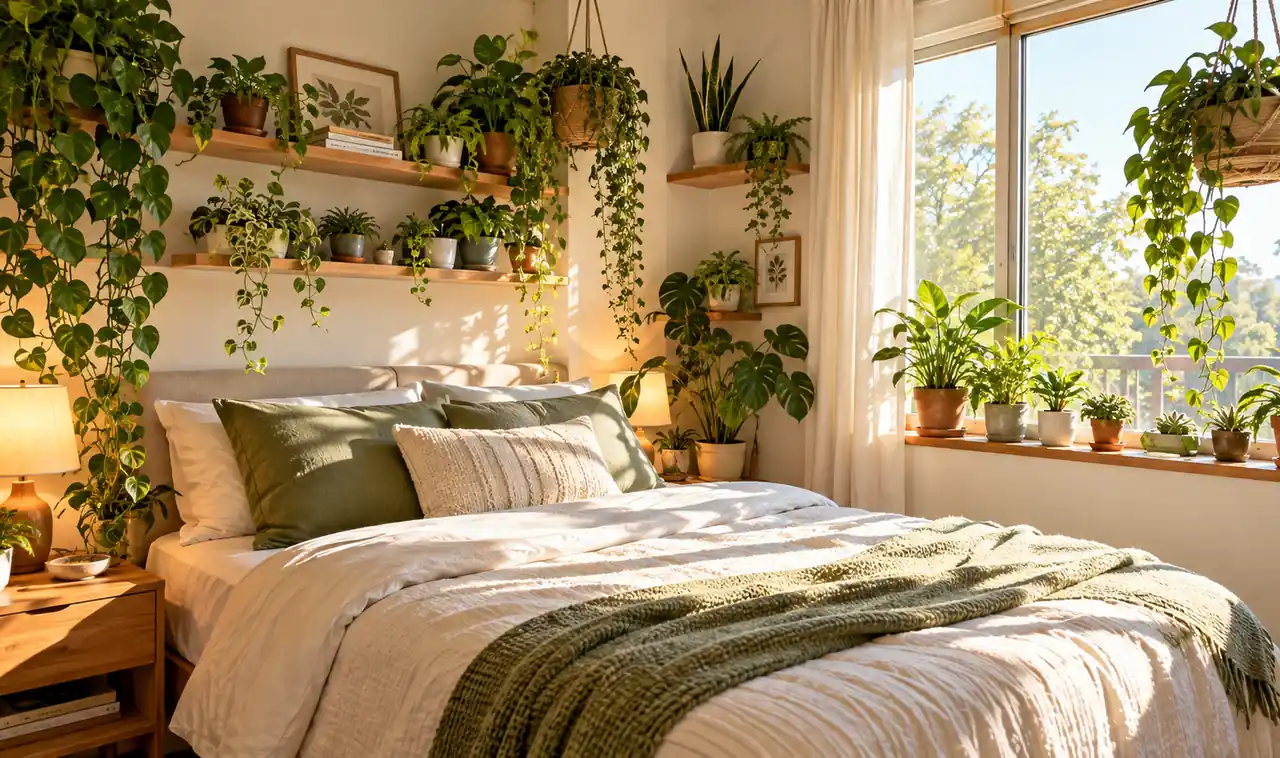
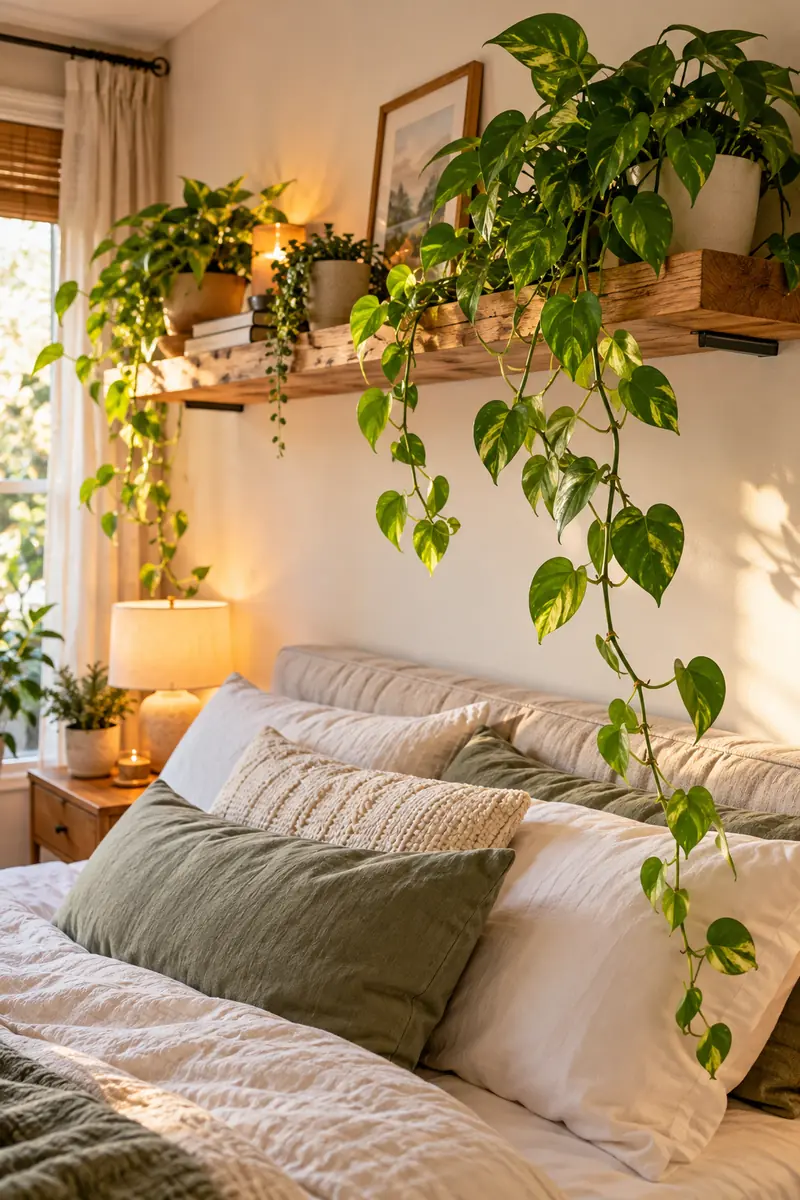
Walls do nothing in most bedrooms. A single floating shelf changes that, giving trailing plants a home that costs zero floor space.
Mount it above the dresser or beside the window, then let pothos or philodendron spill over the edge. The vines draw the eye along the wall instead of across the floor, which makes the room feel wider than it is.
2. Hang One Macrame Planter by the Window
A single hanging planter does more for a small room than five floor pots. It pulls greenery up to eye level, where you actually see it, and leaves every inch of floor untouched.
Hang it in the brightest corner of the window, high enough to clear your head. A spider plant or fern stays light and full, and the gentle sway adds movement to a still room.
💡 Quick Tip
Use a swag hook with an adhesive base if you rent, so you get the hanging look without drilling the ceiling.
3. Turn the Windowsill Into a Mini Greenhouse
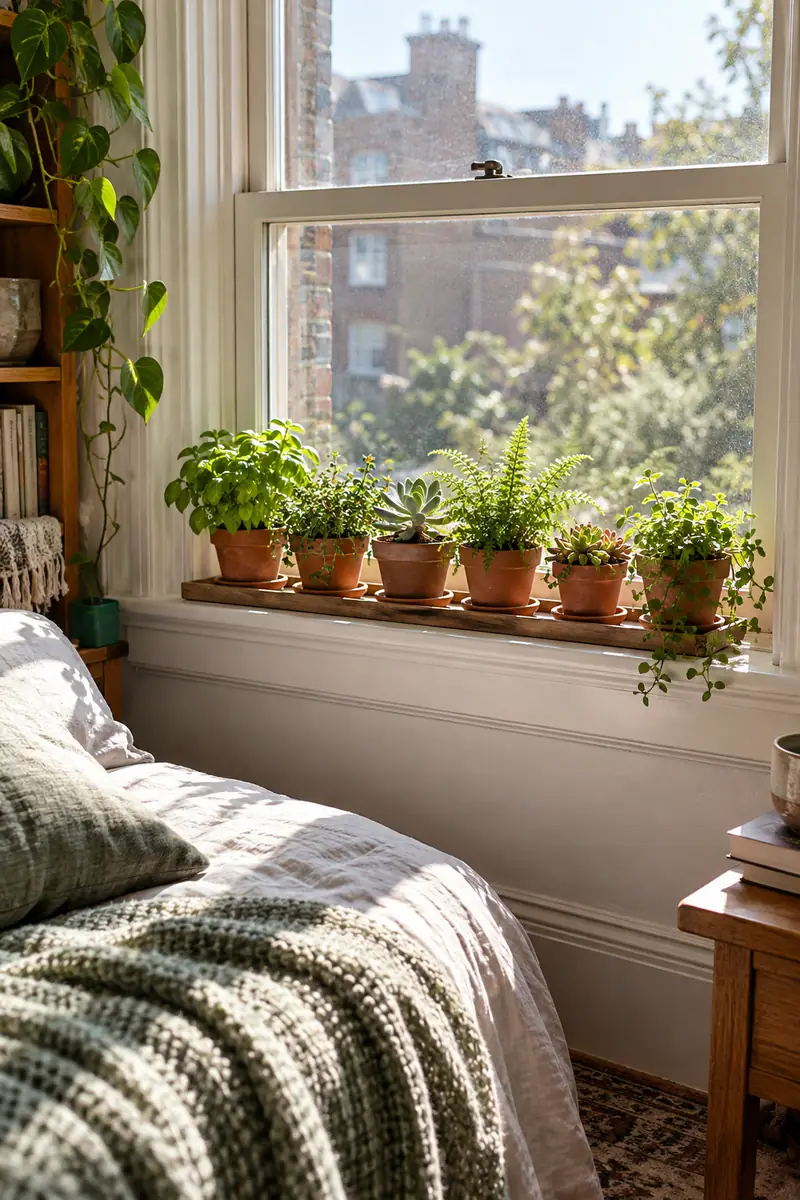
The windowsill is the most underused surface in a small bedroom. It gets the best light in the room and costs nothing to claim.
Line it with small pots in a row: herbs, succulents, or tiny ferns. A narrow tray underneath catches water and keeps the sill clean. Because the plants sit in prime light, even fussy varieties stay happy here with little effort.
4. Slide a Tall Narrow Plant Stand Into the Corner
Corners in small bedrooms usually hold nothing but dust. A tall, narrow plant stand turns that dead triangle into a vertical garden.
Look for a stand with three or four tiers that gets narrower toward the top. It holds several plants in the footprint of one pot. Put the light lovers on top and the shade tolerant ones below.
What to grab first
5. Hang a Wall-Mounted Pocket Planter
Pocket planters are fabric or felt panels with slots for small plants, and they hang flat against the wall like art. In a small bedroom, they give you a living wall in the space of a poster.
Mount one beside the bed or on the back of the door. Fill the pockets with pothos cuttings, small ferns, or air plants. Water sparingly, since the pockets hold moisture longer than open pots.
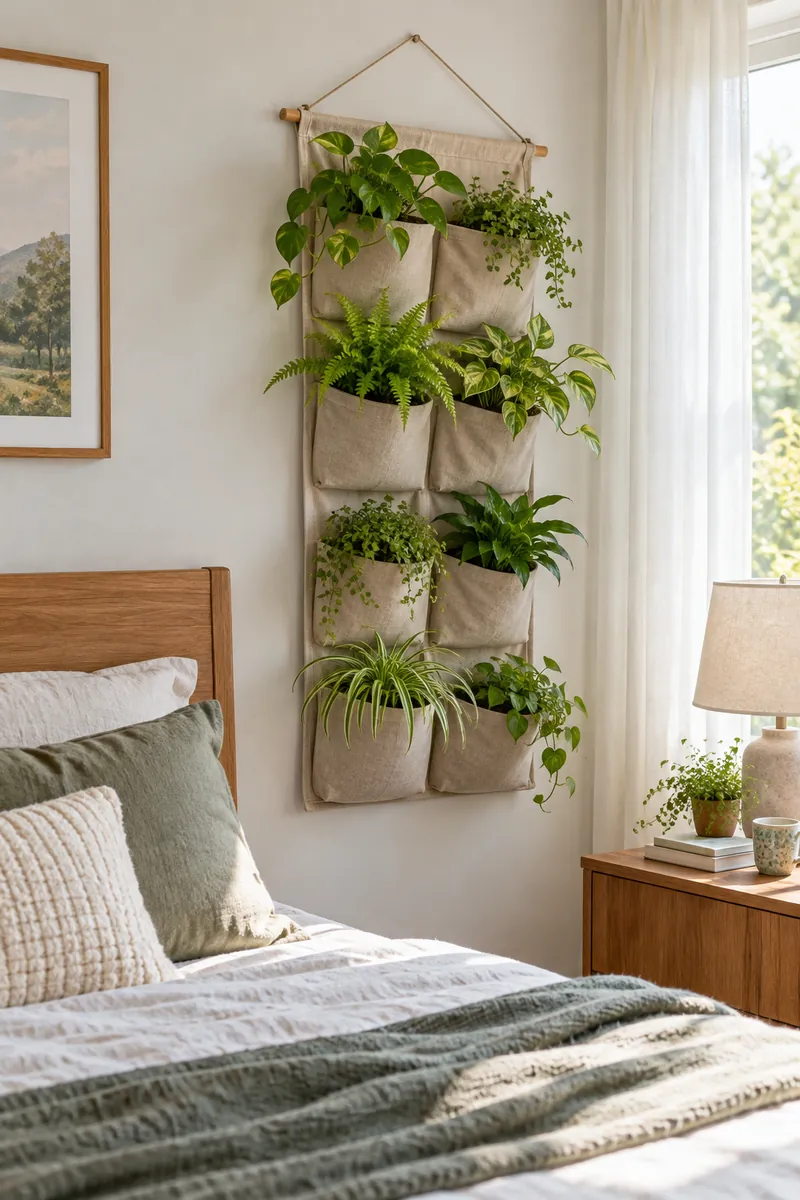
In a small room, the walls are your floor. Anything that hangs flat gives you plants for free.
6. Keep One Statement Plant and Skip the Crowd
Small rooms punish clutter faster than big ones. Five small pots scattered around a tiny bedroom read as mess, while one bold plant in the right spot reads as style.
Pick a single medium plant, a monstera, a bird of paradise, or a tall snake plant, and give it the best corner. Let it be the only floor plant in the room. Everything else goes on walls and shelves.
Choose the corner you see first when you enter the room.
Pick a plant with height, not width, so it never crowds the walkway.
Remove every other floor plant and watch the room breathe.
7. Use the Top of the Wardrobe
The top of the wardrobe is a shelf you already own and never use. It sits high, gets decent light, and is completely out of the way.
Trailing plants are perfect here. A pothos or philodendron spills over the front edge and softens the big blank box of the wardrobe. Put the pots in saucers or cachepots, and water with a small can to avoid drips.
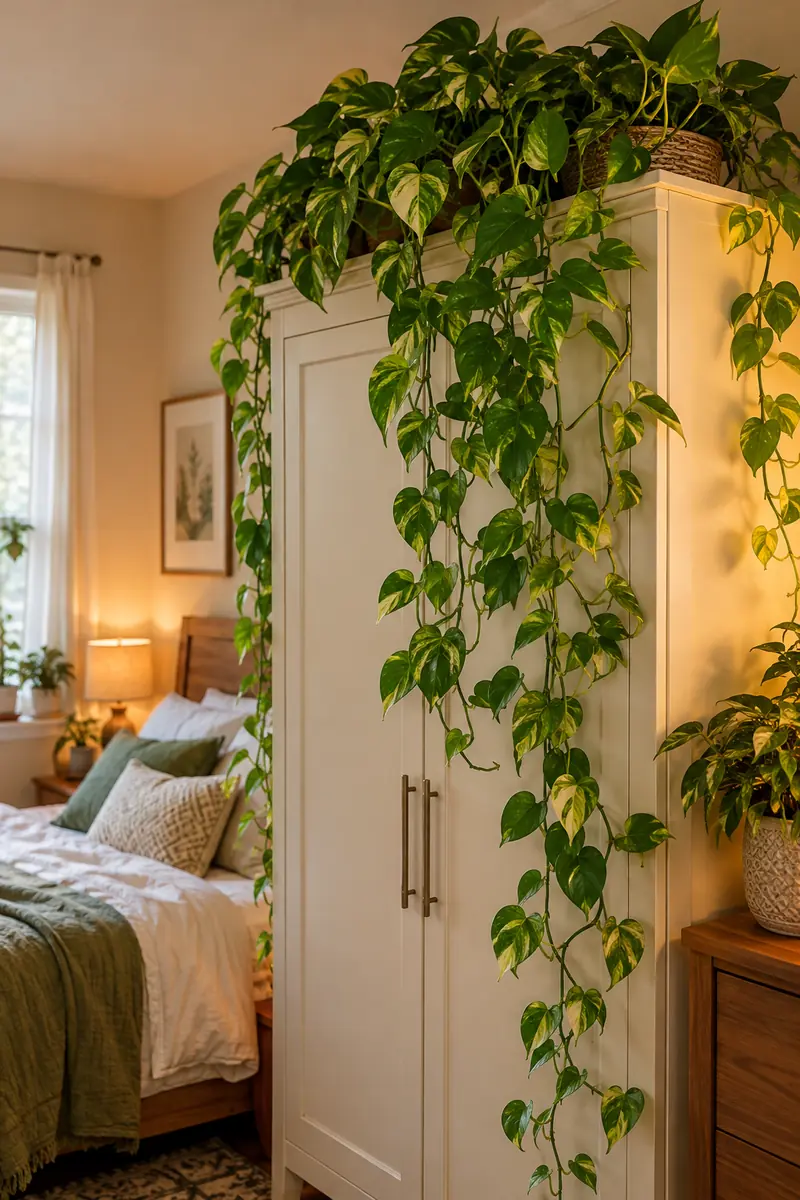
A dusty wardrobe top holding a forgotten box and nothing else.
Green vines spilling over the edge, turning dead space into a feature.
8. Try a Ladder Shelf for Vertical Display
A leaning ladder shelf holds five or six plants in the footprint of one. It leans against the wall, so it needs no mounting, which renters love.
Place heavier pots on the bottom rungs and lighter ones up top. The angled shape keeps every plant visible instead of hidden behind the one in front. Compare it with a bookcase and the ladder wins for plants, since the open rungs let light reach every level.
| Ladder Shelf | Bookcase |
|---|---|
| Open rungs let light hit every plant. | Shelves shade the plants below them. |
| Leans with no drilling needed. | Heavy and eats more floor space. |
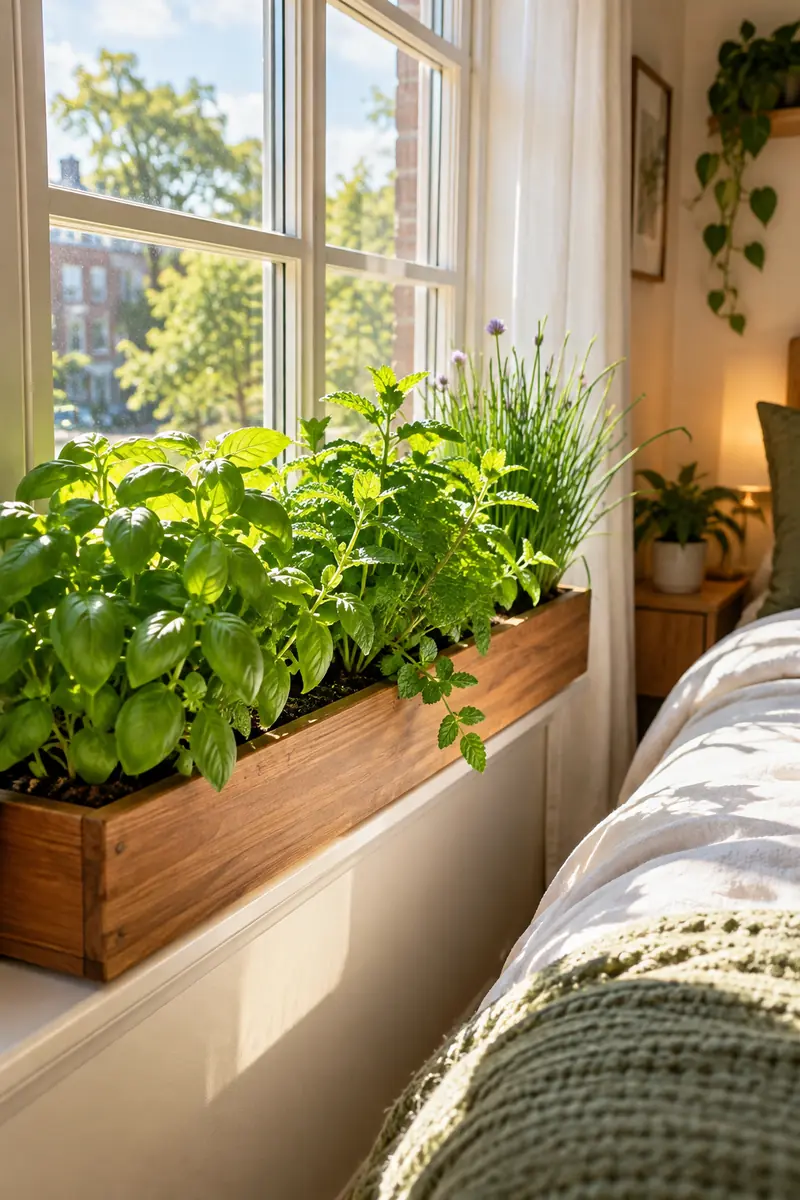
9. Grow Herbs in a Window Box
A window box hangs outside or on the sill, which means the plants live outside your floor plan entirely. In a small bedroom, that is as close to free as plants get.
Mount a box on the inside of the sill or hang it from the window frame. Basil, mint, and chives thrive in the direct light, and you get fresh herbs steps from the bed. The greenery also softens the hard lines of the window.
10. Hang Air Plants From the Curtain Rod
Curtain rods span the whole window and hold nothing but fabric. A few air plants hung from the rod turn it into a floating garden.
Tie small air plants with clear fishing line at different heights so they catch the light. They need no soil and no pots, just a misting twice a week. When the curtains move, the plants sway gently, which feels alive in a way static decor never does.
💡 Quick Tip
Hang them toward the ends of the rod so they never block the light coming through the middle of the window.
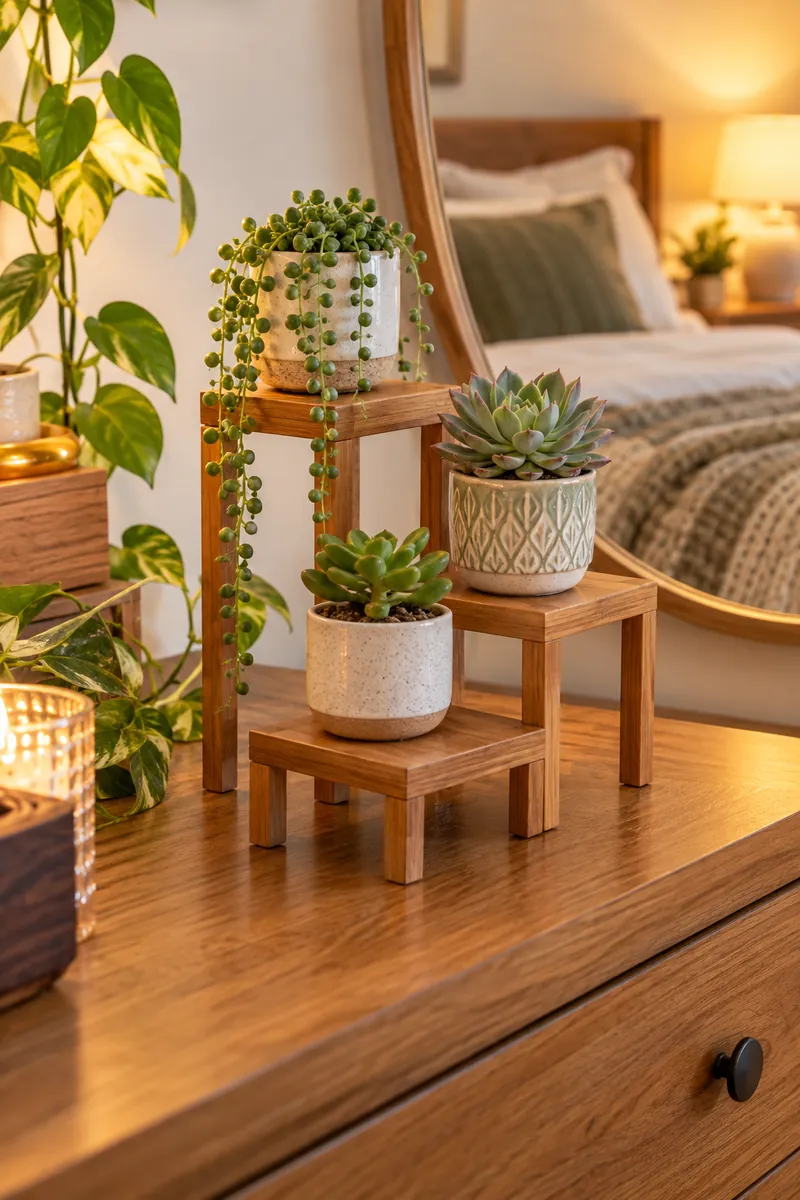
11. Use Stackable Plant Risers on the Dresser
Dressers are wide but shallow, so pots lined up in a row eat the whole surface. Plant risers stack pots vertically, giving you three levels of green in the space of one.
Small wooden or metal risers hold two or three pots each. Put the tallest plant at the back and the smallest in front so nothing hides. The dresser keeps its usable surface and gains a layered display.
Use saucers under every pot to protect the wood.
Keep the tallest plant at the back for balance.
Stacking heavy ceramic pots high, which risks tipping.
Blocking the mirror or lamp you use daily.
12. Choose a Slim Snake Plant for Tight Gaps
Every small bedroom has a gap nobody uses: between the dresser and the wall, beside the bed frame, behind the door swing. A slim snake plant slides right in.
Snake plants grow straight up instead of outward, so they fit where bushy plants never could. They tolerate the low light these gaps usually get and forgive weeks without water. One plant in a dead gap makes the whole room feel considered.
What to grab first
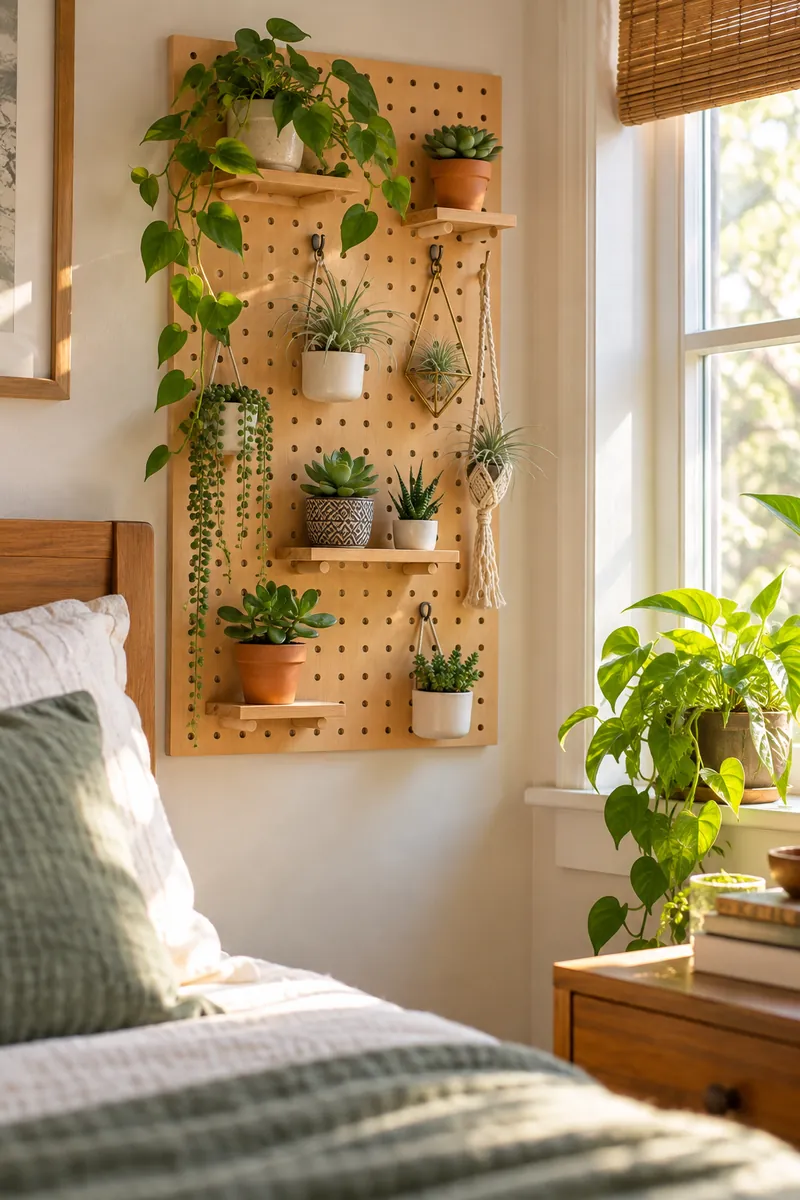
13. Mount a Pegboard for Small Pots
Pegboards are not just for garages. A small pegboard on the bedroom wall holds tiny potted plants on hooks and shelves you can rearrange anytime.
Mount a two by three foot board beside the window. Hang small pots of succulents, air plants, and cuttings from hooks, and move them around as they grow. The whole display stays flat against the wall and changes whenever you want.
14. Give the Nightstand One Mini Plant Only
Nightstands in small bedrooms work hard. Lamp, book, water glass, phone charger. There is room for exactly one small plant, and that discipline is the point.
Pick a single mini succulent or a tiny fern in a pot no wider than your palm. It adds life without stealing surface you need. If the nightstand is also the guest nightstand, a low care plant keeps things welcoming, the same thinking behind preparing a home for Thanksgiving guests.
- ▸One plant, never two, on a small nightstand.
- ▸Pot no wider than your palm.
- ▸Low water needs, since you will forget.
15. Hang a Plant From a Ceiling Hook
The ceiling is the most ignored surface in any bedroom. A single hook and a hanging plant claim it without touching walls, floors, or furniture.
Screw the hook into a joist and hang a pothos or spider plant where it gets light but stays clear of heads. The plant becomes a floating focal point, and the floor below stays completely free. In truly tiny rooms, this one move can be the whole plant strategy.
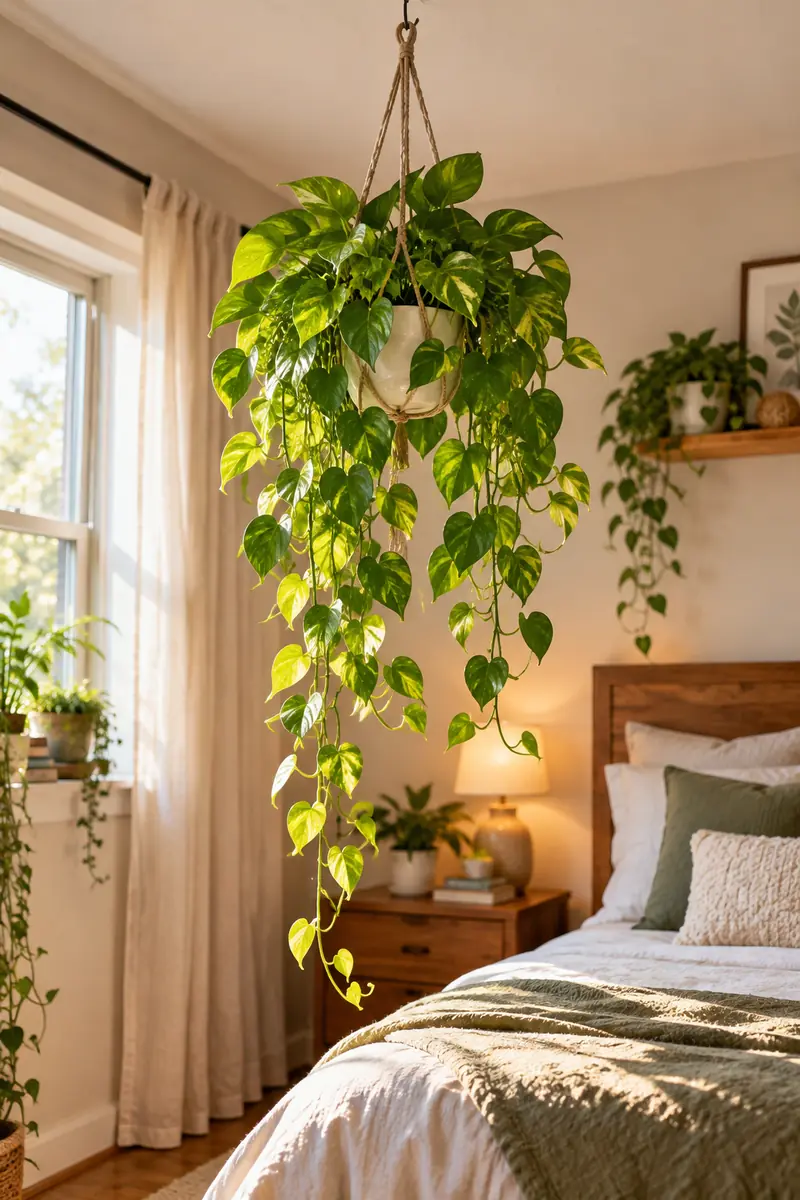
A plain ceiling and a floor crowded with pots you trip over.
One floating plant overhead and a clear floor you can actually walk on.
16. Stick Magnetic Planters on a Metal Board
A metal memo board on the wall is usually for photos and notes. Add small magnetic planters and it becomes a garden you can rearrange with one hand.
Tiny magnetic pots hold air plants or succulent cuttings. They weigh almost nothing and pop on and off the board, so you can redesign the layout whenever the mood strikes. Hang the board near the window for the light the plants want.
Mount a metal board or sheet on the wall near the window.
Fill tiny magnetic pots with air plants or cuttings.
Arrange, rearrange, and mist the plants twice a week.
17. Pick Trailing Plants Over Bushy Ones
Bushy plants grow outward and eat the precious inches around them. Trailing plants grow downward, using air instead of floor.
When every inch counts, choose vines. Pothos, philodendron, string of pearls, and hoya all drape instead of sprawl. One trailing plant on a high shelf gives you the lushness of three bushy pots with none of the footprint.
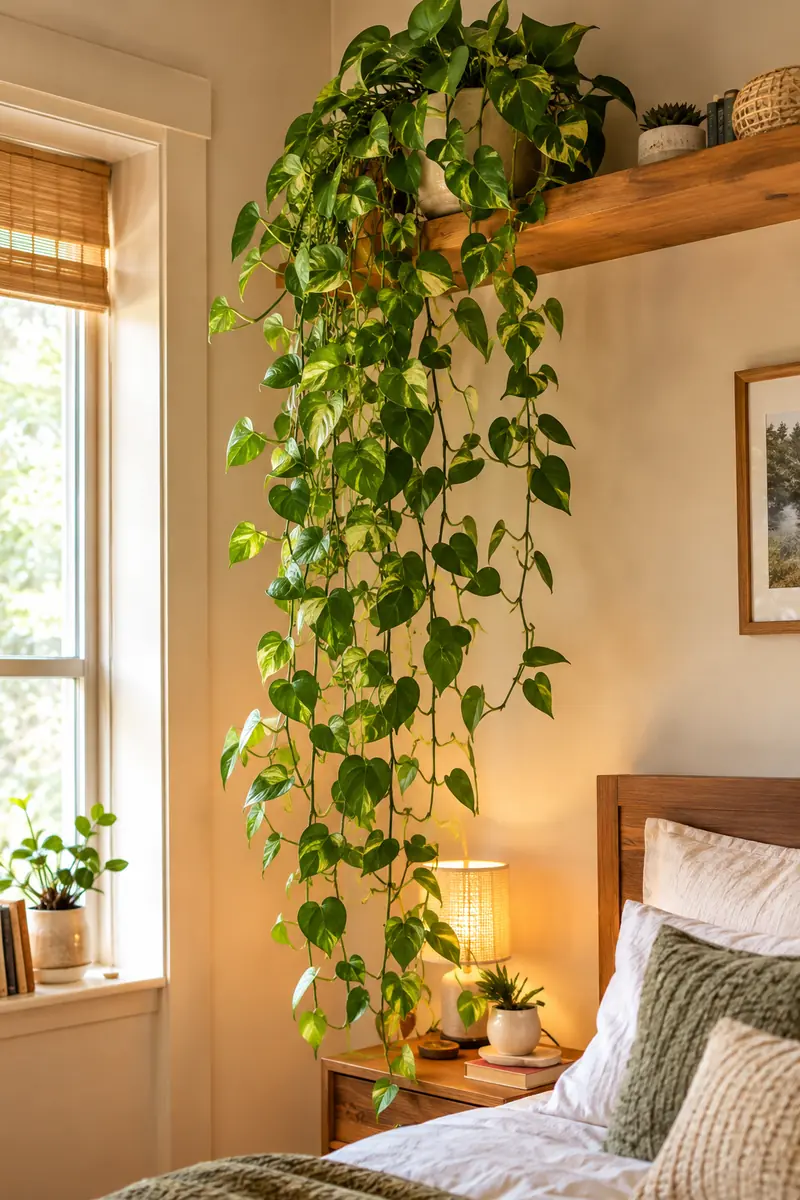
In a small bedroom, growth direction matters more than plant size. Down beats out, every time.
18. Roll a Plant Cart Into the Light
Light moves through a small bedroom during the day, but furniture does not. A rolling bar cart full of plants solves the mismatch.
Load a two tier cart with your sun lovers and roll it to the window in the morning, back to its corner at night. The cart itself takes barely more space than a nightstand, and the mobility means every plant gets its hours. This is the same flexible thinking behind smart small space styling.
💡 Quick Tip
Lock the cart wheels once it is parked so watering never turns into a slow slide across the floor.
19. Build a Green Nook With Corner Shelves
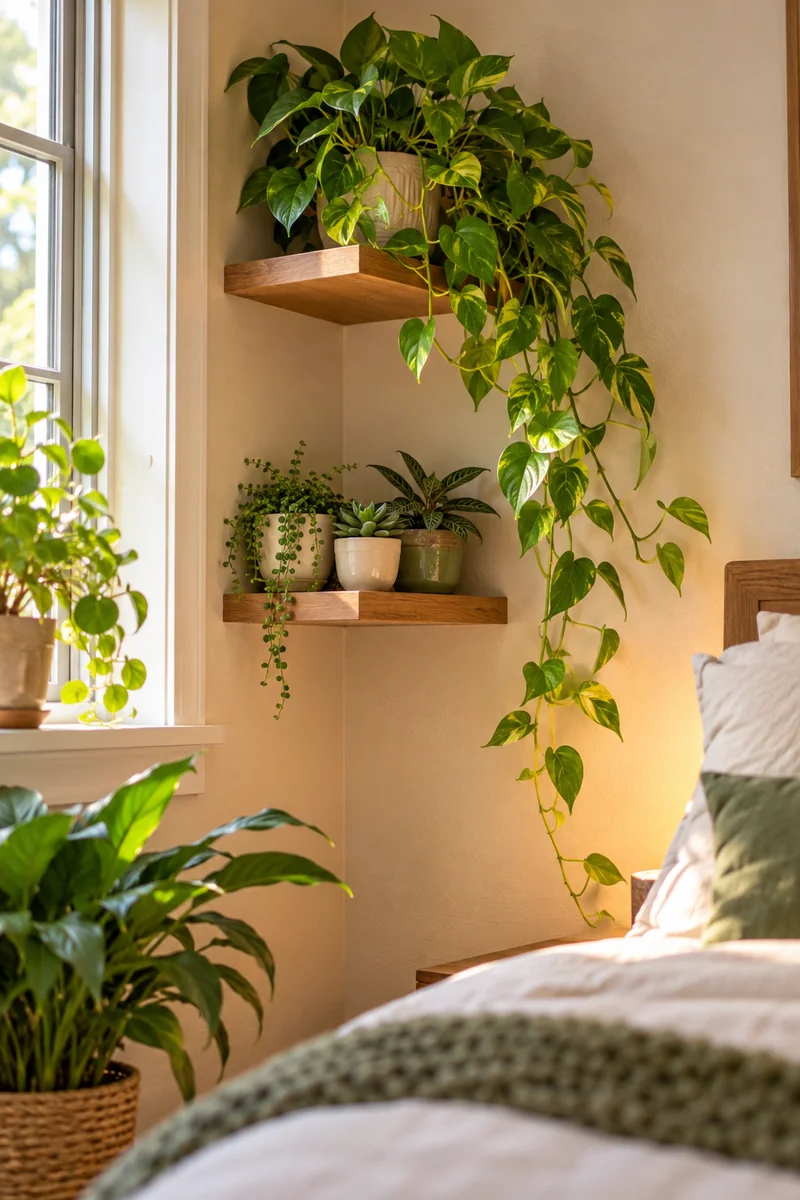
Two small corner shelves, one above the other, create a dedicated plant nook that takes up no usable space at all. Corners are otherwise dead zones, so this is pure gain.
Mount the shelves in the corner that gets the best light. Mix one trailing plant on the top shelf with two or three small upright pots below. The nook becomes a little destination in the room, a spot your eyes rest on.
20. Choose Dwarf Varieties That Stay Small
The simplest space saver is a plant that never gets big. Dwarf varieties give you full sized looks in miniature, with no pruning battles.
Look for dwarf snake plants, petite monstera varieties, and compact ferns. They stay in small pots for years and never outgrow their spot. Compare a dwarf with its full sized cousin before buying, since the difference in mature size is dramatic.
| Dwarf Variety | Stays About |
|---|---|
| Dwarf snake plant | 8 to 10 inches tall |
| Petite monstera | 12 inches, never splits huge |
| Button fern | 6 to 8 inches, compact mound |
21. Use the Headboard Shelf for Tiny Pots
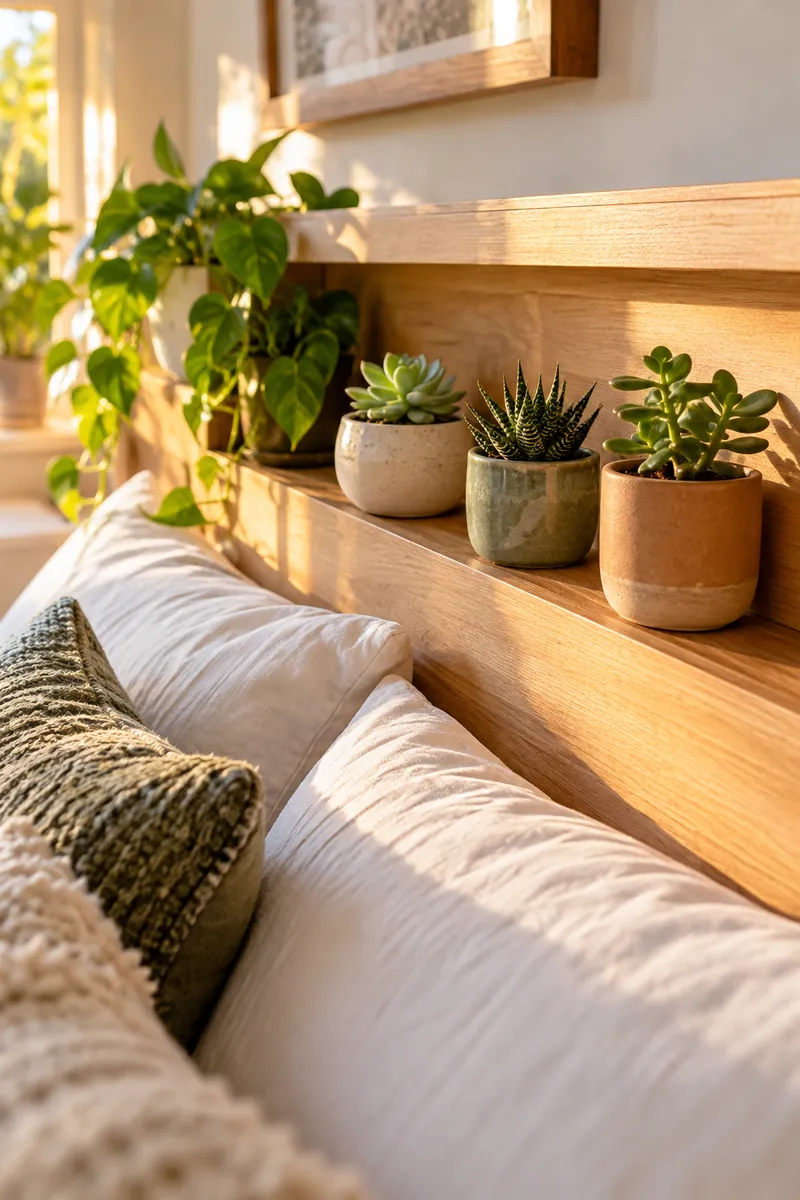
Some headboards come with a built in shelf, and most people pile books on it. Trade half those books for three tiny pots and the bed becomes the greenest spot in the room.
Tiny succulents, mini cacti, or a small air plant in a shell all fit a headboard shelf. They sit at eye level when you lie down, so you see green last thing at night and first thing in the morning. For more ways to layer green around the bed, see our greenery bedroom ideas.
A small bedroom does not need fewer plants, it needs smarter ones. Pick the ideas that use your walls, your window, and your vertical space, and skip anything that touches the floor unless it earns its footprint. One hanging planter and a lined windowsill can make a tiny room feel like a greenhouse, while the floor stays clear for living. These small-bedroom plant ideas prove that square footage was never the real limit, imagination was.
Save this list for your next tiny room refresh, and pin the idea that fits your space so it is ready when you are.