Most bedrooms feel finished once the bed is made and the curtains are up. Then you walk in at the end of a long day and something still feels flat. That missing piece is usually alive. A plant in the corner softens hard furniture, a trailing vine makes a plain wall feel layered, and even one small pot on the nightstand changes how the whole room breathes.
The good news is you do not need a green thumb or a sunny loft to pull this off. These 25 greenery bedroom ideas work for dark rooms, tiny rooms, and people who forget to water. Some take five minutes and a grocery store plant. Others are small weekend projects that pay off every morning when you wake up to leaves instead of blank walls.
Pick the one that fits your light and your schedule, start there, and let the rest of the room catch up. Your bedroom is about to feel calmer, fresher, and a lot more like you.
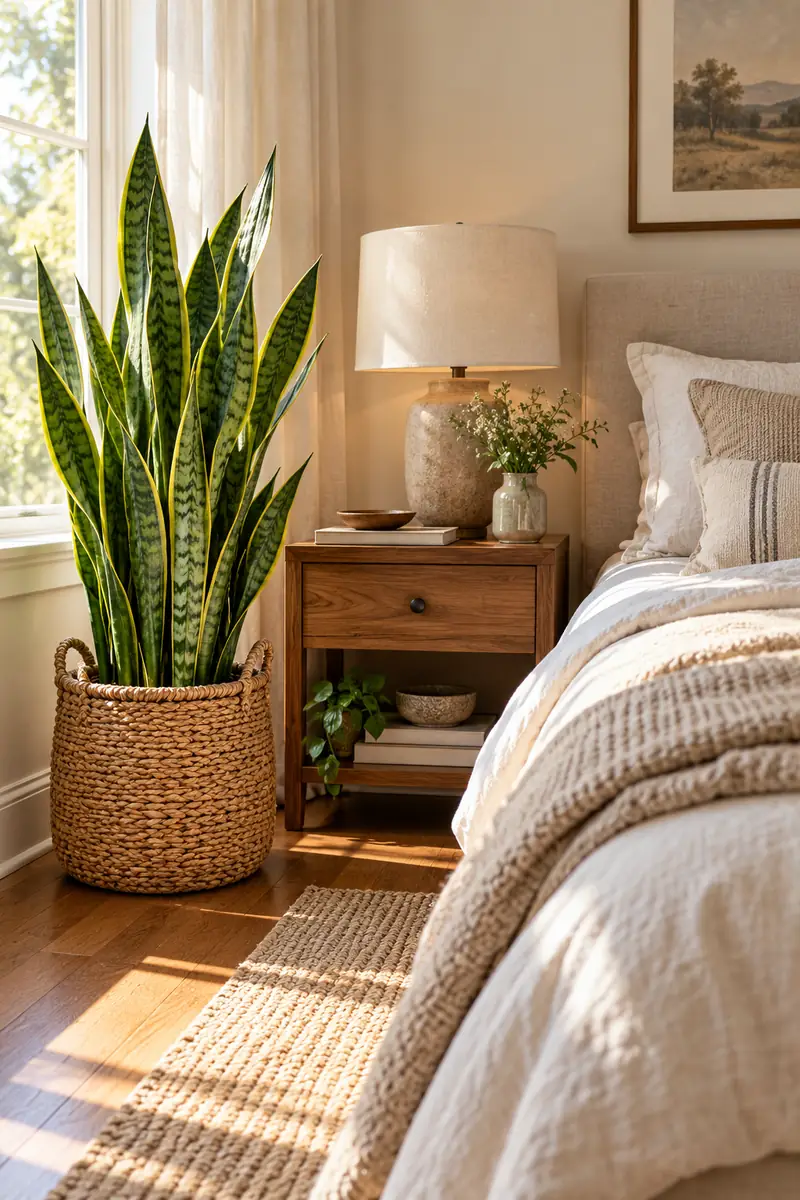
1. Park a Snake Plant in a Woven Basket by Your Nightstand
Nightstands collect clutter fast. A phone charger, a book you stopped reading, a glass that never made it back to the kitchen.
A snake plant in a woven basket fixes the look without adding to the mess. It stands tall, needs almost nothing, and the basket hides the plastic nursery pot. Snake plants handle low light and missed waterings better than almost anything else you can buy.
Put it on the side of the bed you see first in the morning, so green is the first thing you notice.
2. Let a Pothos Trail Down From Your Headboard
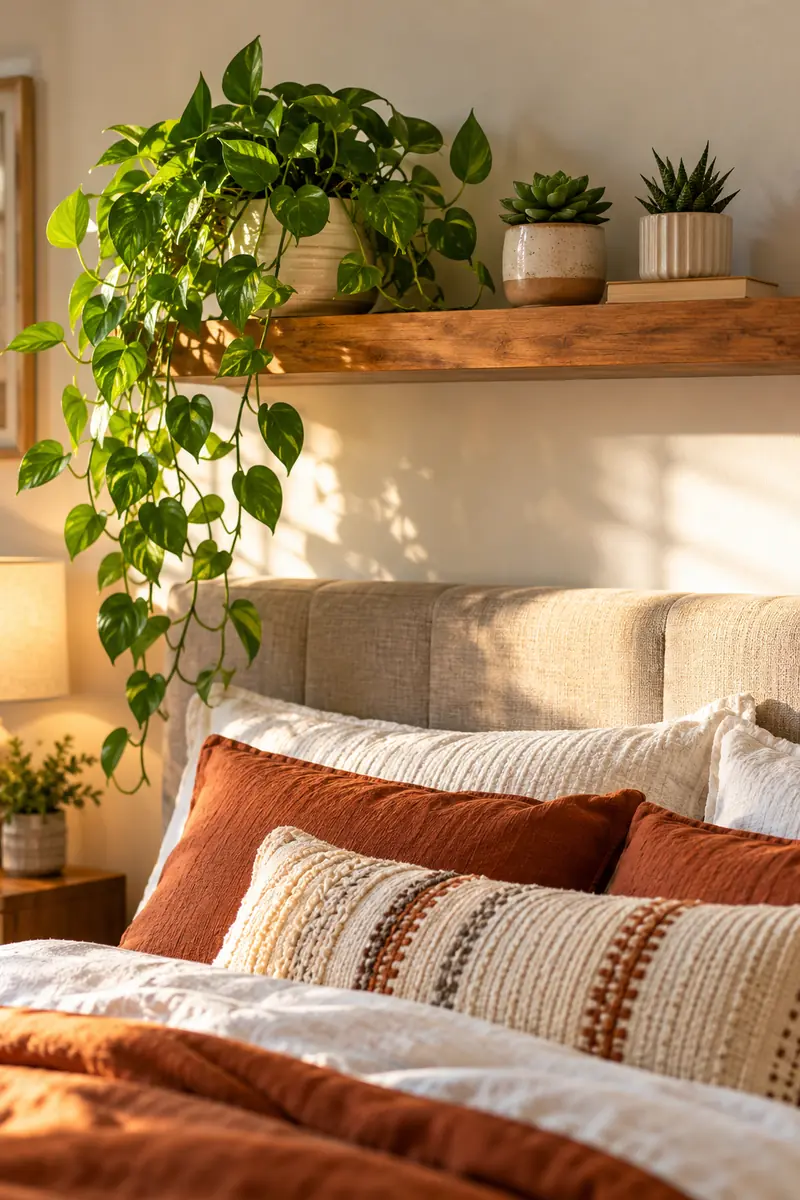
A plain headboard can make the whole bed look unfinished, no matter how nice the bedding is. A trailing pothos softens that hard line and draws the eye upward, which makes the ceiling feel a little higher.
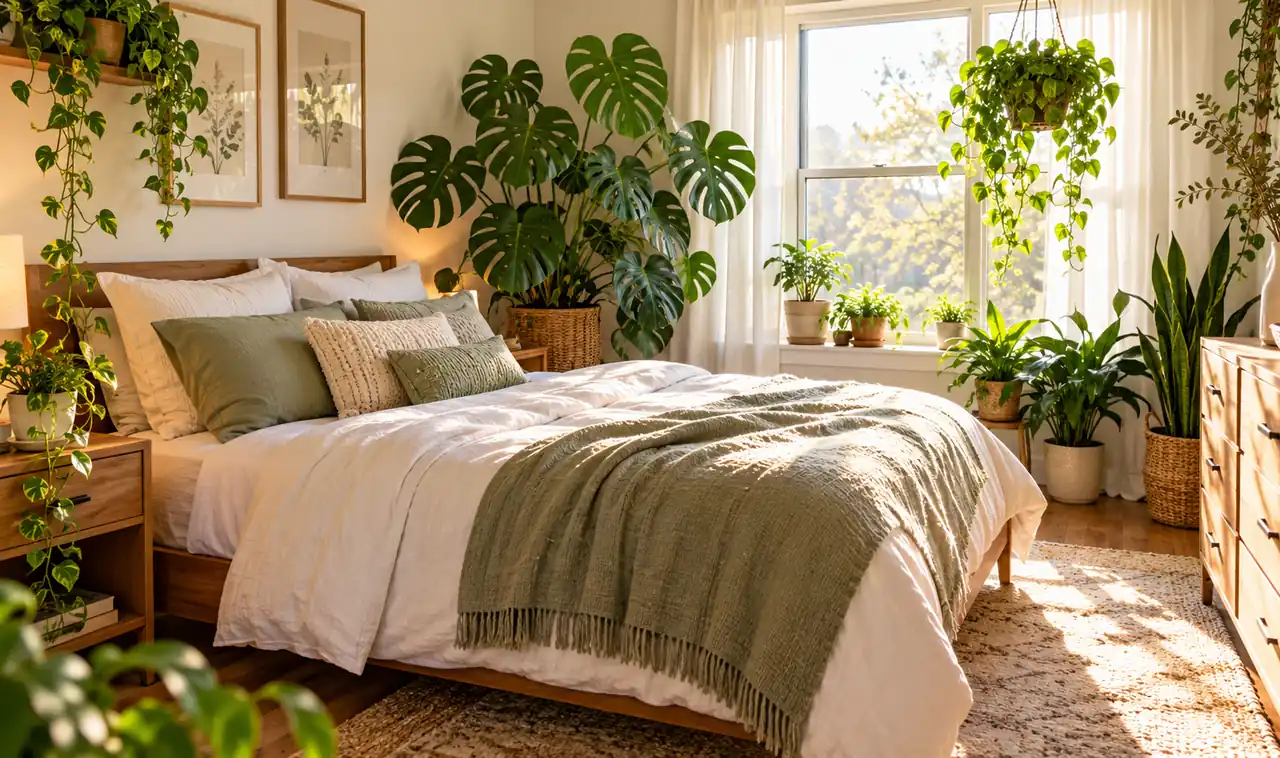
Pothos grows fast, forgives neglect, and roots in plain water, so one plant can become three within a year. Set the pot on a small shelf or bracket just above the headboard and let the vines fall on both sides. Trim the longest stems now and then to keep the plant full instead of stringy.
💡 Quick Tip
Rotate the pot a quarter turn every week so the vines grow evenly on all sides instead of leaning toward the window.
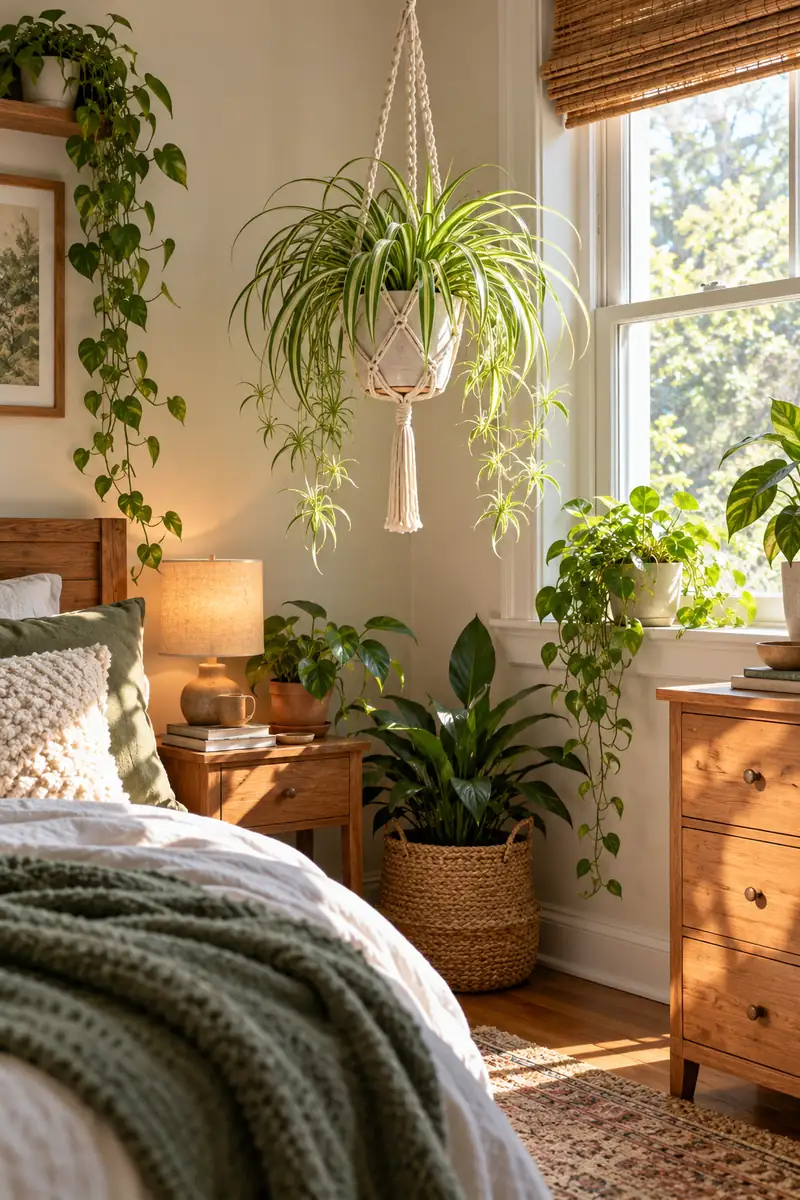
3. Hang a Macrame Planter in the Brightest Corner
Empty corners are the hardest spots in a bedroom. Furniture never quite fits and they collect dust. A hanging planter solves it in one move.
1
Screw a sturdy ceiling hook into a joist, not just drywall, so the weight holds.
2
Pick a light plant like a spider plant or fern so the hanger never strains.
3
Hang it where morning light lands but the leaves stay out of your walking path.
The sway of a hanging plant adds gentle movement to a still room, and it keeps the floor clear for cleaning.
4. Keep Eucalyptus Stems in a Bedside Vase
You wake up, reach for your phone, and the first thing you smell is yesterday’s laundry. A small vase of eucalyptus on the nightstand changes that first breath of the day.
Eucalyptus stems last for weeks in water and keep their scent as they dry. You do not need a florist. Grocery stores sell bunches cheap, and three or four stems in a narrow vase is plenty. Trim the ends every few days and change the water weekly.
What to grab first
When the stems dry out completely, keep them anyway. Dried eucalyptus still looks good for months.
5. Make a Monstera the Room’s Statement Plant
People assume a big plant needs a big room. A monstera proves the opposite. One large plant in a small bedroom looks intentional, while five tiny pots scattered around look cluttered.
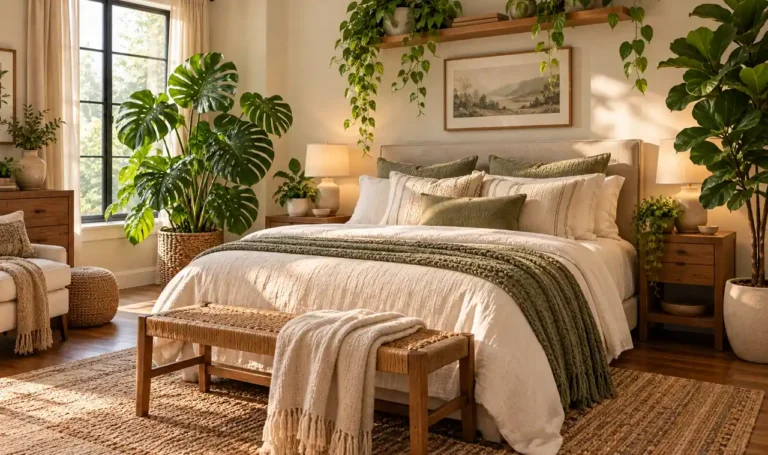
Give it the brightest spot you have, ideally near a window with indirect light, and a pot with drainage. Wipe the leaves with a damp cloth once a month so they stay glossy and catch the light. A moss pole keeps it growing upright instead of sprawling across your floor.
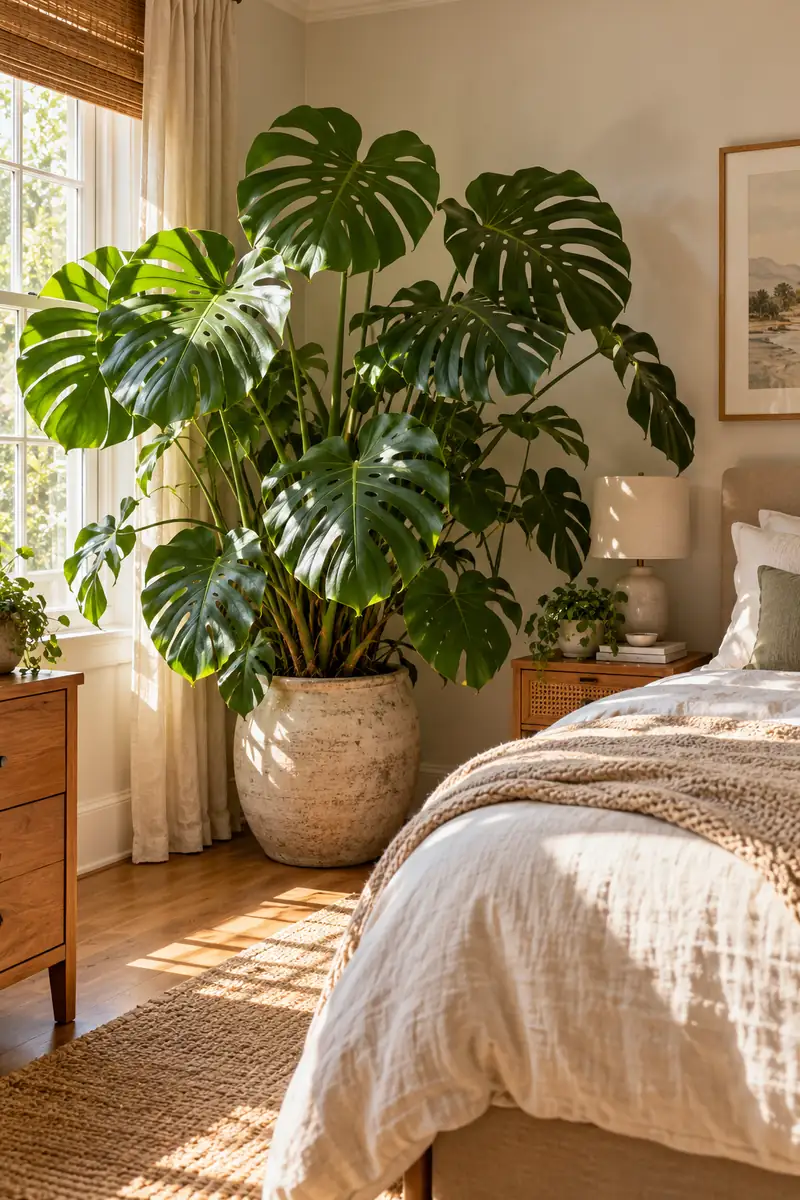
One bold plant beats a crowd of small ones. Scale is what makes greenery look designed instead of random.
6. Line the Windowsill With Small Herb Pots
A windowsill full of herbs gives you two wins at once. The bedroom smells like a kitchen garden, and you stop buying wilted basil in plastic boxes.
Basil, mint, and chives all do well in bedroom windows with a few hours of sun. Keep them in small terracotta pots with saucers so water never reaches the sill. Pinch the tops regularly and the plants stay bushy instead of tall and bare.
1
Start with mint, the hardest herb to kill and the fastest to fill a pot.
2
Add basil once the mint is settled, since basil wants a touch more sun.
3
Water in the morning so the leaves dry before night and stay healthy.
7. Give a Fiddle-Leaf Fig the Sunniest Corner
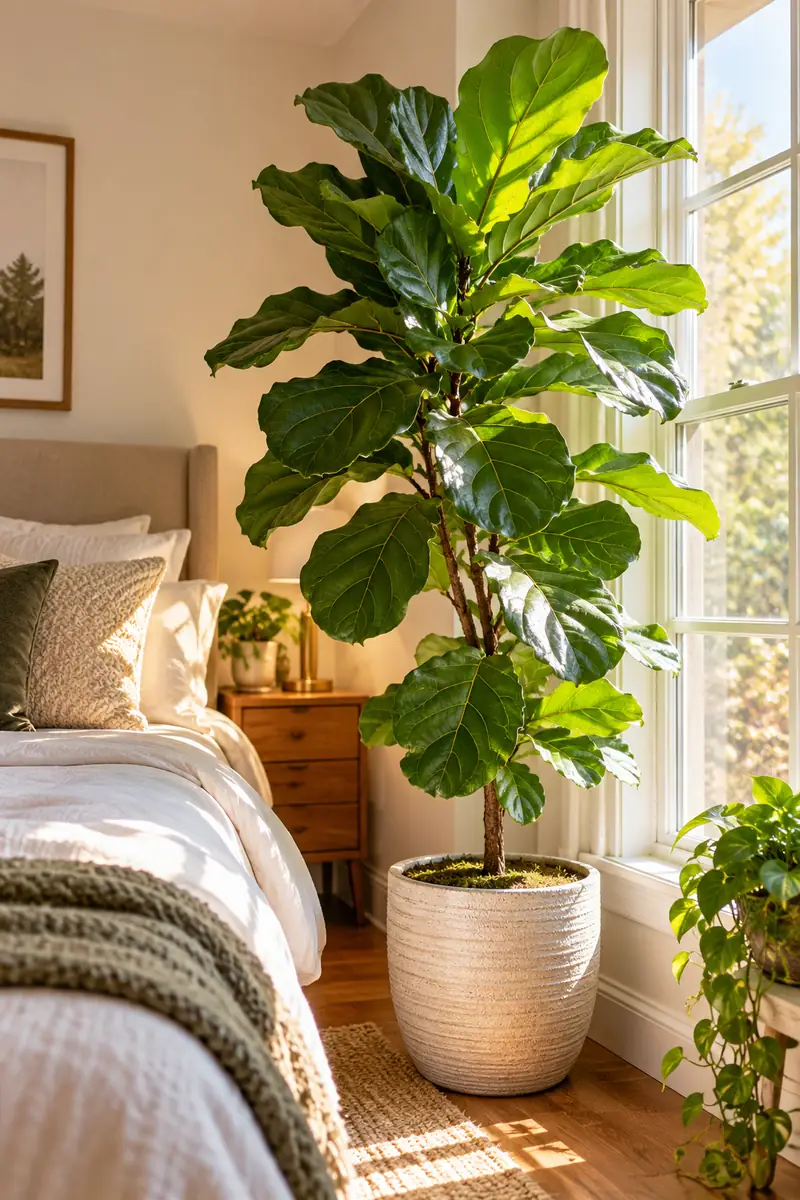
The classic mistake is buying a fiddle-leaf fig for a dark corner and wondering why it drops leaves within a month. These plants are dramatic, but their needs are simple. They want the brightest spot in the room and a routine that never changes.
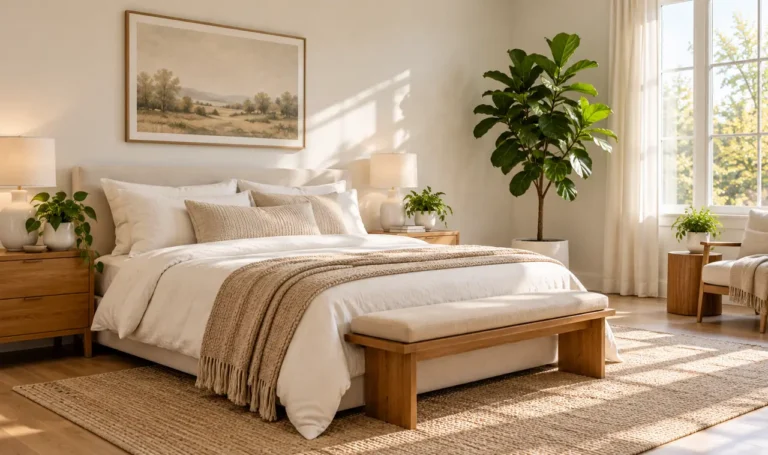
Place it right beside your sunniest window, water only when the top two inches of soil feel dry, and do not move it around. Once it settles, new leaves arrive glossy and deep green, and the height fills a corner no furniture could.
A bare corner that feels empty, with a plant shedding leaves from too little light.
The same corner anchored by a tall, healthy fig that makes the whole room feel styled.
8. Set a Fern on Top of the Dresser
Dressers tend to become flat surfaces where mail and keys pile up. A Boston fern breaks that pattern. Its arching fronds spill over the edges and soften the hard rectangle of the furniture.
Ferns like humidity, so a bedroom with a shower nearby suits them, or mist the leaves a few times a week. Compare your options before you buy, since not every fern behaves the same indoors.
| Boston Fern | Maidenhair Fern |
|---|---|
| Tough and forgiving, handles missed misting. | Delicate and pretty, needs steady moisture. |
| Grows wide, great for large dressers. | Stays compact, better for small tops. |
For most bedrooms, the Boston fern is the safer pick. It looks lush with far less fuss.
9. Build a Plant Shelf Above the Bed
The wall above the bed is usually wasted. A single floating shelf there turns dead space into a green display you see every time you lie down.
Mount the shelf high enough that you will not bump it sitting up, about a foot above the headboard. Mix trailing plants like pothos with small upright ones like succulents so the shelf looks layered. Use pots with saucers or cachepots with no drainage holes to protect the wall and bedding below.
10. Try an Olive Tree in a Simple Ceramic Pot
I used to think olive trees belonged in sunrooms and restaurant patios. Then I saw one in a friend’s bedroom, slim trunk and silvery leaves catching the afternoon light, and the whole room felt calmer.
Olive trees want as much sun as you can give them, so this one is for bright bedrooms. A plain ceramic pot keeps the look quiet and lets the silvery foliage do the talking. Let the soil dry between waterings and it stays happy for years.
💡 Quick Tip
Turn the pot slightly every two weeks so the canopy grows even instead of leaning hard toward the glass.
11. Tuck a Calathea Into the Darkest Corner
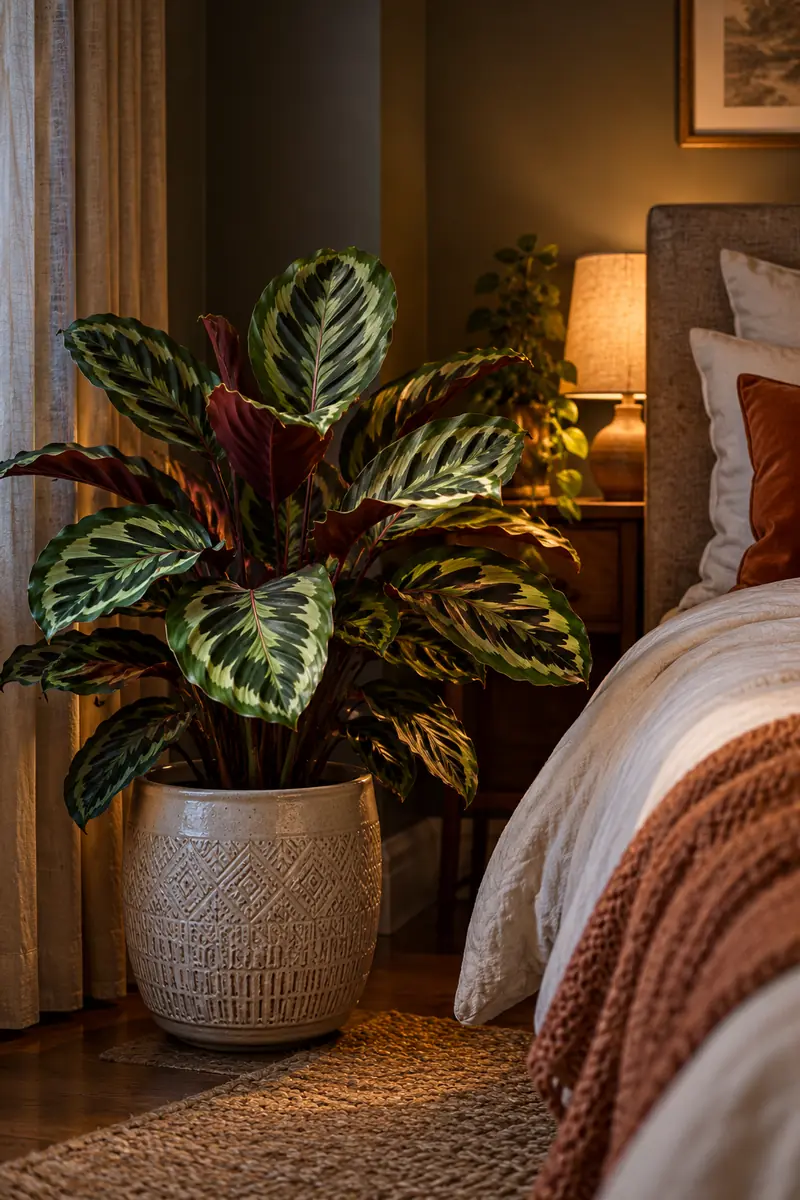
Most people believe every plant needs bright light. Calatheas break that rule. They actually prefer shade, and their patterned leaves look painted in dim corners where other plants sulk.
The one thing calatheas ask for is steady moisture. Water when the top inch feels dry and they reward you with leaves that fold up at night and open each morning. Keep them away from heating vents, which dry the air they love.
Water with room temperature water to avoid shocking the roots.
Group it with other plants to raise the humidity around it.
Direct afternoon sun, which scorches the patterned leaves.
Letting the soil dry out completely between waterings.
12. Style Dried Pampas Grass in a Tall Floor Vase
Fresh flowers die, and you know it the moment you buy them. Dried pampas grass skips that cycle entirely. A tall bunch in a floor vase fills an empty corner for a year or more with zero care.
Choose a heavy vase so the tall plumes never tip. Fluff the stems outside first, since they shed when new, then bring them in. One large bunch beats two small ones, because scale is what makes dried grasses look designed.
What to grab first
Thrift stores are full of big vases for a few dollars, which keeps this whole look budget friendly. Small styling wins like this are the same idea behind our budget decor ideas using simple materials.
13. Cluster Three Succulents on the Nightstand
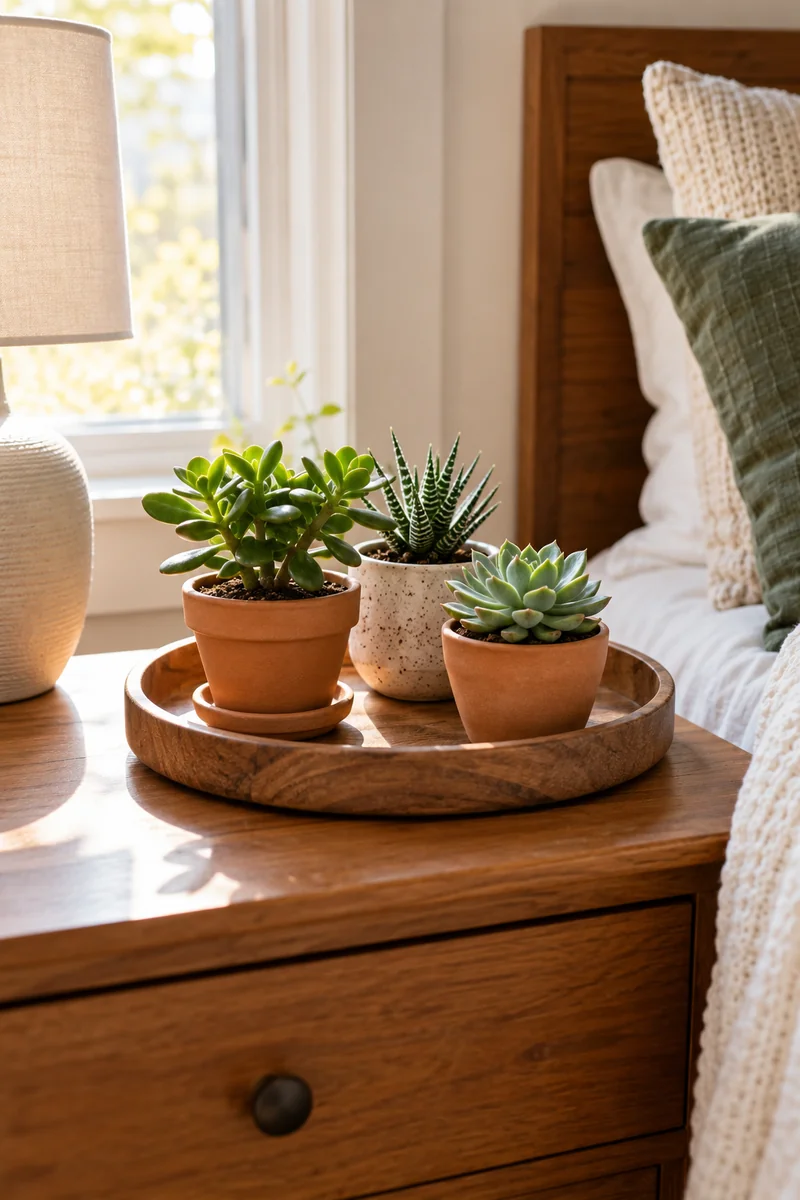
One succulent looks lonely. Three together look like a decision. The rule is simple: odd numbers, varied heights, one tray to hold them.
Pick a tall echeveria, a low haworthia, and something trailing like string of pearls. A shallow wooden tray keeps the grouping tight and catches water. Succulents want bright light and very little water, so they suit nightstands near windows.
This same trick works in a guest room, where low care plants keep the space welcoming without asking visitors to play gardener. If you are preparing your home for Thanksgiving guests, a succulent cluster is the easiest nightstand upgrade there is.
14. Pick a ZZ Plant If You Forget to Water
Some people water on schedule. Others remember only when leaves droop. If you are the second type, the ZZ plant was made for you. Its thick stems store water for weeks, and its glossy leaves look polished even in low light.
Compared with fussier plants, the ZZ asks for almost nothing and still looks like you tried.
- ▸Water every 3 to 4 weeks, less in winter.
- ▸Low to medium light keeps it happiest.
- ▸Dust the leaves monthly so they stay glossy.
Put it where you will see it daily, like beside the dresser, so its slow new growth feels like a small reward.
15. Grow Lucky Bamboo in a Glass Cylinder
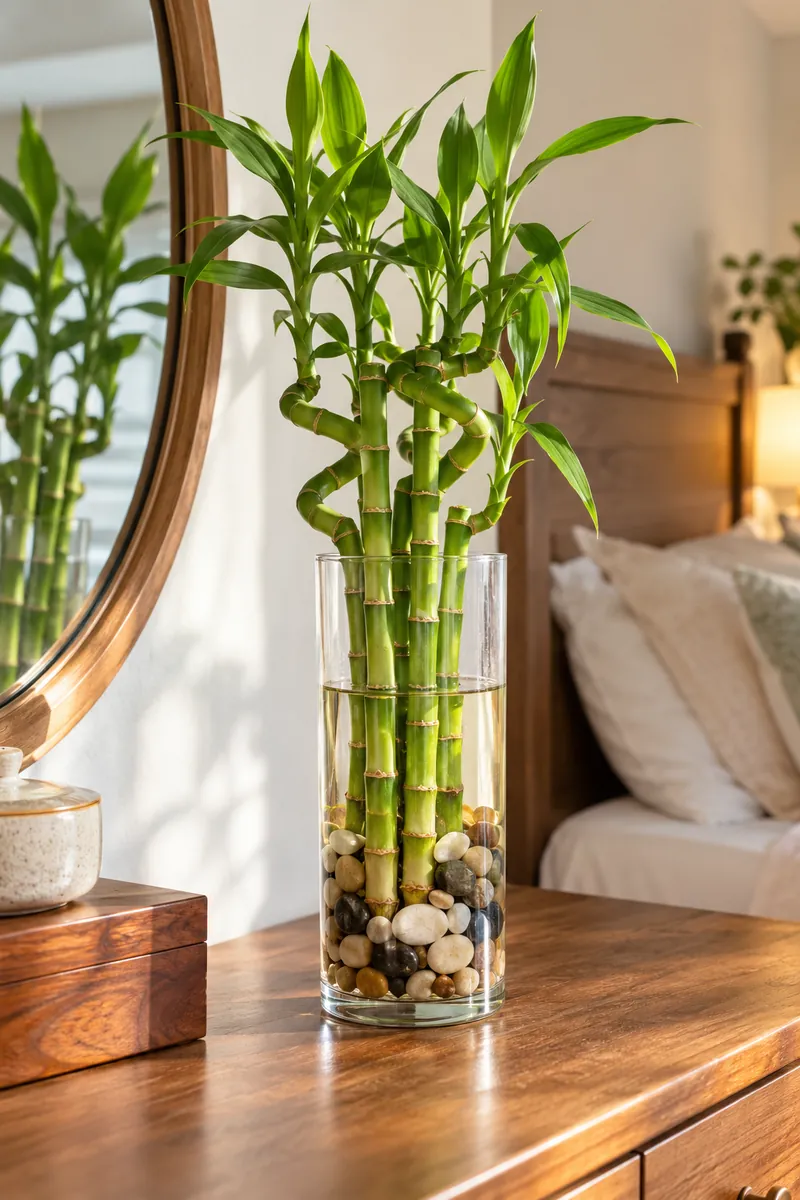
Soil feels like commitment. Water feels easy. Lucky bamboo grows in plain water inside a glass cylinder, so you can see exactly what the roots are doing.
Fill the cylinder with pebbles to hold the stalks upright, add water to cover the roots, and change it every two weeks. Keep it in indirect light, since direct sun turns the leaves yellow. A few drops of liquid fertilizer once a month keeps the green deep.
A bare dresser top that collects random clutter and looks unfinished.
A clean glass cylinder of green stalks that makes the whole dresser look styled.
16. Hang Air Plants in Glass Orbs by the Window
Morning light hits the window, and three glass orbs catch it, each holding a silvery air plant that seems to float. No soil, no pots, no mess on the sill.
Air plants drink through their leaves, so care is different from normal plants. They suit tiny bedrooms because they take up zero surface space, the same reason small space styling tricks lean on vertical ideas.
1
Hang the orbs where they get bright indirect light, never harsh midday sun.
2
Mist them well twice a week, or soak for 20 minutes weekly.
3
Shake off extra water after soaking so the base never stays soggy.
17. Let a Bird of Paradise Fill a Tall Empty Wall
High ceilings can make a bedroom feel cold, because all that empty wall has nothing to say. A bird of paradise answers with height. Its huge banana like leaves rise five or six feet and turn a blank wall into a backdrop.
This plant wants your brightest window and room to spread. Give it a large pot from the start so you are not repotting every year. New leaves unfurl slowly, and watching one open feels like the room is breathing with you.
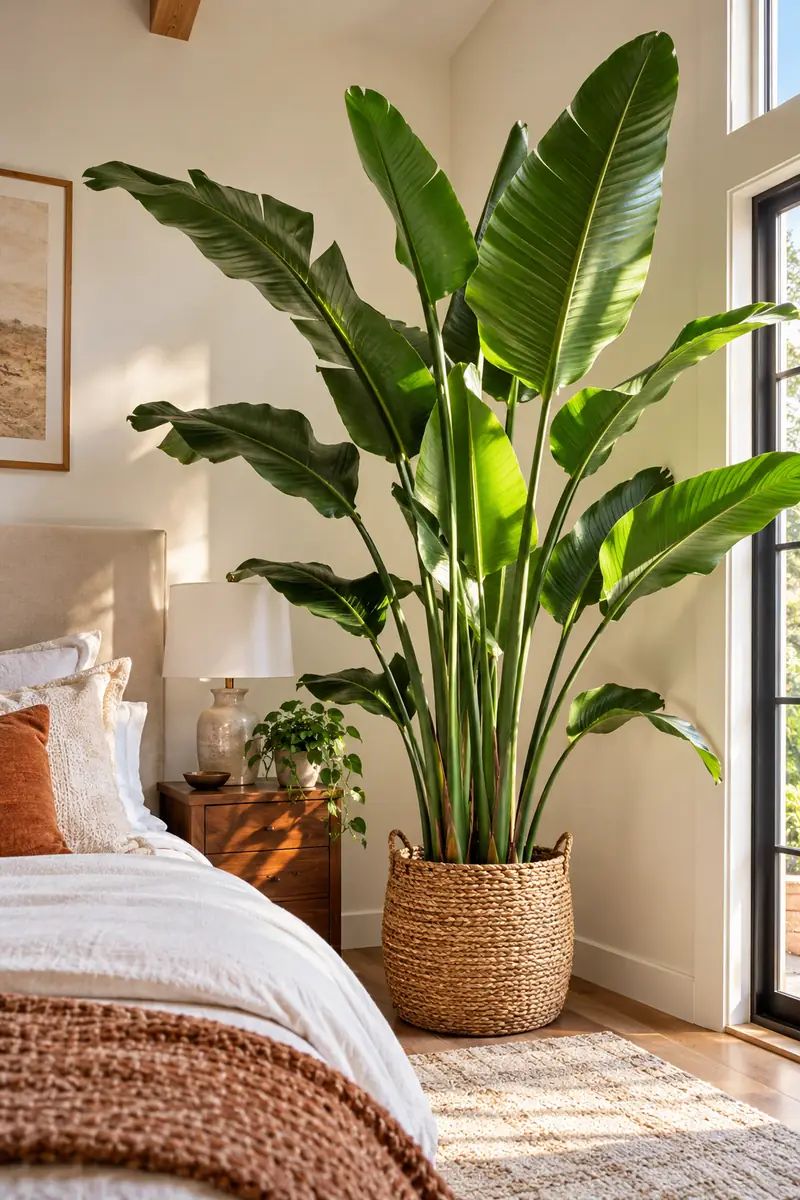
Match the plant to the architecture. Tall walls want tall plants, and one right choice beats three wrong ones.
18. Hang Preserved Moss as Living Wall Art
Not every green thing needs watering. Preserved moss panels look like living art, need zero light, and never need a drop of water. They are real moss, treated to stay soft and green for years.
Hang a framed moss panel where a plant could never survive, like a dark hallway wall inside the bedroom or above a wardrobe. Keep it out of direct sun so the color stays rich. Dust it gently with a cool hairdryer once in a while.
📌 Good To Know
Preserved moss is not the same as fake plastic moss. It is real plant material, so it has natural texture and variation that plastic never copies.
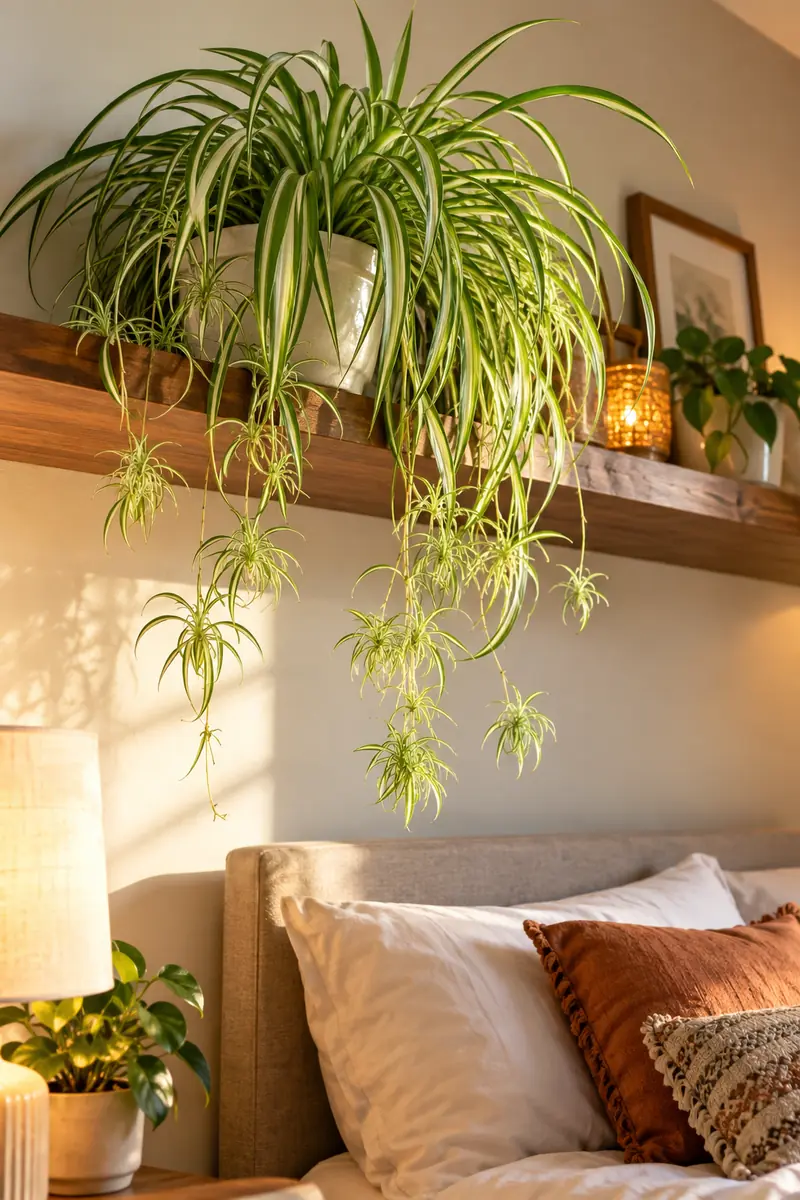
19. Perch a Spider Plant on the Highest Shelf
The mistake people make with spider plants is giving them a low spot where their arching leaves get crushed by passing shoulders. Up high, those same leaves cascade beautifully and stay out of the way.
Spider plants are famously tough and they produce baby plants, called spiderettes, that dangle on long stems. Snip a few, root them in water, and you have free plants for every other room. A high bookshelf or the top of a wardrobe is the perfect perch.
20. Frame the Doorway With a Rubber Plant
Doorways are transition zones, and a plant on one side makes entering the bedroom feel like arriving somewhere. A rubber plant’s dark glossy leaves read almost sculptural next to a plain door frame.
Rubber plants grow upright and do not sprawl, so they suit the narrow space beside a door. Wipe the broad leaves now and then, since dust shows fast on the dark surface.
| Burgundy Rubber Plant | Variegated Rubber Plant |
|---|---|
| Deep wine colored leaves, dramatic and moody. | Cream edged leaves, brighter and airier. |
| Tolerates lower light well. | Wants brighter light to keep its pattern. |
Either one turns a plain doorway into a small moment. Pick based on your light.
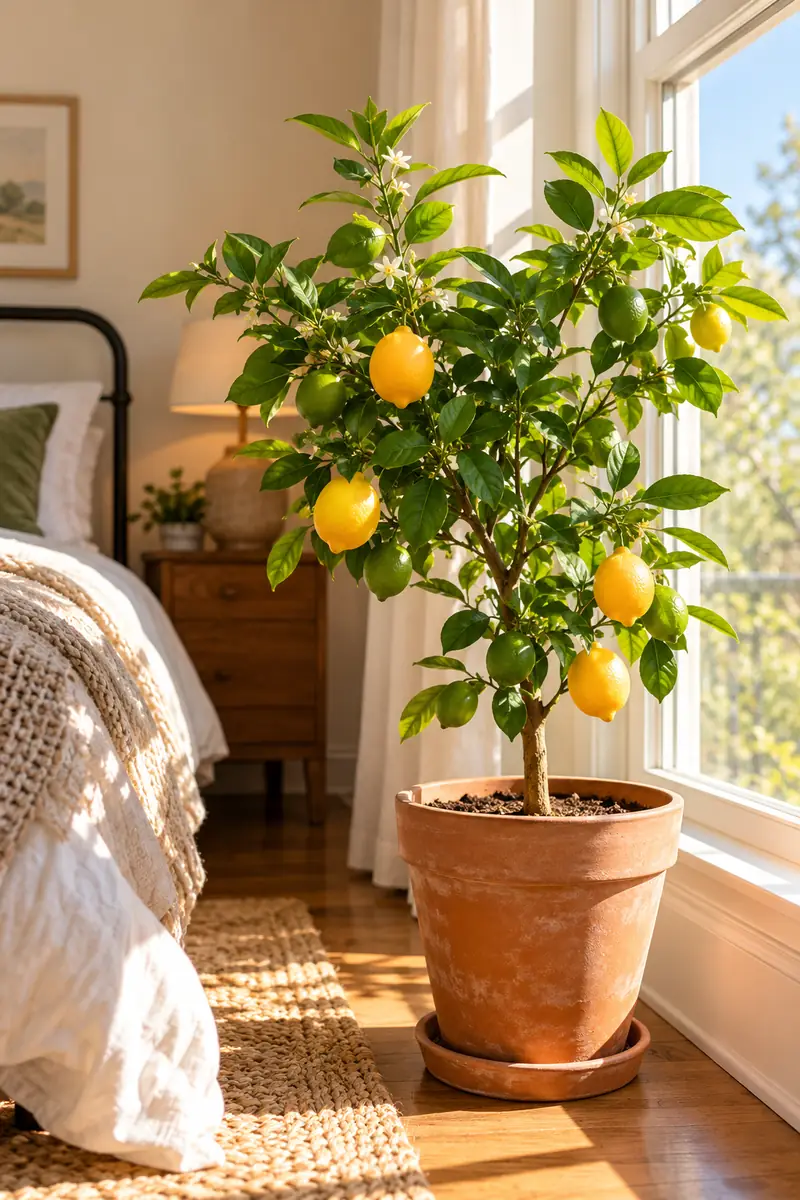
21. Grow a Lemon Tree in Your Sunniest Room
A lemon tree gives you something no other bedroom plant can: fruit. Watching tiny green lemons swell on the branches turns plant care into a slow, rewarding project.
Dwarf Meyer lemons suit indoor life best. They want your sunniest window, at least six hours of light, and consistent watering. The blossoms smell like orange groves, which is a strange and wonderful thing to wake up to.
22. Tie a Dried Lavender Bundle to the Dresser Mirror
You catch your reflection while getting ready, and there is a bundle of purple-grey lavender hanging beside it, smelling faintly every time you brush past.
Dried lavender keeps its scent for months and costs almost nothing. Tie a small bunch with twine and hang it from a mirror corner or a drawer pull. When the scent fades, crush a few buds between your fingers to wake it back up.
What to grab first
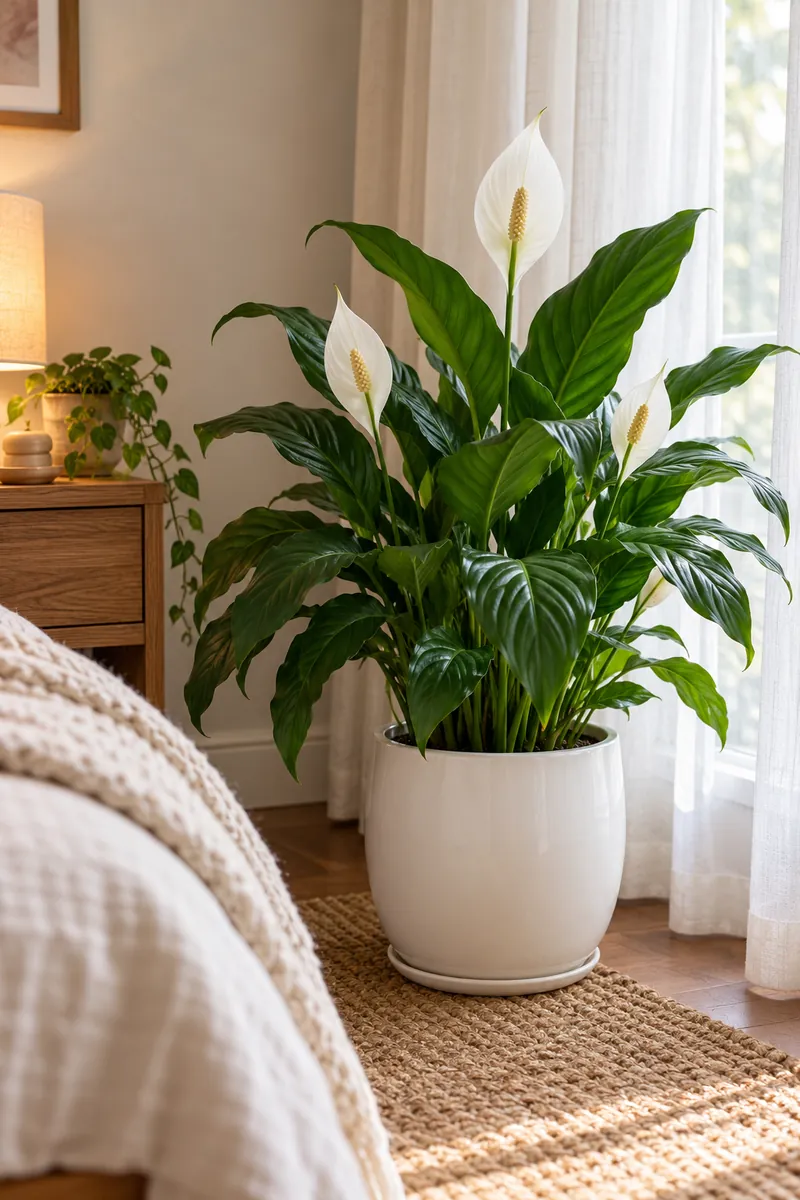
23. Place a Peace Lily Where Light Is Soft
North facing bedrooms frustrate plant lovers, because most greenery sulks without direct sun. The peace lily does not. It blooms in soft light where other flowering plants refuse.
Its white blooms rise above dark green leaves for weeks at a time. The plant even tells you when it is thirsty by drooping slightly, then perks back up within hours of watering. That built in reminder makes it one of the most forgiving flowering plants you can own.
Keep the soil lightly moist, never waterlogged.
Wipe the broad leaves so they stay glossy.
Direct sun, which browns the leaf edges.
Cold drafts from windows in winter.
24. Keep Aloe Vera Within Reach of the Desk
Small cuts and kitchen burns happen, and the remedy can sit on your desk. Aloe vera’s thick leaves hold soothing gel, and the plant itself looks like modern sculpture.
The rule is neglect with light. Bright sun, sandy soil, water only when fully dry. Aloe rots faster from kindness than from forgetfulness, so when in doubt, skip the watering can.
💡 Quick Tip
Snap off an outer leaf only when you need the gel, and let the cut end callus for a day before using it.
25. Build One Lush Jungle Corner and Stop There
Every plant lover I know has made the same error: one plant on every surface until the bedroom feels like a nursery. Restraint looks better. Pick one corner and make it lush, then leave the rest of the room calm.
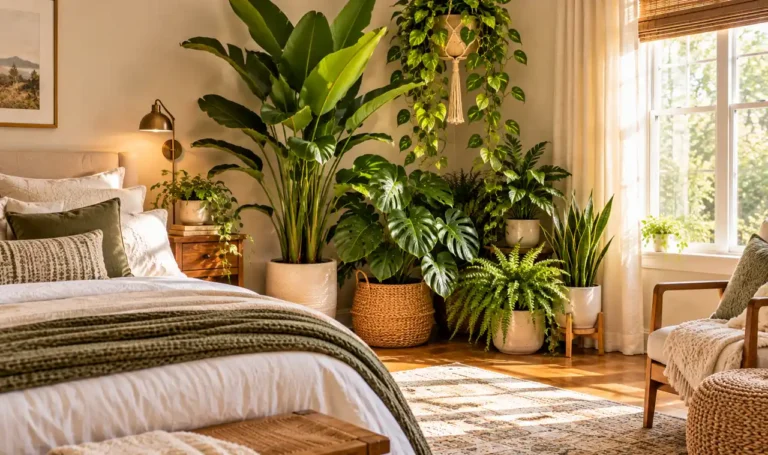
Group five to seven plants of different heights in that corner: a tall bird of paradise or monstera at the back, medium ferns and calatheas in the middle, small pots and trailing vines in front. Vary the pot materials, ceramic, basket, terracotta, so it looks collected over time. Watering day becomes one trip with the can instead of a room wide tour.
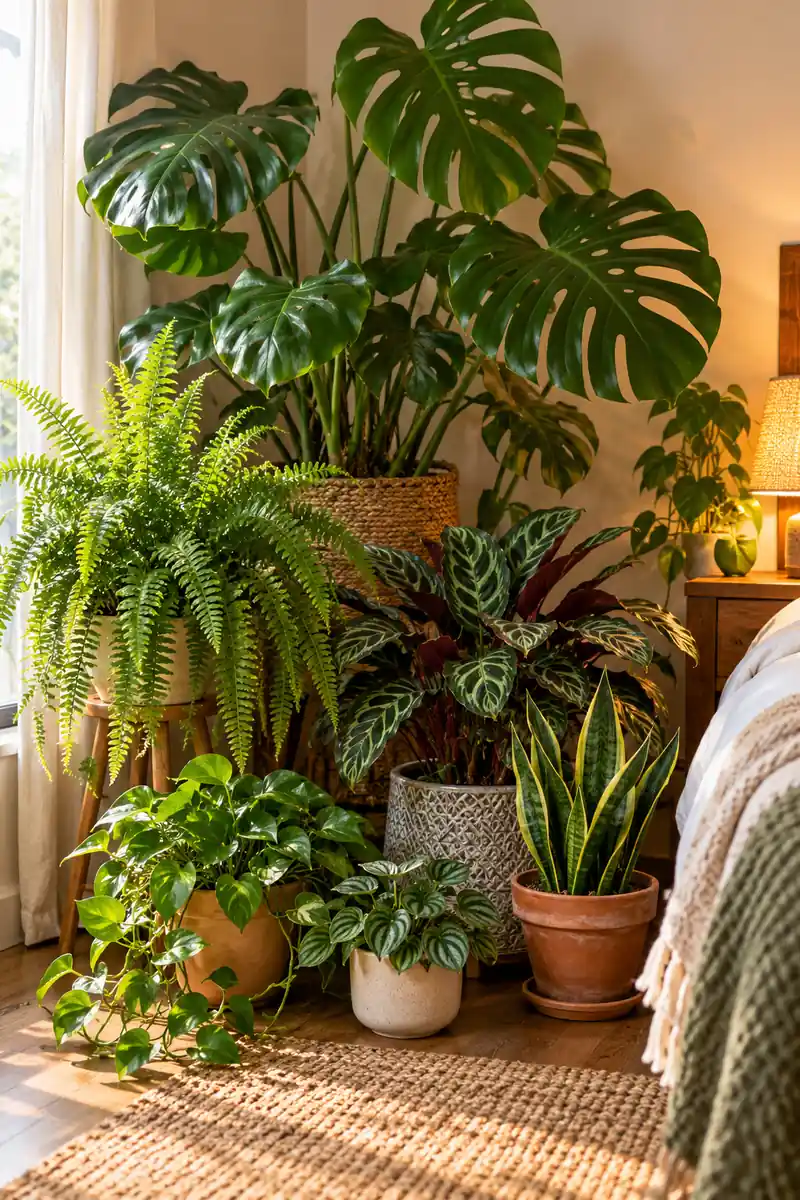
Density in one spot reads as design. The same plants spread thin across the room just read as clutter.
You do not need all 25 of these greenery bedroom ideas. Most bedrooms come alive with just two or three done well: one tall plant for structure, one trailing plant for softness, and one small one where your eyes land first in the morning. Start with the plant that matches your light, learn its rhythm, and add the next one only when the first feels easy. Before long your bedroom will feel less like a room you sleep in and more like a place that takes care of you.
Save this list for the next time you want to refresh your space, and pin your favorite idea so it is waiting when the plant shopping mood strikes.