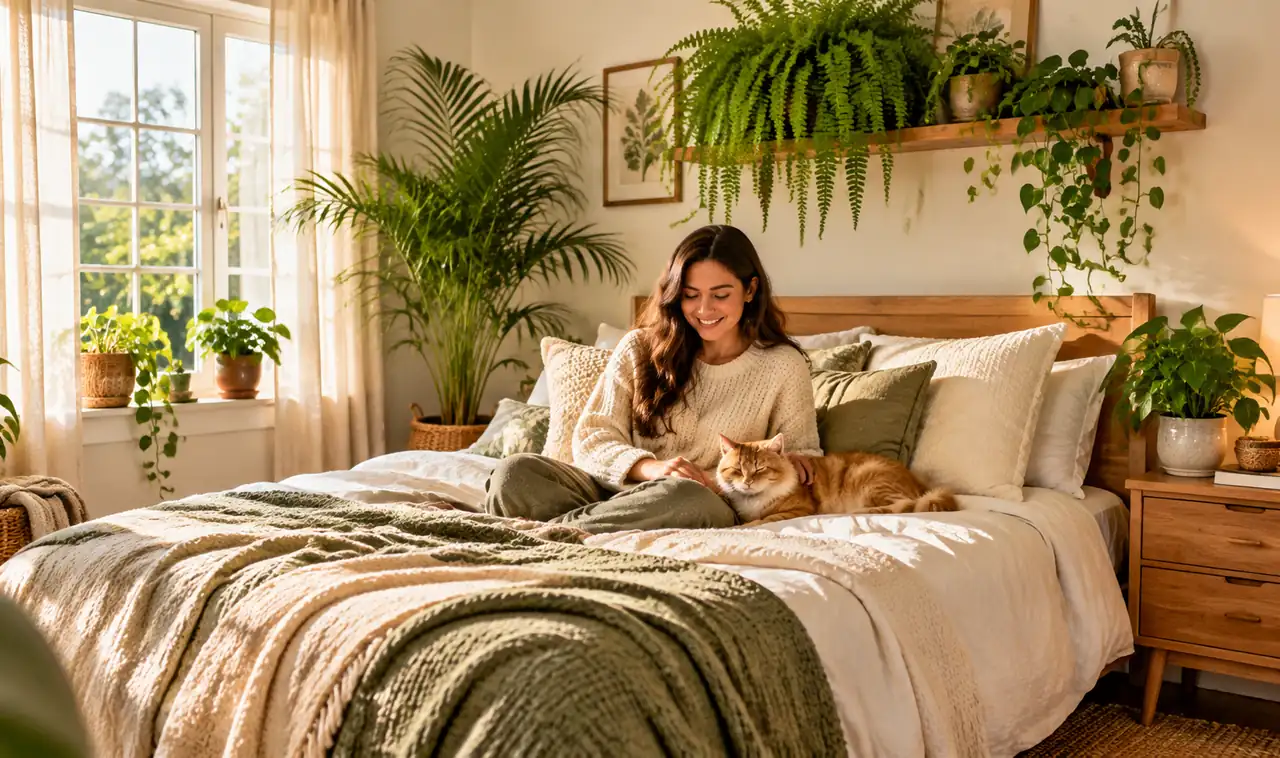
A cat who treats every leaf like a salad bar can end a plant hobby fast. So can a 2 a.m. crash when a curious dog shoulder-checks a pot off the nightstand. If you share your room with animals, every plant on your list has to pass two tests: it must be safe to nibble, and it must sit somewhere your pet cannot easily wreck it. Pet-Friendly Bedroom Plants are not a small or boring group. The list includes feathery palms, patterned calatheas, trailing spider plants, and even a flowering orchid.
The trick is matching each plant to a spot where your pet’s habits work in your favor. Below are 17 ideas that pair a genuinely non-toxic plant with a placement that suits real bedrooms and real animals. Start with one or two, watch how your pet reacts over the first week, then build from there.
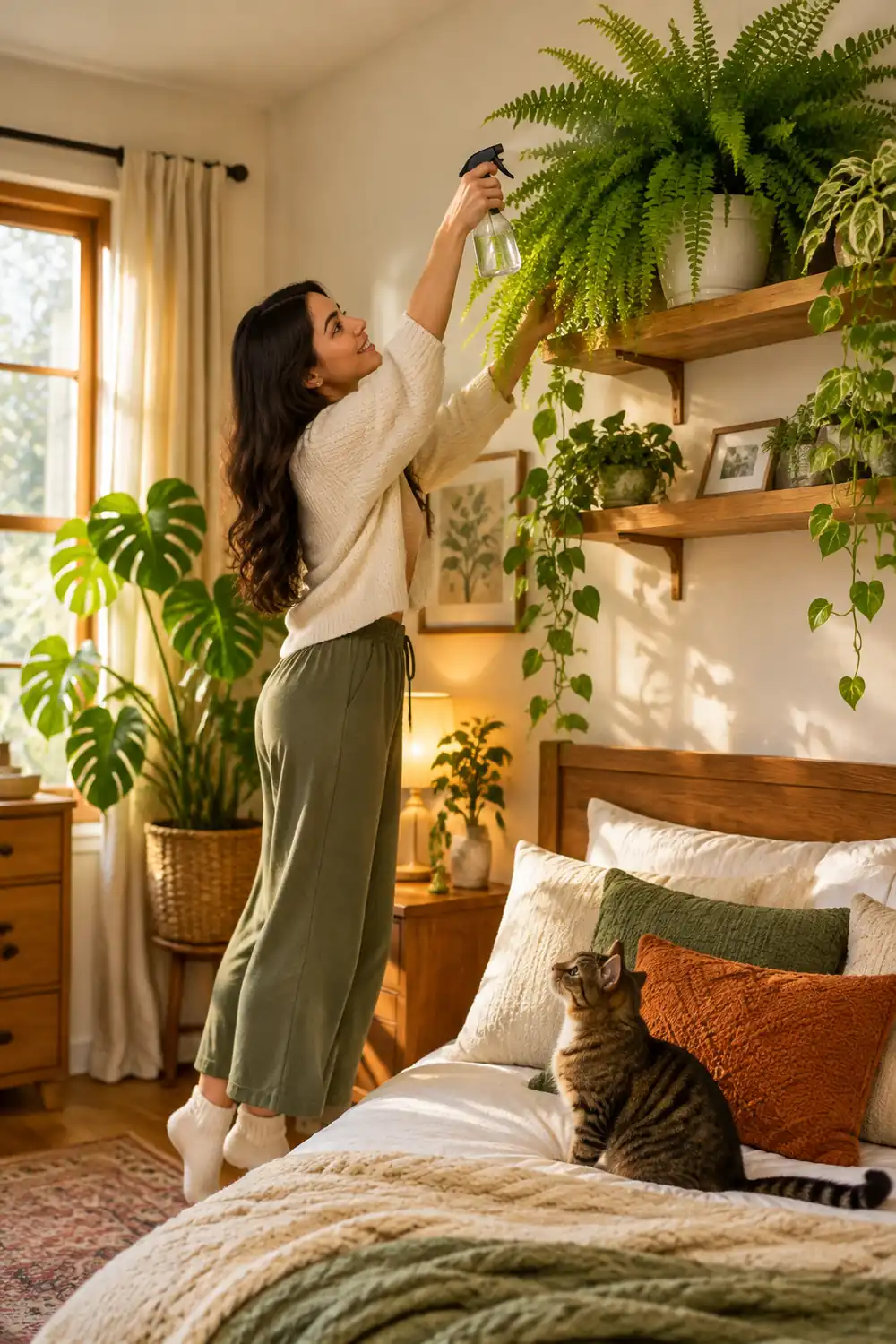
1. Boston Fern on a Shelf Your Cat Cannot Reach in One Jump
Boston ferns are safe for cats and dogs, and their soft fronds forgive the odd swat. The problem is placement, not the plant. A fern on the dresser edge is an invitation. A fern on a wall shelf with clear space around it is decor.
Mount the shelf where there is no launch pad nearby, no bed corner or chair back within leaping distance. Boston ferns like indirect light and a weekly misting. Trim any frond that droops low enough to become a toy.
2. Calathea on the Nightstand for Pattern Without the Worry
Calathea leaves look hand painted, with stripes and brush marks in green, cream, and blush. The whole calathea family is non-toxic to pets, which makes it one of the few showy plants you can keep at pillow height without stress.
It asks for steady moisture and hates dry air, so set the pot on a pebble tray. In return you get foliage that folds upward at night and opens again by morning.
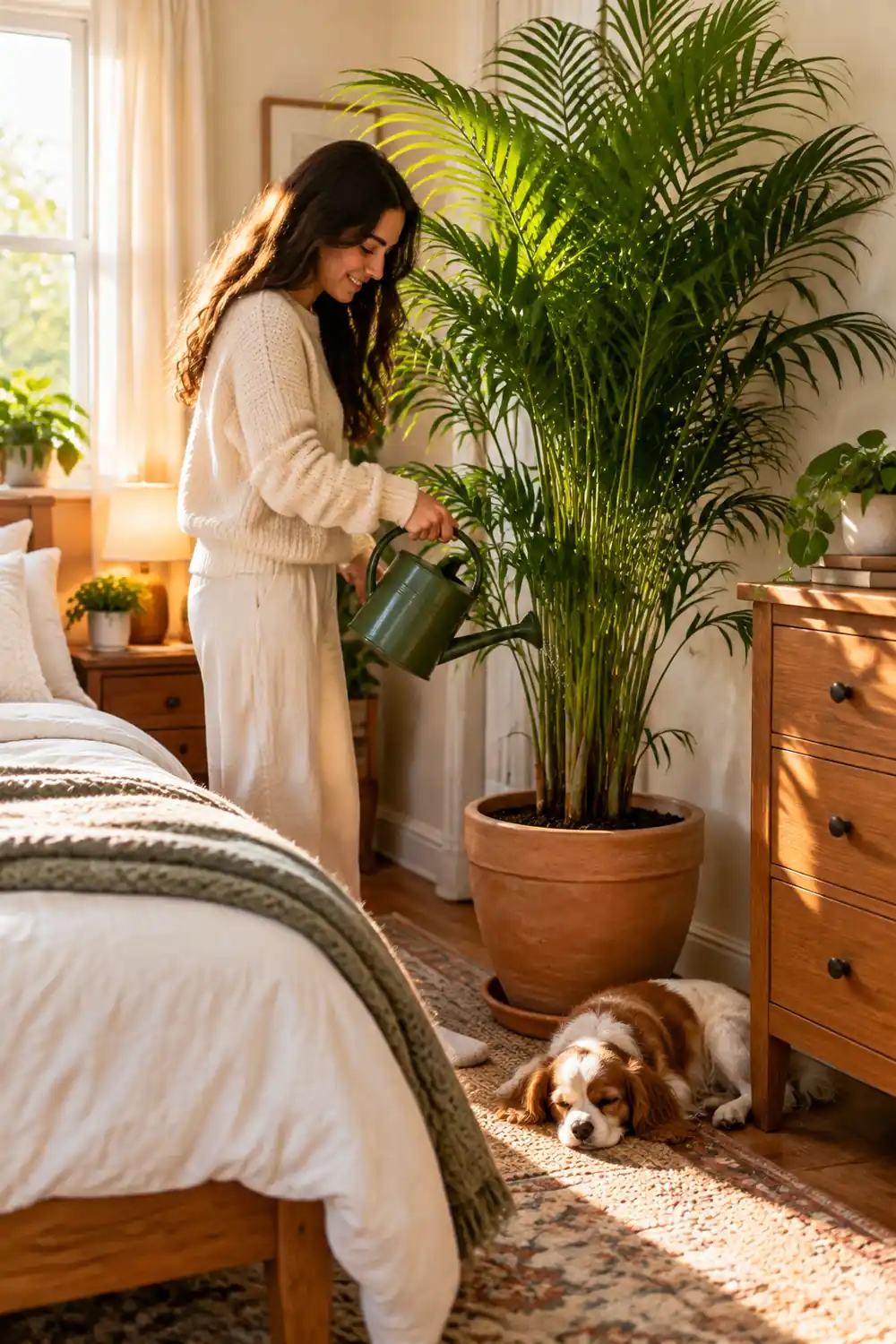
3. Parlor Palm in the Corner for Slow, Steady Green
Some plants demand attention. The parlor palm is not one of them. It grows slowly, tolerates the lower light in a bedroom corner, and is fully safe around cats and dogs.
Give it a floor pot with some weight to it, since a tall plant in a featherlight plastic pot tips the first time a dog brushes past. Water when the top inch of soil feels dry. It grows at its own pace and will not sulk if you forget a week. For a small room, this is the easiest floor plant to live with.
4. Spider Plant in a Ceiling Hanger, Out of Batting Range
Spider plants are non-toxic, but their dangling babies are the best cat toy in the house, at least from the cat’s side of the deal. Hang yours high enough that the babies clear the top of the tallest furniture.
A macrame hanger near a bright window keeps the whole plant in good light and out of paw range. The babies root easily in water, which makes this a handy plant to share. It is also a fun pick for younger plant fans, as the teen bedroom plant ideas on this site show, since it survives missed waterings.
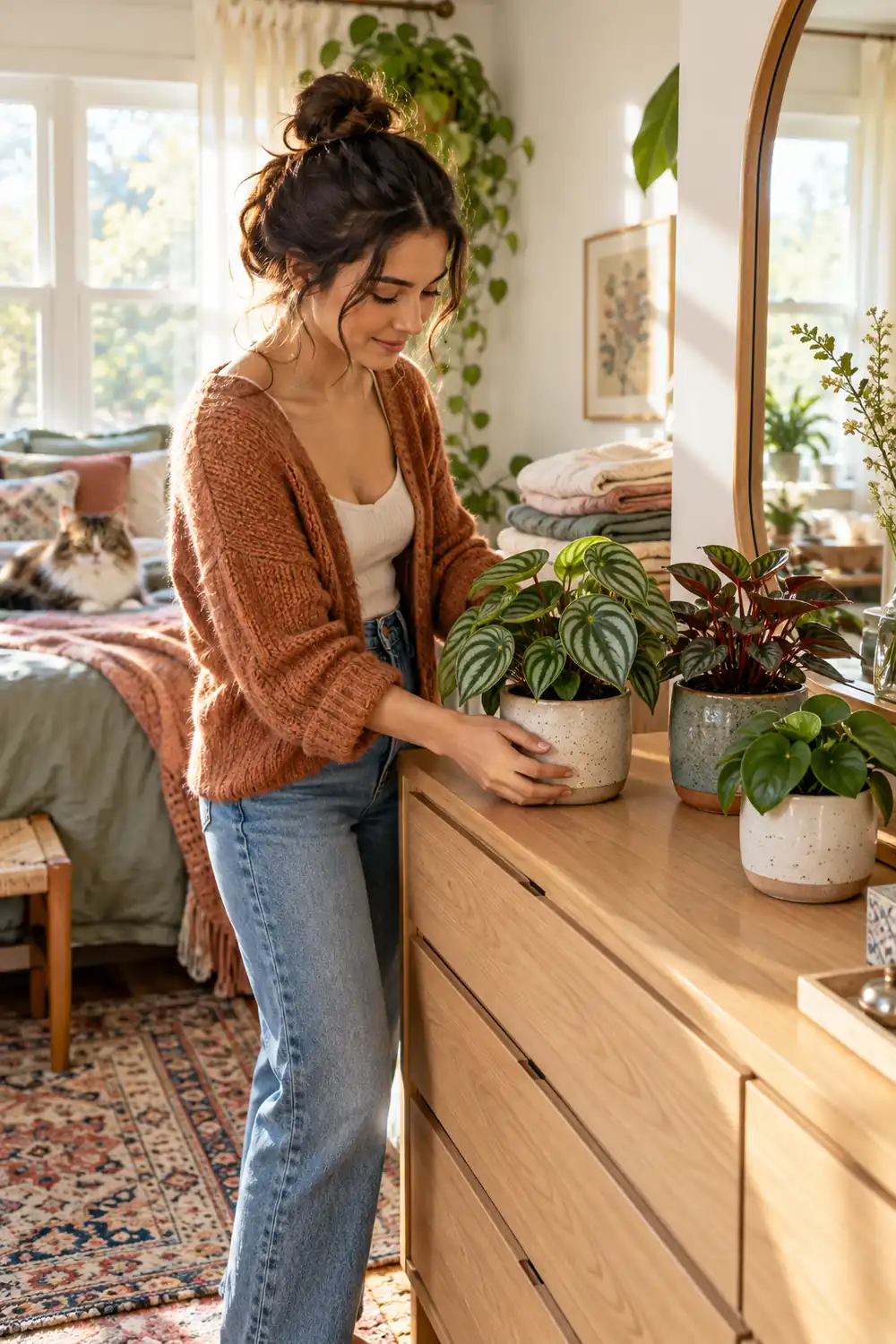
5. Peperomia on the Dresser for Small Spaces
Floor space runs out fast in a shared bedroom. Peperomias stay compact, most under a foot tall, and every common type is safe for pets.
- Watermelon peperomia for bold striped leaves
- Baby rubber plant for a tidy, upright shape
- Ripple peperomia for textured, quilted foliage
Their thick leaves store water, so a missed watering is no drama. Put one on the dresser where a bigger plant would crowd the mirror.
6. Areca Palm for a Big, Soft Floor Statement
An areca palm fills a corner with arching, feathery fronds and asks for nothing toxic in return. It is one of the few large floor plants completely safe for cats and dogs.
It likes bright, indirect light and a drink when the top of the soil dries out. In a larger room it anchors a corner the way the statement plants do in these master bedroom ideas with plants, softening hard edges around wardrobes and doors. Check the name before you buy, because not every palm is a safe one.
| Plant name on the tag | Safe for cats and dogs? |
|---|---|
| Parlor palm and areca palm | Yes, both are non-toxic |
| Kentia palm and bamboo palm | Yes, safe choices |
| Sago palm (not a true palm) | No, highly toxic, skip it entirely |
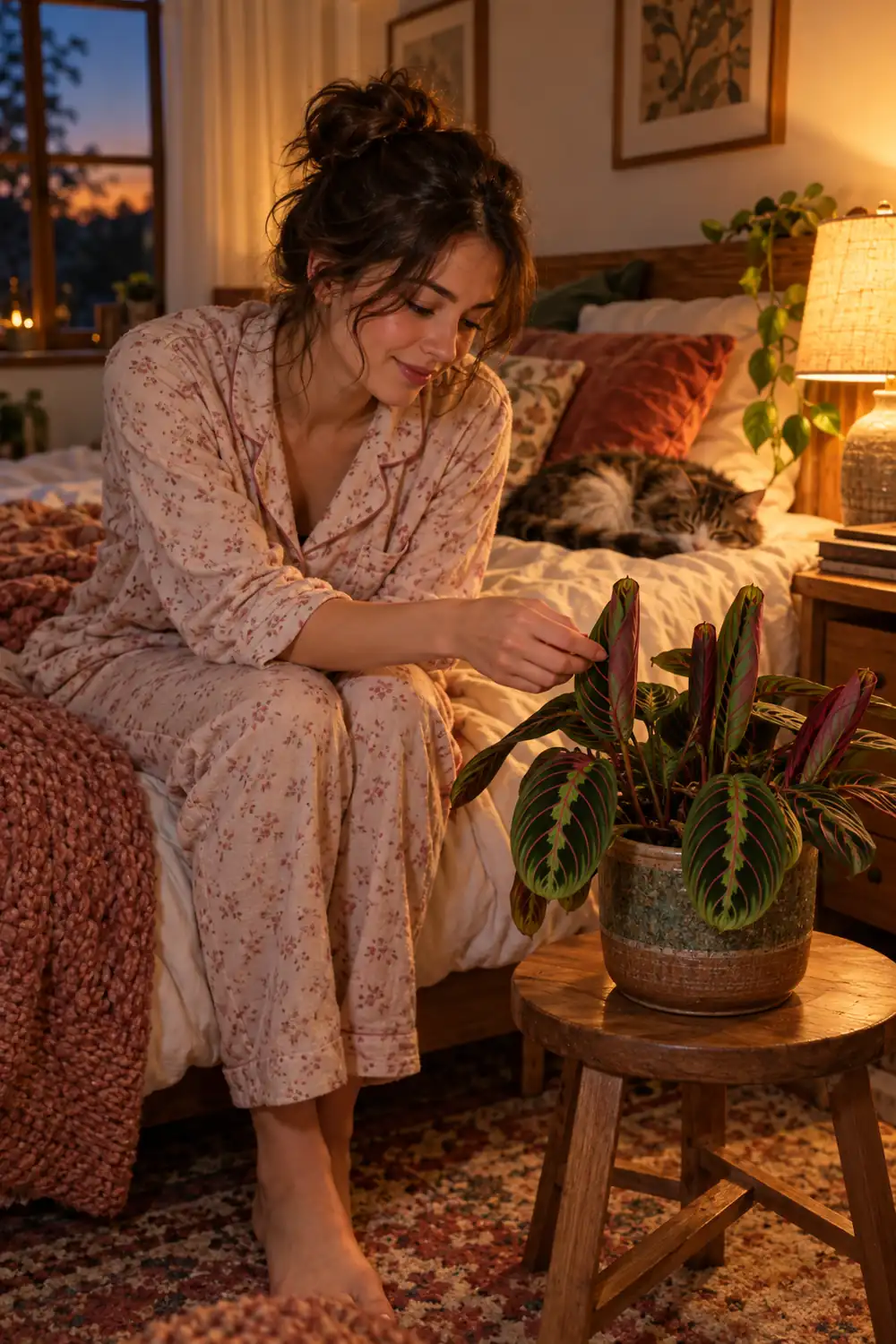
7. Maranta by the Bed, the Plant That Folds Up at Night
Maranta, the prayer plant, folds its leaves upward every evening like hands coming together, then opens them flat again at sunrise. It is a small daily show, and the plant is non-toxic to cats and dogs.
Keep it on a low stool or the lower shelf of a nightstand where you can watch the leaves move. It likes humidity and steady moisture, the same routine as its calathea cousins. If a cat chews a leaf, the plant is safe, though the leaf keeps the teeth marks.
8. African Violet on the Windowsill for Flowers Pets Can Ignore
Most flowering houseplants come with a warning label for pet owners. African violets are the pleasant exception. They are non-toxic, and their fuzzy leaves seem to hold no appeal for most cats, who prefer smoother things to chew.
Set the pot on a sunny sill and water from the bottom so drops never spot the leaves. A healthy plant blooms on and off all year: real flowers in the bedroom with no safety trade-off. Deadhead spent blooms to keep new ones coming.
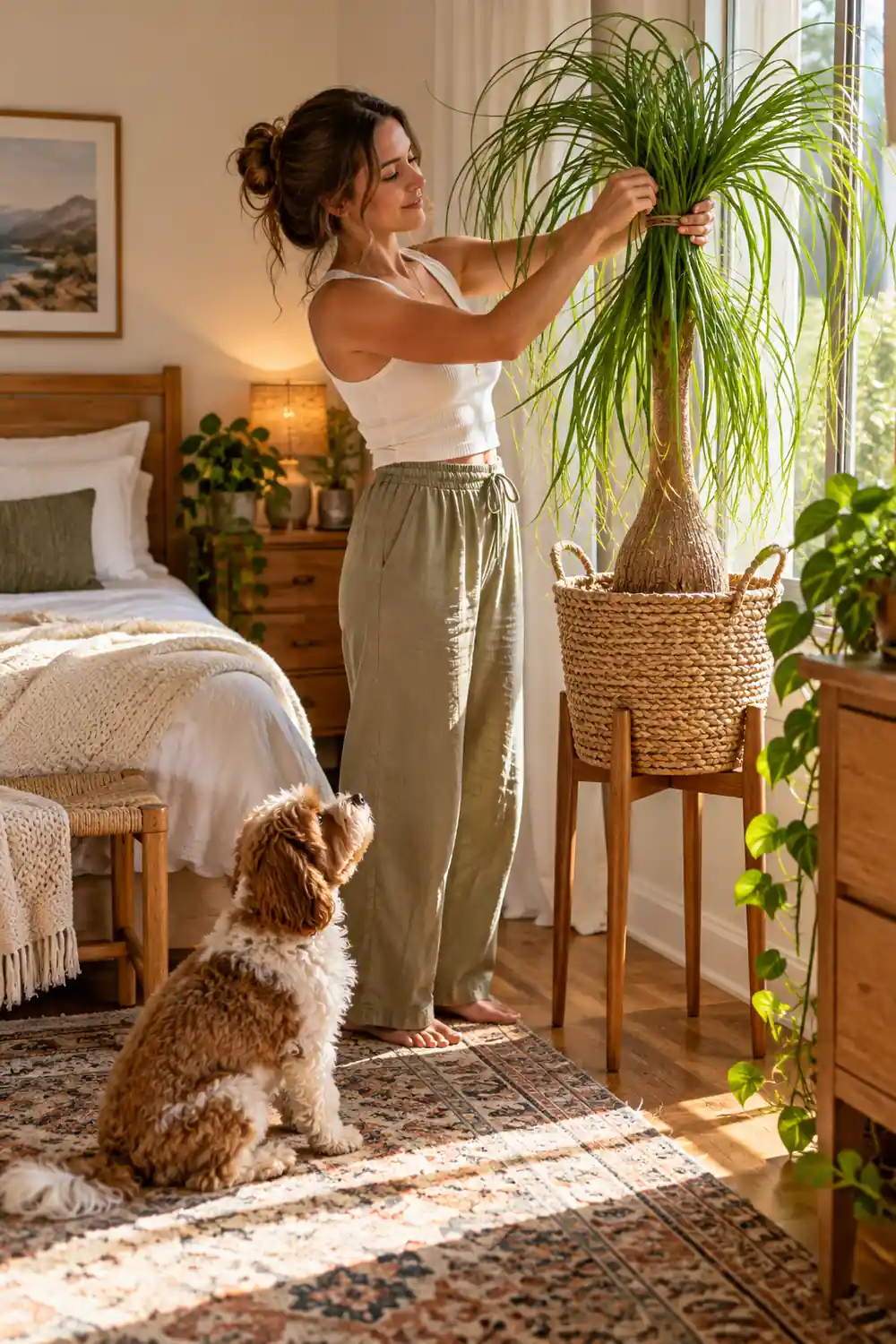
9. Ponytail Palm on a Stand, Up Away From Chewers
The ponytail palm stores water in its swollen trunk and trails long, curly leaves from the top like a fountain. It is non-toxic, but those strappy leaves beg to be chewed, so placement does the protecting here.
A plant stand lifts the leaf cascade above dog height and most cat interest. It also suits the plant, which wants bright light and very little water. In a sunny corner it can go three weeks between drinks, a kind pick for anyone who travels.
10. Haworthia Instead of Aloe on the Desk
Here is the swap that saves the most trouble. Aloe looks like a harmless desk succulent, but it is toxic to cats and dogs. Haworthia, the zebra plant, has the same rosette shape and white markings, and it is safe.
It stays small, sips water, and handles a bright desk or a shelf with ease. Keep the labels straight at the shop, because the two plants sit side by side on the same bench and look like cousins.
Pick haworthia, echeveria, or a burro’s tail for sunny spots.
Check the plant tag name before anything goes in the cart.
Skip aloe, jade, and kalanchoe in rooms pets can enter.
Never trust looks alone, since toxic plants often mimic safe ones.
11. Money Tree for Height Without Hanging Anything
Not every room has a ceiling hook or a spare shelf. The money tree, Pachira aquatica, grows up instead of out, with a braided trunk and a canopy of leaves near the top.
That shape is the safety feature. The foliage sits well above floor level, where dogs nose around and cats stalk from below. It is non-toxic, likes bright indirect light, and wants a thorough drink only when the soil has dried. Turn the pot a quarter every few weeks so the canopy grows evenly.
12. Cast Iron Plant for the Dark Corner Nothing Else Likes
Every bedroom has one corner the light never reaches, usually behind the door or beside the wardrobe. The cast iron plant was made for it. Its broad, dark green leaves are non-toxic, and the plant shrugs off low light, irregular watering, and general neglect.
It grows slowly, so buy the biggest one you can afford and let it fill the spot from day one. If that dim corner is part of a bigger plan, these low light bedroom plants pair well with it and share the same easy care. Dust the leaves now and then.
13. Swedish Ivy Trailing From a High Bookshelf
The name causes mix-ups, so read it twice. Swedish ivy is not a true ivy at all. It is a trailing mint relative with scalloped leaves, and it is safe for cats and dogs. English ivy, the one in most garden centers, is toxic.
Swedish ivy trails fast and looks best spilling over a high bookshelf, where the stems stay out of reach. Pinch the tips to keep it bushy rather than stringy.
⚠️ Watch Out
Common names lie. Always buy by the botanical name on the tag: Plectranthus for Swedish ivy, Hedera helix for the toxic English ivy you want to avoid.
14. Air Plants in Wall Holders, No Soil to Dig In
Digging is its own problem, separate from chewing. A dog who would never eat a leaf may still excavate a floor pot for the fun of it. Air plants end that game entirely, because they grow with no soil at all.
Tillandsia are non-toxic and live happily in wall holders, glass globes, or small ceramic cradles. Mist them twice a week or soak them for twenty minutes and shake off the water. Mounted at eye level, three or four read as living wall art.
15. A Phalaenopsis Orchid on the Vanity for a Calm Corner
Orchids have a delicate reputation they do not deserve. The common phalaenopsis is non-toxic to cats and dogs, and its flowers last for months on a single stem.
Set one on the vanity or a dressing table, spots pets rarely patrol compared with the bed. It wants bright light with no direct midday sun, and a weekly soak of the bark in the sink. When the blooms drop, keep watering. A healthy orchid usually flowers again within the year.
16. Cat Grass in a Wide Pot as a Planned Decoy
Fighting a leaf chewer rarely works. Feeding the habit somewhere harmless works much better. Cat grass, usually young oat or wheat grass, gives your cat a plant that is grown for chewing and is completely safe.
Sow it in a wide, heavy pot by a sunny window and replace it every few weeks. Most cats happily switch their grazing to the grass and leave the fern alone. It costs almost nothing and sprouts in days.
17. Fittonia in a Glass Terrarium for Tiny Leaves, Zero Access
Some plants are safe but fragile, and some pets are determined. A terrarium solves both sides at once. Fittonia, the nerve plant, has tiny veined leaves in pink, white, and red, and it is non-toxic.
Inside a glass vessel with a lid or a narrow opening, it gets the humidity it craves while paws stay firmly outside. Set it on a shelf or desk where the light is bright but indirect. If it faints flat, a drink stands it back up within hours.
Sharing a bedroom with a pet does not mean giving up on plants. It just means the plant list gets smarter. Pick your Pet-Friendly Bedroom Plants from the non-toxic names above, match each spot to your animal’s habits, and the room stays green without the midnight vet worries. Save this list to your bedroom board so it is handy on your next plant shop run, and start with the one idea your pet has been asking for all along.
Before a new plant comes home