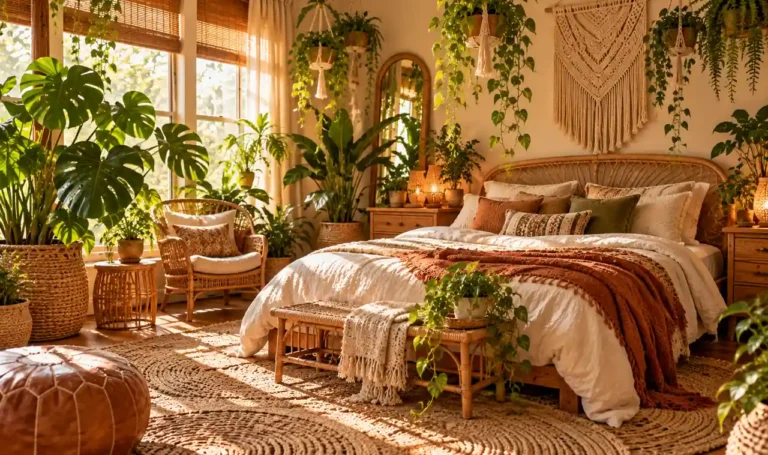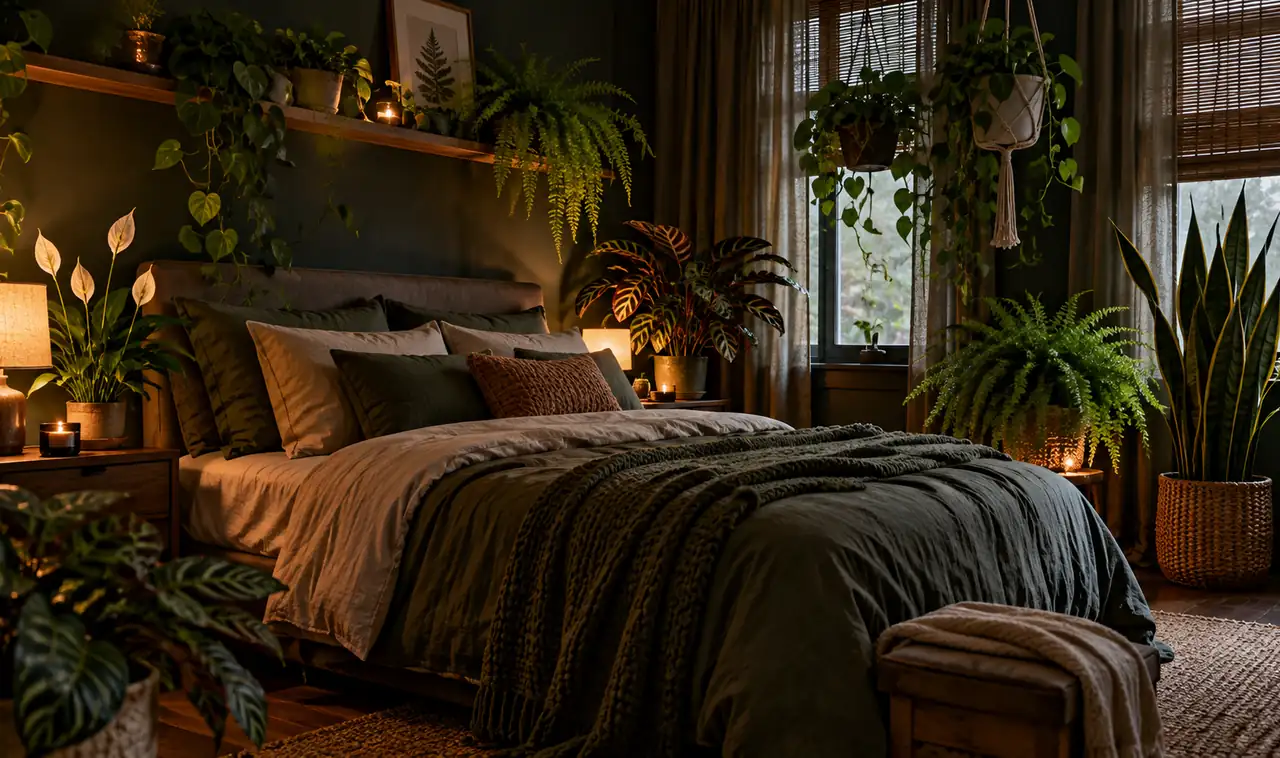
A north facing bedroom can feel like a cave by three in the afternoon. The light goes flat, the corners go dark, and every plant advice you read seems written for someone with a wall of south facing glass. So the plants die, and you decide your room just is not a plant room.
That is not true. These 15 low-light bedroom plants are chosen for rooms with limited sunlight: north facing windows, small high windows, rooms shaded by other buildings. None of them need direct sun, and several actually prefer the shade. They grow slower in dim light, which means less watering and less fuss, not more.
Dark rooms also hide dust and clutter better than bright ones, so a little green goes a long way visually. One healthy plant in a dim corner draws the eye and makes the whole room feel intentional.
Match the plant to the light you have, not the light you wish you had, and your dark corners will turn green.
1. Start With a Snake Plant, the Low-Light Champion
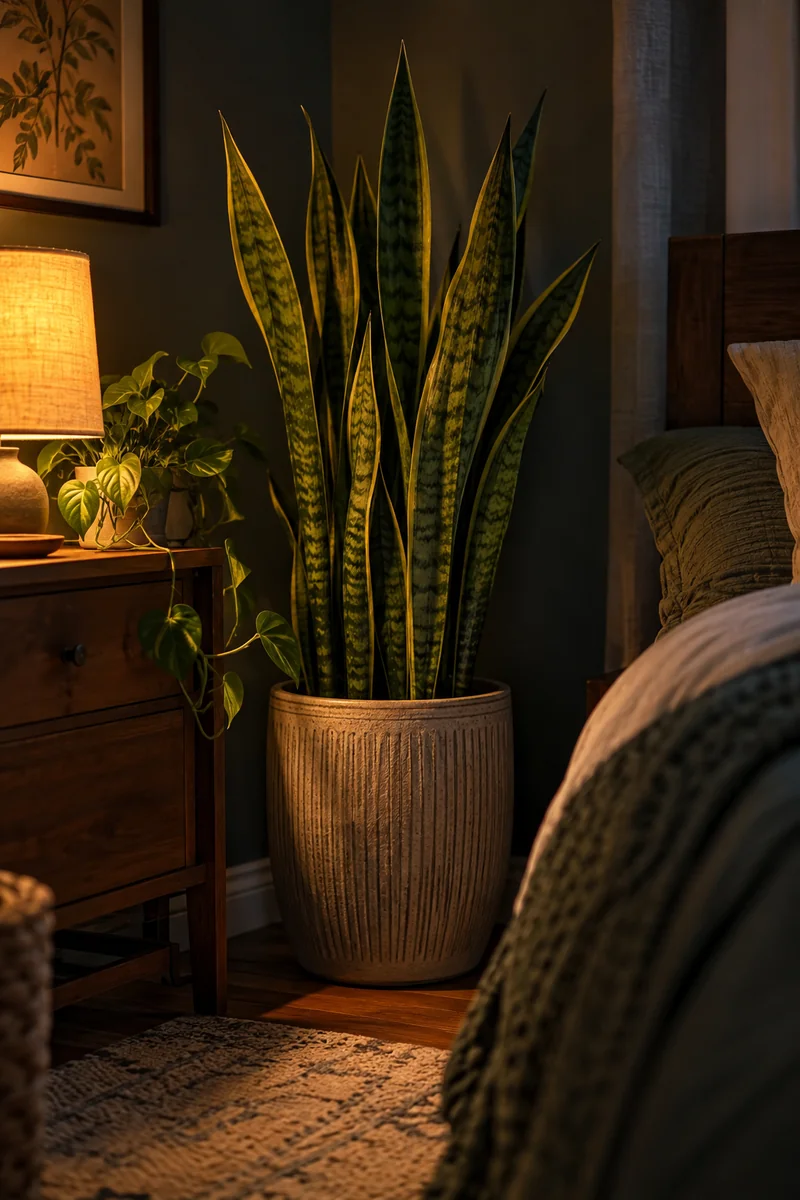
If your bedroom gets almost no direct sun, start here. The snake plant survives light levels that kill nearly everything else, and it does it while looking sharp.
Its upright sword leaves grow slowly in dim rooms, which means less care, not more. Water every three weeks, ignore it otherwise, and it stands tall for years.
2. Tuck a ZZ Plant Into the Darkest Corner
That corner behind the door where nothing grows? A ZZ plant will take it. Its waxy leaves store water and its roots tolerate shade that stops other plants cold.
Growth will be slow in deep shade, and that is fine. A ZZ that barely grows also barely needs you. Water monthly, dust the leaves now and then, and let it be the easy win.
💡 Quick Tip
In very dark rooms, water even less than you think. Low light means slow drinking, and soggy soil is the real killer.
3. Let Pothos Trail Through the Shade
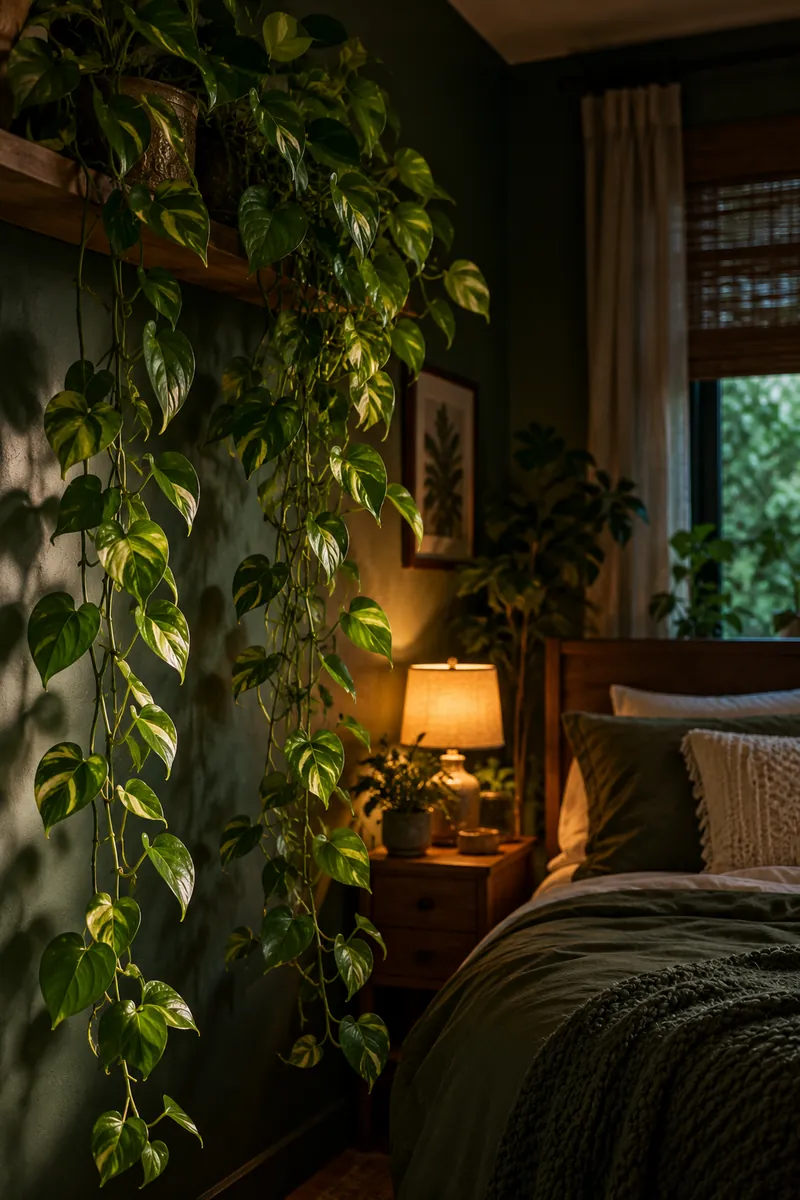
Pothos is famous as a bright room plant, but it tolerates shade better than its reputation suggests. In low light it grows slower and the variegated types turn more green, which is the plant adapting, not failing.
Hang it high where whatever light exists is strongest, usually near the top of the window. The trailing vines soften dark walls and draw the eye through gloom.
4. Try the Cast Iron Plant, Nearly Indestructible
The cast iron plant earned its name. It survives dark hallways, irregular watering, and rooms where other plants give up within weeks.
Its broad dark leaves look lush even in gloom, and it asks for almost nothing: occasional water, no direct sun ever. If you have killed every plant you ever owned, this is your fresh start. Small dim rooms reward this kind of easy thinking, the same approach behind smart small space styling.
What to grab first
5. Enjoy Peace Lily Blooms in Soft Light
Most flowering plants demand sun. The peace lily blooms in soft, indirect light, which makes it the rare flower for dark bedrooms.
Its white blooms rise above glossy leaves for weeks. It even droops slightly when thirsty, then perks up after watering, so it teaches you its rhythm. Keep it out of direct sun, which browns the leaves.
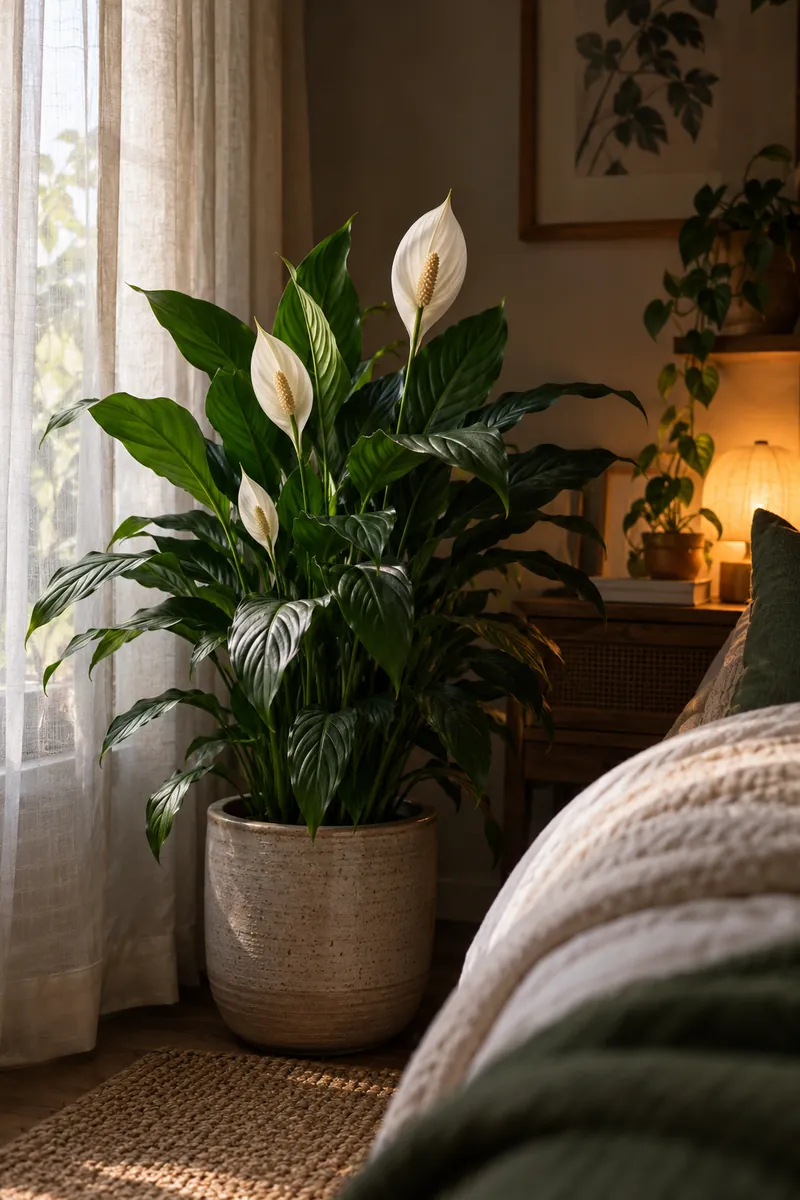
Flowers in a dark room are possible. You just have to pick the one plant that evolved for it.
6. Brighten Gloom With a Chinese Evergreen
Dark rooms need color more than bright rooms do. The Chinese evergreen brings it, with leaves patterned in silver, pink, and red that glow even in shade.
It is one of the most shade tolerant decorative plants you can buy. Newer varieties hold their color in surprisingly little light.
Pick a variety with silver or red patterning for the most color in shade.
Place it where you will see it daily, like beside the bed.
Water when the top two inches dry out, and wipe leaves monthly.
7. Trail a Philodendron Down a Dark Wall
Philodendrons are pothos’s quieter cousins, and they love shade. Their heart shaped leaves trail beautifully down dark walls where brighter plants would stall.
Hang one high and let it fall. In low light it grows slowly, so a yearly trim keeps it tidy. The deep green reads rich against dim walls, adding depth where flat paint feels dull.
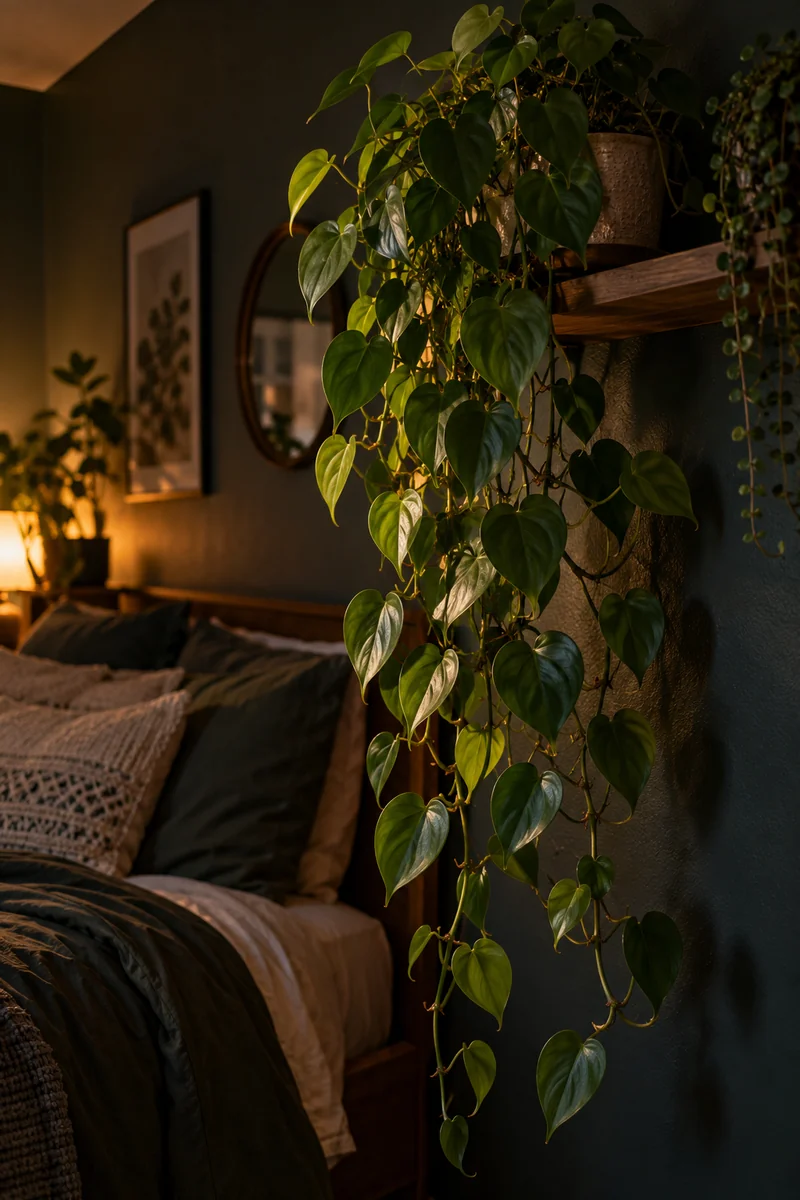
A dark empty wall that makes the room feel smaller and gloomier.
Green vines softening the wall and pulling the eye through the shade.
8. Keep a Spider Plant in Indirect Light
Spider plants want bright indirect light, not sun, which makes them natural fits for north facing bedrooms. They sulk in direct rays but thrive in the soft glow near a shaded window.
They also make free plants. The dangling babies root in water in days, so one purchase becomes gifts for every room. Compare a hanging spider plant with a floor one and the hanging version always looks better in dim rooms, since it catches more of the available light.
| Hanging Up High | Sitting on the Floor |
|---|---|
| Catches the brightest light near the ceiling. | Sits in the darkest zone of the room. |
| Vines cascade where you can see them. | Leaves get crushed in walkways. |
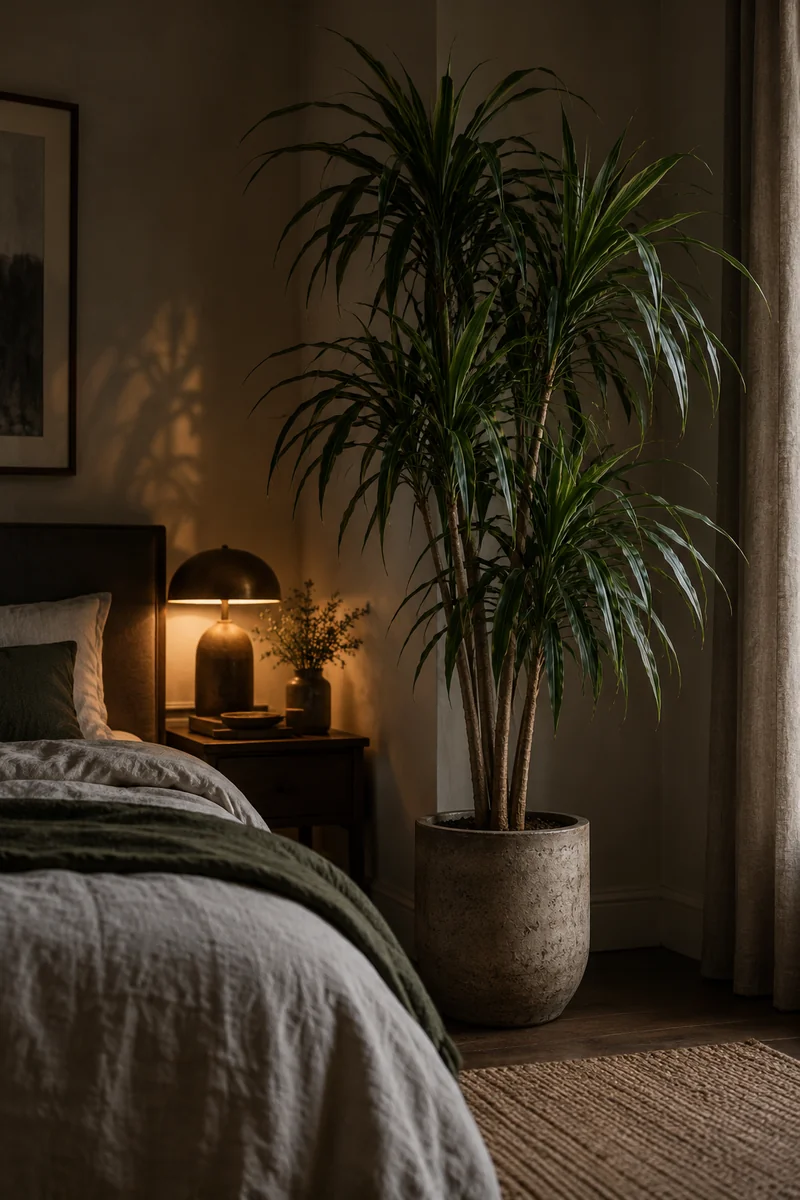
9. Add Height With a Dracaena in Dim Rooms
Low light rooms often feel flat because everything sits at the same level. A dracaena adds height, with strappy leaves rising from a slim trunk.
Several dracaena types tolerate dim conditions well, especially the Janet Craig with its deep green leaves. It grows slowly in shade, which suits a bedroom, and needs water only when the soil dries out.
10. Choose a Parlor Palm for Classic Shade
The parlor palm has sat in dim Victorian rooms for over a century, which tells you everything about its shade tolerance. It wants indirect light and nothing more.
Its feathery fronds bring a soft, classic look that suits bedrooms better than spiky modern plants. Keep the soil lightly moist and it stays elegant for years with almost no attention.
💡 Quick Tip
Brown leaf tips usually mean dry air, not low light. A weekly misting keeps the fronds soft and green.
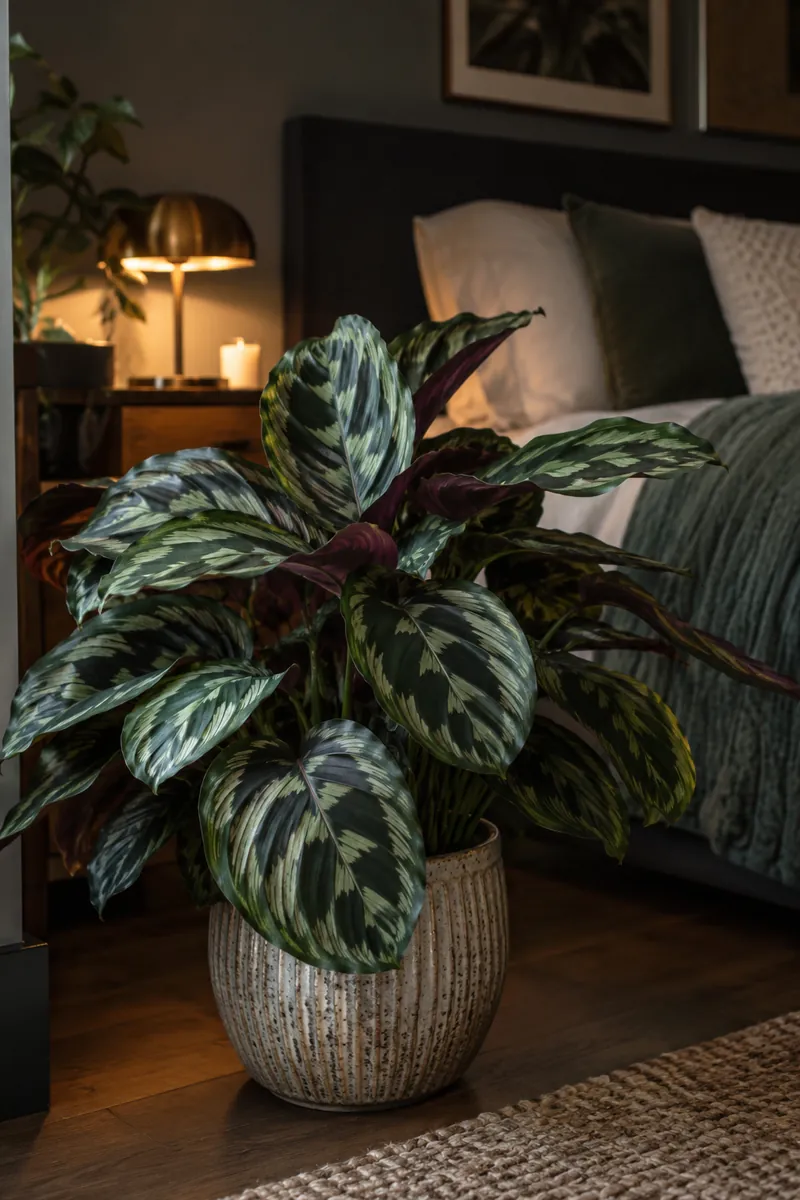
11. Show Off a Calathea’s Patterned Shade Leaves
Calatheas do not just tolerate shade, they prefer it. Direct sun scorches their painted leaves, while dim corners keep the patterns vivid.
They ask for steady moisture in return. Water when the top inch dries and keep them away from heating vents. The leaves fold up at night and open each morning, a small daily show for a dark room.
Use room temperature water to avoid shocking roots.
Group with other plants for shared humidity.
Any direct sun, even morning rays through glass.
Letting the soil dry out fully between waterings.
12. Let a Fern Love Your Humid Dark Corner
Ferns evolved for forest floors, which are nature’s low-light rooms. A Boston fern in a dim bedroom corner is simply at home.
What ferns want is humidity more than light. Bathrooms that open into bedrooms are perfect, or mist the fronds a few times a week. The arching green softens hard furniture edges beautifully.
What to grab first
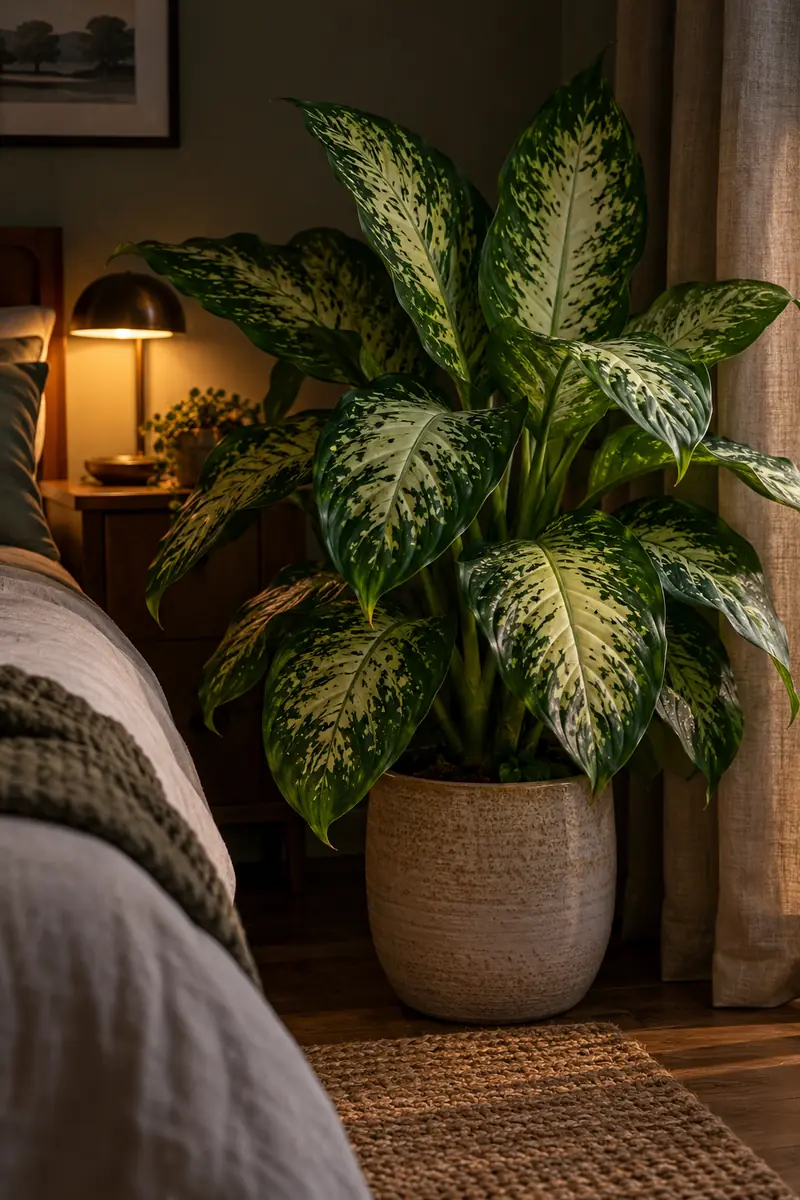
13. Go Bold With Dieffenbachia Foliage
Dark rooms can handle bold leaves. Dieffenbachia’s big cream splashed foliage lights up a dim corner like a lamp, no electricity needed.
It tolerates low light well, though the variegation stays brightest with a little more. Keep it away from pets that chew, since the leaves irritate if eaten. Otherwise it is an easy, dramatic shade plant.
14. Grow Lucky Bamboo in Water, No Sun Needed
Some plants barely care about light at all. Lucky bamboo grows in plain water and tolerates the dimmest rooms, as long as it gets some ambient glow.
Stand the stalks in pebbles inside a glass vase, cover the roots with water, and change it every two weeks. It is the lowest commitment green you can own.
- ▸No soil means no mess and no repotting.
- ▸Survives in rooms with only ambient light.
- ▸Change water every two weeks, that is the whole job.
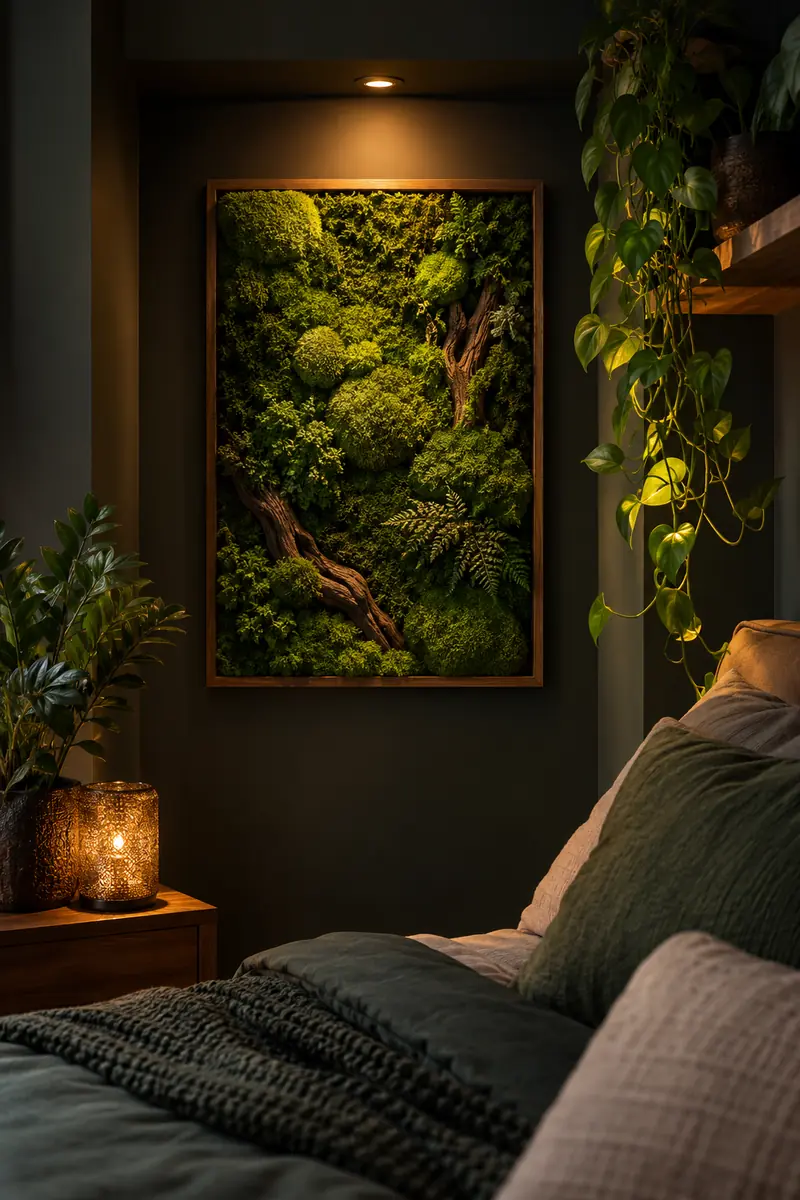
15. Use Preserved Moss Where Zero Light Reaches
Every bedroom has one spot no plant can survive: inside a dark wardrobe wall, a windowless alcove, a hallway corner. Preserved moss goes there.
It is real moss, treated to stay soft and green for years with zero light and zero water. A framed panel looks like living art and never fades in the dark. For styling ideas that use dried and preserved greens, see our greenery bedroom ideas and small-bedroom plant ideas, which both lean on texture when light is short.
Zero light does not mean zero green. It just means choosing plants that evolved for the shade.
Low light is not a flaw in your bedroom, it is just a condition, and these plants treat it that way. Start with the toughest one that fits your darkest corner, learn how little it asks of you, and add more only when you feel like it. A dim room with the right green feels calm and cocoon like in a way bright rooms never do. These low-light bedroom plants prove the shade was never the problem, only the plant choice.
Save this list for your next plant shopping trip, and pin the shade lover that fits your room so it is waiting when you are.