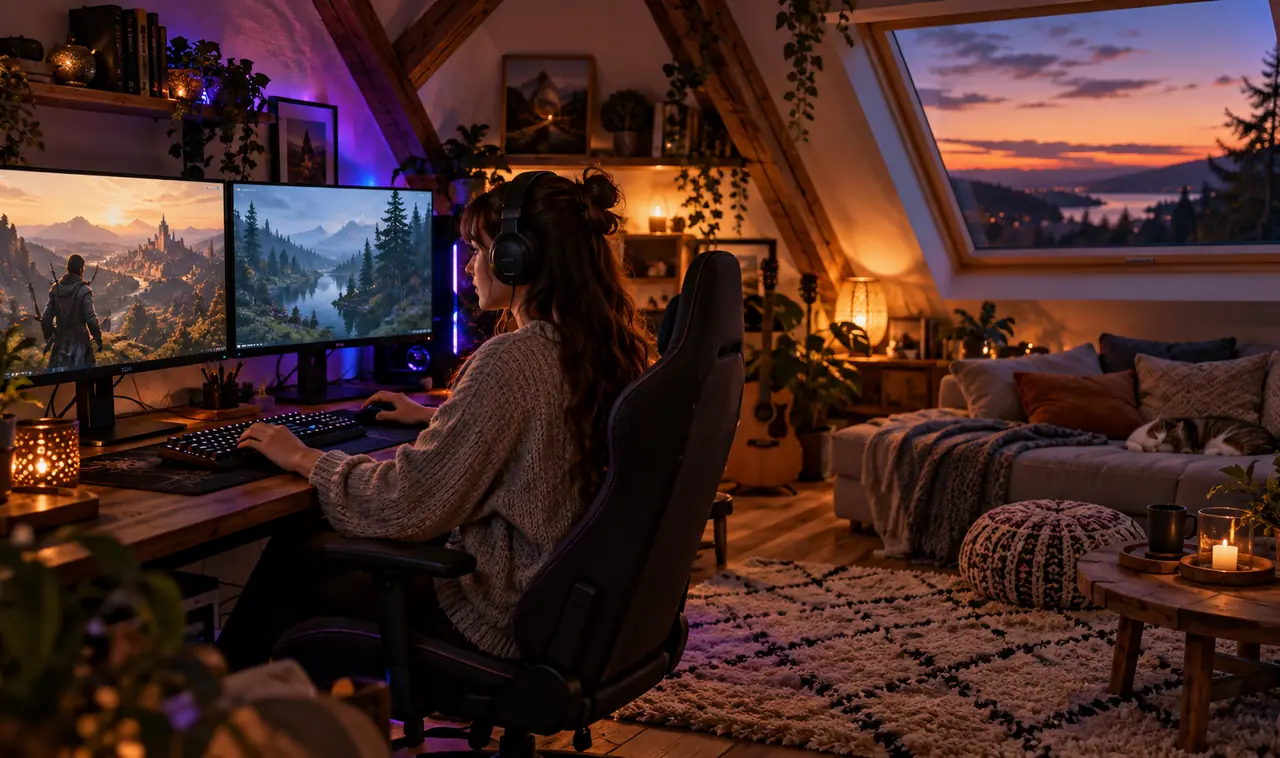
Most attics lose their best room to storage boxes. The slope that makes the space awkward for a bedroom is exactly what makes it feel private and shut away for gaming, and that is the whole appeal. The catch is that attics punish lazy planning. Heat collects under the roof, the low edges steal headroom, and sound carries straight down into the rooms below.
The attic gaming room ideas in this list deal with those three problems first, then get to the fun parts like screens, seating, and lighting. Measure your ceiling heights before you spend anything, because in an attic, the tape measure makes more decisions than your wishlist does. Start at the highest point of the ceiling and work outward from there, and most of the layout choices in this list fall into place on their own.
1. Put the Main Desk Where the Ceiling Stands Tallest
Headroom decides the layout, not the floor plan.
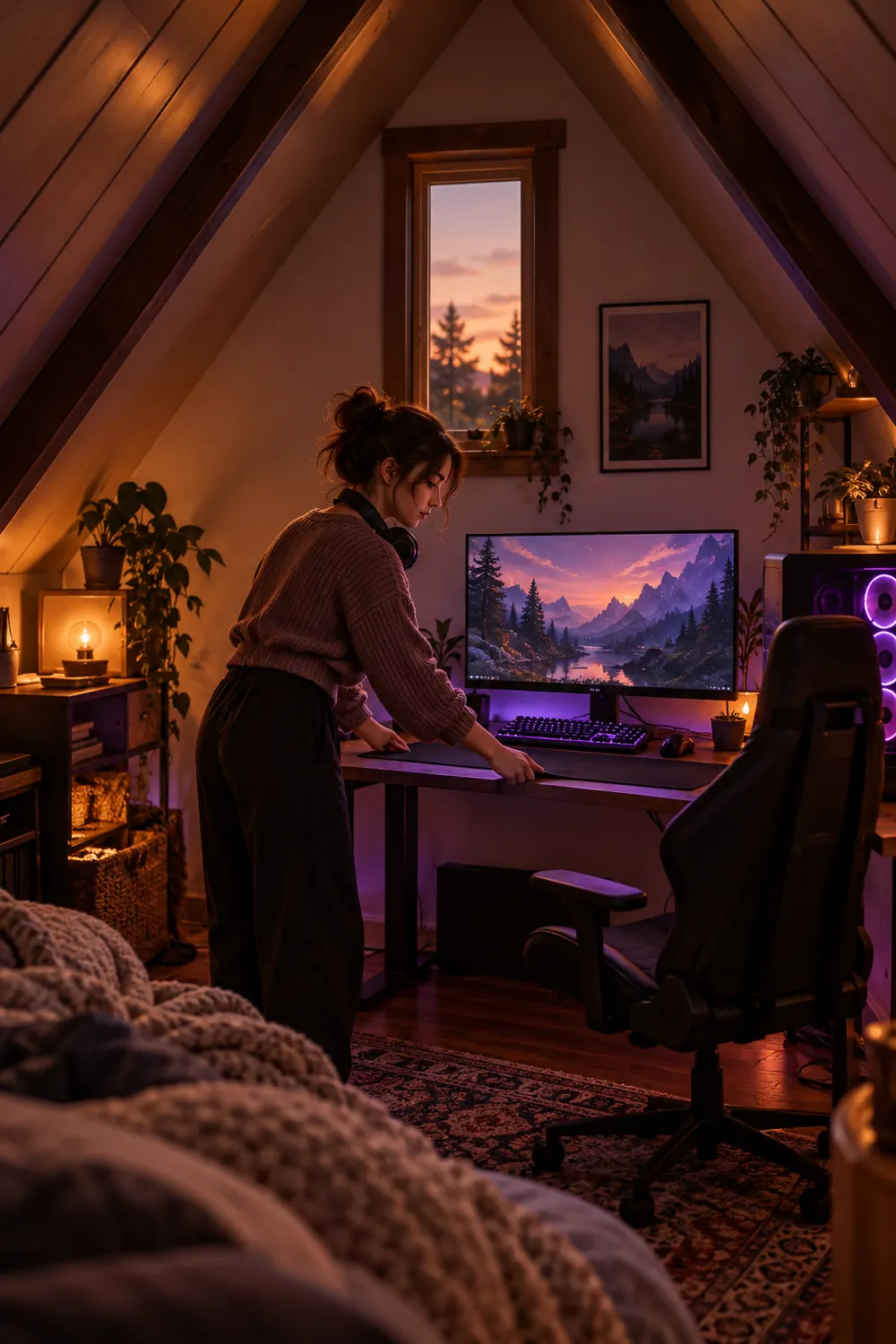
Stand at the ridge line, the highest strip of the room, and mark where you can stand up straight without ducking. That strip is where the desk and chair belong, because you sit and stand there more than anywhere else. Push the desk against the tall gable wall or run it along the center wall, and leave the sloped sides for things that never need headroom. A desk placed under the slope feels cramped within a week, no matter how good it looks on day one.
2. Turn the Low Eaves Into Storage With Short Shelves and Cubbies
The strip of floor where the ceiling drops below chest height is useless for people and ideal for stuff. Low bookcases, cube shelves, and plastic tubs on wheels all slide into that dead zone and hold the things every gaming room collects: spare controllers, game cases, headsets, and board games for offline nights. Label the tubs, because you will forget which one holds the extra cables by the second month. The same trick rescues the awkward spot under a staircase, as these under-stairs gaming nook ideas show.
3. Fit Blackout Blinds on Skylights So Daytime Screens Stay Readable
A skylight over a screen is a glare machine from late morning onward. Made to measure blackout blinds that clip into the skylight frame fix it in one afternoon, and most brands print the frame code you need right on the window. Keep the fabric dark on the room side so reflections die down, and leave a small gap at the edges if you still want a sliver of daylight for breaks between matches.
💡 Quick check: hold your phone at screen height at noon. If you can see the window reflected in it, that spot needs a blind, a different angle, or both.
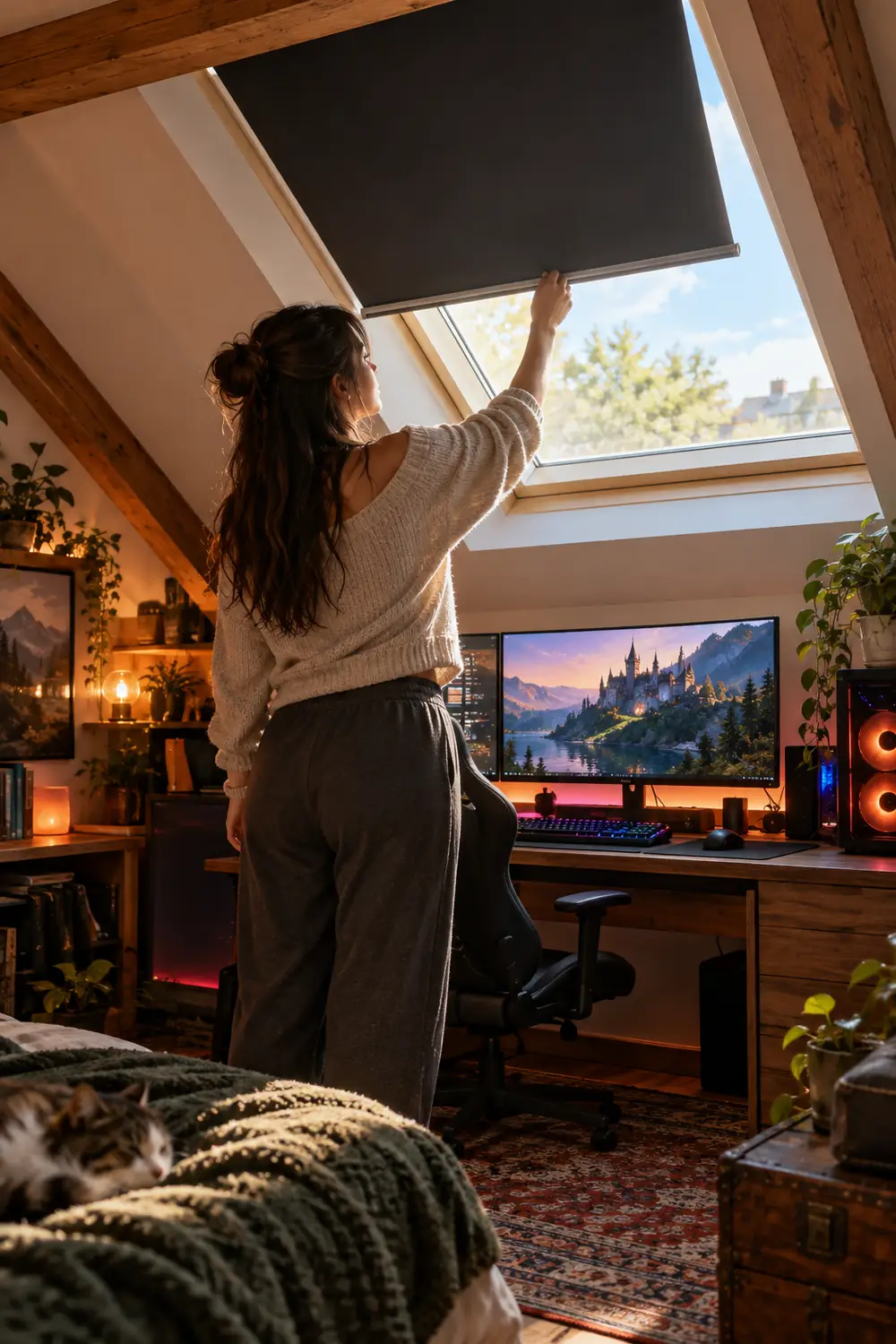
4. Cool the Room Before You Buy a Single Poster
Heat rises, and in summer the attic holds all of it. A gaming PC and a console add their own heat on top, so a room that feels fine in April can turn miserable by July. Plan the fix early: a small split unit if the budget allows, a portable air conditioner vented through the window if it does not, and a plain desk fan moving air across the desk either way. Your hardware runs quieter too, because the fans inside the case slow down when the room itself stays cool.
5. Lay a Thick Rug and Underlay So the Floor Below Stays Quiet
Attic floors are often just boards over the ceiling of the room beneath, and every chair roll and dropped controller lands downstairs as a thud. A dense rug over proper underlay is the cheapest fix that actually works.
Quiet floor kit
- Thick pile rug, one size bigger than the desk zone
- Rubber backed underlay under the whole rug
- Soft mat under the chair wheels
- Felt pads on every furniture foot
Test it by having someone stand in the room below while you roll the chair around. Silence, or something close to it, is the goal.

6. Mount the Big Screen on the Gable End Wall
Every attic has one tall, flat wall: the gable end. That is the natural home for the main screen, because it is the only wall with room for a TV or a projector screen at eye level when you sit down. Center the seating on it, keep the screen away from the skylight wall to dodge reflections, and run the cables down one corner in a plain trunking strip. Movie nights and split screen sessions both work better when nobody watches at an angle.
7. Choose Low Seating That Sits Happily Under the Slope
Tall sofa backs and sloped ceilings do not mix.
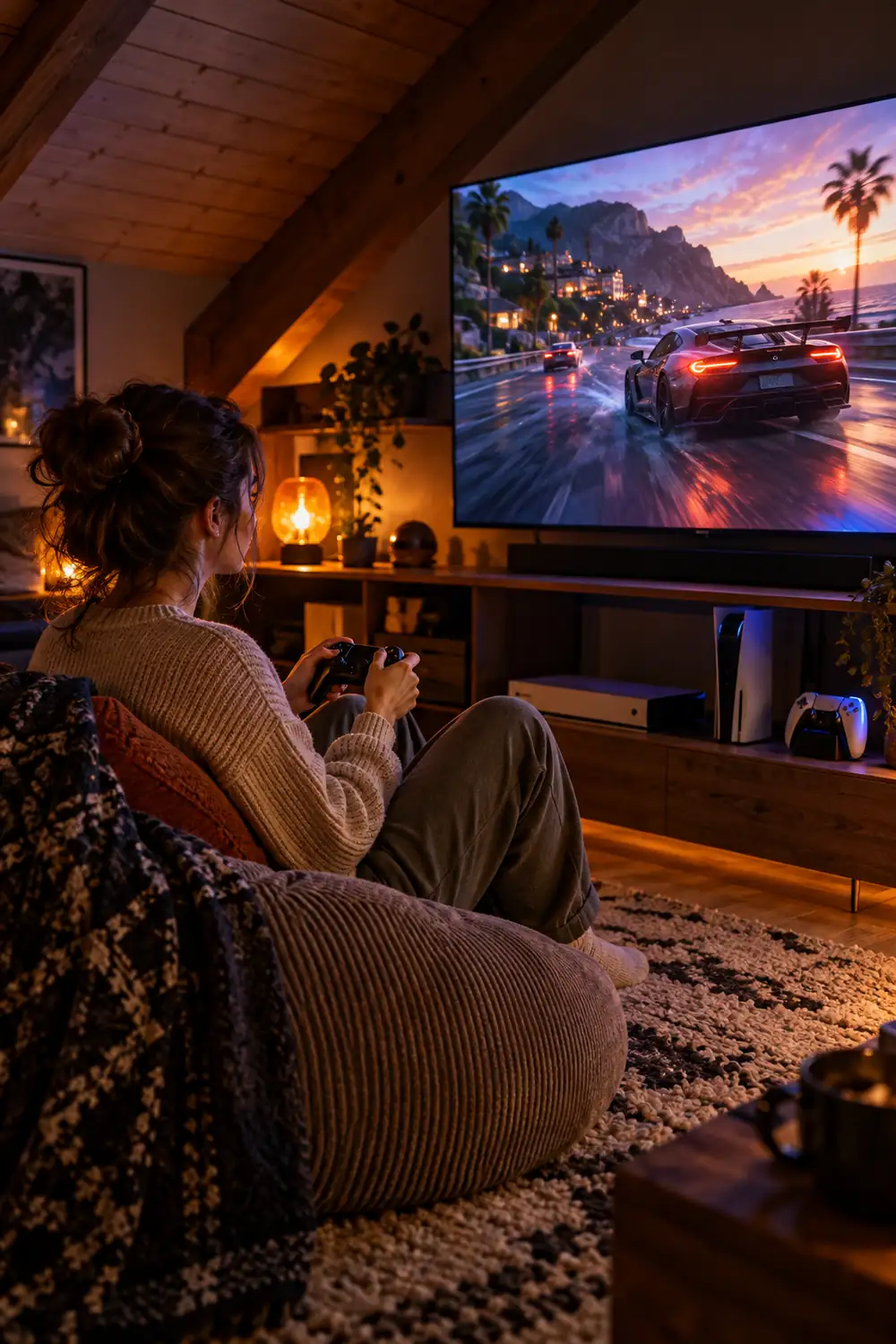
Floor cushions, a low futon, beanbags, and a short backed lounge chair all fit where a standard sofa would block the room. Test the sight line before you commit: sit in the seat, look at the screen, and check that the slope is not crowding the top of your view. Removable covers matter up here, because snacks and attic dust find fabric fast.

8. Run LED Strips Along the Beams Instead of Adding Lamps
Exposed beams are a gift for lighting. Stick LED strips along the underside of each beam and the light bounces off the slope, so the whole ceiling glows without a single lamp eating floor space. Warm white suits film nights, while full color strips suit late sessions, and the better setups let you switch between the two. For color schemes that stay tasteful, borrow a few tricks from these rgb gaming room ideas, and keep the brightness low enough that the screen still wins.
9. Build a Console Corner Under the Slope With a Low Media Unit
A short media unit, the kind sold for under window sills, slides neatly under the slope with a mid size TV on top. Consoles live in the open compartments where air can move, and the slope above the TV stops being wasted space once a shelf goes in for controllers and charging docks.
Low, wide, open backed for airflow
Charging dock and controller stand
Power strip with a switch, not buried
10. Wall Mount Your Monitors and Win Back the Desk
Attic desks are often narrower than standard ones, squeezed between the slope and the swing of the door. A wall mounted arm lifts the monitor off the desk entirely, which frees the surface for a keyboard, a drink, and your elbows. Mount into studs or the gable wall rather than thin slope boards, and tilt the screen down a touch, since attic seating often sits lower than a normal desk chair. The cables drop straight behind the desk, which keeps the whole setup looking calmer than it has any right to.
11. Park a Mini Fridge and Snack Shelf Beside the Stair Door
The trip downstairs for a drink breaks the flow of a session, and attic stairs are usually the steep kind you do not want to climb half asleep. A small fridge on a sturdy shelf near the door solves it. Keep it out of the desk zone, because fridge compressors hum, and put a small bin next to it. Skip the bin and the wrappers will migrate across the floor by the end of the week, guaranteed.
12. Use the Dead Corner for a Bartop Arcade Cabinet
Most attics have one corner where the slope, a chimney breast, or a water tank steals the usable space. A bartop arcade cabinet on a small stand fits that corner exactly, and it gives guests something to play while the main desk is taken. It is also the one machine that works at standing height in a spot where nobody could sit down anyway. Add a short strip of light above it and the corner stops looking like an afterthought.
13. Hide Every Cable in Trays Along the Knee Wall
The knee wall, the short vertical wall where the slope meets the floor, is a ready made cable highway. Screw vented cable trays on at skirting height and run the power and display leads through them, so nothing dangles across the walkway and nothing gets kicked loose mid game.
⚠️ Heat warning: never bury a power strip under insulation, and never coil spare cable into a tight bundle. Trays stay open, strips stay reachable, and the attic heat does the rest of the safety talk for you.
14. Split the Room Into a Play End and a Lounge End
A long attic works best as two small rooms sharing one roof. Desk and screens at one gable end, soft seating and a low table at the other, with the edge of the rug or a shelf marking the border. The split keeps headsets off during film nights and gives the room a purpose on evenings when nobody feels like playing. If the lounge end risks feeling like leftover space, these cozy gaming room ideas translate well to sloped ceilings.
15. Measure the Stair Turn Before Ordering Any Furniture
More attic projects stall on the stairs than anywhere else. Desks, sofas, and shelving all have to survive a narrow door, a tight turn, and often a hatch. Measure the tightest point, save it in your phone, and check it against every product page before you pay. Flat pack furniture earns its keep up here. Anything that arrives in one rigid piece is a gamble, however good the discount looks on the day.
16. Paint the Slopes Dark and Let the Room Lean Into the Den Feel
White slopes make an attic feel taller, but they also bounce screen light around and show every scuff. A deep shade on the slopes, charcoal, forest green, or navy, absorbs stray light and makes the ceiling look deliberate instead of leftover.
Test the color on the slope itself first. Light hits an angle differently, and a shade that looks rich on the tin can turn flat on the ceiling.
Painting every wall dark. Keep one light wall, usually the gable end, so the room glows instead of closing in.
17. Give Collectibles the Tall Wall Nobody Is Using
Figures, boxed games, and framed posters need flat wall and a little height, and the gable end above the screen is usually already spoken for. The wall beside the door is the spot most people forget. Fit simple floating shelves in a loose grid, keep the heaviest pieces on the lowest shelf, and check what your fixings are biting into before anything goes up. Attic walls near the slope are often stud and board rather than brick, and a shelf that feels solid in plasterboard can still let go under a row of hardback art books.
18. Keep a Fold Down Second Desk for Co op and Guest Sessions
A wall mounted fold down desk, the kind sold for small kitchens, gives a second player a real setup without stealing floor space all week. Add a small TV or a spare monitor on the wall above it, keep a folding chair in the eaves storage, and the room handles two players after about five minutes of setup. When the desk folds away, the walkway to the stairs stays clear, and in a room this shape, that clear path matters more than any single feature on this list.
An attic will never behave like a normal spare room, and that is the point. The slope that limits your furniture choices also shuts out the noise and traffic of the rest of the house, which is what a gaming room wants most. Start with cooling, a quiet floor, and the desk at the tall end, and the rest of these attic gaming room ideas can arrive one payday at a time. Save this list before your next trip up the stairs, and measure twice while you are up there.