
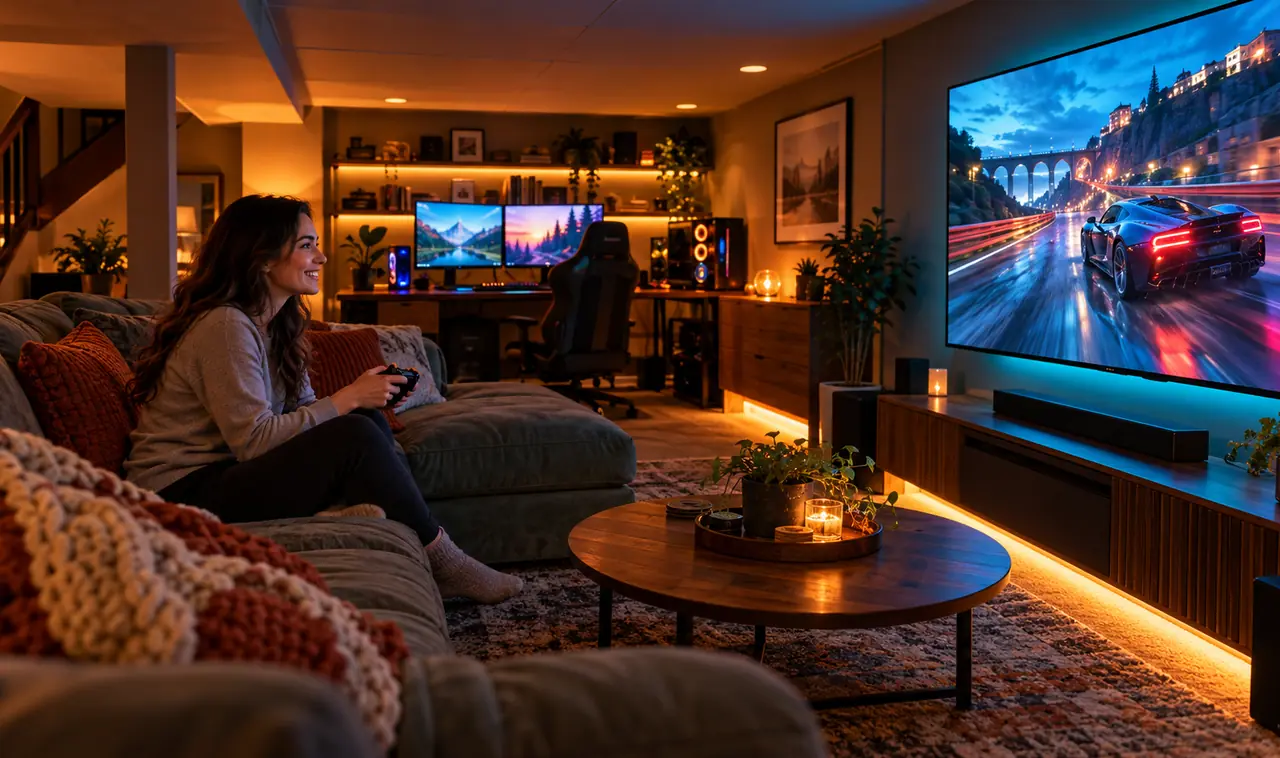
Pipes overhead, one small window, and a sofa that has been down there for years. That is the starting point for most basements, and it is why so many setups end up squeezed into a bedroom corner instead. A basement gives you real space, distance from the rest of the house, and walls that forgive late night noise. What it does not give you is light, height, or dry air, and every idea below works around one of those three limits. These Basement Gaming Room Ideas skip the showroom talk and stick to layouts, lighting, and storage that hold up in a real room below ground. Pick the zones that match how you play, and the rest of the plan gets much easier.
Anchor the Room With One Main Gaming Station
Every good layout starts with a single decision, which wall holds the main screen. Put your primary desk or console setup on the longest wall, centered if you can, and build everything else around it. One clear focal point beats gear scattered on all four walls. Mark the center with painter’s tape, sit where the chair or sofa will go, and check the viewing distance before anything gets drilled.
Split the Space Into Zones With One Job Each
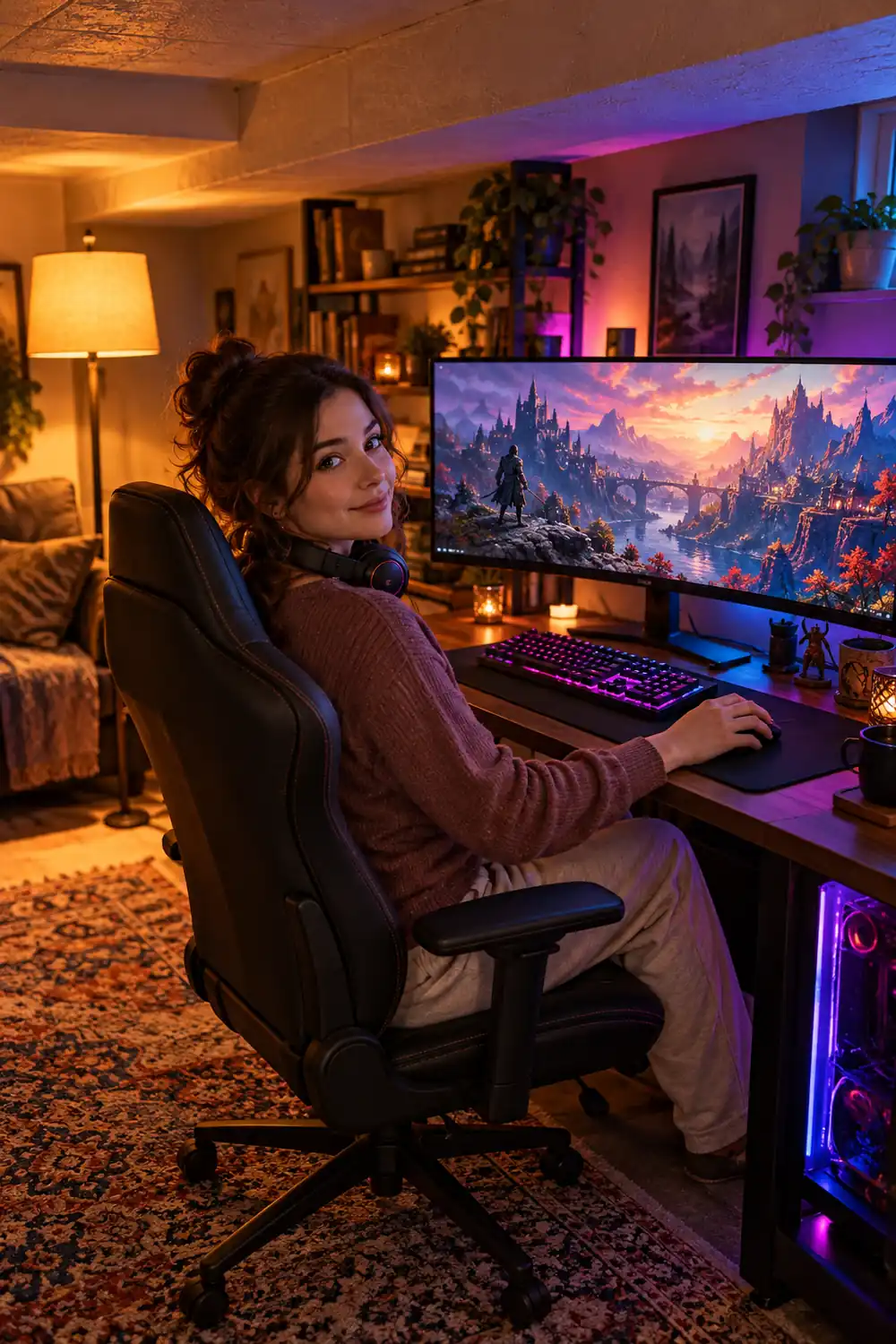
A basement feels bigger when each area does one job. One end for focused PC play, one for couch gaming, a corner for storage and spares. Rugs do most of the dividing down here. A large rug under the sofa and a smaller one at the desk tells your eyes where one zone ends, no partitions needed. Keep the walkways between zones wide enough to carry a drink tray without turning sideways.
- PC zone: desk, chair, one task lamp
- Couch zone: sofa, big screen, side tables
- Quiet zone: shelves, spares, the charging hub
Give Retro Cabinets a Corner of Their Own
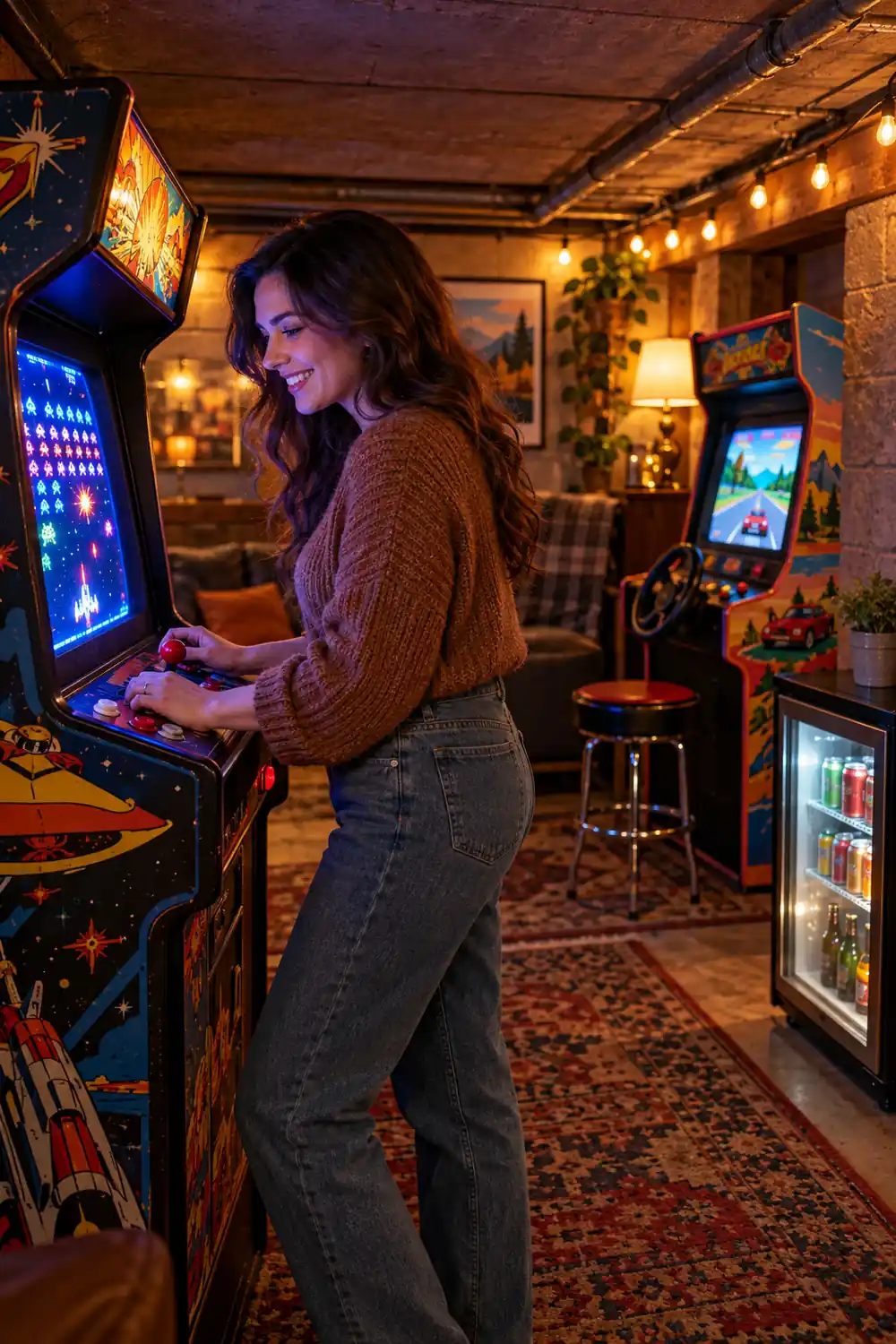
Arcade cabinets and retro consoles deserve better than a spot beside the water heater. Claim one corner, run a strip of warm light above it, and group two or three machines with a small stool each. The framing makes even one cabinet feel like a display instead of clutter. Short on machines? One cabinet plus a mini fridge in a matching color still reads as a zone. For bigger layouts, borrow tricks from these home arcade room ideas and scale them down to fit your corner.
Light in Layers, Not One Bare Ceiling Bulb
Basement ceilings sit low, and the stock fixtures are usually a bare bulb or a tired panel, so one overhead light washes out screens and leaves faces in shadow. Work in three layers instead. Bias light behind the main screen eases eye strain, a floor lamp with a warm bulb covers the sofa, and LED strips along a shelf edge carry the room after dark. Separate switches or smart plugs let movie nights and match nights use different light.
💡 Quick Tip
Judge paint colors at night, under your own lamps. Basement light runs warm, and a grey that looked clean upstairs can turn muddy by 8 pm.
Soften Echo and Noise With Fabric Before Foam
Bare walls bounce sound straight back at you, and game audio leaks up through the floor to the rooms above. Start with the cheap soft stuff. A thick rug on a dense pad, curtains over the small windows, and upholstered seating absorb more echo than most people expect. Save acoustic panels for the wall behind the speakers once the soft layer is working. These soundproof gaming room ideas cover ceiling and door fixes when you are ready for round two.
Claim the Under-Stair Nook for a Second Setup
The triangle under the stairs usually holds holiday boxes and a vacuum. It also fits a compact desk, one monitor, and a chair with room to spare. That makes it a natural second station for a partner, a younger player, or a dedicated streaming PC. Run one power strip from the nearest outlet, add a small fan for airflow, and hang a curtain across the opening as a door that costs almost nothing.
Park a Racing Rig in the Corner Nobody Wants
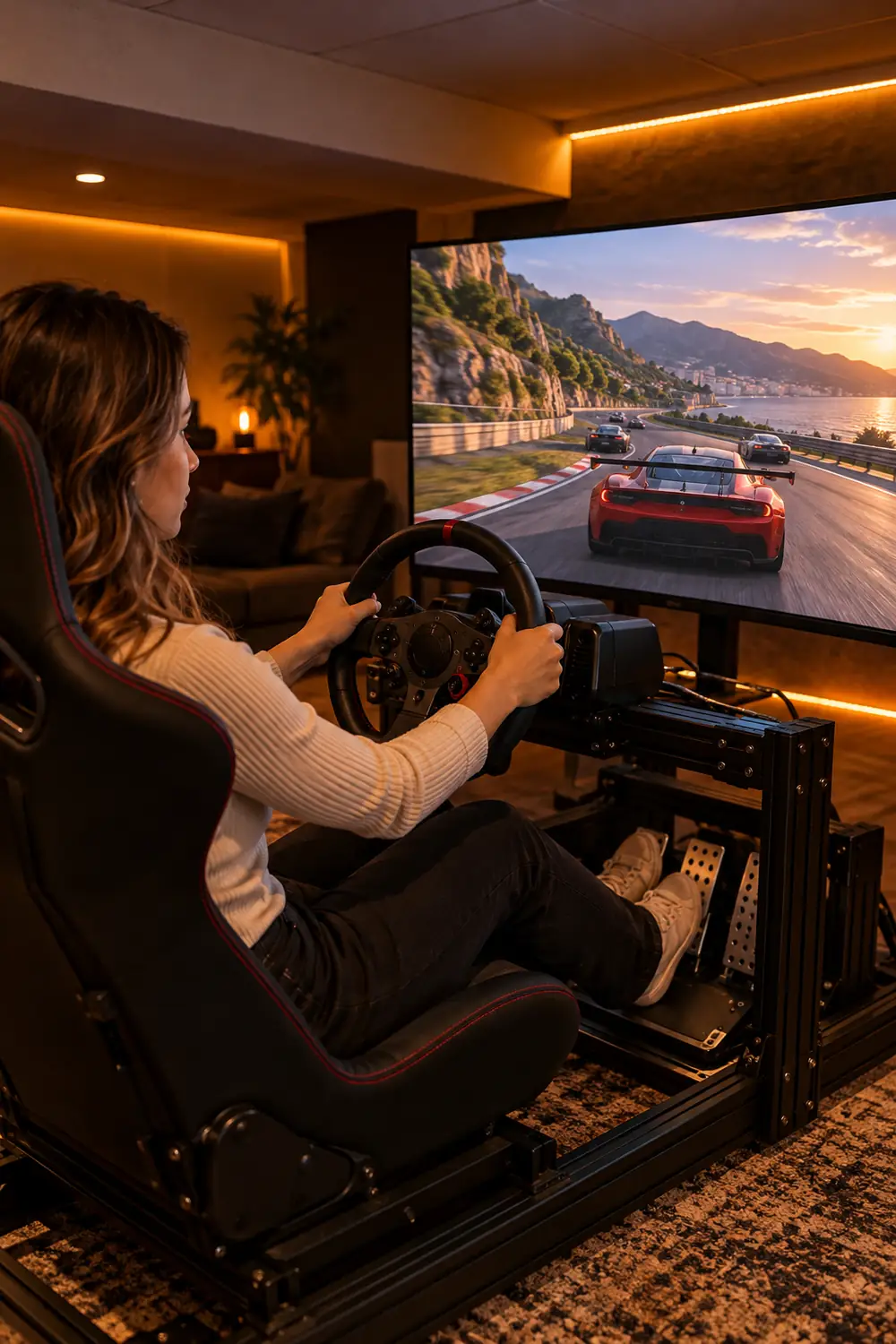
Somewhere in the room there is an awkward corner, too dark for seating and too tight for shelves. A racing rig loves that corner. Wheel stand, seat, and pedals form one solid block that needs no walkway on three sides. Face the rig toward the room and its screen doubles as a second display for sports when nobody is driving. Brace it against the wall, though. Hard braking will walk a loose rig across the floor.
Paint the Screen Wall Dark, Keep the Rest Light
A deep charcoal, navy, or forest wall behind the main screen does two jobs at once. It hides cable runs and scuffs, and it raises the contrast your eyes perceive, so the picture looks richer. Keep the other walls a lighter warm neutral so the room does not shrink. Finish matters as much as color down here.
- Screen wall: flat or matte, deep color
- Side walls: warm light neutral
- Ceiling: plain white to fake a little height
Build the Console Zone Around a Real Sofa
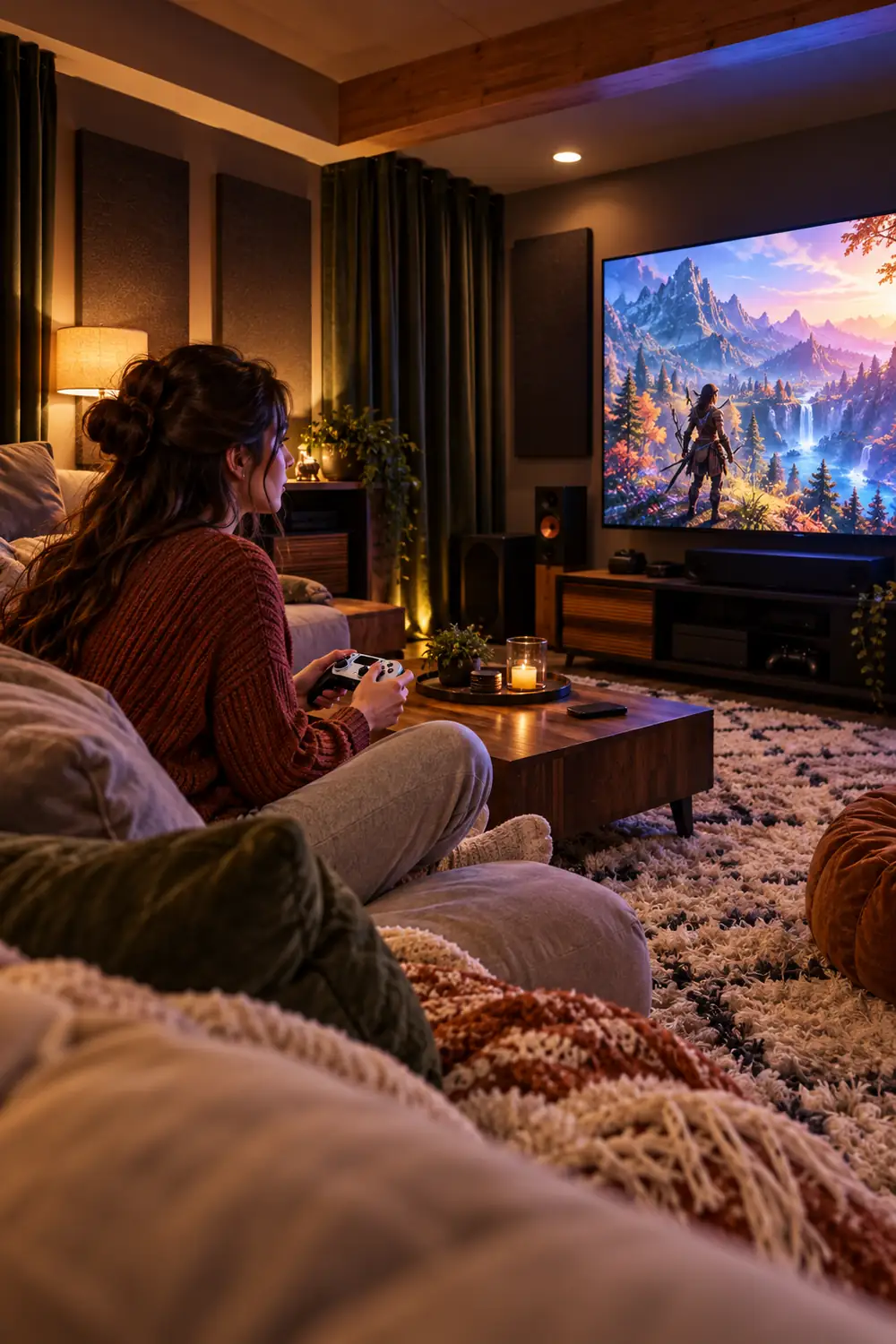
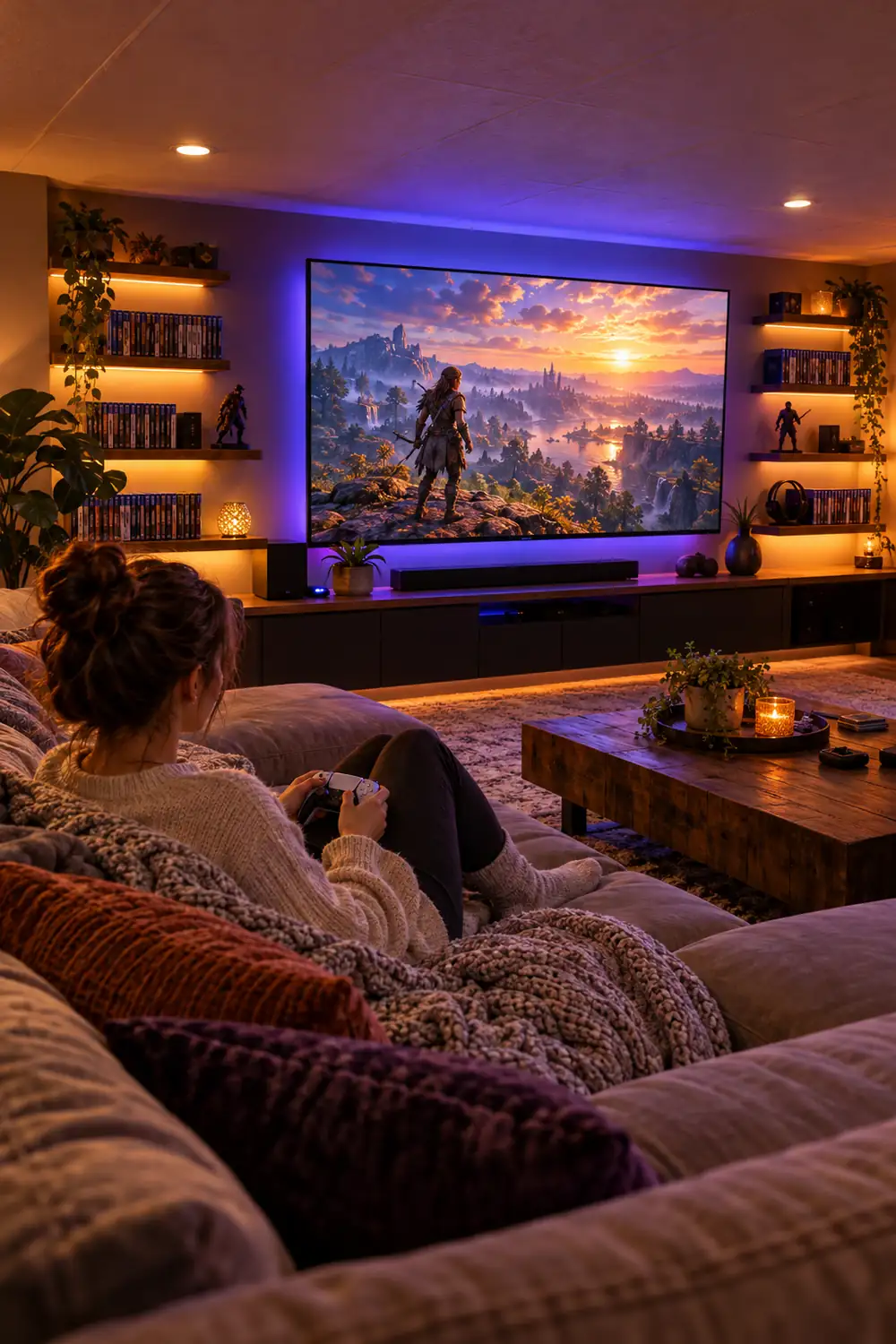
Console gaming deserves seating you can sit in for three hours, not a futon bought as an afterthought. Face a full sofa at the big screen, leave a step of space behind it for a narrow shelf, and trade the bulky coffee table for two small side tables. A viewing distance of about one and a half times the screen width keeps text readable without turning heads. Spare controllers live in a basket on that back shelf, always within reach.
Gather Every Charger Into One Power Hub
Controllers die mid session because their chargers live in four different rooms. Pick one shelf or drawer near the main station and make it the only charging spot in the basement. One dock, one hub, one cable bin, and the nightly scavenger hunt is over.
What the hub needs
Mount the Screens and Float the Shelves
Floor space is the one thing a finished basement never has enough of, so get everything you can off it. Wall mount the TV, float a shelf under it for the consoles, and run cables inside a paintable raceway down to the outlet. Floating shelves hold games and headsets without the visual weight of a bookcase. For more ways to use that vertical space, these gaming room wall decor ideas are a good next read.
Deal With Damp Air Before It Reaches Your Gear
Basements sweat. That moisture corrodes contacts, swells game cases, and grows a smell no candle covers. A dehumidifier sized to the room is not glamorous, but it protects every dollar already spent on hardware. Keep gear a few inches off the floor on stands, and never push fabric seating tight against an outside wall.
Run a dehumidifier with a drain hose.
Store discs and cases above knee height.
Carpet laid straight onto cold concrete.
Furniture blocking the room’s air vents.
Hang a Second Screen for Spectators and Streams
One screen serves the player. A second, smaller screen serves everyone else in the room. Angle it from the sofa zone so friends can follow a stream, a match, or the score while the main screen stays in play. During tournaments it runs brackets or chat. An old TV you already own is exactly right for this job, which keeps the cost at one wall mount.
Choose Low Furniture That Respects a Low Ceiling
Tall shelving and hanging lamps make a seven foot ceiling feel like six. Shop for low profile pieces instead, and the sight lines open right up. The same rule covers storage: short bookcases beat tall ones you have to duck past.
- Media console under twenty inches tall
- Platform sofa or low backed chairs
- Flush mount lights, nothing hanging
Put Snacks and Drinks on Their Own Station
Drinks and keyboards mix badly, and the trip upstairs breaks every session at the worst moment. Claim a bar cart, a short counter run, or one sturdy shelf near the stairs for a mini fridge, a snack bin, and a stack of coasters. Distance is the whole point. Snacks live over there, controllers stay dry over here, and the one house rule enforces itself.
Mark Out a VR Corner With Room to Swing
VR needs the one thing basement clutter hates, an empty patch of floor. Tape a clear rectangle in the most open area, move the coffee table out of it, and store the headset on a wall hook at the edge so the space stays open between sessions. A soft mat inside the border warns your feet before your hands find a shelf.
Line One Wall With Game and Display Shelves
A collection spread across four walls reads as mess. The same collection on one wall of matching shelves reads as a display. Group games by console, stand a few favorite cases facing out, and leave a third of every shelf empty so the eye gets a rest. A short LED strip along one shelf adds glow without heat near the boxes.
Hide the Overflow Behind Curtains and Closed Doors
Open bins and stacked boxes are where basement rooms start to look like storage units. Swap the worst offenders for closed cabinets, or hang a curtain rod across a shelving bay and let one long curtain do the hiding. It costs little, takes an afternoon, and the room calms down fast. Keep weekly grabs at the front so the curtain never becomes a daily fight.
Add Guest Seating That Folds, Stacks, or Rolls
Game nights double the headcount, and permanent chairs for eight eat the floor all month. Keep folding chairs and floor cushions in the closet or under the stairs, and pick an ottoman on casters that works as seat, footrest, and side table. When the night ends, everyday layout comes back in about five minutes. Nobody misses the spare chairs the other twenty nine days.
Keep One Corner Free for Table Games
Not every game night needs a screen. A bar height table or a sturdy card table in the last corner covers board games, card tournaments, and the friend who would rather watch with a drink in hand. It also gives spectators a home that is not the arm of your gaming chair. Fold it flat against the wall afterward and the corner disappears back into the room.
Start with the station, then the zones, then the light. That order solves most basement problems before they start, and it stops you buying decor for a layout that does not work yet. Pick three or four of these Basement Gaming Room Ideas that match your room and your games, and leave the rest for a later weekend. Save this list to your basement board for the next free Saturday, and send it to the friend whose setup still lives in a living room corner.
Layout first, gear second. Clear zones make a small basement feel bigger than a room with twice the equipment and no plan.



One Response