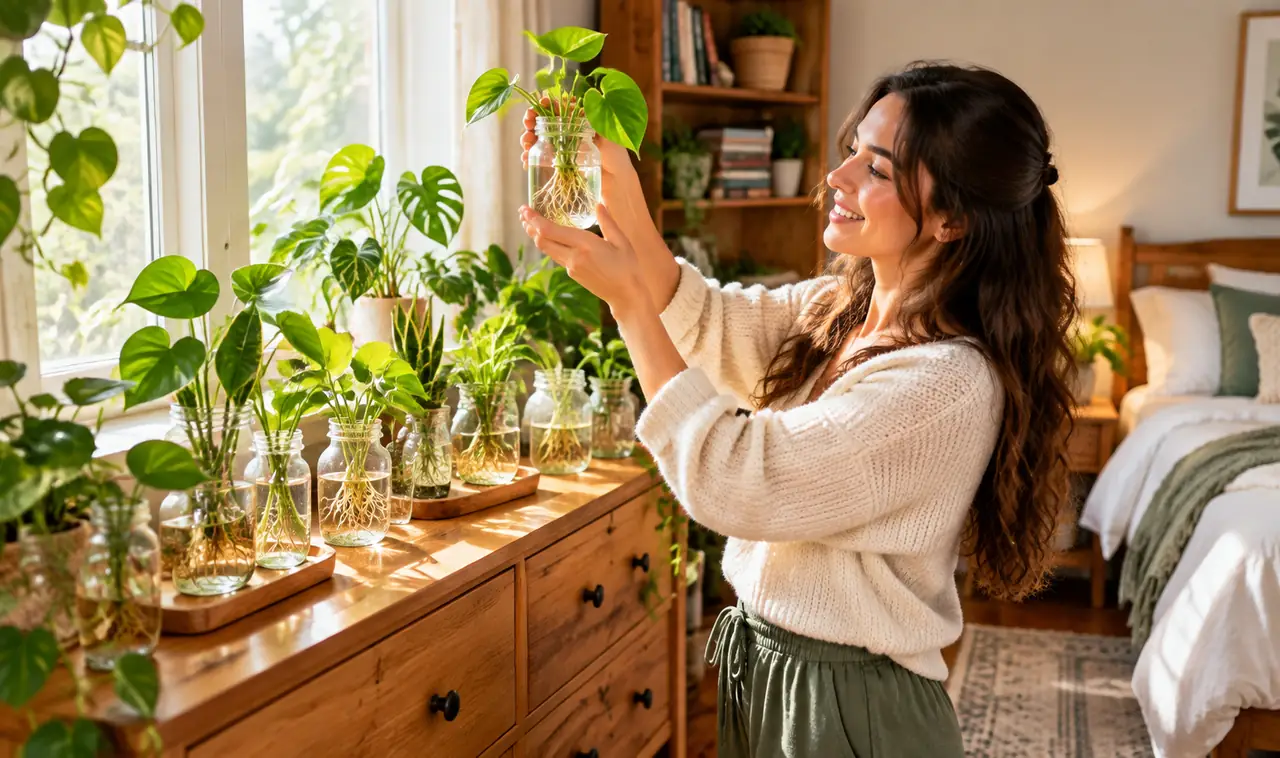
Every plant lover hits the same moment. A pothos gets leggy, you snip the long stem, and then you stand there holding a cutting with nowhere good to put it. The kitchen counter fills up. A jar ends up on the bathroom sink. Within a month, cuttings are scattered across the whole house.
A bedroom propagation station fixes that. It gives every cutting one home base, close to the window light they need and close to you, so checking roots becomes part of your morning instead of a chore you forget. Bedrooms are honestly well suited to this. Most have a spare sill, a dresser top, or one quiet corner that is doing nothing.
The fifteen ideas below range from a single jar on a nightstand to a full ladder shelf of test tubes. Each one fits a real bedroom, with real furniture and real light limits. Pick the one that matches your space.
1. Line the Windowsill With a Row of Glass Jars
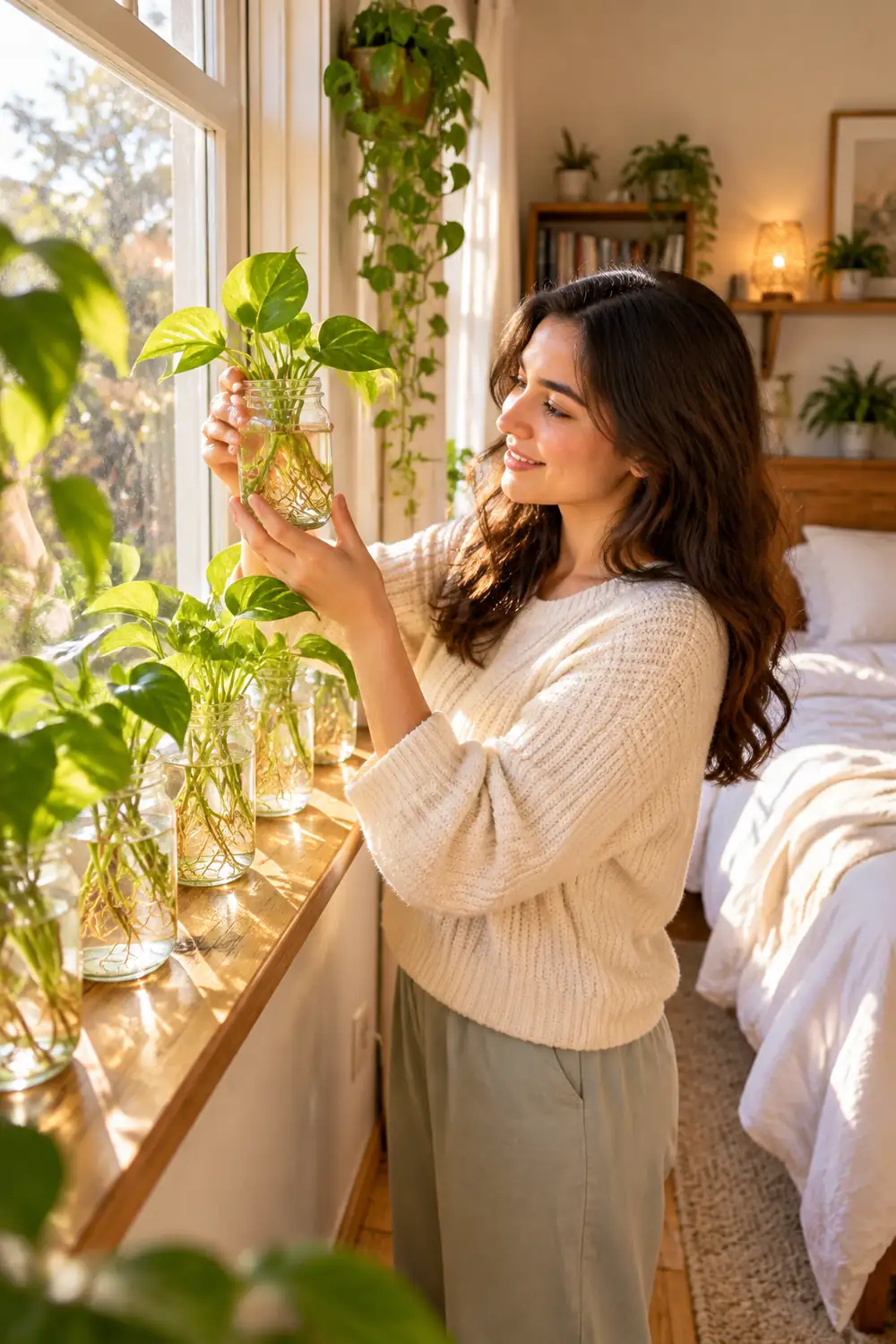
The windowsill is the easiest station you will ever build. Clear glass jars, the kind jam and pasta sauce come in, hold one or two cuttings each and let you watch the roots grow without lifting anything out of the water.
Set four to six jars in a row and the sill starts to look deliberate instead of cluttered. Keep plants with similar light needs together, and rotate each jar a quarter turn every few days so the new leaves grow evenly. If your sill is deep, lay a narrow wooden board across it and add a second row behind the first. For more ways to use that light well, these bedroom window plant ideas make the most of a sunny ledge.
2. Mount a Test Tube Rack Above the Dresser
Counter space runs out fast in a small bedroom, but the wall above a dresser usually sits empty.
Wooden test tube racks hold five to ten tubes in a neat line, and each tube takes a single cutting. The setup looks tidy, almost like a small lab, and it keeps water safely away from the clothes and books below. Tubes suit smaller cuttings best, so save them for pothos, philodendron, tradescantia, and herb sprigs.
💡 Quick Tip
Change the water in tubes every three or four days. The narrow neck slows evaporation, but the small amount of water still goes stale faster than it does in a wide jar.
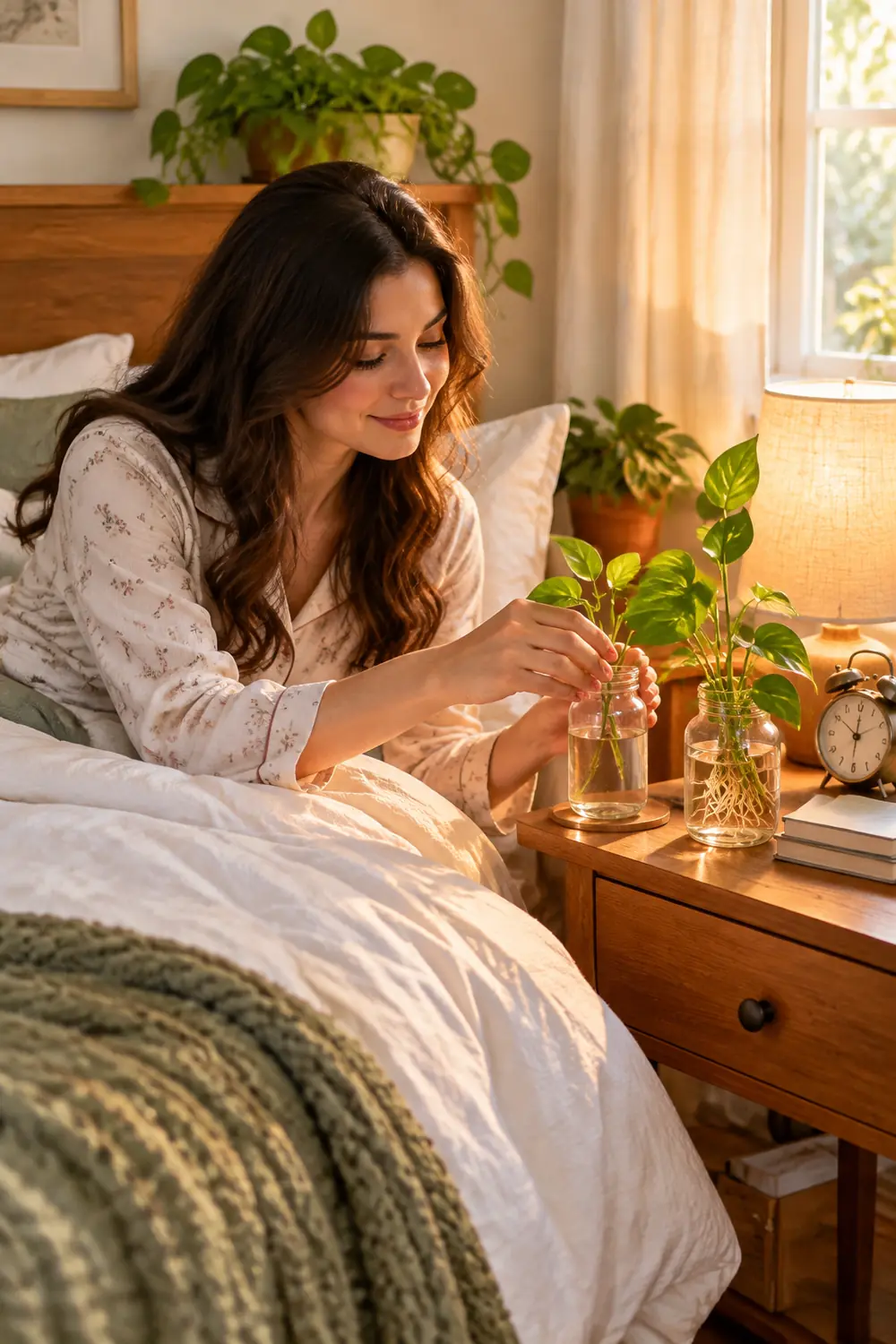
3. Keep a Micro Station on the Nightstand
One jar. That is the whole station.
A single cutting in a small glass on the nightstand stays alive because you see it every morning and every night. Top up the water when you notice it running low, and snip off anything mushy before it spreads to the healthy stem. A small clip-on grow light helps if your side of the bed faces away from the window. Tiny stations suit new plant parents most of all, because cuttings usually die from being forgotten in another room, not from anything complicated.
4. Hang Propagation Jars in Macrame Holders
String, a hook, and a jar with a lip under the rim. That is all a hanging station takes.
Macrame holders cradle the jar so it cannot slide out, and a row of three at different heights beside the window turns cuttings into part of the decor. Hanging jars catch light from the side, which helps trailing plants root evenly, and they free the sill for plants that need to sit flat. Check the water level from below. If you cannot see the line against the light, it is time to refill.
- ▸Best for hanging jars: pothos, English ivy, string of hearts, and spider plant babies.
- ▸Use small jars only. A big jar of water gets heavy fast.
- ▸Hang them where you can reach without standing on the bed.
5. Corral Every Cutting on a Dresser Tray
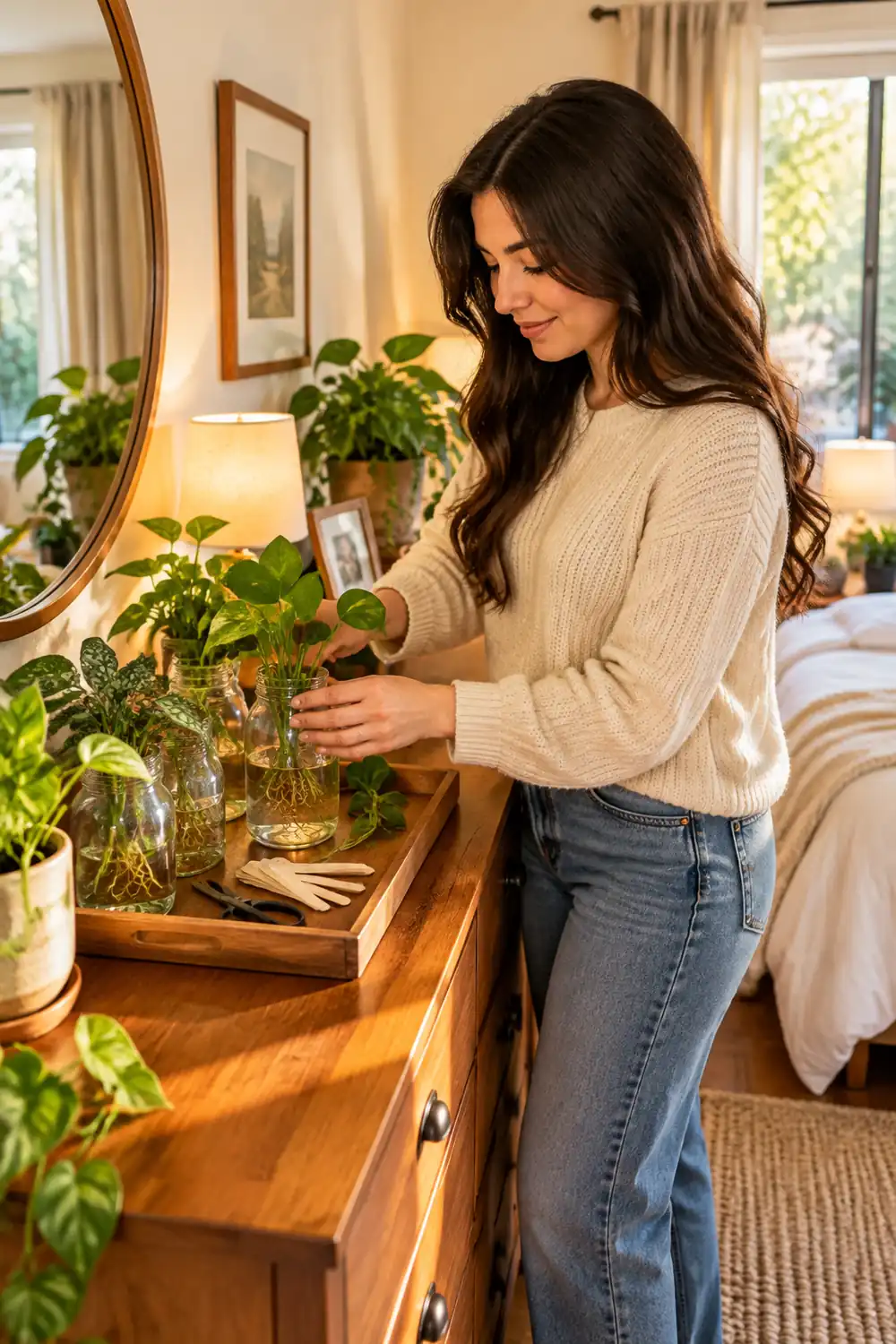
My dresser used to be a graveyard of single jars, each one creeping a little further from the window every week.
A shallow tray, wood, metal, or ceramic, gives the whole station edges. Jars, scissors, a small towel, and labels all live inside the tray lines, so the dresser reads as one styled spot instead of six random glasses. The tray also catches drips when you lift a cutting out to check the roots, which saves the wood finish underneath.
What lives on the tray
6. Turn a Ladder Shelf Into a Propagation Tower
A leaning ladder shelf gives you four or five levels in the floor space of one chair.
Put the jars that need the most light on the top rungs near the window, and keep bigger, heavier bottles low where the shelf is widest and steadiest. Trailing cuttings can spill over the edges as they root, which softens the straight lines of the frame. Anchor the top to the wall if your floor is uneven or a pet likes to lean on furniture.
7. Give One Bookshelf Shelf to Cuttings Only
Bedrooms with north-facing windows or heavy curtains often fail at propagation for one plain reason: not enough light hours in the day.
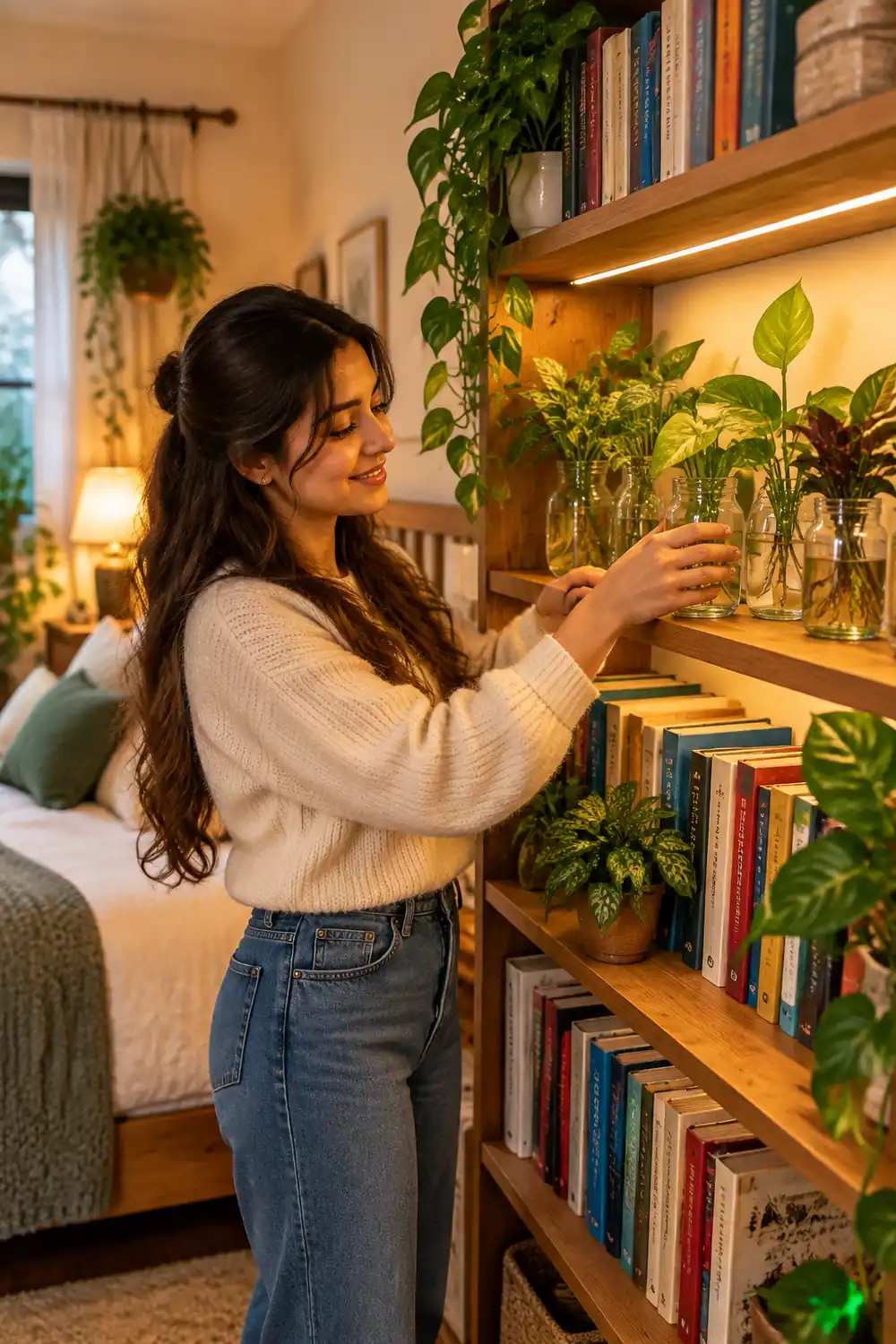
Claiming one shelf of a bookcase solves it. Clear the books off a single shelf at eye level, line up your jars, and stick a slim LED light strip under the shelf above it. Run the strip on a timer while you are awake, and the cuttings get steady light no matter what the weather does outside. Books on the shelves above and below keep the station feeling like part of the room instead of a science project.
8. Save Colored Glass Bottles for a Vintage Style Station
Amber, green, and pale blue glass does something clear glass cannot: it makes a row of cuttings look collected instead of makeshift.
Old medicine bottles, small wine bottles, and thrift store vases all work well. The tinted glass also slows algae growth in bright rooms, a small practical bonus on top of the looks. Group bottles in odd numbers on a sill or shelf, with varied shapes and colors kept close so the group reads as one set. If you enjoy a styled shelf moment, these aesthetic bedroom plant ideas show how to mix bottles, pots, and books without clutter.
9. Build a Station in Your Reading Corner
There is a chair in most bedrooms that collects clothes. Clear it off, and the corner beside it is prime propagation space.
A small side table holds two or three jars at exactly the height where you can watch roots grow while you read. Corners beside a chair usually get soft indirect light from a lamp and a window at once, which suits most cuttings. Add a hook on the wall for your snips and the corner turns into a small ritual: sit down, check the jars, turn a page.

10. Back the Jars With a Mirror
Plenty of people treat a mirror behind plants as pure decoration. It is actually a light tool.
A mirror bounces window light back onto the shaded side of your jars, so cuttings root more evenly and lean less toward the glass. A thrifted mirror or mirrored tray behind a sill row works well in rooms where the only window sits off to one side. Keep the mirror a few inches behind the jars so heat and glare do not build up against the glass on hot afternoons.
Angle the mirror so it catches the window light and throws it back at the jars.
Wipe it once a week. Dust dulls the reflection fast.
Do not press jars tight against the mirror in direct sun. The reflected heat can cook tender roots.
Do not aim the reflection at the bed unless you enjoy waking up to a beam of light.
11. Spin a Lazy Susan Station on Your Desk or Vanity
Root checks take ten seconds when the whole station turns to meet you.
A wooden or marble lazy Susan holds six or eight small jars in a circle. Spin it and every cutting comes around to the front, so there is no reaching over the first row and knocking the back one off the edge. The round shape also suits corners where a straight row looks awkward. Put the tallest cuttings in the center so the spin stays balanced and nothing topples mid turn.
12. Hang a Pegboard for Jars, Tools, and Labels
A small pegboard on the wall beside the window turns propagation into a proper little workstation.
Hang jars in wire holders on the hooks, then add your snips, a roll of tape labels, and a small funnel for topping up water without spills. Everything stays visible, so nothing gets lost at the back of a drawer, and you can rearrange the whole layout in minutes as your collection grows. Paint the board the wall color if you want it quiet, or a soft clay tone if you want it to read as decor. Renters can lean a framed pegboard on the dresser instead of drilling.
13. Use a Tiered Plant Stand as Your Station Base
A tray holds jars on one level. A tiered stand holds them on three, in the same footprint.
Set a stand with two or three levels beside the window and give each level a job. New cuttings go on top where the light is strongest, rooting jars sit in the middle, and potted up babies wait on the bottom step. The steps keep every jar visible, so nothing hides at the back and quietly rots. If you are shopping for one, these bedroom plant stand ideas cover wood, metal, and ladder styles at different heights.
14. Roll a Bar Cart Station Toward the Light
Bedroom light changes with the seasons, and a fixed station cannot keep up with it.
A small rolling cart can. Park it beside the window in spring, pull it back a few feet in high summer when the sun turns harsh, and wheel it into a brighter room for a weekend if a batch of cuttings stalls. The top shelf holds the jars, and the lower shelf holds spare pots, a bag of soil, and the cuttings you are about to pot up. Pick a cart with a raised edge so the jars stay put while it rolls.
15. Keep a Label, Date, and Swap Shelf
Unlabeled cuttings all look the same by week three. Ask me how I know.
One small shelf or tray reserved for labeled jars solves the mystery and turns your extras into gifts. Write the plant name and the date it went into water on a strip of tape or a small wooden label. When the roots reach a couple of inches, pot up the spares and set them on the swap shelf for friends, neighbors, and coworkers. A station that gives plants away never stays overcrowded for long.
A propagation station works when it lives where you already spend time. The fanciest setup in the world fails in a room you never walk into.
Start smaller than you think you should. One tray, one shelf, or one row of jars is enough to learn what your light can do, and a station you check daily beats a big one you ignore. Add a level or a second spot only when the first one is full of roots. Your bedroom propagation station will grow at the same pace as your collection. Save this list on Pinterest for the next time a plant gets leggy and the scissors come out.