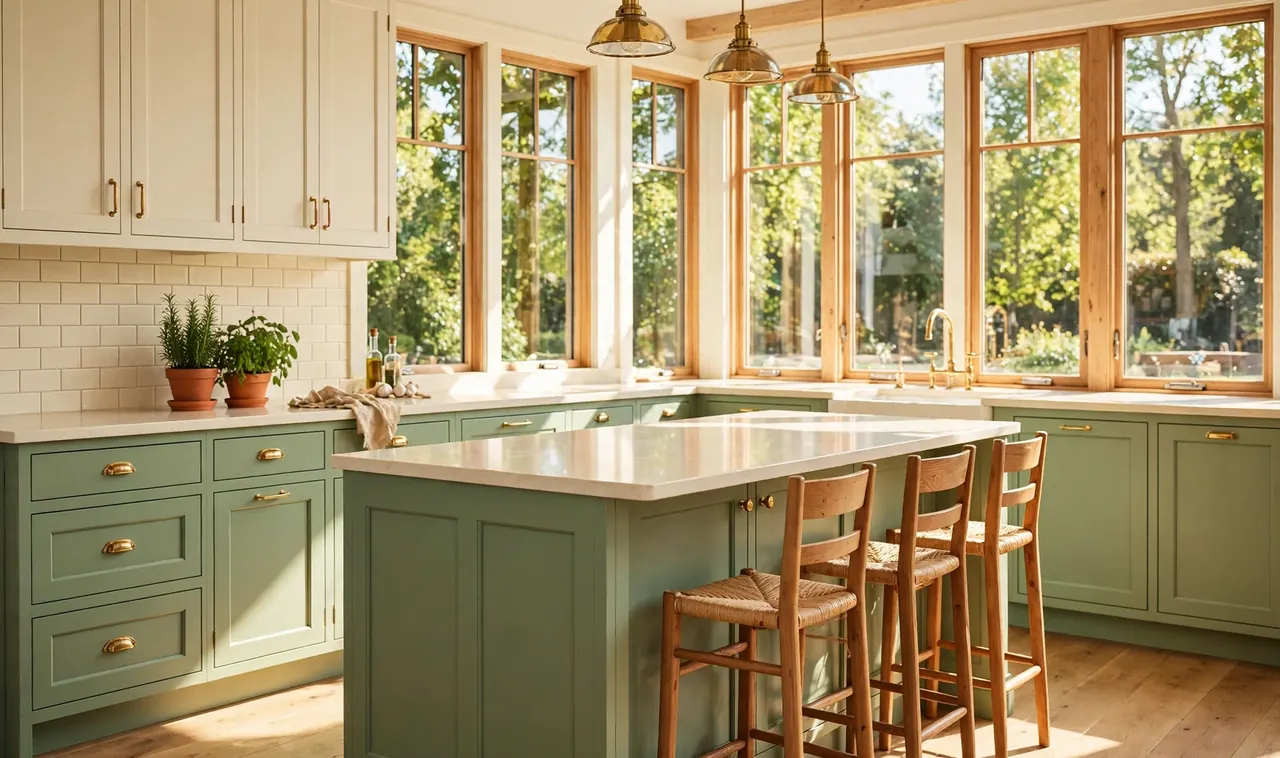
Sage green and cream is the kitchen pairing that never argues with itself. Sage brings the calm of a garden, cream brings warmth and light, and together they make a room that feels fresh in summer and cozy in winter. The trouble is that most kitchens using this palette look flat in photos, because the two colors sit side by side without enough contrast, texture, or a clear focal point.
A sage green and cream kitchen works best when each color has a job. Sage grounds the lower cabinets, cream lifts the walls and uppers, and wood, brass, and stone fill the space between them. The ideas below show how to give the pairing shape.
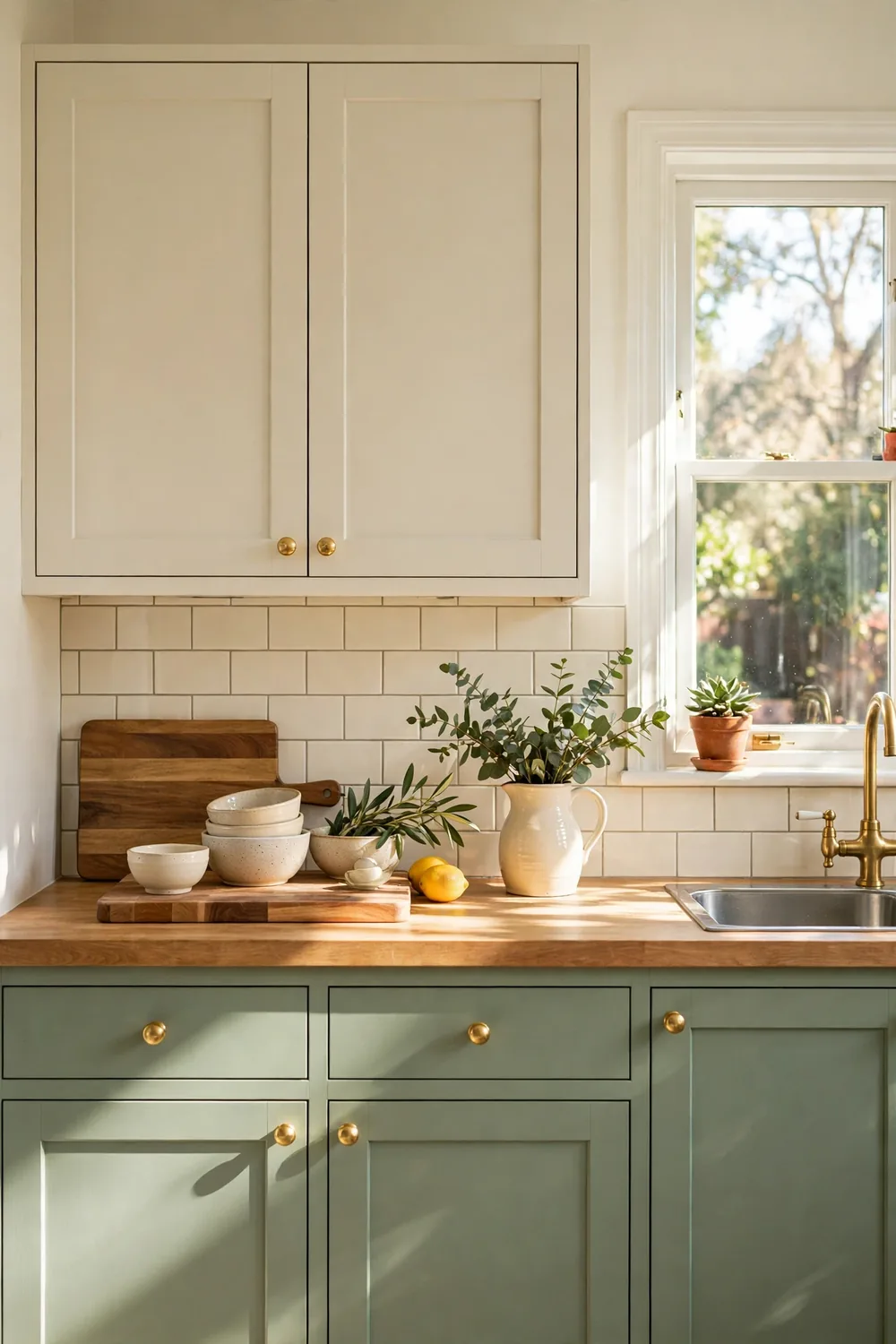
1. Two Tone Cabinets with Sage Below and Cream Above
The classic move for a reason. Sage on the lower cabinets grounds the room, cream on the uppers keeps it light, and the eye reads the kitchen as taller than it is.
Keep the two colors close in tone so the shift feels soft, not striped. A muted sage with a warm cream works better than a bright green next to a stark white. If your cabinets are in good shape, painting them is the cheapest way to get this look, and this guide to how to paint kitchen cabinets walks through the prep that keeps the finish from chipping.
2. Make the Island Sage and Let It Anchor the Room
A sage island in a mostly cream kitchen does the work of a rug in a living room. It pulls the eye to the center and gives the room a clear gathering point. The rest of the cabinets can stay cream, which keeps the job smaller and the budget lower.
- Choose a sage a few shades deeper than the wall color so the island stands out.
- Repeat the green once more, in bar stools, a vase, or open shelf dishes, so it looks planned.
- Top it with a light counter so the island does not feel heavy.
💡 Quick Tip
Paint a large swatch on the island side and live with it for two days before you commit. Sage shifts a lot between morning light and evening light.
3. Pair Sage Cabinets with Cream Subway Tile
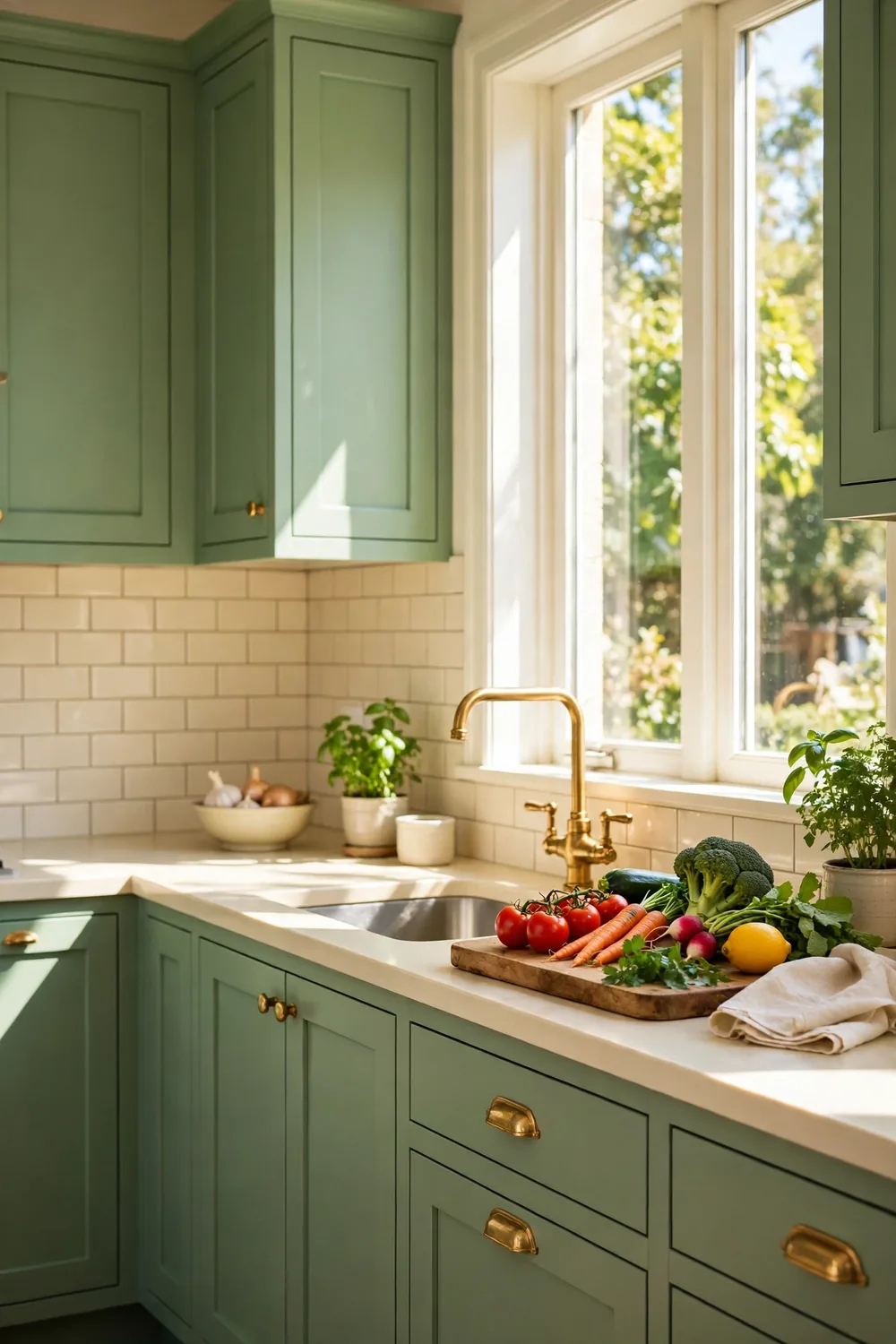
Subway tile is the quiet partner this palette needs. Cream tile with a warm grout softens the line between sage cabinets and the wall, and the small grid adds texture without adding noise. Run the tile to the ceiling behind the range for a taller look.
Pick a handmade look tile if the budget allows. The slight variation in each tile keeps a big cream wall from looking like a blank sheet. Glossy tile bounces light around a dark kitchen, while matte tile feels calmer in strong sun.
4. Warm Up Sage with Butcher Block Counters
Sage and cream can drift toward cool and pale if nothing warm enters the room. Butcher block fixes that in one move. The honey tones of the wood sit between the green and the cream and make both colors look richer.
Butcher block costs far less than stone, and it suits a kitchen that gets daily use. Oil it every few months and wipe up water fast. If you are watching the budget, these budget kitchen makeover ideas show where to save and where to spend.
5. Let Brass Hardware Bridge the Two Colors
Hardware is the smallest change with the biggest payoff here. Brass knobs and pulls warm up sage, glow against cream, and tie the two colors together without a single extra paint can. Unlacquered brass ages gently, while brushed brass stays steady.
Match the faucet finish to the hardware so the metals read as one choice. Keep the shapes simple. Slim bar pulls on drawers and small round knobs on doors suit the soft, calm feel of this palette better than heavy ornate pulls.

6. Turn the Range Hood into a Sage Focal Point
Most kitchens waste the hood. It hangs there in stainless steel, doing nothing for the room. Paint it sage, or wrap it in sage plaster, and it becomes the one bold shape the whole kitchen organizes around.
Keep the cabinets around it cream so the hood stands alone. A simple wood trim along the bottom edge of the hood adds a finished line and echoes any wood in the room. This single change can carry a kitchen that is otherwise plain.
7. Cream Quartz Counters over Sage Base Cabinets
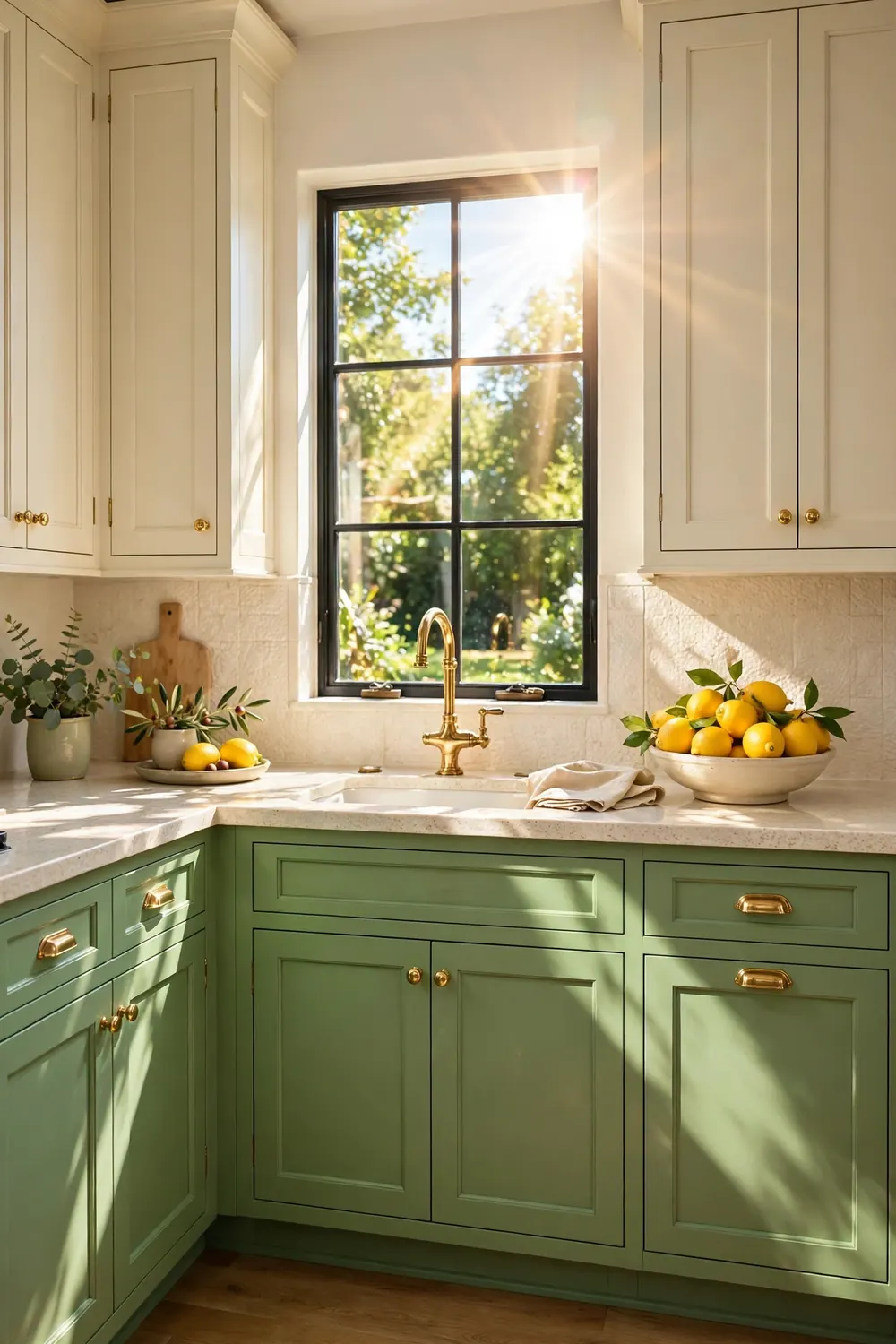
Quartz in a soft cream with faint grey veining gives sage cabinets a clean, bright top that never needs sealing. The pale surface bounces light down onto the green, so the cabinets look lighter than they do under a dark counter.
- Choose a quartz with warm veining, not cool blue grey, to stay in the palette.
- Carry the same quartz up as a short backsplash for a seamless look.
- Keep the edge simple, a straight or slightly eased edge suits the calm style.
8. Make a Small Galley Kitchen Feel Wider with the Palette
A galley kitchen is where this color pairing earns its keep. Sage on one run of cabinets and cream on the other breaks up the tunnel effect, and the lighter color on the wall side keeps the room from closing in.
Run the floor in a light wood or pale tile to stretch the space. Skip upper cabinets on one side and use open shelves instead, so the wall breathes.
One dark color on both walls makes a galley feel like a hallway with cabinets.
Sage low and cream high opens the same galley up and gives each wall a job.
9. Paint the Pantry Doors Sage with Cream Trim
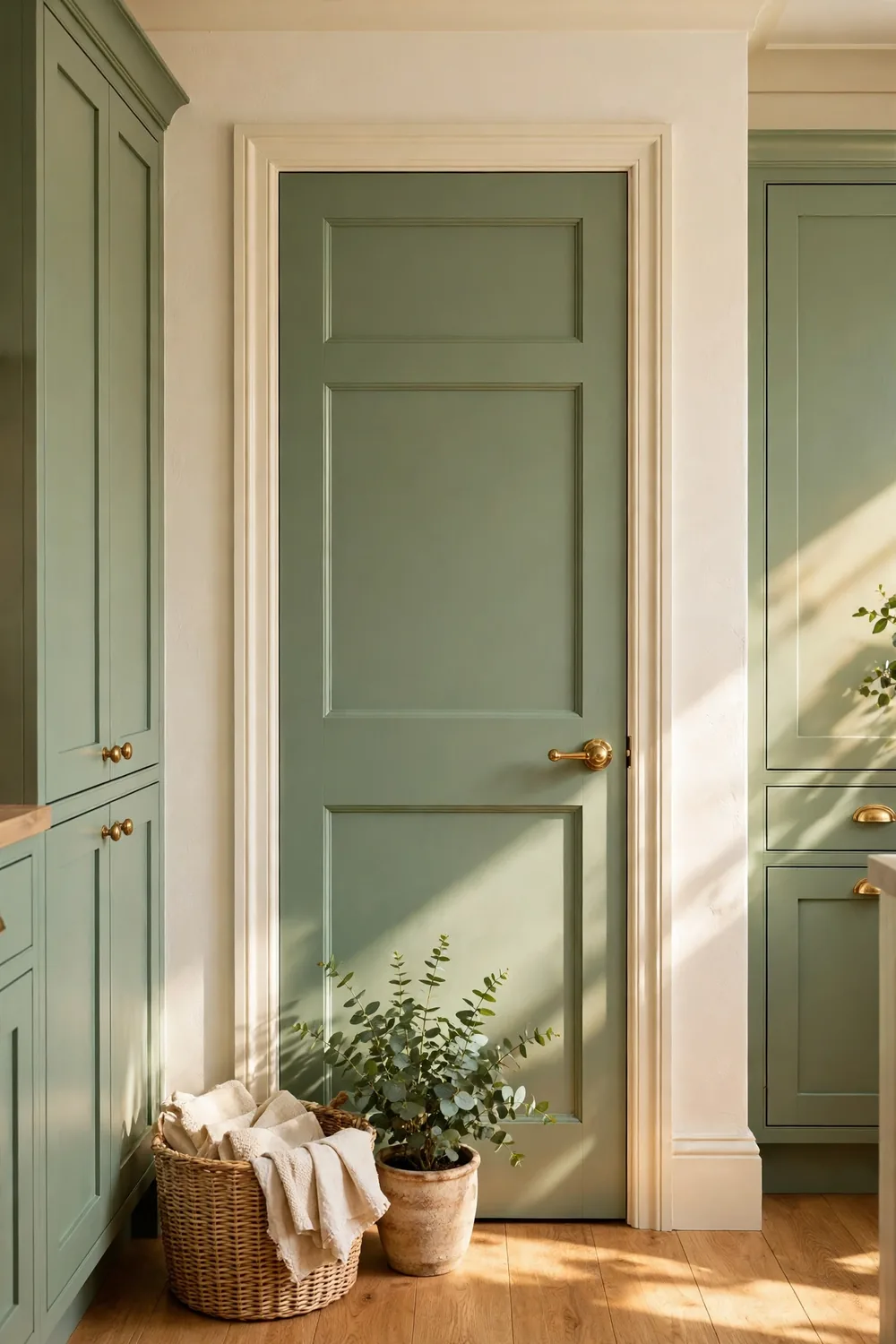
The pantry is often the biggest door in the kitchen, and it usually wears the same white as every other door in the house. Paint it sage and frame it with cream trim, and it becomes a piece of furniture instead of a blank slab.
Add a small brass latch or a vintage style handle to finish it. If the pantry sits in a hallway or on the edge of the kitchen, the green door pulls the eye toward the kitchen and makes the whole space feel connected.
10. Cream Open Shelves Against a Sage Wall
Open shelves work best when they have a backdrop with some depth. A sage wall behind cream shelves makes white dishes, glass jars, and wooden boards stand out like a display. The green does the decorating, so the shelves can stay simple.
Keep the shelves loose and useful. Stack everyday plates, line up a few jars, and leave some empty space. Shelves packed edge to edge look like storage, not style.
11. Build a Sage Breakfast Nook with Cream Cushions
A corner bench in sage with cream cushions turns a dead corner into the seat everyone fights for at breakfast. The green bench reads as built in furniture, and the cream cushions keep it soft and washable.
Add a small round table and one pendant light above it. A cushion cover in a washable fabric is the practical choice here, since breakfast crumbs find every seam.
| Nook Piece | Best Pick |
|---|---|
| Bench | Sage painted wood with storage inside |
| Cushions | Cream washable fabric, 3 to 4 inches thick |
| Table | Round wood top, 36 inches across |
12. Choose a Cream Marble Backsplash with Soft Sage Veins
Marble with faint green veining is the quiet luxury version of this palette. The cream stone keeps the wall bright, and the sage veins pull the cabinet color up without any paint. Honed marble feels softer than polished here.
Seal the stone well and wipe up tomato sauce and lemon juice fast, since marble stains. A marble look porcelain slab gives the same effect with far less upkeep.
13. Layer Warm Wood Through a Sage and Cream Kitchen
Wood is the third color this palette needs. Oak stools, a walnut cutting board, a pine shelf, each one adds warmth that keeps sage and cream from feeling washed out. The wood does not need to match. Two or three warm tones in one kitchen look collected, not careless.
Start with the pieces you touch every day. A wood stool, a wood tray by the stove, a wood bowl on the island. These warm wood kitchen ideas show how to mix wood tones without making the room feel busy.
14. Add Sage Beadboard on the Island or Half Wall
Beadboard gives flat sage paint a texture the eye can feel. Use it on the island front, on a half wall, or as a backsplash below cream uppers. The vertical lines add height to a low ceiling and a cottage feel to a plain room.
Paint the beadboard the same sage as the cabinets so it reads as one surface. A semi gloss finish wipes clean, which matters on an island that takes kicks and splashes.
15. Sage Bar Stools at a Cream Island
If painting cabinets feels like too much, start with the stools. Sage stools at a cream island give you the pairing in one afternoon, with no paint and no contractor. They are also easy to change later if your taste moves on.
- Wood stools with a sage seat suit a farmhouse kitchen.
- Metal stools in sage suit a more modern room.
- Backless stools tuck under the island and keep a small kitchen open.
Stool Shopping Checklist
16. Hide the Appliances Behind Sage and Cream Panels
Panel ready appliances let the fridge and dishwasher disappear into the cabinetry. Sage panels on the fridge and cream panels on the dishwasher keep the wall of cabinets unbroken, and the kitchen reads as furniture, not a showroom.
This works best in a kitchen that already has flat front cabinets. The panels need to match the cabinet fronts exactly, so order them with the cabinets or from the same maker.
17. Add Black Accents to Sharpen the Soft Palette
Sage and cream on their own can go sleepy. A little black wakes them up. Matte black faucet, black pendant lights, black window frames, each one draws a clean line through the softness and makes the green look greener.
Keep the black to about one in ten surfaces. Too much turns the kitchen moody, which fights the calm this palette promises.
18. Flip It: Cream Cabinets with a Sage Tile Backsplash
The pairing works in reverse too. Cream cabinets with a sage tile backsplash put the color at eye level, where you see it while you cook. Zellige style tiles in soft green catch the light and shift shade through the day.
Keep the counter light so the green tile has room to breathe. A cream counter with a sage backsplash and cream cabinets is the most forgiving version of this palette.
19. Keep the Palette and Swap the Accents by Season
Once the cabinets and walls are set, the palette does the heavy lifting all year. Change the small things instead. Terracotta pots and herbs in spring, woven baskets and linen in summer, brass candlesticks and dried leaves in fall.
This is the real payoff of a calm base. The kitchen never needs a redo, only a refresh. A new dish towel, a different vase, and a bowl of whatever is in season is enough.
A sage green and cream kitchen stays beautiful because it never tries too hard. Pick the moves that fit your room and your budget, start with one change, and let the rest follow. Save this list for the next time you want to refresh your kitchen.