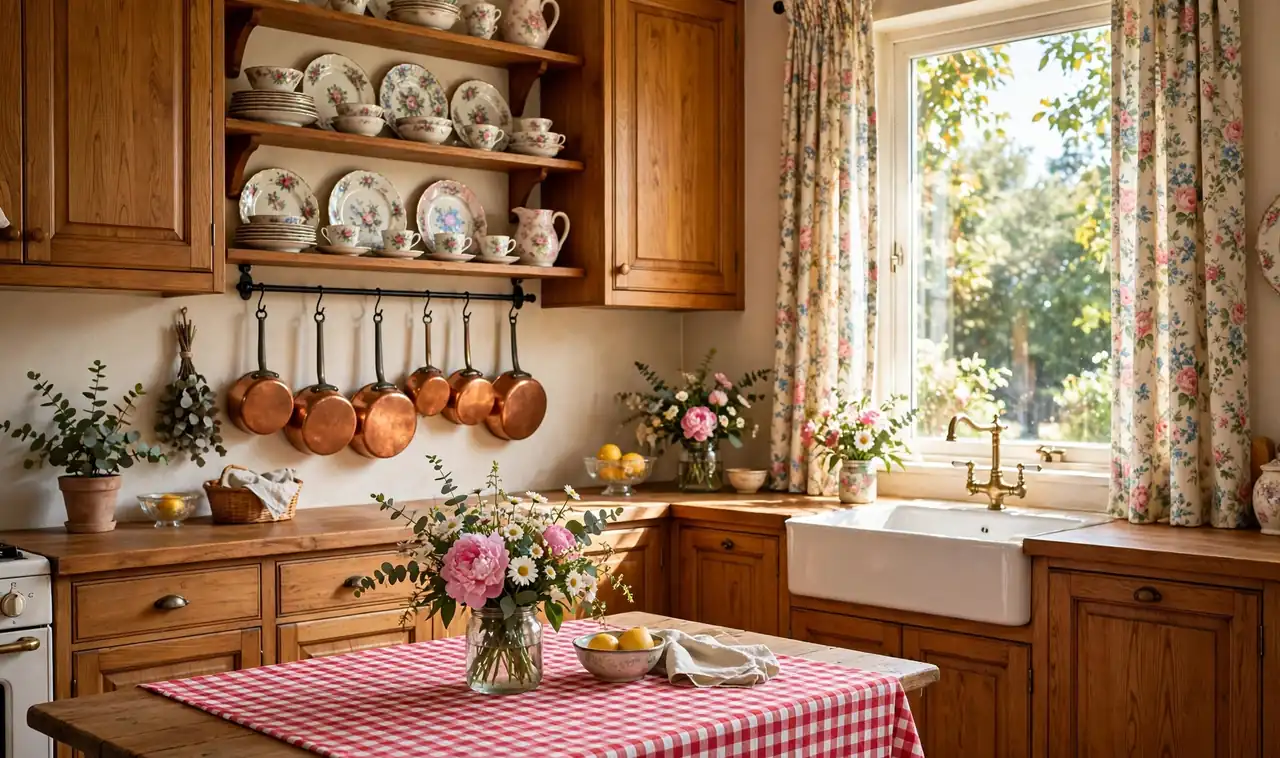
Some kitchens feel like a showroom. Everything matches, nothing is out of place, and nobody quite relaxes in them. A grandma core kitchen is the opposite. It smells like baking, the mugs do not match, and there is always a chair pulled out at the table.
Grandma Core Kitchen style is about that feeling, not about buying a whole new kitchen. It borrows the warm, collected look of the kitchens our grandmothers kept: floral prints, worn wood, china that gets used instead of saved, and small useful things kept where hands can reach them. The best part is that most of these ideas cost little and work in a rented kitchen too.
Below are 17 ideas you can start with this weekend. Pick the ones that fit your space and your budget, and let the room grow slowly, the way a real grandmother’s kitchen did.
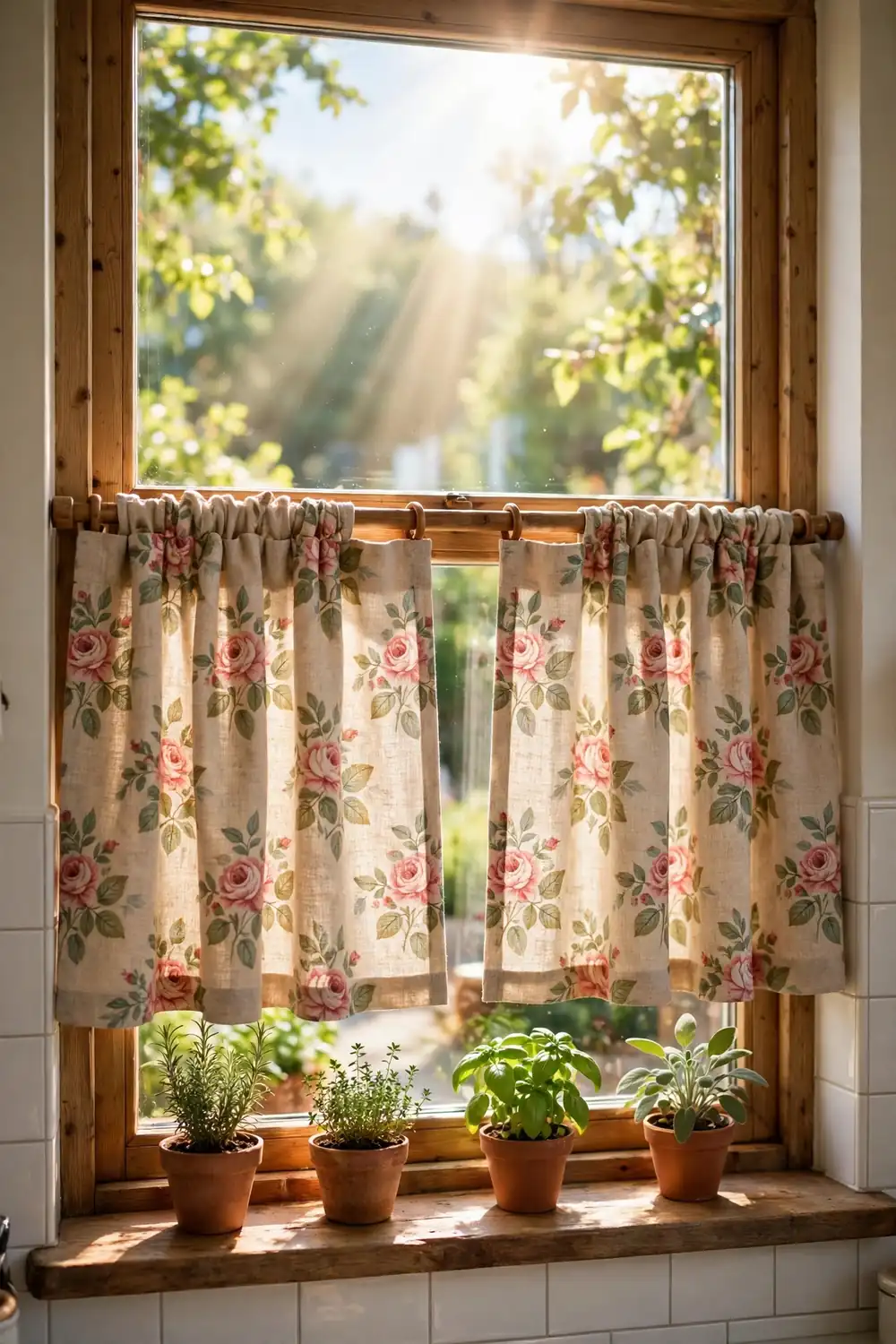
1. Hang Floral Curtains at the Window
A floral curtain is the fastest way to change the mood of a kitchen. It softens hard edges, adds color at eye level, and makes even a small window feel like it belongs in a cottage. Look for a small scale print in rose, blue, or sage, and let the fabric fall just to the sill.
A cafe curtain that covers only the lower half of the window is the classic choice. It gives privacy without blocking the light, and it leaves the top of the window open for plants.
2. Put a Checked Tablecloth on the Table
A checked tablecloth does more work than any other single item in a grandma core kitchen. It hides a scratched tabletop, sets the color scheme for the whole room, and tells everyone this table is for sitting down, not for show.
Gingham in red, blue, or sage green is the traditional pick. Wash it often and do not worry about wrinkles. A slightly rumpled cloth looks lived in, which is the whole point of this style.
Quick Tip
Keep two cloths and rotate them. One on the table, one in the wash, so the table never sits bare while laundry catches up.
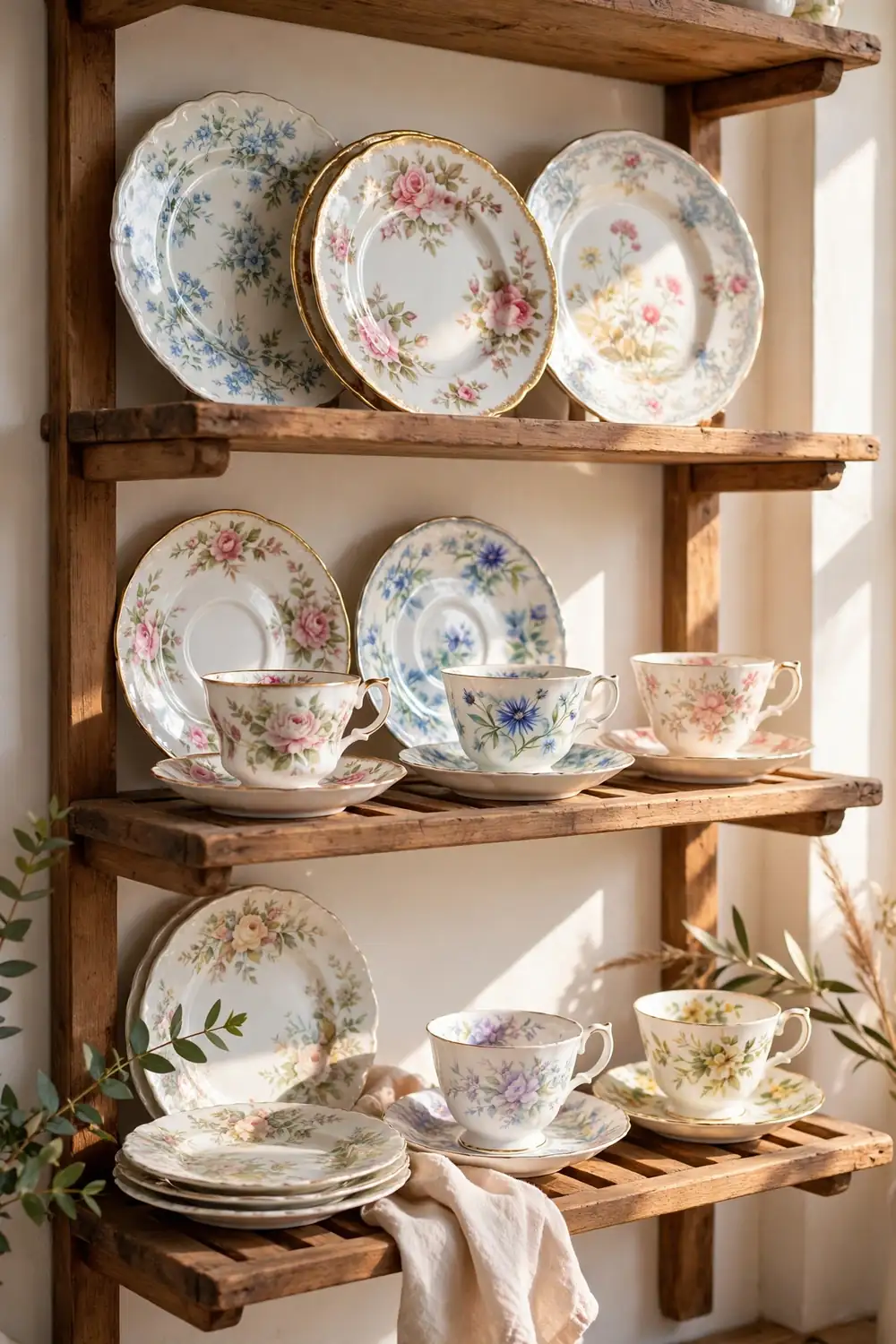
3. Display Vintage China on Open Shelves
Open shelves turn everyday dishes into decoration. Stack floral plates, line up teacups, and let a few serving bowls fill the gaps. The mix is what makes it work. Matching sets look formal, while collected pieces look like a real kitchen.
Thrift stores and charity shops are the best source for this. Look for one or two pieces at a time rather than buying a full set in one trip.
4. Bring in a Wooden Hutch or Dresser
A wooden hutch is the anchor piece of a grandma core kitchen. It holds dishes, linens, and jars, and its worn surface gives the room instant history. A tall dresser with glass doors works just as well if floor space is tight.
Paint is optional. A hutch in warm oak or pine suits the look straight away, while a painted one in cream or soft green blends with lighter kitchens. Fill the top shelves with your prettiest pieces and keep daily items at hand height.
What to put in the hutch
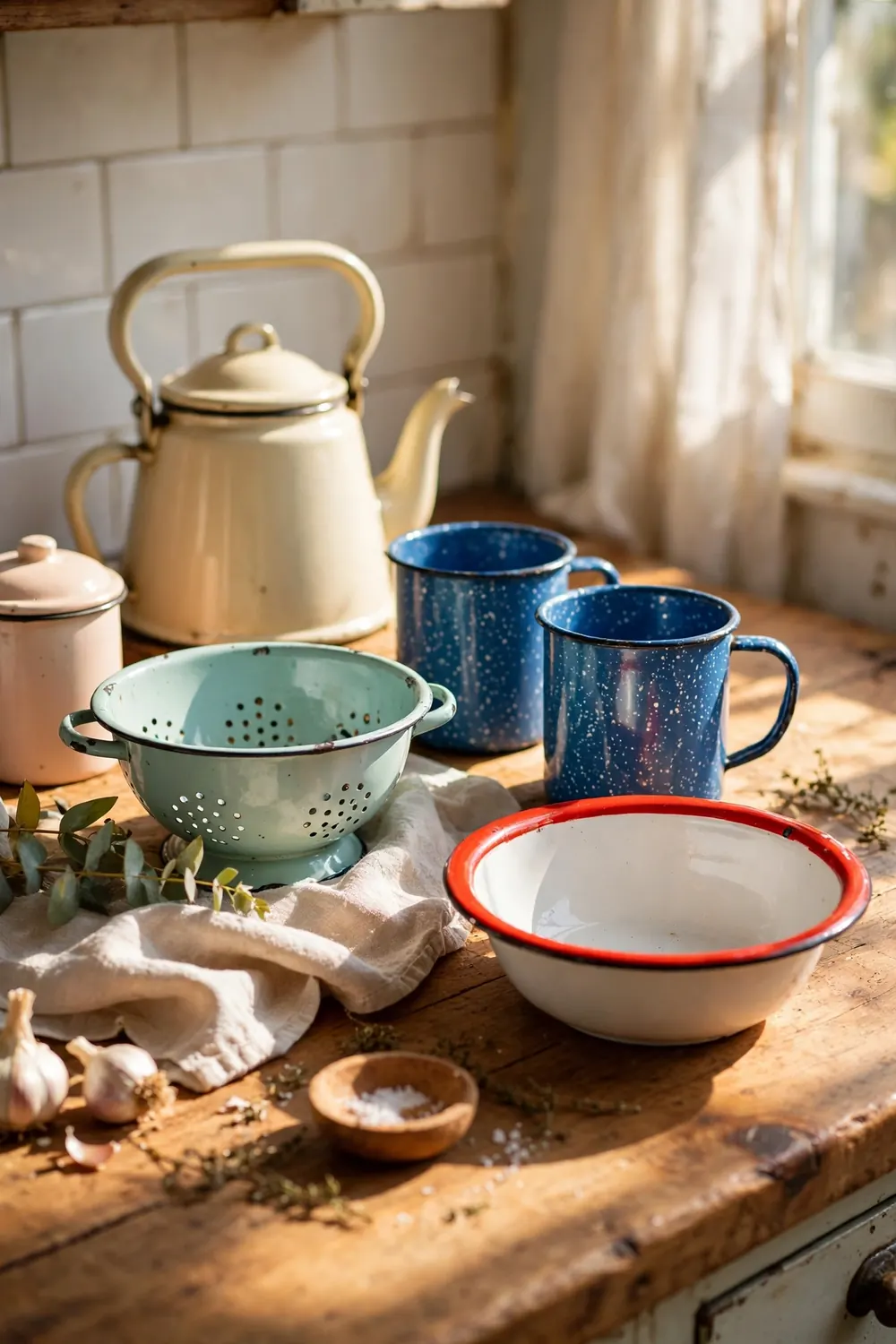
5. Use Enamelware in Soft Colors
Enamelware is tough, cheerful, and made for daily use. A cream kettle, a speckled blue mug, or a red rimmed bowl brings color to the counter without looking new or precious. The slight wear on old enamel only adds to the charm.
Start with the pieces you reach for most. A kettle and two mugs are enough to set the tone, and keeping the colors to two or three makes the collection feel gathered rather than random.
6. Layer a Rug Under the Table
A rug under the kitchen table warms up cold floors and pulls the eating area together. In a grandma core kitchen, the rug should look soft and a little worn, like it has been there for years. A faded floral or a simple braided rug both work well.
Choose a flat weave so chairs slide easily and crumbs sweep up without a fight. A washable rug is the sensible choice for a room where food gets dropped, and it lets you keep the vintage look without the vintage worry.
| Rug type | Best for | Upkeep |
|---|---|---|
| Braided cotton | Country tables and farmhouse chairs | Shake out weekly, machine wash |
| Faded floral | Soft color schemes and small rooms | Vacuum often, spot clean spills |
| Woven jute | Warm wood floors and neutral rooms | Sweep daily, blot spills fast |
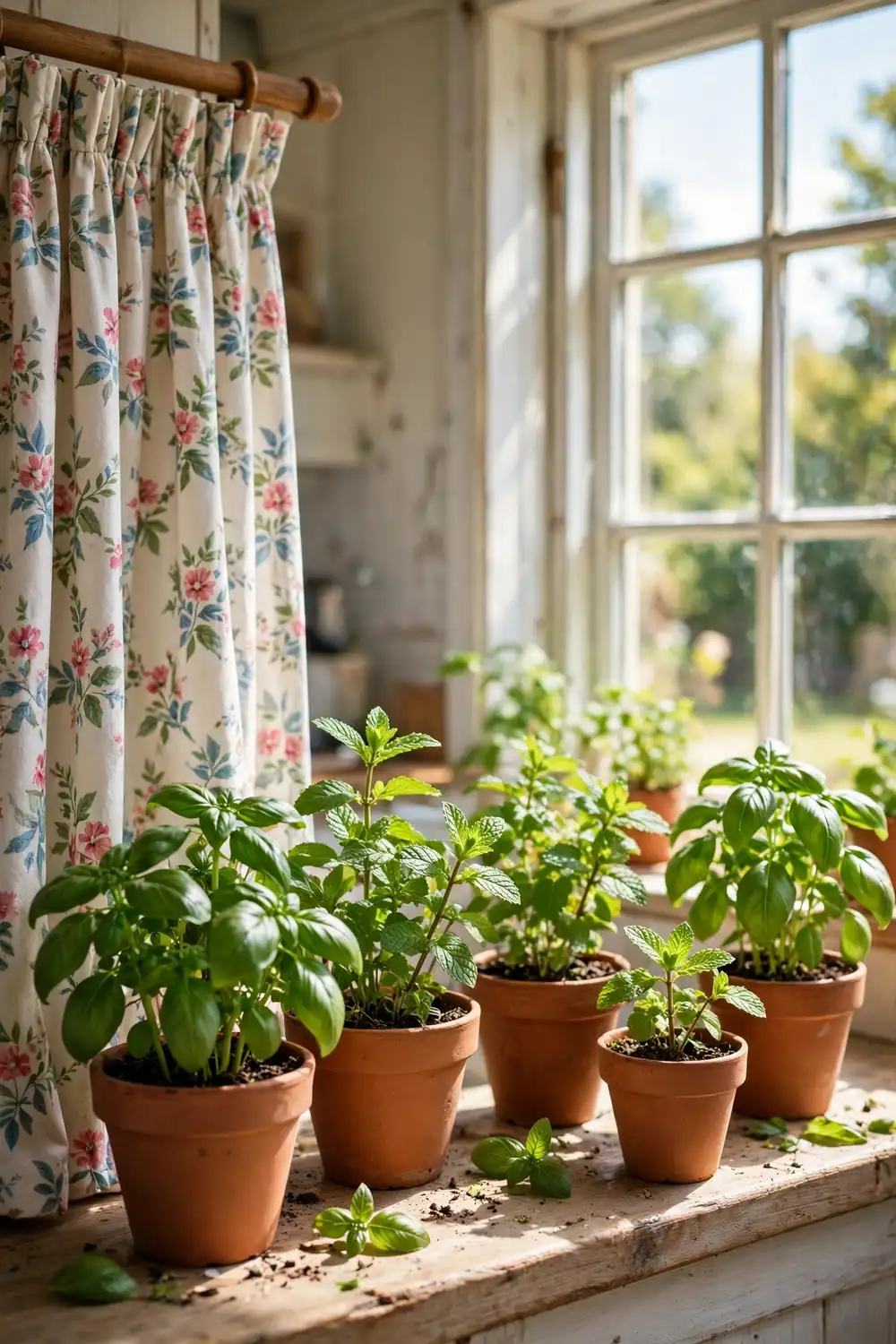
7. Grow Herbs on the Windowsill
A row of herbs on the windowsill is practical and pretty at the same time. Basil, parsley, and mint grow happily in small pots, and snipping fresh leaves into dinner is one of the small pleasures this style is built around.
Use mismatched pots for the collected look. Old jam jars, tin cans with drainage holes, and small terracotta pots all sit happily side by side. Keep a small pair of scissors nearby so the herbs actually get used.
8. Hang Copper Pots from a Rail
Copper pots earn their place on display. Their warm glow suits wooden shelves and cream walls, and hanging them on a rail frees up cabinet space for everything else. A simple wall mounted rail with S hooks is all you need.
Do not worry about keeping the copper polished to a shine. A soft patina looks right in a vintage kitchen.
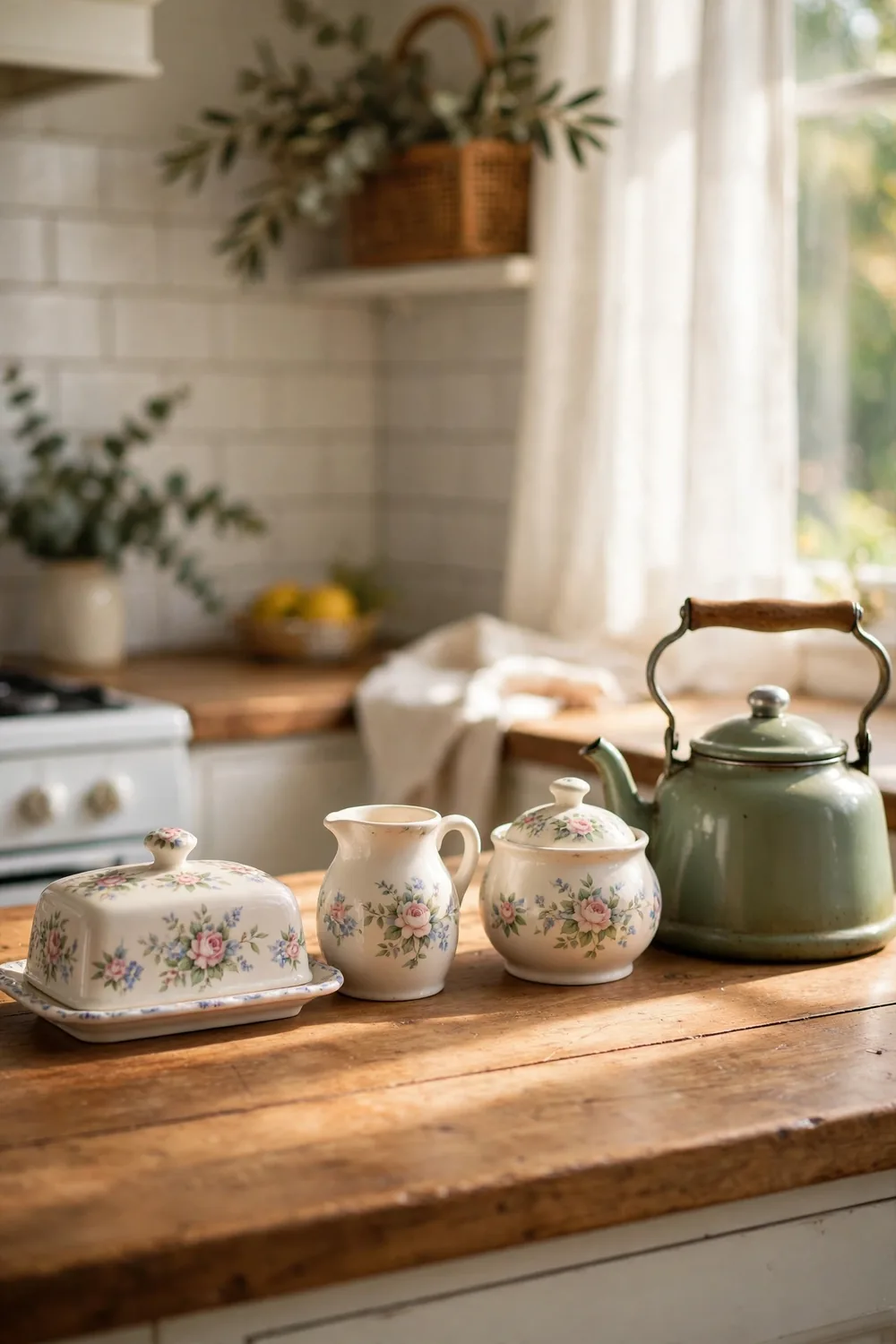
9. Set Out a Butter Dish and Milk Jug
Small everyday items left on the counter are what make a kitchen feel used and welcoming. A ceramic butter dish, a small milk jug, and a sugar bowl lined up near the kettle look like a still life, and they save trips to the fridge at breakfast.
Look for pieces with a floral pattern or a hand painted rim. They do not need to match each other. One pretty piece next to a plain one reads as collected, and that is exactly the feeling to aim for.
10. Add a Wall of Framed Family Recipes
Handwritten recipes deserve better than a drawer. Frame two or three in simple wooden frames and hang them near the stove or the table. The handwriting, the stains, and the crossed out lines are what make them special.
If you do not have family recipes, copy a favorite from a cookbook in your own handwriting. The personal touch matters more than the source. A small shelf under the frames can hold a jar of pens for jotting notes on new recipes.
Recipe wall at a glance
Frames: plain wood, all the same size, hung in a straight row
Recipes: two or three favorites, written by hand on cream paper
Spot: near the stove or above the table, where cooks can read them
11. Use Mason Jars for Everyday Storage
Mason jars are the workhorse of a grandma core kitchen. They hold pasta, rice, dried beans, and baking supplies in plain sight, and their clear glass turns pantry staples into part of the decor. A row of filled jars on an open shelf looks tidy and honest.
Label each jar with a paper tag tied on with string. It is cheaper than a label maker and it fits the style better.
12. Paint Cabinets a Soft Cream or Sage
Cabinet color sets the tone for the whole room. Soft cream warms up a north facing kitchen, while sage green brings a gentle garden feeling indoors. Both colors pair well with wood, brass, and floral fabric, which is why they suit this style so well.
If a full repaint feels like too much, paint just the lower cabinets and leave the uppers white. The two tone look is forgiving, and it lets you test the color before committing to the whole kitchen. A weekend is usually enough for the lowers alone.
For more ideas on giving tired cabinets a fresh coat, see our guide on how to paint kitchen cabinets like a pro.
Clean the doors with warm soapy water and let them dry fully before sanding.
Sand lightly, wipe off the dust, and apply one coat of primer.
Paint two thin coats of cabinet paint, letting each coat dry overnight.
13. Keep a Cake Stand on the Counter
A cake stand on the counter is an invitation to bake. Even when it holds nothing but a few apples or a loaf of bread, it gives the counter a purpose and a focal point. Glass and ceramic stands both suit the vintage look.
Pick a stand with a foot tall enough to see from across the room. If you bake often, this is the piece you will reach for every week.
14. Add Lace or Crochet Touches
A lace runner on the sideboard or a crocheted doily under a vase brings in the handmade layer that defines grandma core. These pieces soften hard surfaces and add texture without adding color or clutter.
Look for real cotton lace rather than stiff synthetic copies. A single runner is enough to start. If you crochet, a small mat under the fruit bowl is a quick project that earns its place in a day.
Soft pink and floral patterns pair naturally with lace, so take a look at our vintage pink kitchen ideas if you want to lean into the rosy side of this style.
15. Set Up a Tea Station
A tea station gathers everything in one spot: the kettle, the mugs, the tea caddy, and a small tray. It turns a routine cup of tea into a small ritual, and it keeps the rest of the counter clear.
A wooden tray on the counter near the kettle is all it takes. Line up three or four mugs, a jar of tea bags, and a teaspoon pot. A home coffee bar works the same way if coffee is your morning drink instead.
16. Bring in Fresh Flowers Every Week
Fresh flowers are the simplest luxury in a grandma core kitchen. A bunch of market flowers in a jam jar on the table costs little and changes the whole room. The flowers do not need to be fancy. Daisies and carnations suit the style as well as roses do.
Make it a weekly habit. Buy the flowers on the same day you do the food shop, and trim the stems before they go in water so they last longer.
17. Leave Room for a Slow Breakfast Nook
The last idea is about space, not stuff. A grandma core kitchen needs a corner where someone can sit with toast and tea without being in the way of cooking. A small table by the window, a bench with cushions, or even one good chair at the end of the counter all count.
Keep the nook clear. No mail, no chargers, no clutter. A cushion, a small vase, and morning light are all it needs. This is the spot that turns a kitchen from a workroom into the heart of the home.
A grandma core kitchen is not about following a trend. It is about building a room that feels warm, useful, and a little bit old fashioned in the best way. Start with one or two ideas from this list, live with them for a week, and add the next one when the room asks for it. The kitchens we remember most were never finished in a weekend. They grew one floral curtain, one chipped teacup, and one slow breakfast at a time.
Save this article to your kitchen board on Pinterest so you can come back to it when you are ready for the next idea.