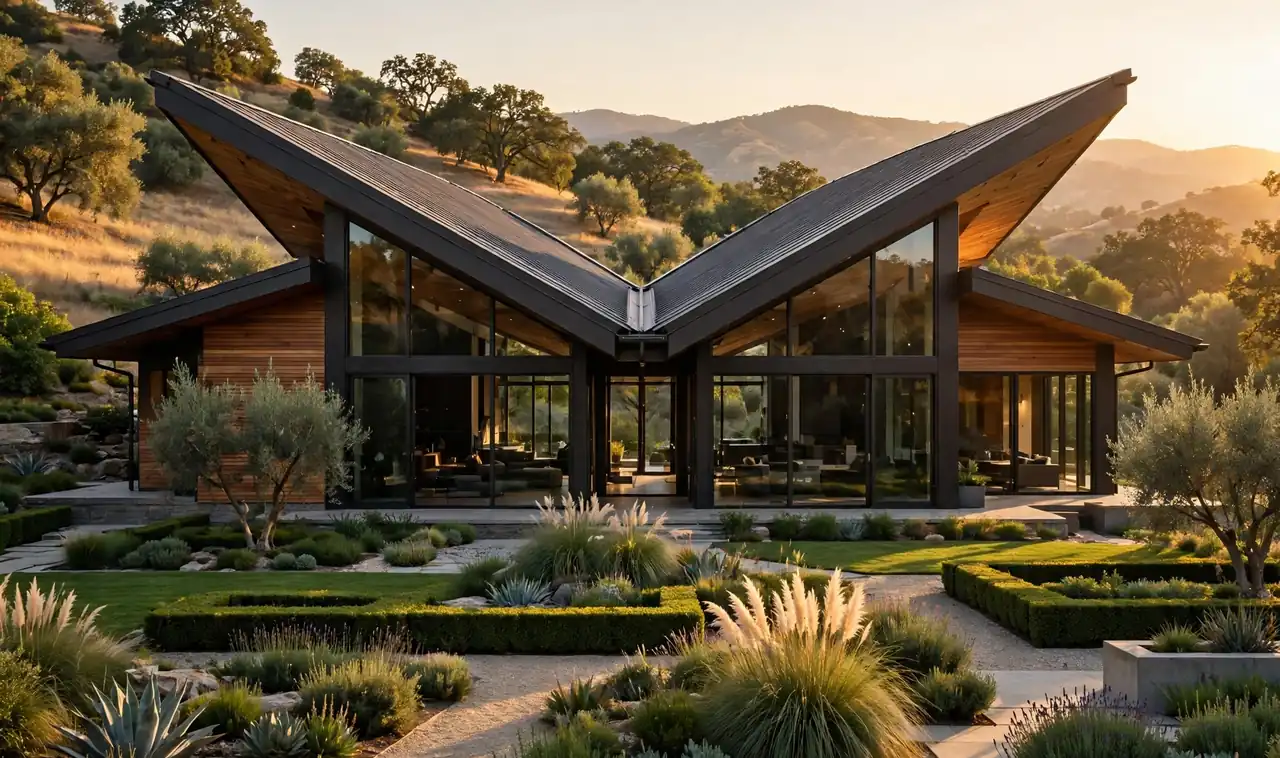
Most roofs slope down from a high ridge. A Butterfly Roof does the opposite. Its two wings slope inward to a low valley in the middle, like a butterfly resting with its wings open. The shape showed up on mid-century homes and never really left, and now it is back on modern builds, cabins, and bold remodels.
The look is the draw, but the shape works hard too. The high outer edges make room for tall windows and high ceilings. The low valley gathers rain in one neat line. The whole house gets a roofline that people notice from the street.
This list covers 19 ways to use the shape: classic mid-century glass fronts, metal wings, solar panels, and cabins in the woods. Some ideas suit a new build. Others work as an addition or a remodel. Pick the ones that fit your home, your climate, and your budget.
1. A Classic Mid-Century Butterfly with a Glass Front
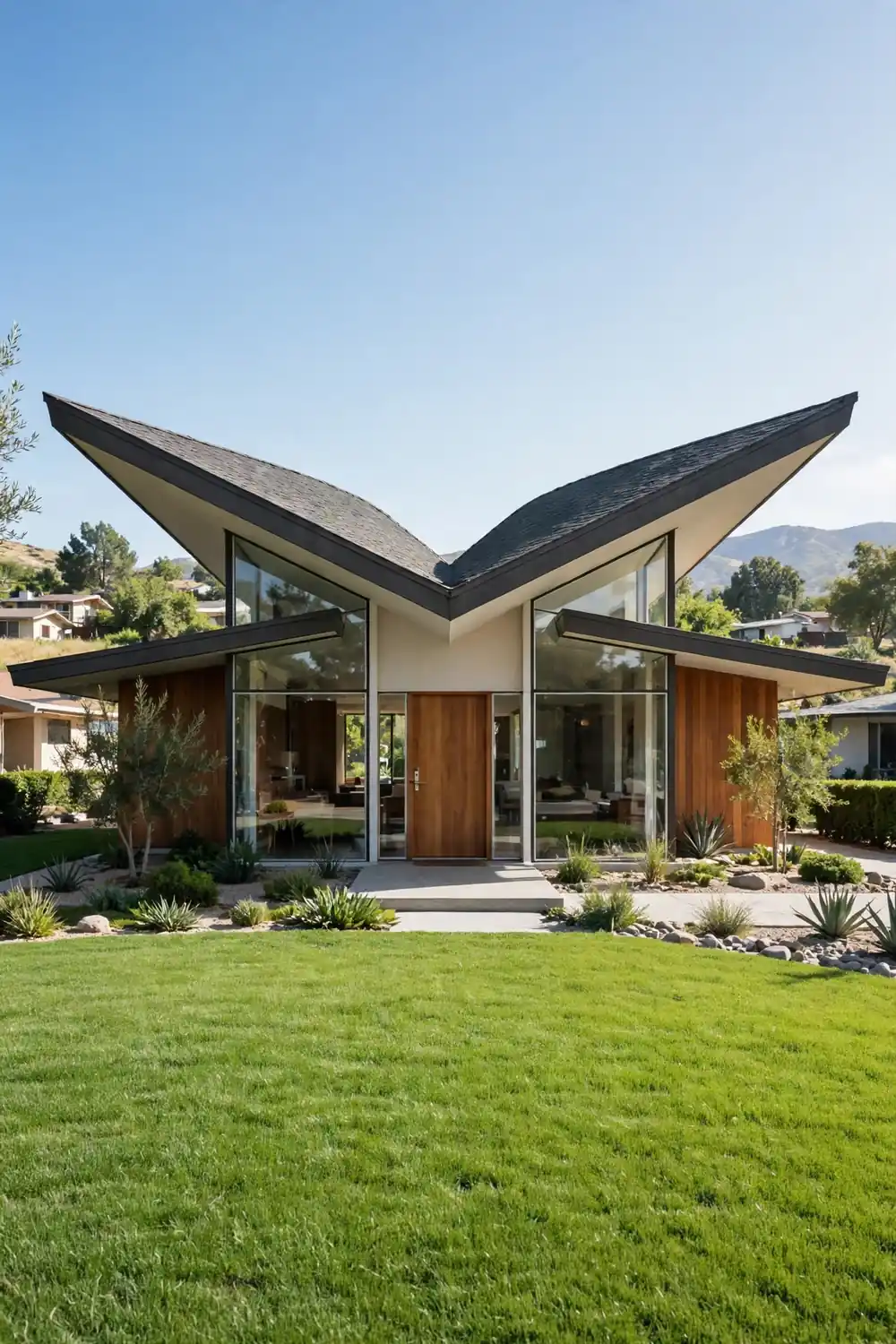
The original butterfly roof belongs to the mid-century ranch, and it still looks right today. Low wings, a wide glass front, and a flat entry plane give the house a calm, horizontal feel. The roof does the talking, so the rest of the house can stay simple.
Keep the glass in big, clean panels with thin frames. A single front door in warm wood warms up the glass. Inside, the ceiling follows the roof, so the living room feels taller on the window side and cozier toward the back.
2. Standing Seam Metal on a Butterfly Roof
Metal and butterfly roofs get along well. Standing seam panels run cleanly down each wing and meet at the valley, where a single gutter line handles the water. The seams add thin vertical lines that make the V shape even sharper.
Choose a matte finish to keep glare down. Dark bronze, charcoal, and soft silver all work. A standing seam roof also lasts for decades with little upkeep, which matters on a shape that is harder to re-roof than a simple gable. If you are weighing metal options, this guide to standing seam metal roof ideas covers the profiles and finishes that suit a V-shaped roofline best.
3. A Rain Garden at the Valley Line
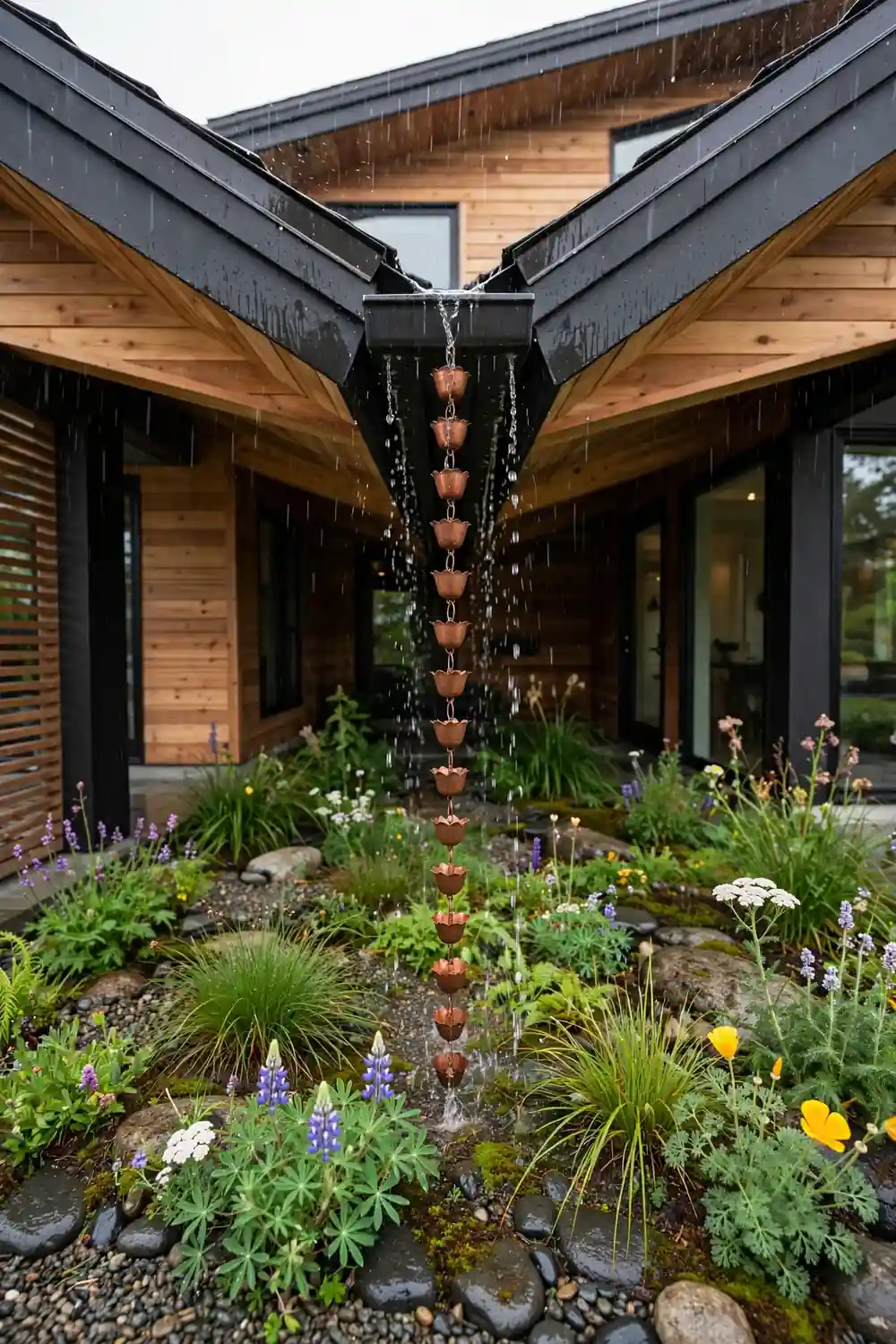
The valley is where both wings send their water, so give that water somewhere good to go. A rain garden under the valley line catches runoff in a planted bed instead of sending it across the driveway.
Dig a shallow basin, fill it with gravel and soil, and plant native grasses and flowers that like wet feet. A rain chain from the valley gutter turns a rainy day into a small show. The garden needs almost no care once the plants settle in.
💡 Quick Tip
Size the basin for your biggest storms, not the average rain. A bed that overflows in the first heavy downpour will flood the path beside it.
4. Floor-to-Ceiling Glass Under the High Wing
The high outer edge of a butterfly roof is the perfect place for tall glass. The wing lifts the ceiling on one side, and full height windows fill that tall wall with light.
Face the glass toward the best view, not the street. Morning sun in a kitchen or evening light in a living room both work. Add a deep overhang so summer sun stays out while winter sun still reaches inside.
5. A Butterfly Cabin in the Woods
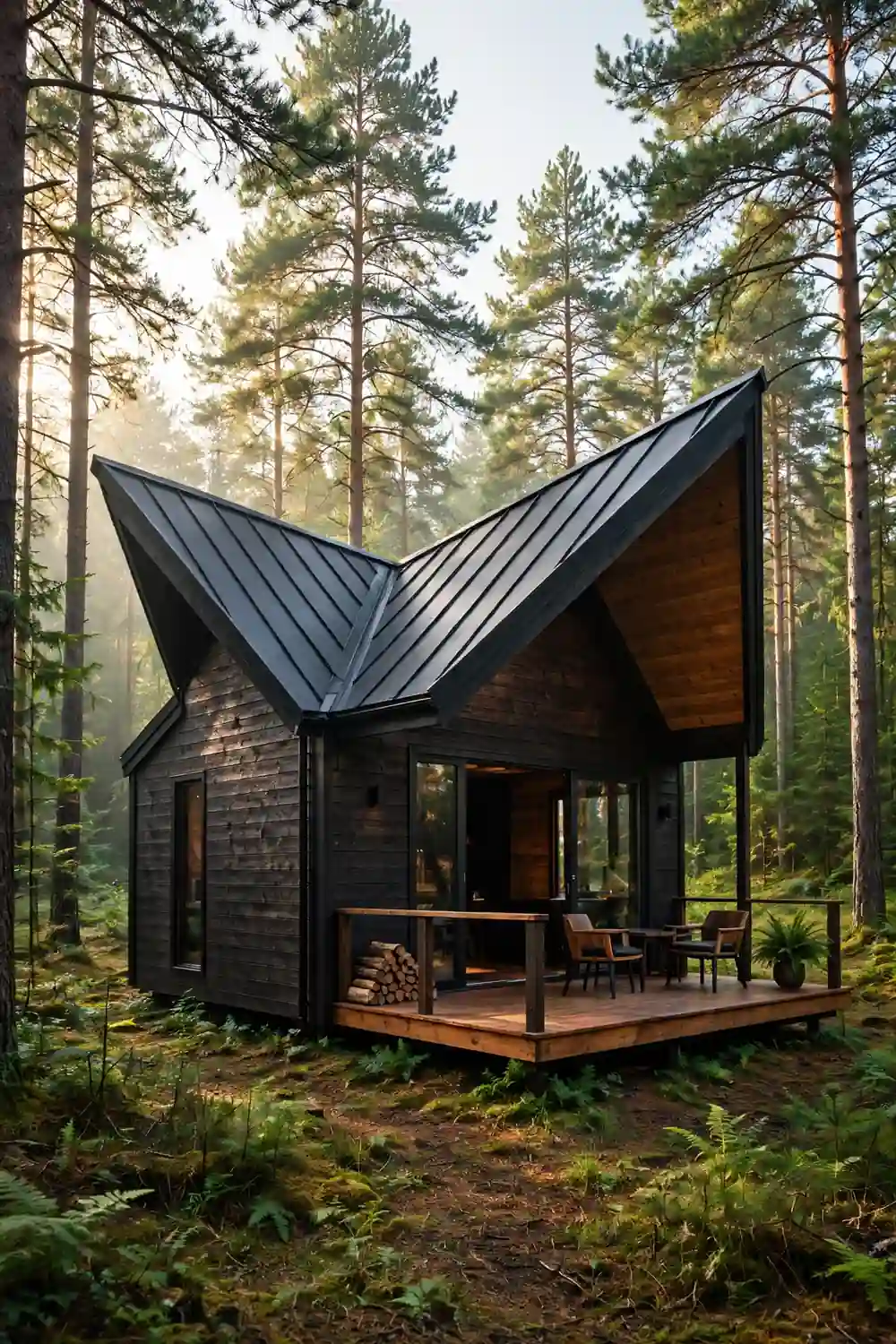
A butterfly roof turns a small cabin into something people stop to photograph. The wings echo the trees around it, and the low center keeps the cabin feeling tucked in rather than towering over the clearing.
Use dark wood siding and a metal roof so the cabin reads as one quiet shape in the trees. A big deck under the high wing gives you a dry spot to sit and watch the rain run off the valley.
Before you build in the woods
6. White Stucco and Warm Wood
White stucco walls and a dark butterfly roof make a clean, graphic pair. The roof reads as one bold line against the pale walls, and warm wood at the entry keeps the house from feeling cold.
Keep the palette tight. White walls, one dark roof color, and one wood tone are enough. A wood slat screen at the front door adds privacy without blocking light.
7. Solar Panels on the Sun-Facing Wing
One wing of a butterfly roof usually faces the sun, and that wing is a natural home for solar panels. The panels sit flat on the slope, follow the roofline, and stay out of sight from the street.
Angle matters more than looks here. Ask your installer to check the wing pitch and direction before you commit. On many homes, the sunny wing holds enough panels to cover a good share of household power. For a closer look at how solar fits modern rooflines, see these solar roofing ideas for modern homes.
| Sun-Facing Wing | Shaded Wing |
|---|---|
| Solar panels, flat mounted on the slope | Skylights for soft, even daylight |
| Best angle for power output | Stays cooler, suits a green roof |

8. Vaulted Ceilings That Follow the Wings
Inside, a butterfly roof gives you ceilings that slope in two directions. The room feels tall at the edges and intimate in the middle, which suits an open living space better than a flat ceiling ever could.
Leave the ceiling plain and pale so the shape itself is the feature. A single long pendant light hung from the high side draws the eye up. Keep furniture low so the ceiling has room to breathe.
9. Black Metal and Cedar, a Bold Two-Tone Look
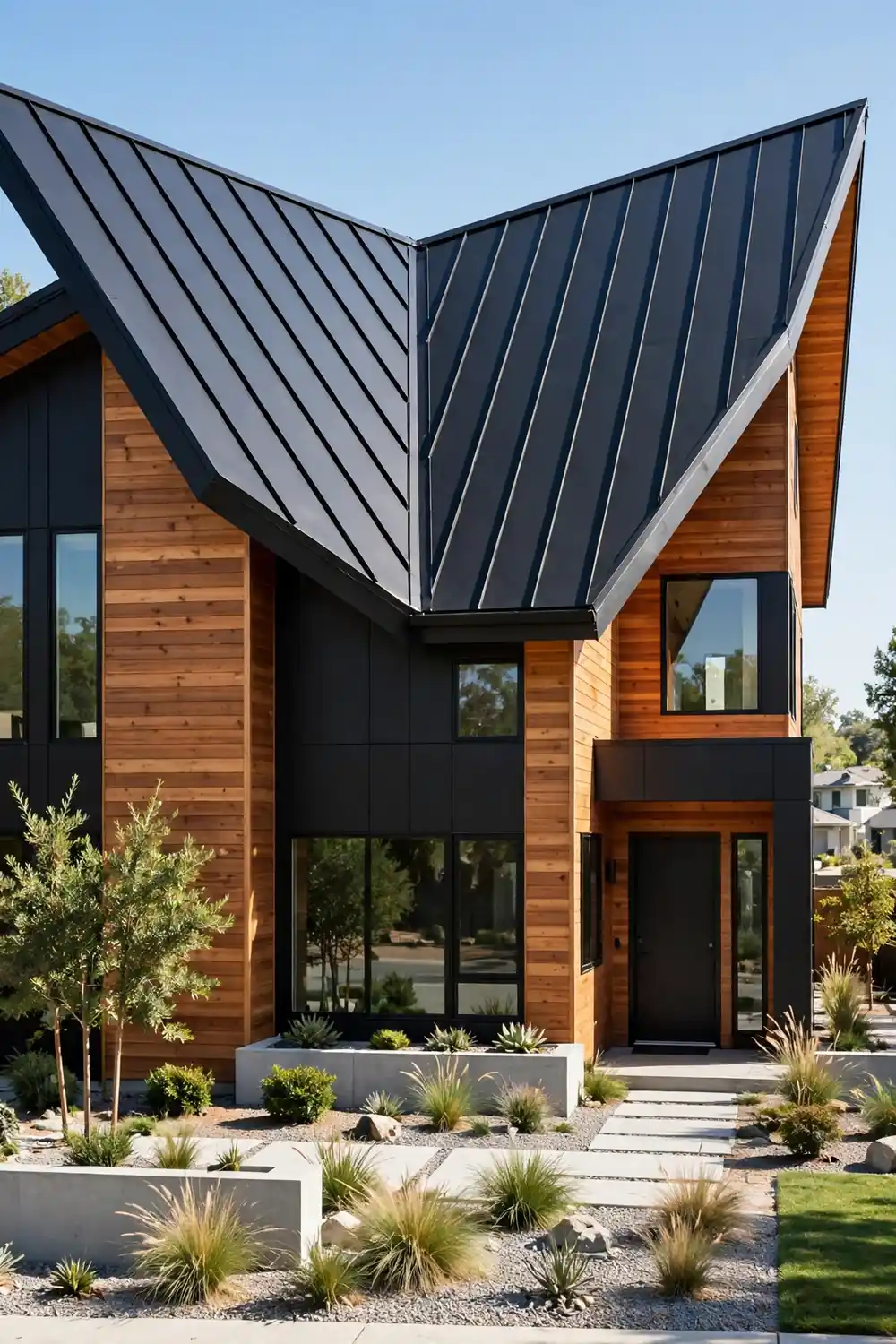
Black standing seam metal on the roof and warm cedar on the walls is a pairing that never looks dated. The dark wings look sharp against the wood, and the cedar softens the black.
Let the cedar weather naturally if you like a silvered tone, or oil it each year to hold the warm color. Keep window frames black to match the roof and tie the whole house together.
10. A Butterfly Carport and Entry Canopy
You do not need a whole new house to try the shape. A butterfly carport or a canopy over the front door brings the V shape to a normal home for a fraction of the cost.
The canopy keeps rain off the entry and gives guests a covered spot to shake off an umbrella. Match the canopy material to your main roof so it looks planned, not added on.
11. A Clerestory Window Band Along the Valley
The low valley wall is often wasted space. A band of clerestory windows along it brings light deep into the house without giving up privacy.
High windows like these work well over a kitchen or a hallway. They catch light all day and vent warm air in summer. Frosted glass keeps the light soft and the neighbors out of view.
12. A Low-Slung Desert Butterfly Home
In hot, dry places, a butterfly roof earns its keep. The wings shade the walls below, and the valley collects the rare rain for the garden.
Use light colored walls to bounce heat away and a pale metal roof to reflect the sun. Deep overhangs keep the glass shaded at noon. A gravel garden under the valley needs no watering at all.
13. Exposed Timber Beams Under the Wings
If the roof structure is beautiful, show it. Exposed timber beams under a butterfly roof turn the ceiling into the best feature in the room.
Douglas fir and cedar both look warm against white walls. Keep the beams chunky and few rather than thin and many. The beams also give you a natural place to hang lights and plants.
14. A Butterfly Addition on a Traditional Home
A butterfly roof can rescue a plain house. Add a wing with a butterfly roof to the back of a traditional home and the whole property gets a modern focal point.
The addition works best as a living room or a studio, where the tall glass and vaulted ceiling matter most. Match the wall material to the old house so the new wing feels like family, not a stranger.
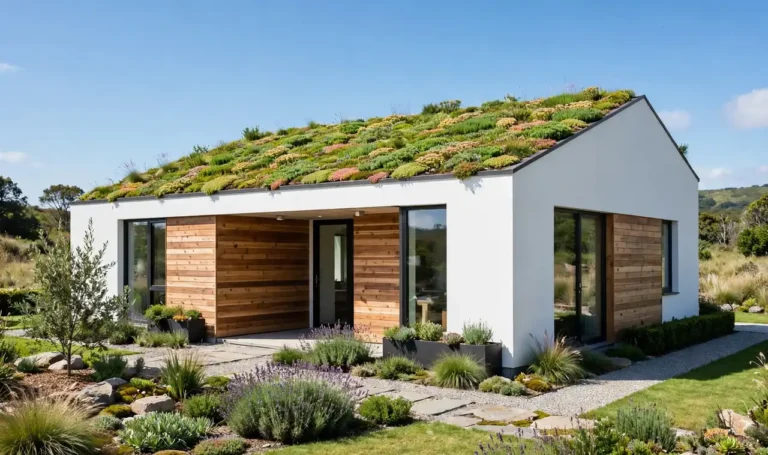
15. A Living Green Butterfly Roof
Planted roofs and butterfly shapes go together well. The gentle slopes hold soil and sedum, and the valley drains the extra water away.
Start with sedum and low grasses. They need little water and almost no mowing. A green roof also cools the house in summer and quiets rain noise inside.
Check the structure can carry wet soil.
Use a root barrier under the planting.
Heavy shrubs on a light frame.
Planting without a drainage plan.
16. A Rooftop Deck Tucked Between the Wings
On a flat site, the valley of a butterfly roof can hold a small deck. The wings shelter it from wind, and the view over the roofline is better than any ground floor patio.
Keep the deck small and the railing simple. A couple of chairs, a small table, and a planter are enough. Make sure the deck drains to the valley gutter and never pools water.
17. Charcoal Shingles on a Butterfly Roof
Not every butterfly roof needs metal. Charcoal asphalt shingles give the shape a softer, more familiar finish at a lower cost.
Pick a shingle with a clean, flat profile so the V shape stays crisp. Dark shingles also hide the valley flashing better than light ones. The result reads modern without shouting about it.
18. A Small Cottage with a Butterfly Roof
Small homes suit the butterfly shape. The wings lift the ceiling and the tall windows make a tiny footprint feel open.
Keep the plan simple. One open living space under the high wing, bedrooms tucked under the low side. A small butterfly cottage costs less to heat and cool than a tall two story house, and it photographs beautifully.
19. A Butterfly Roof Built for Snow Country
Snow and butterfly roofs need honest planning. The valley collects snow as well as rain, so the structure must carry the extra weight and the valley must drain when the snow melts.
Use a steep enough pitch that snow slides, and heat tape along the valley in the coldest climates. A metal roof sheds snow faster than shingles. Talk to a local builder who knows your snow load before you draw the plans, and read up on how to prepare a roof for winter so the valley stays clear all season.
A Butterfly Roof is a bold choice, and that is the point. It gives a home a shape people remember, tall windows, high ceilings, and a roofline that works as hard as it looks. The ideas above show how many ways the shape can fit: a desert retreat, a snowy cabin, or a simple carport on a plain house.
Start with the one that fits your home and your climate, and talk to a builder who has done the shape before. Save this list for the next time you sketch a roof, and pin the idea that feels most like home.