Some roofs look fine for a few years and then start to fade, curl, and date the whole house. Slate does the opposite. It settles in, grows more character with every season, and still looks sharp decades later. That is why you see it on old stone cottages, grand colonials, and even crisp modern builds. A slate roof carries a quiet confidence that asphalt and metal just cannot copy.
The trick is picking the right slate for your house. Color, cut, and pattern change everything. A blue gray slate can make a cottage feel calm and timeless, while a deep purple blend gives a plain facade real presence. The ideas below cover classic looks, modern twists, and small details that make a big difference.
1. Classic Blue Gray Slate on a Stone Cottage
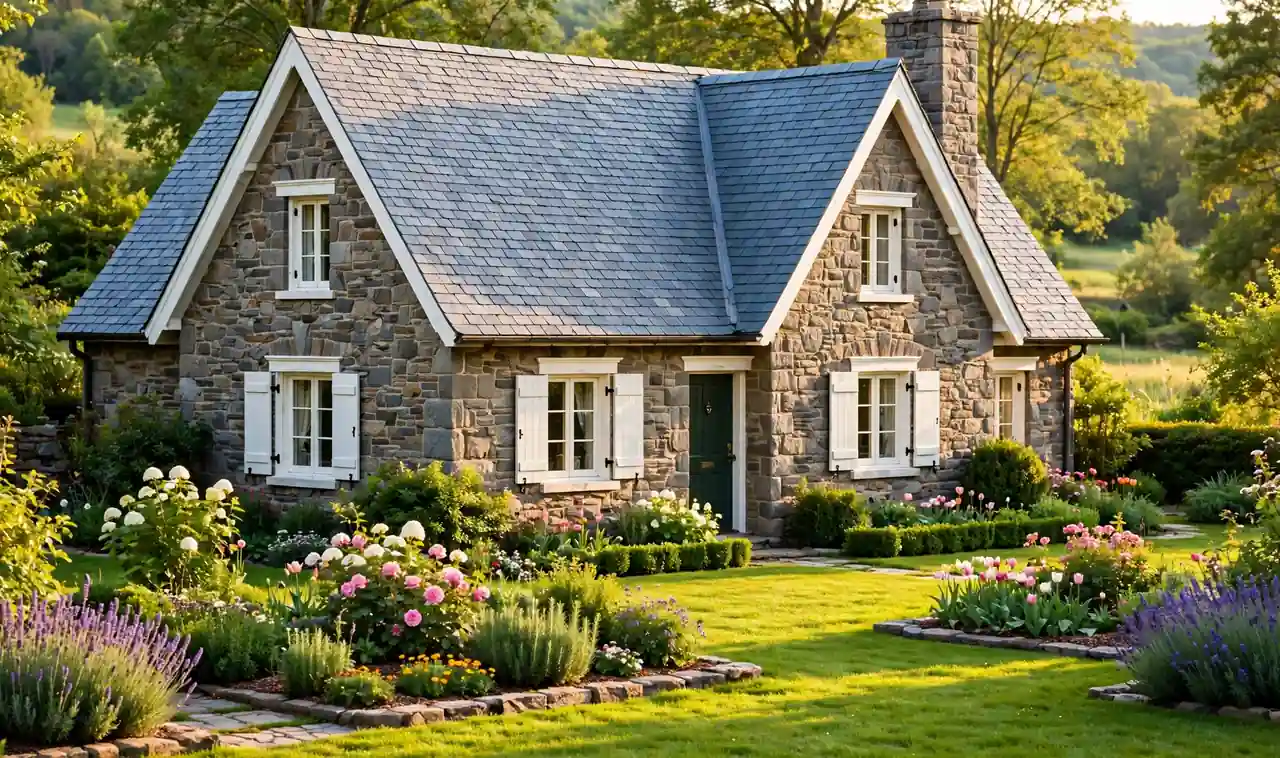
Blue gray slate and stone were made for each other. The cool tones in the tile pick up the gray in the stonework, and the whole house reads as one solid, settled piece. This is the look you see on countryside cottages that seem to have stood there forever.
Keep the palette simple so the roof stays the star. Cream or soft white trim works well, and a dark wood door adds just enough warmth.
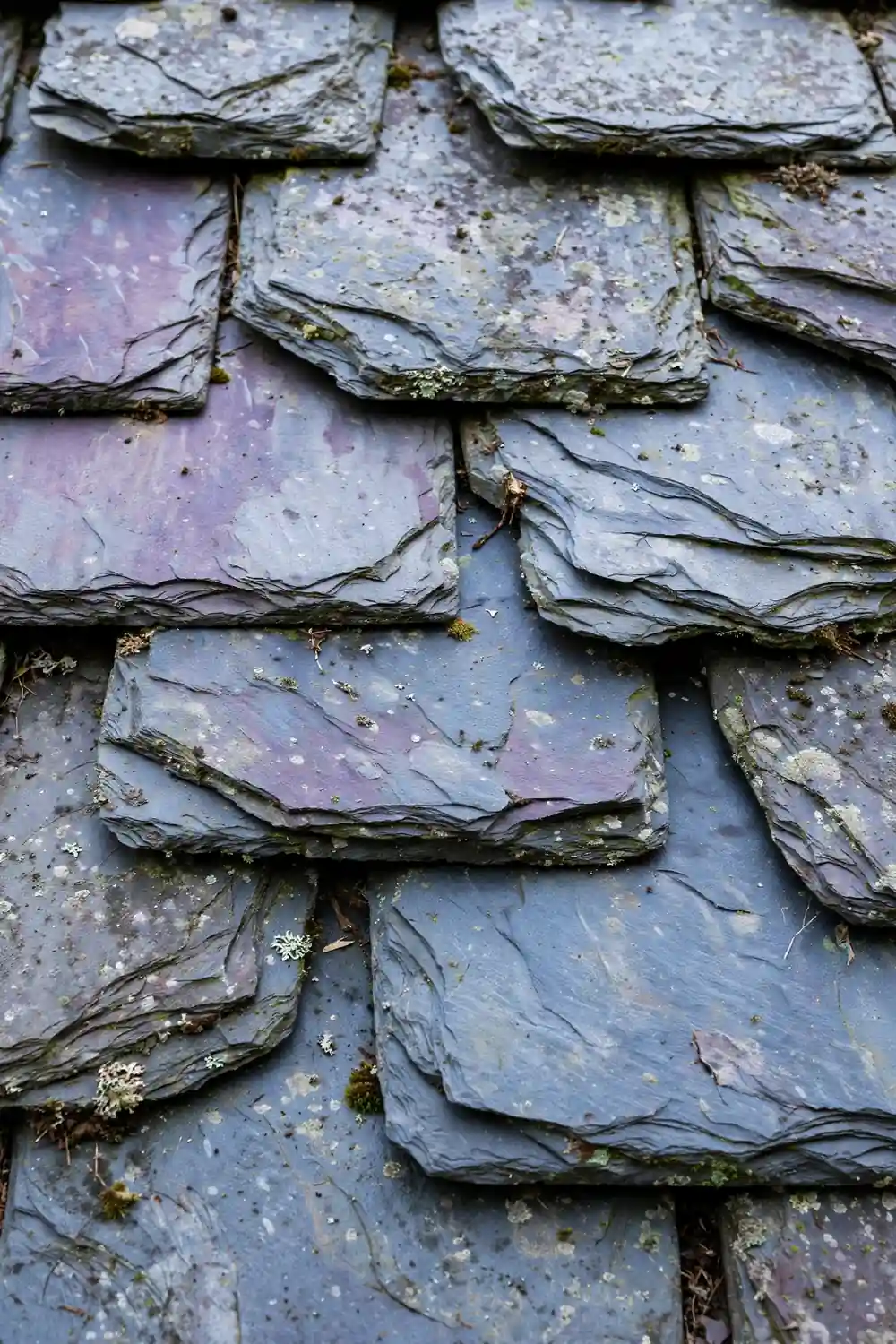
2. Deep Purple Slate for a Bold Statement Roof
Purple slate sounds daring until you see it on a house. In daylight it reads as a rich plum gray, and in low evening light it turns almost black. It gives a simple house shape real drama without a single extra decoration.
This works best on homes with plain, strong lines. A boxy colonial or a clean gable lets the color do the talking. Pair it with white or light gray siding, and skip busy trim colors that fight the purple.
Good To Know
Purple slate varies a lot from quarry to quarry. Ask to see full size samples in daylight before you commit, since a small swatch can look very different on a whole roof.
3. Mixed Multicolor Slate for a Lived In Look
A blend of gray, green, plum, and rust tiles gives a roof the feel of a home that has been loved for a hundred years. The mix hides dust and weathering better than a single flat color ever could.
- ▸Ask for a random blend, not a repeating pattern, so the mix looks natural.
- ▸Keep one tone dominant, usually gray, so the roof still reads as calm.
- ▸Save the boldest tiles for the ridge line.
4. Slate and Copper Accents That Age Together
Copper flashing, gutters, and ridge caps start out bright and slowly turn a soft green. Set against gray slate, that slow change looks intentional and rich. The two materials age side by side, and the roof only gets better looking.
You do not need a full copper gutter system to get the effect. Copper flashing around the chimney and copper snow guards are enough to set the tone.
5. A Steep Slate Gable on a Modern Farmhouse
Modern farmhouses often pair white board siding with a dark roof, and slate takes that contrast further than shingles can. A steep gable in charcoal gray slate gives the house a crisp silhouette and a solid, grounded feel.
Keep the lines clean. A simple gable with no fussy dormers lets the slate pattern show, and black window frames tie the roof to the rest of the house. A charcoal roof in slate reads richer than the same color in asphalt, since each tile catches light a little differently.
6. Textured Rough Cut Slate for a Rustic Edge
Most slate is cut smooth and even, but rough cut tiles keep their natural edges and uneven surface. The result is a roof with real texture that you can see from the street. It suits cabins, cottages, and any home with a rustic side.
Rough cut slate pairs well with stone, log, and rough wood siding. Keep the rest of the exterior simple so the texture does not compete with busy details.
7. Slate Roof With White Trim and Black Shutters
This is the classic American pairing for a reason. Gray slate, crisp white trim, and black shutters give a house a clean, tailored look that never goes out of style. The contrast is strong, but the slate keeps it from feeling stark.
Use the same white on the porch posts, window frames, and fascia so the whole house feels pulled together.
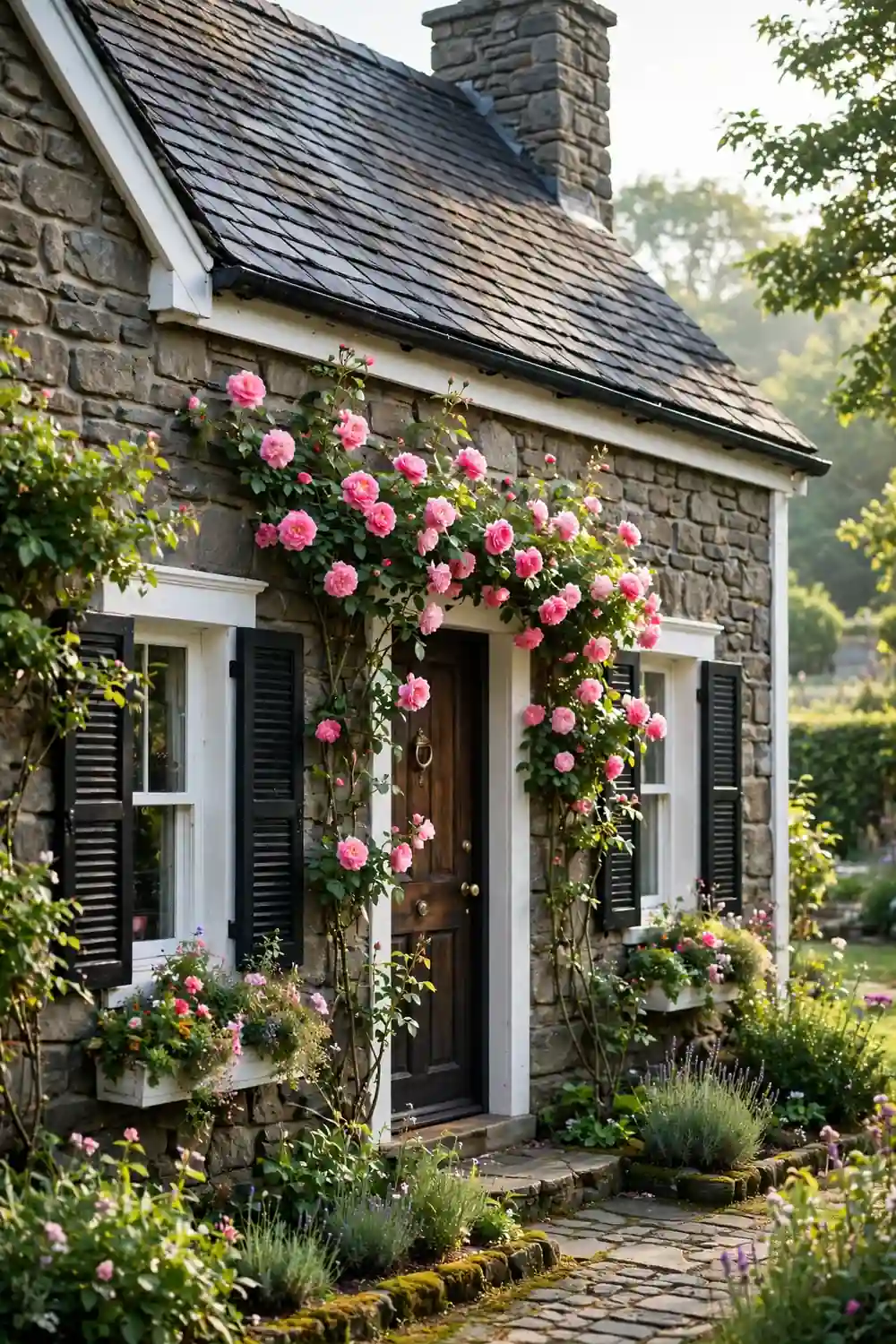
8. Green Slate Tiles on a Garden Cottage
Green slate is easy to overlook, and that is a shame. Soft sage and deep forest tones blend with trees and garden beds, so the house feels tucked into its setting instead of sitting on top of it. In spring the roof almost disappears into the leaves.
This is a strong choice for a cottage with a big garden or a wooded lot. Cream siding keeps the look light, and a brick path or stone edging grounds the green.
9. Slate and Stone Chimney Pairing
A stone chimney rising through a slate roof is one of the oldest and most satisfying pairings in home design. The chimney breaks up a large roof plane so it never looks flat.
- ▸Match the chimney stone to the darkest tone in the slate for a unified look.
- ▸Use copper or lead flashing at the base so the joint stays watertight for years.
- ▸Keep the chimney cap simple and wide so rain runs clear of the stone.
A plain brick chimney on a flat shingle roof, with no link between the two materials.
A stone chimney rising through gray slate, with copper flashing tying the two together.
10. Graduated Slate Courses for Old World Charm
Graduated slate means the tiles get smaller as they rise toward the ridge. The bottom courses are wide and bold, and the top rows are fine and neat. It is a technique from old European roofs, and it gives a house instant history.
Save it for a big gable or a long main slope, and ask a roofer who has laid graduated slate before, since the layout takes real skill.
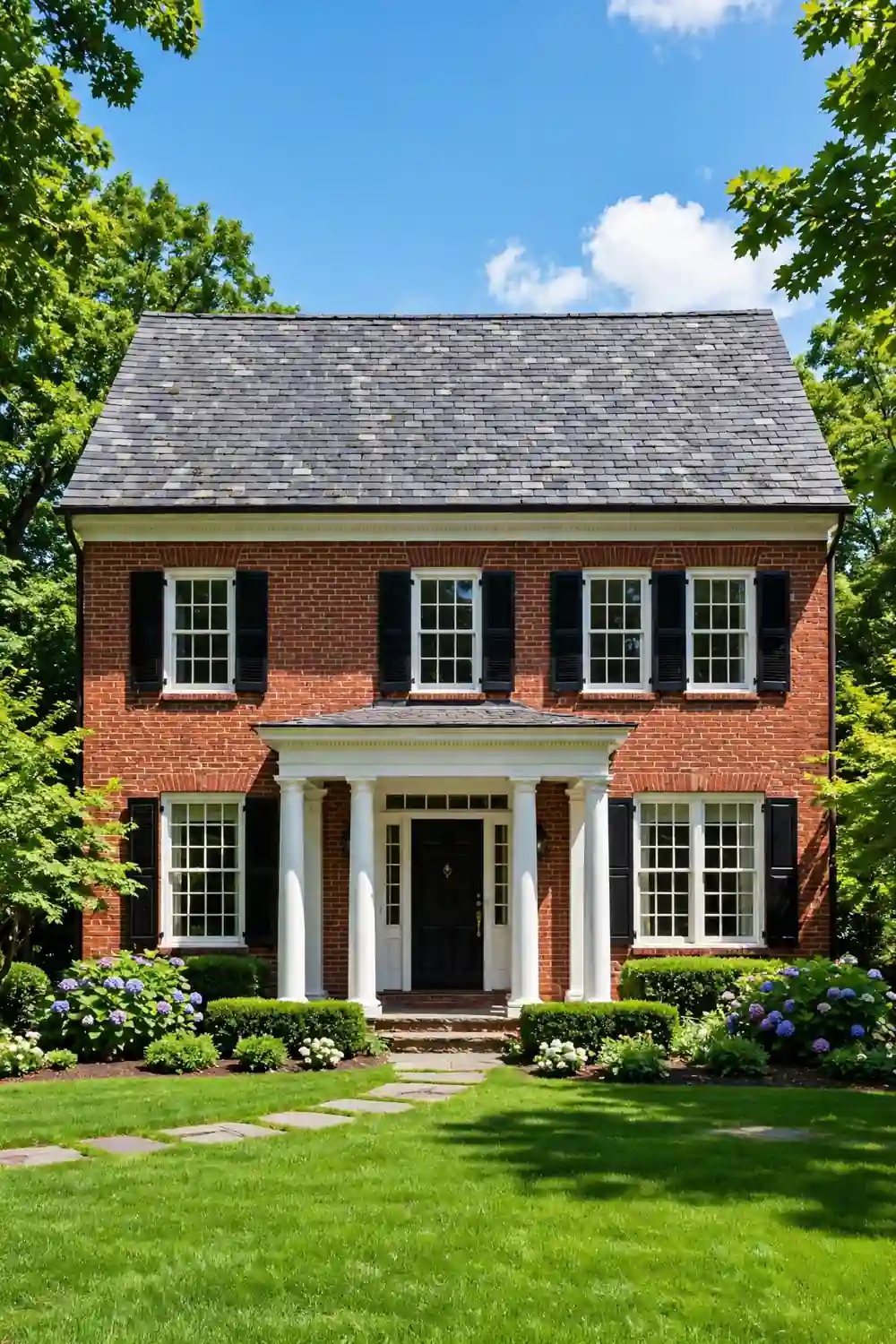
11. Slate Roof on a Brick Colonial
Red brick and gray slate have been paired for centuries, and the combination still works. The warm brick softens the cool slate, and the slate keeps the brick from looking too heavy. Together they give a colonial real weight and presence.
White columns and a black front door complete the picture. If your brick leans orange, choose a blue gray slate to balance the warmth.
12. Low Profile Slate for a Clean Modern Line
Slate is not only for old houses. Thin, evenly cut tiles laid in tight courses give a modern home a smooth, almost seamless roof plane. The natural stone still shows its grain up close, but from the street the roof reads as one clean surface.
This works best with flat or low pitch roofs and simple boxy shapes. Pair it with warm wood cladding or smooth stucco, and keep the gutters hidden or color matched so nothing breaks the line.
13. Slate With Skylights That Let Light In
A dark slate roof can make attic rooms feel dim, and skylights fix that in one move. They cut bright rectangles into the roof plane and flood the rooms below with daylight. From outside, the glass reads as a crisp modern accent against the stone.
Place skylights in a neat row so they look planned, not scattered. Flash them with copper or color matched metal so the joint stays clean and dry.
Line skylights up in a row so they look deliberate from the street.
Use copper flashing for a joint that lasts as long as the slate.
Scattering skylights at random heights across the slope.
Cheap plastic flashing that fails years before the slate does.
14. Weathered Gray Slate for a Soft Aged Finish
New slate can look almost too crisp on an old house. Weathered gray slate, with its soft edges and faded tones, bridges the gap. It looks like it has been there for decades, even on the day it is installed.
This is the right call for a renovation where the house already has age and patina. Match the faded gray to the oldest stone or brick on the property, and let the roof settle into the look instead of shouting over it. A roof color that echoes the house always ages better than one that fights it.
15. Slate Roof and Warm Wood Siding
Warm cedar or pine siding next to cool gray slate is a pairing that feels both rustic and refined. The wood brings warmth to the walls, and the slate brings weight to the top of the house. Neither material needs paint to look finished.
Let the wood weather naturally if you like a silvered look, or oil it to keep the honey tone. Either way, the slate stays the same, which is part of its charm. Cedar shake roofs share this warm wood feeling, but slate asks for far less upkeep over the years.
16. Patterned Slate With Diamond Accents
A few diamond shaped tiles set into a plain slate field turn a quiet roof into a talking point. The pattern is subtle from the street and delightful up close. It is a nod to old European roofs, where roofers used color and shape as decoration.
Keep the diamonds sparse. A single row near the ridge or a small cluster above the front door is enough. Use a contrasting tone, like plum on gray, so the pattern reads clearly.
17. Slate Porch Roof as a Small First Step
A full slate roof is a big investment, and a porch roof is a smart way to start smaller. Covering just the porch in slate gives you the look at the front door, where guests actually see it, at a fraction of the cost of a whole roof.
Choose the same slate you would want on the main roof one day, so the porch becomes a preview rather than a mismatch.
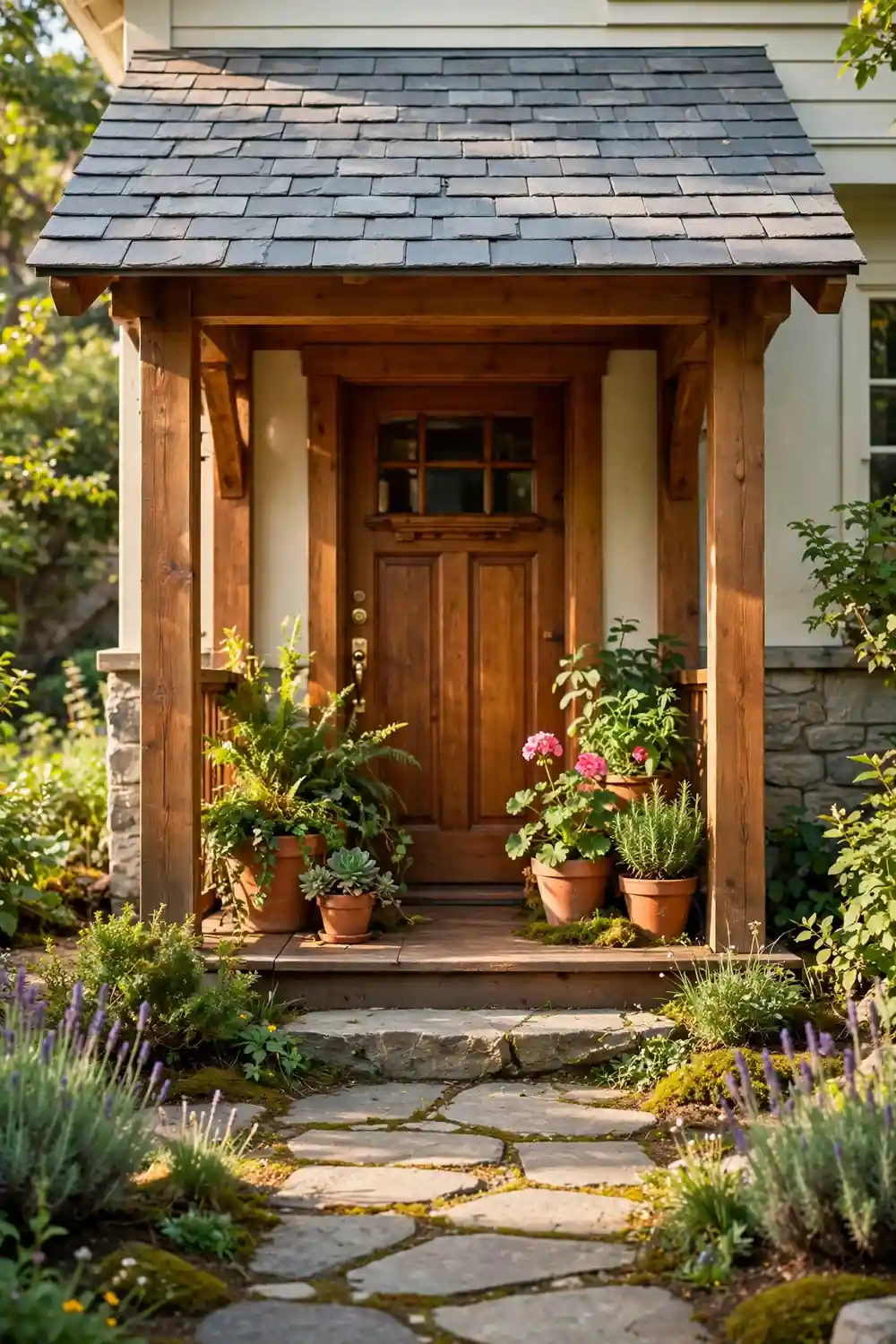
Start with the porch if a full roof feels like too much. The slate you love at the front door is the slate you will love everywhere else.
18. Slate and Dormers for Extra Character
Dormers break up a long slate roof and add light to the rooms upstairs. Each dormer gets its own small slate cap, and the repetition of those little roofs across the slope gives the house a storybook rhythm.
Keep dormer shapes consistent across the roof. Three matching gable dormers look intentional, while mixed shapes can look accidental.
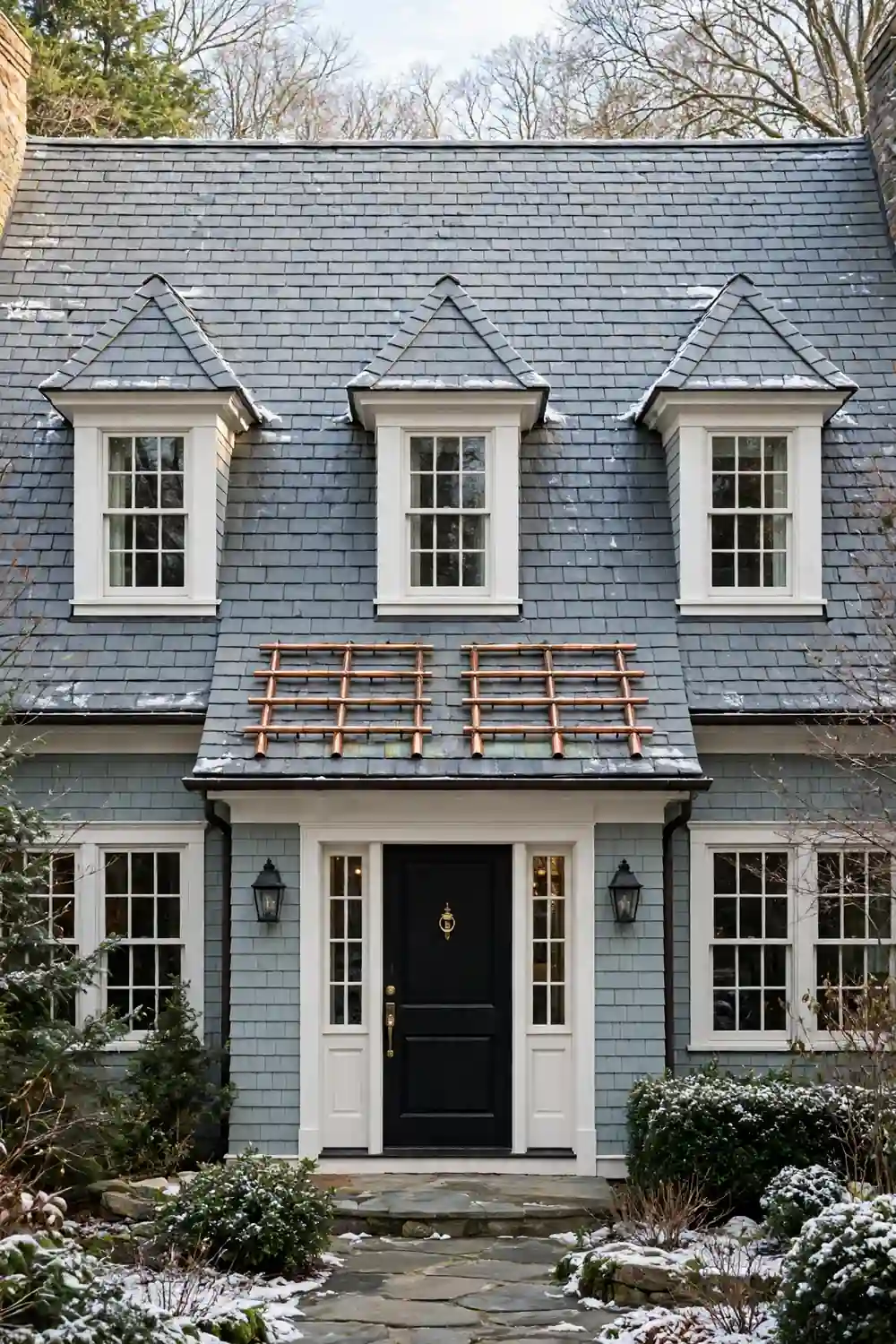
19. Slate Roof With Snow Guards for Winter
Slate is smooth, and snow slides off it in heavy sheets. Snow guards hold that snow in place so it melts slowly instead of crashing down on a walkway, a porch, or a car. They are a small detail that prevents real damage.
Install guards in rows above every doorway and driveway. Copper or dark bronze guards blend into the slate and look like part of the roof.
A slate roof is a long term choice, and that is exactly what makes it worth the thought. It outlasts trends, weathers with grace, and gives a house a sense of permanence that few other materials can match. The right slate for your home is the one that fits its shape, its setting, and the way you want it to age.
Start by narrowing down the color and cut that feel right, then talk to a roofer who knows slate well. Save this list for the next time you are weighing roof options, and come back to the idea that kept catching your eye.