

Modern minimalism is no longer about creating a cold, nearly empty white room. In 2026, the look has become warmer, more personal and easier to live with. Clean lines still matter, but they now sit beside natural wood, tactile fabrics, softly curved furniture and layered lighting.
The goal is simple: keep what supports daily life, remove visual noise and give every object enough space to be appreciated. This updated guide explains how to create a calm minimalist home that feels elegant, comfortable and unmistakably yours.
What Modern Minimalism Looks Like in 2026
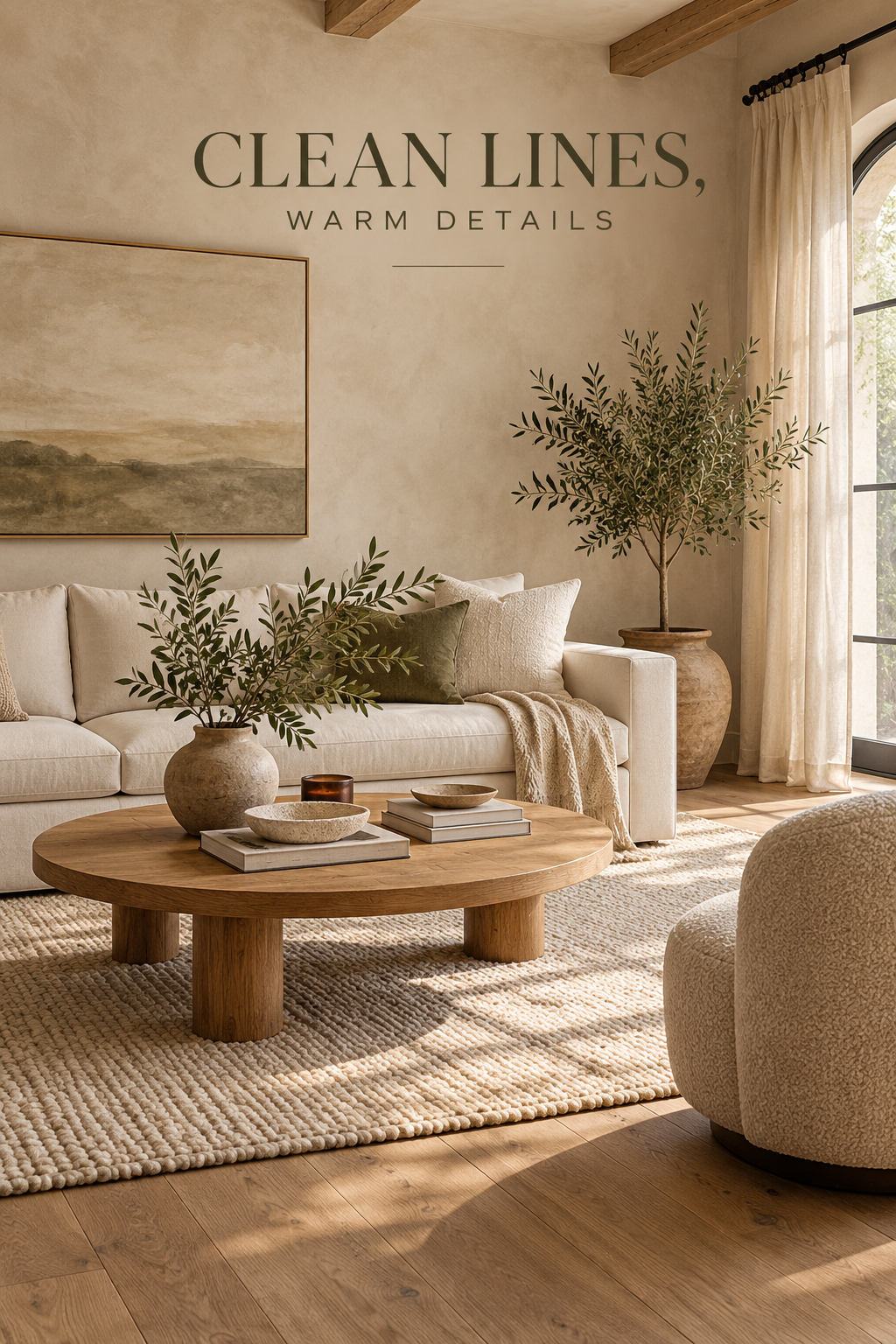
Today’s most inviting minimalist rooms balance restraint with warmth. Instead of stark white walls and glossy surfaces, homeowners are choosing warm whites, oat, sand, mushroom, clay and muted olive. Natural materials such as oak, linen, wool, stone and woven fibers add depth without making the space feel busy.
This softer direction is often called warm minimalism. It keeps the practical strengths of minimal design—clear circulation, useful furniture and uncluttered surfaces—while avoiding the showroom effect. The result is a home that photographs beautifully for Pinterest but still works for real life.
The Core Principles of Simple, Elegant Decor
1. Edit the Room Instead of Emptying It
Minimalism does not require getting rid of everything. Begin by removing items that are broken, duplicated, unused or visually distracting. Then return the pieces that serve a purpose or create genuine enjoyment. A lamp you use every evening, a handmade bowl and one meaningful photograph can have more impact than a shelf filled with random accessories.
Work one surface or storage zone at a time. This makes the process manageable and helps you decide what the room actually needs. If you want a broader organizing plan, these ideas for organizing every room can help you create practical homes for everyday items.
2. Prioritize Clean Lines—But Add a Few Curves
Choose sofas, tables, cabinets and shelving with simple silhouettes and minimal ornament. Straight lines make a room feel orderly, while one or two rounded pieces prevent it from looking rigid. A curved lounge chair, oval mirror or round coffee table can soften a rectangular layout without adding clutter.
Repeat a limited number of shapes throughout the room. For example, pair slim black window frames with simple picture frames, then balance them with a rounded lamp or planter. Repetition creates visual continuity and makes even budget furniture look intentional.
3. Build a Warm Neutral Color Palette
Start with two or three connected neutrals rather than using one flat shade everywhere. Warm white walls, a greige sofa and light oak furniture create subtle contrast. Add depth through small accents in olive, rust, charcoal or chocolate brown.
Test paint and fabric samples in morning, afternoon and evening light. Undertones can change dramatically throughout the day. A calm palette should still feel comfortable after sunset, not only when the room is flooded with daylight.
4. Let Texture Do the Decorating
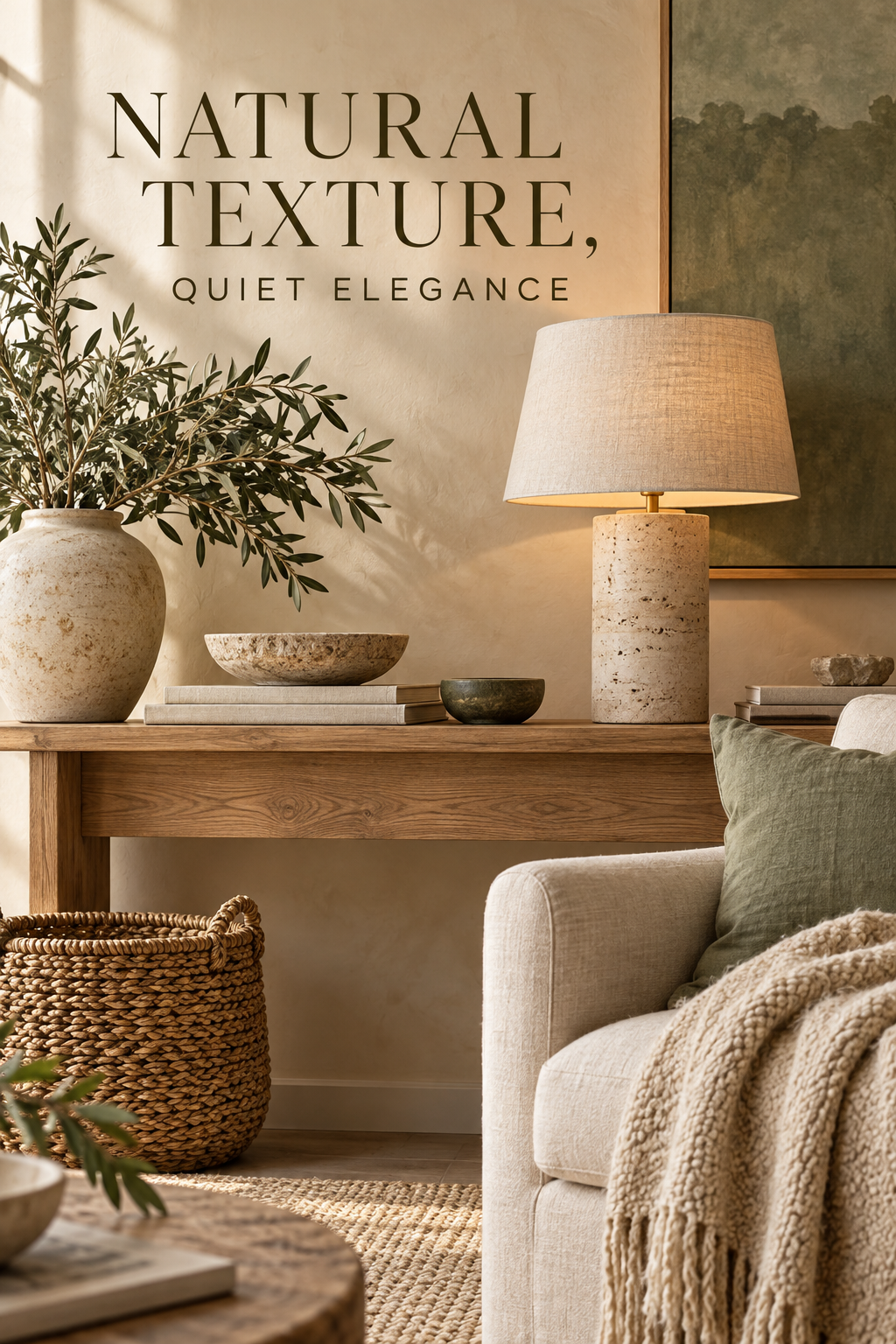
When color and pattern are restrained, texture becomes essential. Combine smooth wood with nubby linen, woven baskets, matte ceramics, honed stone and a soft wool rug. These materials create interest close up while keeping the overall room visually quiet.
A useful rule is to include at least three textures in every main space. In a living room, that might be an oak table, linen upholstery and a woven rug. In a bedroom, try cotton bedding, a wool throw and a timber bedside table.
5. Use Concealed Storage Where Clutter Collects
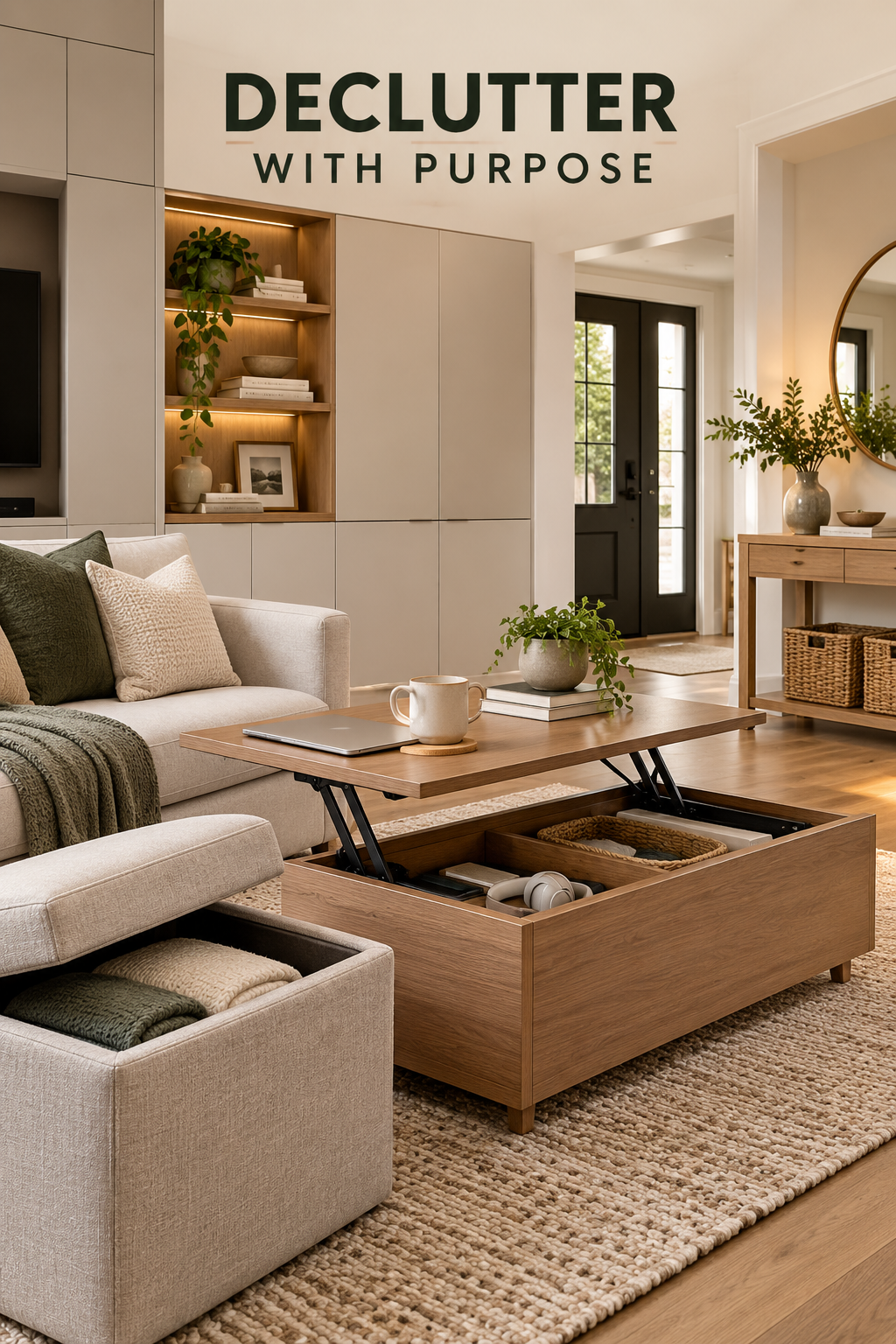
Open shelves can look beautiful, but closed storage is easier to maintain in busy homes. Use drawers, cabinets and baskets for chargers, toys, paperwork, remote controls and cleaning supplies. Reserve open surfaces for a small number of attractive objects.
Multifunctional furniture is especially helpful in compact rooms. Consider:
- A lift-top coffee table with hidden storage
- An ottoman that holds blankets or games
- A bed with integrated drawers
- A bench with shoe storage near the entrance
- A sideboard that hides dining and office supplies
Storage should reduce daily effort. Place it where items naturally accumulate rather than forcing the household to follow an inconvenient system.
6. Layer Natural and Artificial Light
Natural light supports the airy quality of minimalist interiors. Keep windows visually simple with sheers, roller blinds or full-height curtains in a color close to the wall. Position mirrors where they can reflect daylight deeper into the room without creating glare.
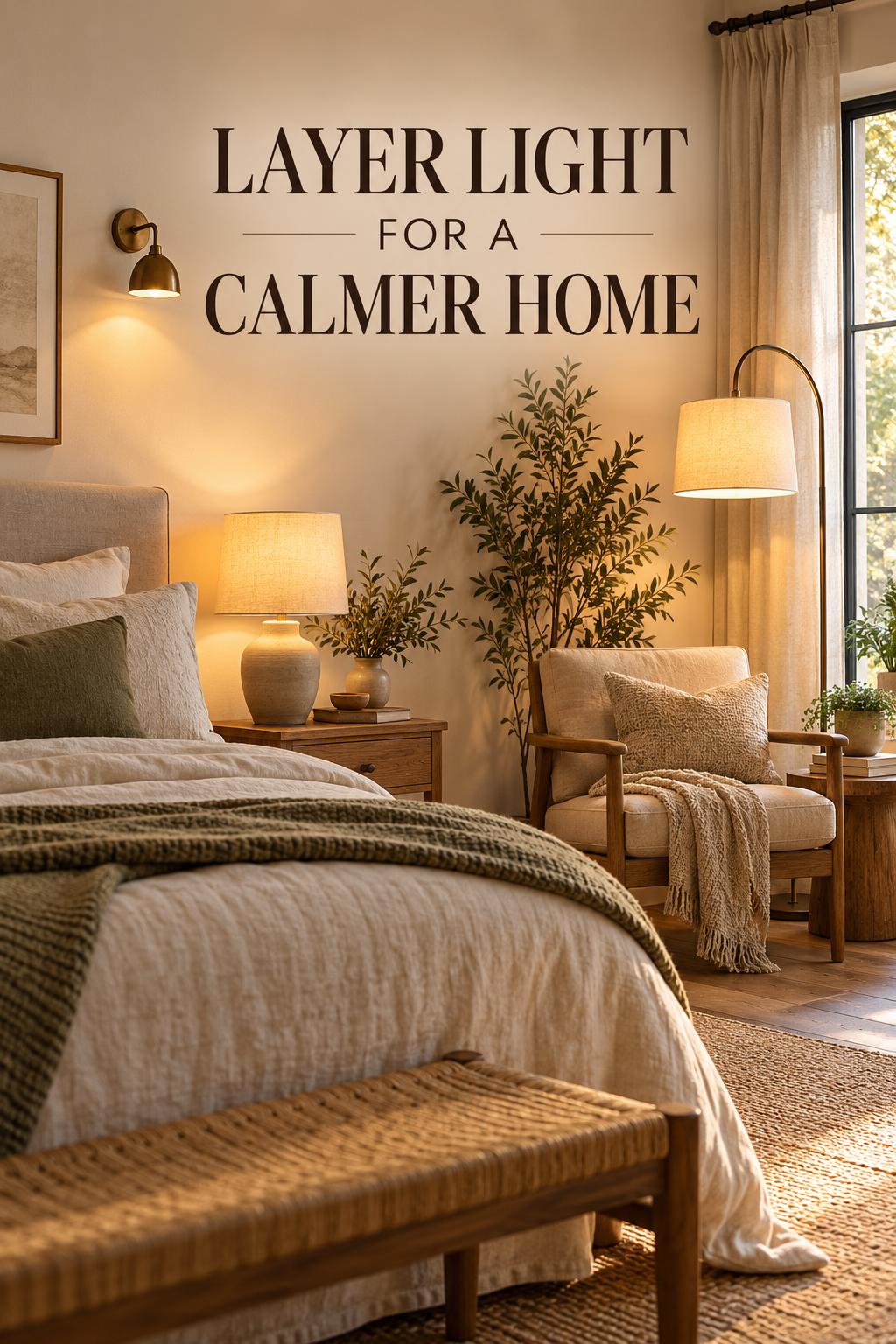
After dark, avoid relying on one bright ceiling fixture. Combine ambient, task and accent lighting: a soft ceiling light, a reading lamp beside a chair and a wall sconce or small table lamp near artwork. Warm bulbs create gentle pools of light that emphasize texture and make neutral rooms feel comfortable.
7. Choose Fewer, Better Decorative Pieces
Instead of buying accessories to fill every gap, leave intentional empty space around the objects you display. One oversized artwork often looks calmer than a wall of unrelated small frames. A large vase with branches can create more presence than several tiny ornaments.
Prioritize pieces with a story: travel finds, family photographs, handmade ceramics, vintage furniture or art from a local maker. Personal items keep minimalism from feeling generic and give the room character without requiring a large quantity of decor.
Room-by-Room Warm Minimalist Ideas
Living Room
Anchor the room with one comfortable sofa and a properly sized rug. Keep the coffee table simple and allow a clear path through the seating area. Add one floor lamp, a textured throw and a plant or branch arrangement. If the room needs more personality, introduce a single accent color through cushions or art rather than scattering many colors around the space.
Bedroom
Make the bed the visual focus. Choose breathable bedding in related neutral tones, then add one tactile blanket or quilt. Use matching visual weight—not necessarily identical furniture—on both sides of the bed. Blackout curtains can be layered behind linen panels so the room remains calm while still supporting good sleep.
Kitchen
Keep counters mostly clear by storing small appliances that are not used daily. Repeat two or three materials, such as painted cabinetry, warm wood and stone, throughout the room. A simple bowl of fruit, a timber board and one pot of herbs can provide enough decoration while remaining useful.
Bathroom
Use wall-mounted storage, mirrored cabinets and trays to control small toiletries. Limit visible products to those used every day. Towels in one color family, a simple bath mat and one natural element—such as a wood stool or small plant—can create a spa-like effect without a remodel.
A Budget-Friendly Minimalist Refresh
You do not need new furniture to simplify a room. Start by removing excess accessories, rearranging the layout and improving lighting. Move furniture away from walls if it creates a better conversation area, swap cool bulbs for warmer ones and gather small objects onto a single tray.
Next, invest in the changes with the greatest visual impact: correctly sized curtains, a larger rug, cohesive storage baskets or fresh paint. Secondhand solid-wood furniture often brings more warmth and longevity than inexpensive trend pieces. Update one room at a time so every purchase has a clear purpose.
Common Minimalist Decorating Mistakes
- Removing too much: A functional home still needs comfortable seating, task lighting and accessible storage.
- Using only white and gray: Warm neutrals, wood and muted color make a restrained room feel welcoming.
- Buying tiny decor: Several small pieces can create more visual noise than one confident statement object.
- Ignoring texture: A limited palette needs linen, wool, wood, stone or woven fibers for depth.
- Choosing looks over comfort: A beautiful chair that no one wants to sit in does not support practical minimalism.
- Forgetting cables and daily clutter: Plan charging drawers, baskets and concealed storage before styling surfaces.
Quick Warm Minimalism Checklist
- Keep a clear walking route through every room.
- Choose a warm base palette with one or two accent colors.
- Mix at least three natural or tactile textures.
- Use closed storage for small everyday items.
- Combine straight lines with one or two soft curves.
- Layer ceiling, task and accent lighting.
- Display meaningful objects with space around them.
- Buy slowly and measure before adding furniture.
Frequently Asked Questions
Can a minimalist home still feel cozy?
Yes. Use warm neutrals, natural wood, soft textiles, comfortable seating and layered lighting. Coziness comes from texture and light rather than from filling every surface.
How many colors should a minimalist room use?
A simple starting point is one main neutral, one supporting neutral and one accent color. Different shades and textures within those colors keep the room from feeling flat.
Is minimalist decor practical for families?
It can be very practical when storage is planned around daily routines. Durable fabrics, washable rugs, baskets, drawers and multifunctional furniture help family spaces stay calm without expecting them to remain perfect.
How do I make minimalism feel personal?
Choose fewer pieces, but make them meaningful. Display family art, travel objects, books or handmade items in small curated groups rather than using generic decor throughout the room.
Final Thoughts
Modern minimalism in 2026 is less about perfection and more about thoughtful editing. Clean lines provide structure, while natural materials, warm color, soft light and personal objects make the home feel lived in. Start with one room, solve its storage problems and add comfort before decoration. The finished space should look calm in a photograph and feel even better in everyday life.


One Response