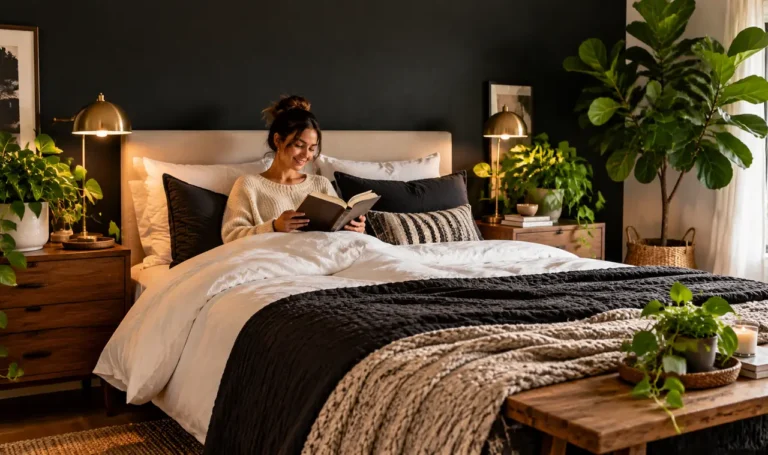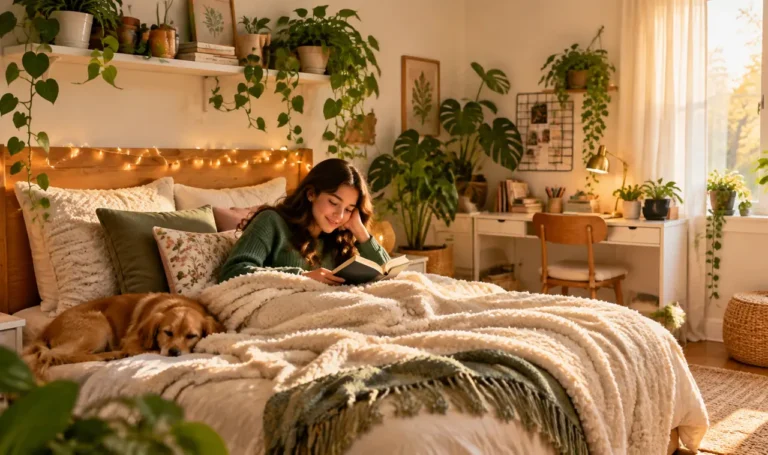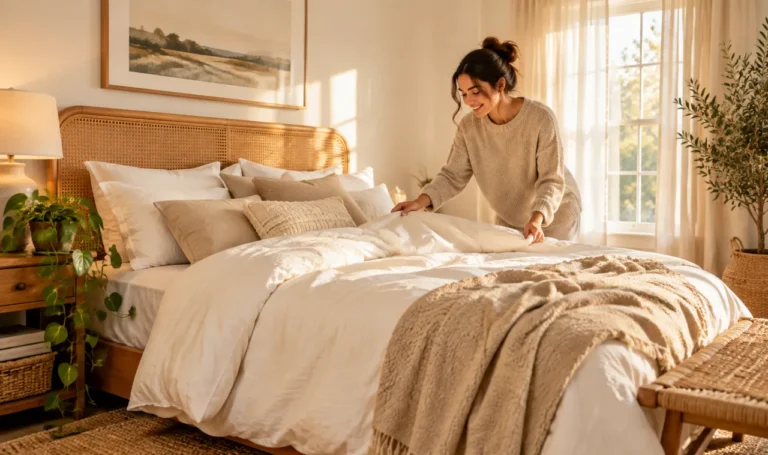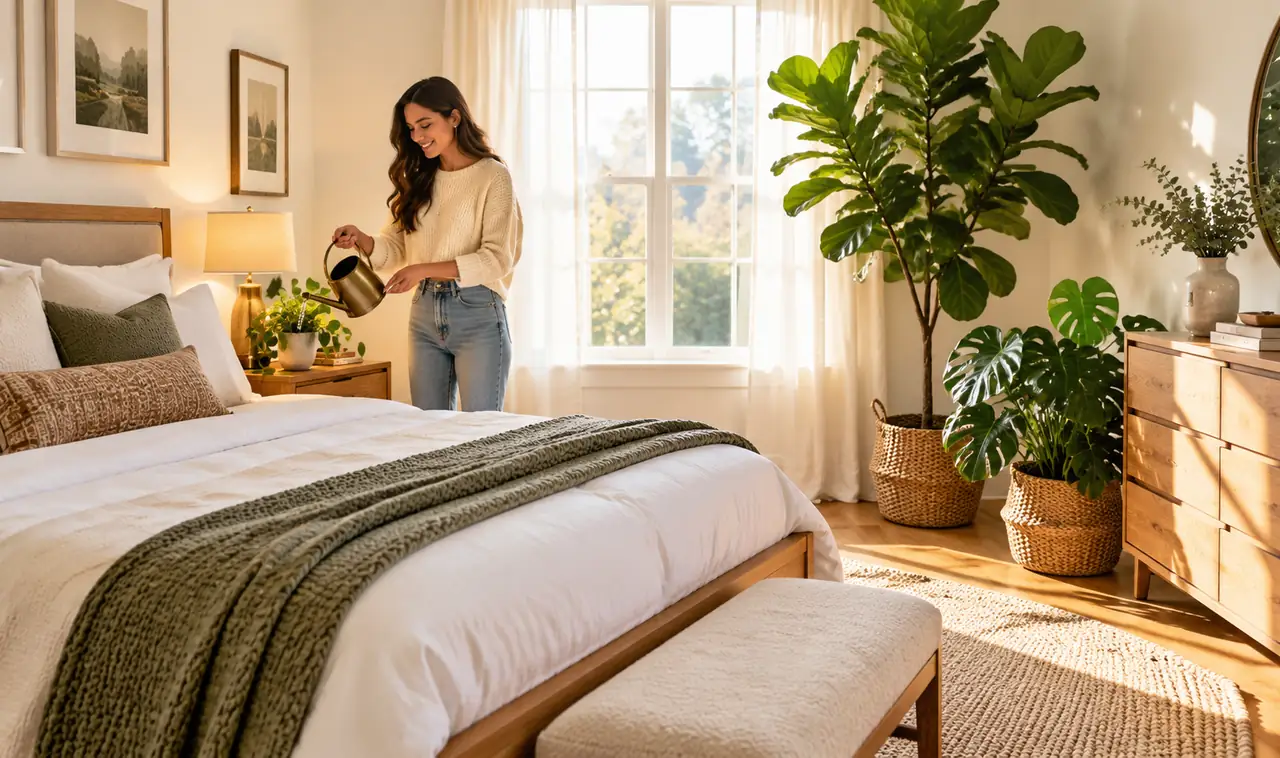
A modern bedroom is easy to spot. The lines are simple, the surfaces are clear, and every object looks like it earned its place. Plants fit that picture well, as long as they are chosen and placed with the same care as the furniture.
The usual mistake is buying plants one at a time with no plan. A fern here, a succulent there, three pots that do not match, and the room starts to feel busy instead of calm. Modern bedroom plant ideas work the opposite way. Fewer plants, bigger shapes, matching pots, and a clear spot where each plant belongs.
The 18 ideas below keep the look clean and current. Some use a single tall plant as the whole statement. Others repeat one plant or one pot style so the room feels pulled together. If you like the calmer end of this style, our guide to minimalist bedroom plant ideas goes even simpler. Start with one idea, live with it for a week, then add another only if the room still asks for it.
1. Put One Tall Plant in the Corner and Stop There
Most modern bedrooms have one corner that does nothing.
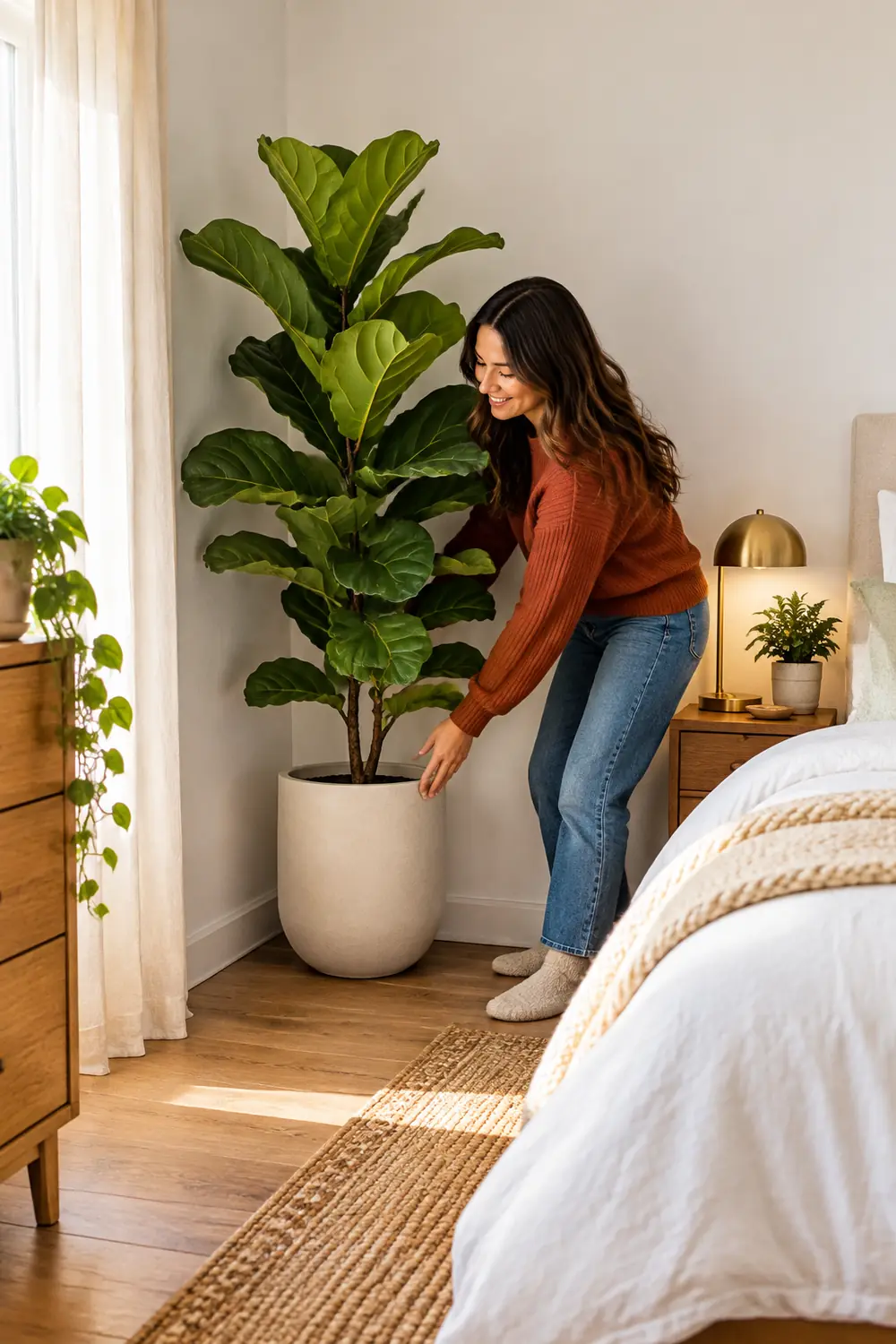
A tall plant fixes it in one move. Choose a fiddle leaf fig, an olive tree, or a bird of paradise with a trunk height of at least four feet, and set it in a plain pot that matches the room’s wood or metal tones. The height pulls the eye up, and the single shape keeps the corner calm instead of crowded. That empty space around it is what makes the plant read as a design choice, not storage.
2. Match Two Snake Plants on Both Nightstands
Symmetry is the fastest route to a tidy look.
Two snake plants of the same height, in the same pot, one on each nightstand, frame the bed like bookends. Snake plants suit bedrooms well because they grow upright, take up little width, and forgive missed waterings. Keep the pots identical. Mismatched pots undo the whole effect.
💡 Quick Tip
Measure before you buy. Nightstand plants should stay below the lamp shade, around 12 to 18 inches tall, so the light still spreads across the bed.
3. Let a Pothos Trail Down From a Floating Shelf
A floating shelf above a dresser or beside the bed gives trailing plants a clean stage.
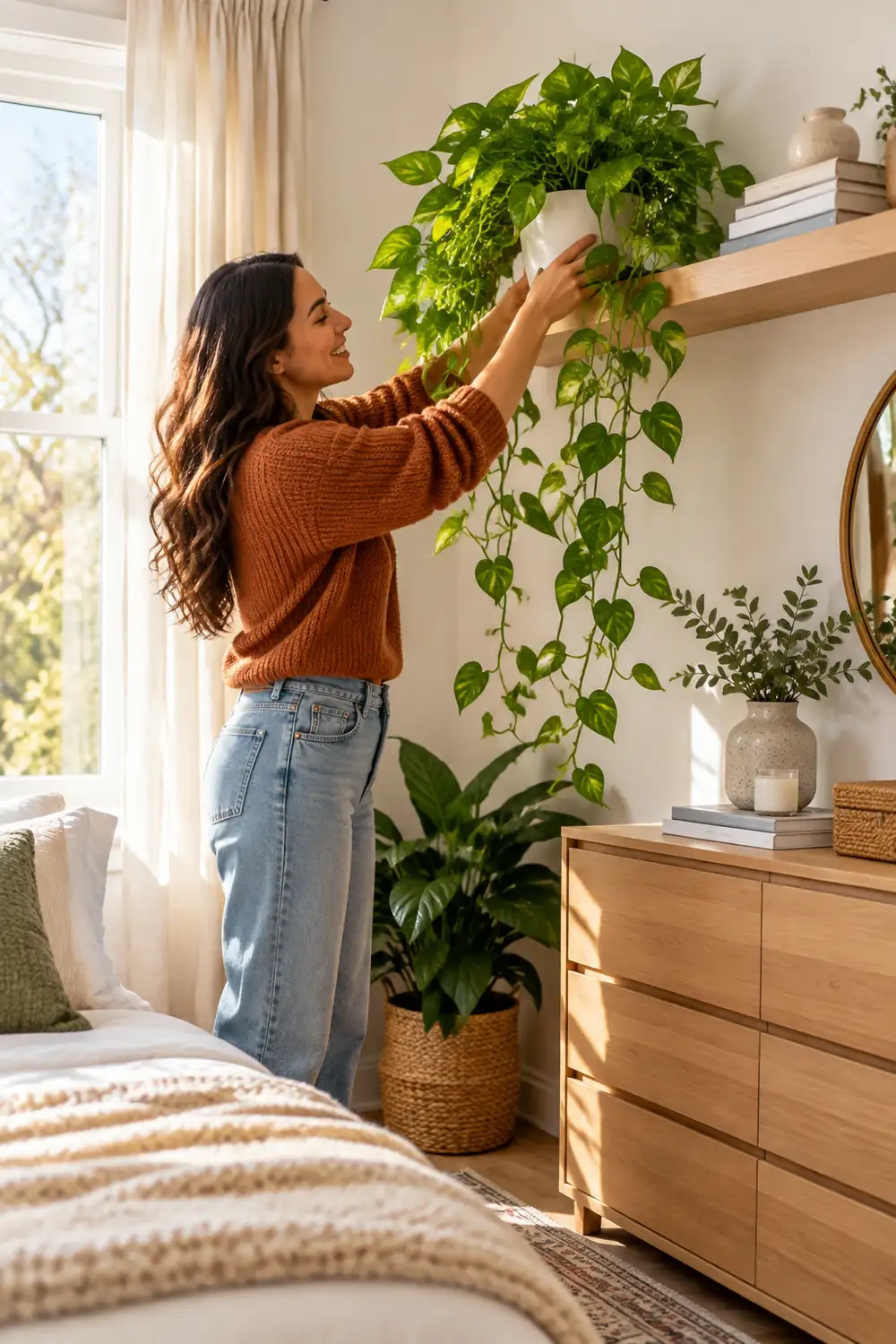
Set a golden pothos in a simple white or black pot at the end of the shelf and let the vines fall at different lengths. Pothos grows fast, so trim the longest stems every few weeks to keep the shape neat. If you want more shelf layouts, our bedroom plant shelf ideas show ways to mix plants with books and frames. One trailing plant per shelf is enough. Two or more start to tangle, and tangles read as mess.
4. Line the Window Sill With Small Plants in Matching Pots
A window sill is free display space that most people waste.
Line it with three or five small plants in pots that match, spaced evenly like a row of books. Herbs belong in kitchens. Here, try small peperomia, a string of pearls in a short pot, or baby rubber plants. The repetition is the point. Our bedroom window plant ideas cover light needs for each direction a window can face. Keep the row to one plant type if your sill is narrow. A single repeated shape looks planned.
5. Group Three Plants on Stands at Different Heights
Plants sitting on the floor in a row look like they are waiting to be moved. Stands fix that.
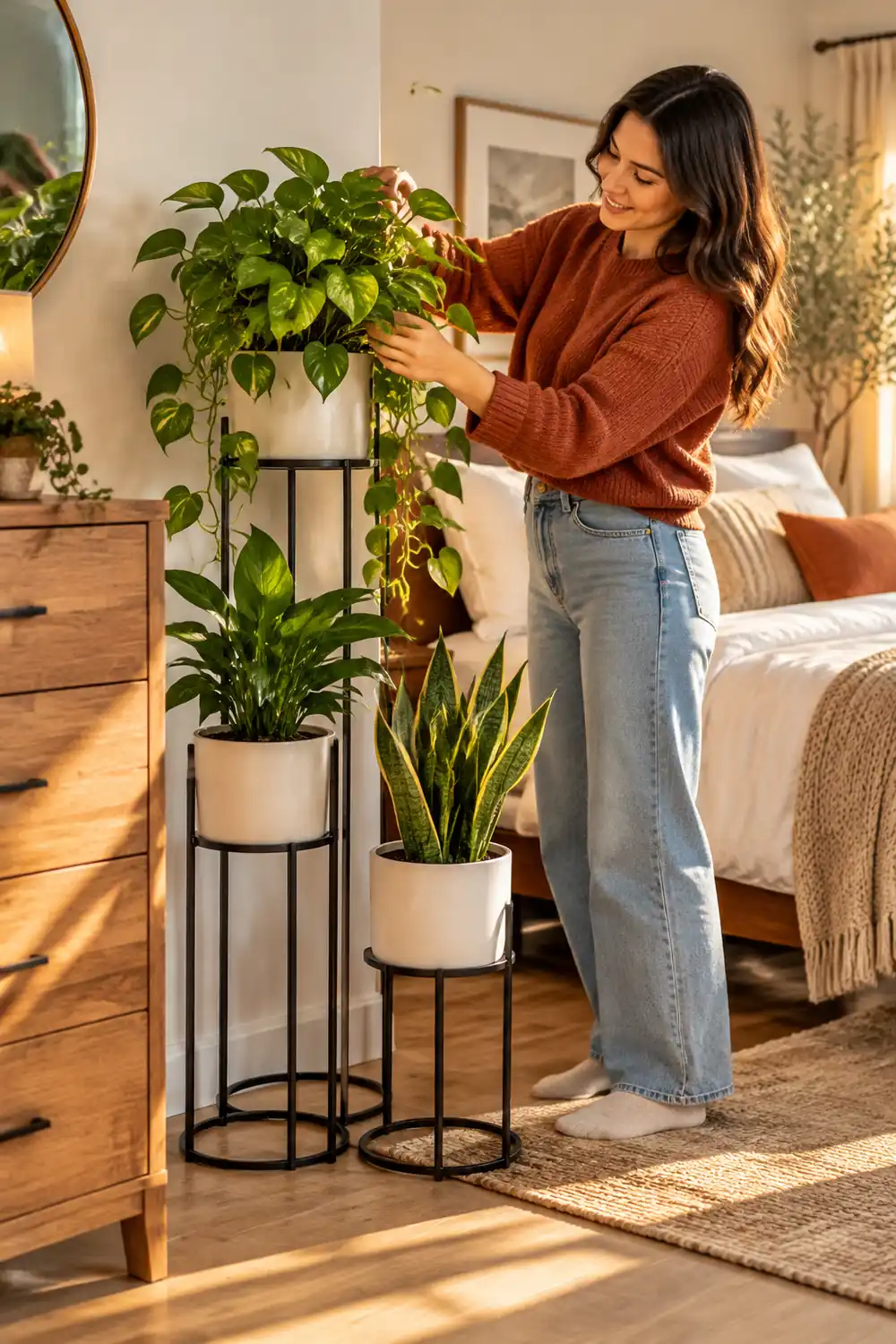
Group three plants in one corner or beside the dresser on stands of low, medium, and tall heights, and the group becomes a small display. Wood stands suit warm rooms, black metal suits cooler ones. Keep the pots in one color family so the heights, not the containers, do the talking.
6. Set a Monstera Beside the Dresser, Leaves Out
A monstera earns its space.
The split leaves work like a piece of art, so give the plant a spot where the leaves can spread without touching furniture, usually beside the dresser or near a bright window. One plant, one wide pot, nothing else on that patch of floor. Monstera leaves turn toward the light, so rotate the pot a quarter turn each week to keep the shape even. Dust the leaves once a month with a damp cloth. Dusty leaves look dull fast.
7. Hang One Planter Beside the Bed, Not Over It
A hanging plant adds green at eye level without using any surface.
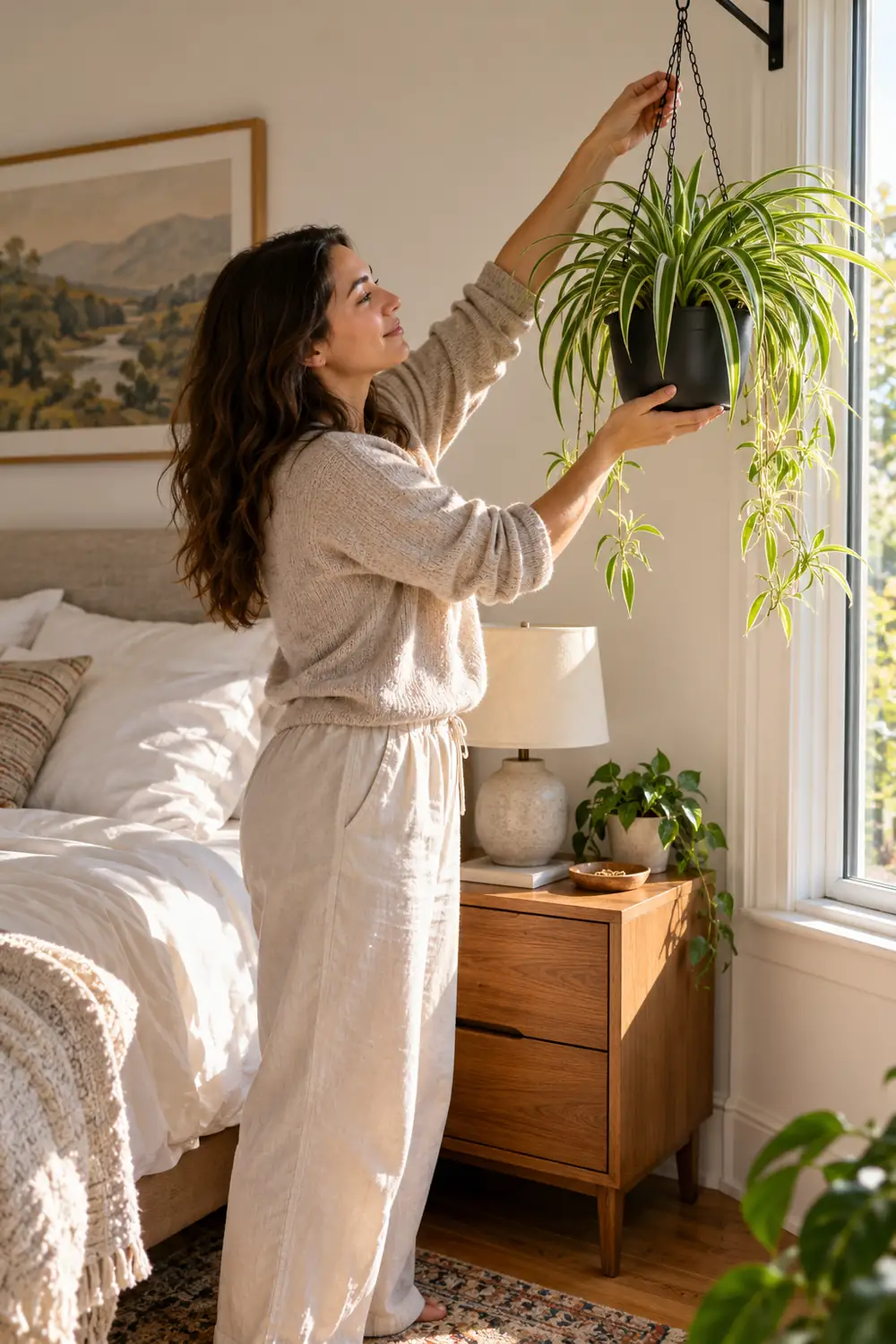
Hang it beside the bed, near the window or over the nightstand corner, rather than above the pillows where a dripping pot becomes a real worry. Black metal or plain ceramic hangers look cleaner than knotted rope. A heartleaf philodendron or a spider plant handles the height well and trails without getting heavy. Check the hook rating before you hang anything with wet soil in it. Wet soil weighs far more than you expect.
8. Run a Slim Ledge Above the Headboard for Small Pots
The wall above the headboard often stays bare because frames feel heavy there.
A slim picture ledge, six inches deep at most, holds a row of small pots and changes the whole wall. Choose two or three small plants with soft shapes, like a rhipsalis or a small fern, and space them wide apart.
Before you hang the ledge
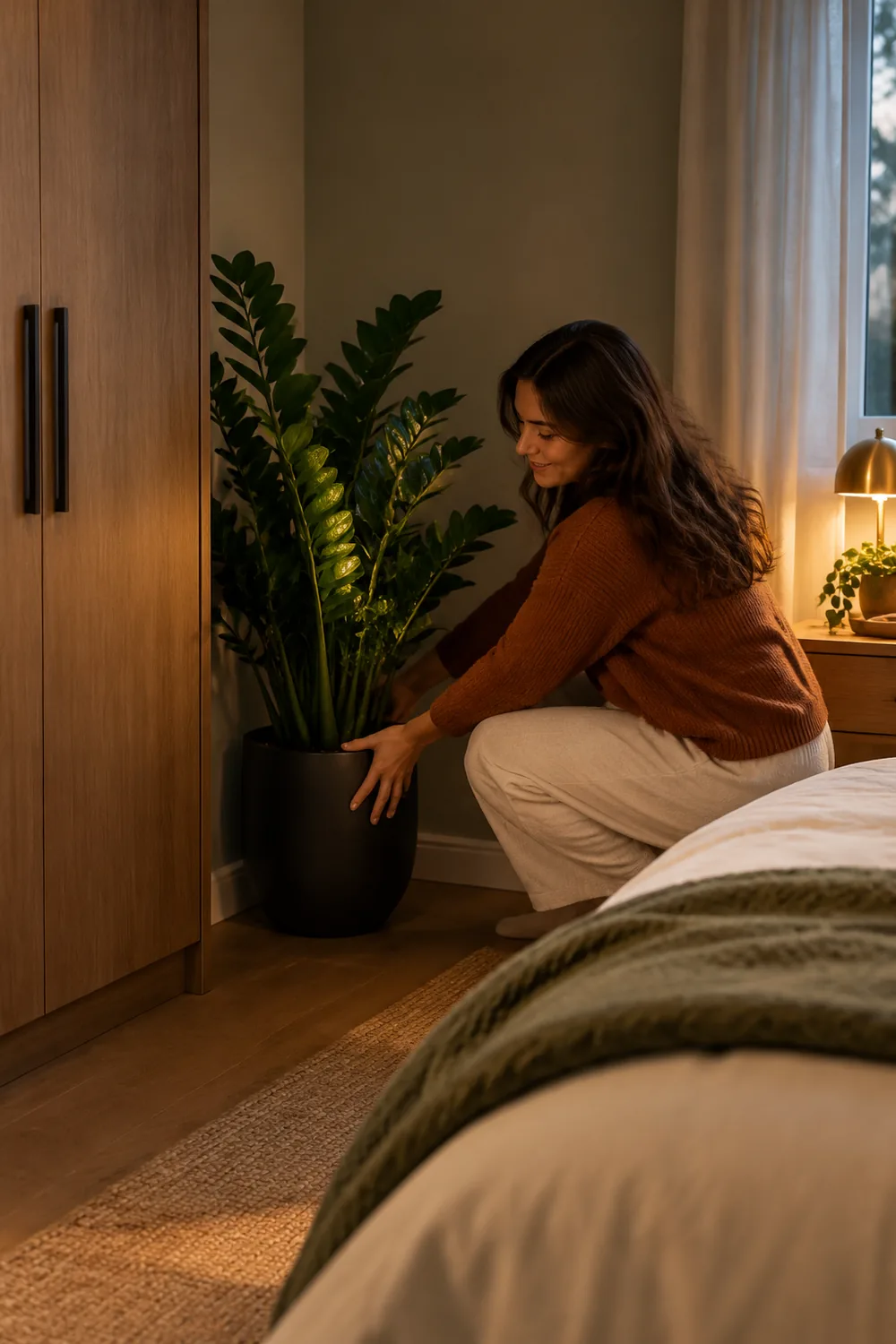
9. Give the Dark Corner to a ZZ Plant
Every bedroom has one corner that gets almost no light, usually beside the wardrobe.
A ZZ plant is built for that spot. Its thick stems store water, its leaves stay glossy in low light, and it grows slowly enough that it will not outgrow the gap in a season. Water it rarely. Once every three or four weeks is plenty. The most common way to kill a ZZ plant is kindness, too much water in a pot with nowhere for it to drain.
10. Swap Dresser Clutter for Eucalyptus in a Glass Vase
Not every green thing in a bedroom needs roots.
A few stems of eucalyptus in a tall glass vase give the dresser one calm focal point and replace the usual pile of bottles, chargers, and loose change. Dried eucalyptus lasts for months, and fresh stems scent the room lightly. Keep the vase tall and the stems taller. Short, bushy arrangements look fussy on a modern dresser. When the leaves fade to grey, that is your sign to swap in a fresh bunch.
11. Mount Air Plants in Clear Wall Holders
Air plants need no soil, which makes them the cleanest plant option there is.
Clear glass or acrylic wall holders show the whole plant and keep walls looking light. Group three holders in a loose triangle near a window, mist the plants twice a week, and soak them for twenty minutes once a month. They suit renters well because the holders mount with small screws or adhesive hooks. No soil also means no gnats, which is reason enough for many people.
12. Lean a Slim Plant Ladder Against the Wall
A leaning ladder shelf gives plants four or five levels in the floor space of one chair.
White or light wood ladders keep the look airy. Put the largest plant on the bottom shelf, smaller pots as you go up, and leave one shelf empty for a folded throw or a small stack of books. That empty shelf matters. A ladder packed on every rung looks like a shop display, not a bedroom.
Heaviest plant on the lowest rung, always.
Leave one shelf empty on purpose.
Trailing vines on the top rung near a door swing.
A different pot color on every shelf.
13. Place an Olive Tree Beside the Reading Chair
A reading chair with a lamp is half a corner. An olive tree finishes it.
The small grey green leaves suit modern rooms because they add color without shouting, and the thin trunk keeps the shape light. Real olive trees want strong light, so sit the chair near a window. Faux olive trees have improved a lot and need nothing but dusting. Set the pot on a low stand so the leaves start around the height of the chair back.
14. Let a Calathea Be the Art on Your Nightstand
Calathea leaves carry bold patterns, stripes, and deep green tops with purple undersides, so one small plant can do the job of a framed print.
Set one on the nightstand where you would normally lean a photo. It likes steady moisture and indirect light. The leaves fold up at night and open in the morning. Guests always ask about it, which is more than most nightstand decor can claim.
15. Fill the Gap Beside the Wardrobe With a Basket Plant
The narrow gap beside a wardrobe collects dust and lost socks.
A floor plant in a woven basket fills it with something worth looking at. A snake plant or a cast iron plant handles the low light there, and the basket hides a plain nursery pot. Measure the gap before you shop. The plant plus basket should sit at least two inches clear of the wardrobe door swing.
16. Train a Vine Along the Curtain Rod With Clear Clips
A pothos or philodendron can be trained along a curtain rod with small clear clips, turning the top of the window into a green border.
Guide new growth every week or two with loose clips. Keep vines off the curtain fabric itself, where they trap dust and moisture. This idea suits one window only. Vines on every window tip the room from clean to jungle, and clean is the goal here.
17. Repeat One Pot Style in Three Spots Around the Room
If your plants look random, the pots are usually the problem.
Pick one pot style, matte white ceramic, black metal, or plain terracotta, and repeat it in at least three places: nightstand, dresser, floor. The plants themselves can differ. The repeated container ties them together, the same way matching handles tie a kitchen together. Give away the odd pots, or the mix starts again.
One pot style, repeated three times, makes five different plants look like one plan.
18. Set Two Plants on a Low Bench at the Foot of the Bed
A low bench at the foot of the bed usually collects clothes. Give it a better job.
Place one plant at each end and leave the middle open for a folded blanket. The plants frame the bed from the front, and the bench finally has a purpose you can see from the door. Keep the pots light enough to move on laundry day. Heavy floor plants belong in corners, not on furniture you shift every week.
Clean and green are not opposites. The rooms that pull off modern bedroom plant ideas share the same habits: fewer plants, clear spots, matching pots, and room to breathe around each one. Pick the idea that fixes your weakest corner first, starting with the dark gap by the wardrobe. Live with it, water on a simple schedule, and add slowly. Save this list for the next time your bedroom feels flat and you want a refresh that takes an afternoon, not a renovation.