Roofing
Roofing Accents and Accessories: 12 Ideas to Upgrade Your Home’s Exterior
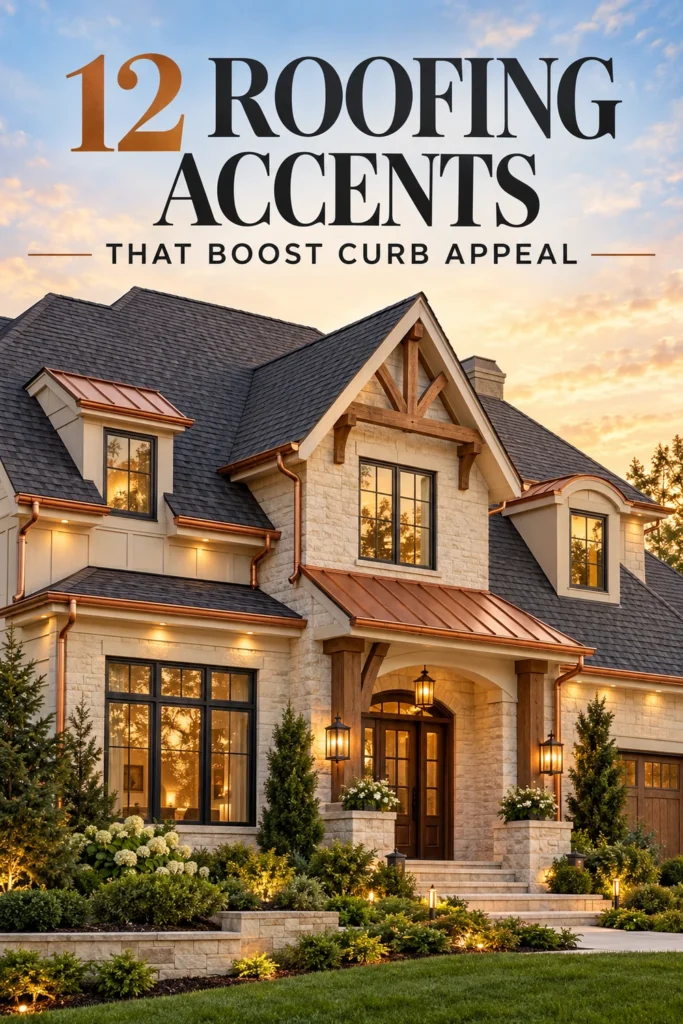
A roof does much more than keep rain out. Its shape, edges, metalwork and smaller architectural details influence how the entire house looks from the street. The right roofing accents and accessories can make a plain exterior feel intentional, add contrast to a large roofline and improve practical features such as drainage, daylight and ventilation.
This is also a timely place to invest. The 2026 U.S. Houzz Outdoor Trends Study reports that roofing appears in 51% of exterior renovation projects, while gutters and downspouts appear in 48%. Exterior accents are part of 29% of projects, and exposed beams have grown sharply in popularity. In other words, homeowners are paying attention to the roof as both a protective system and a major design feature.
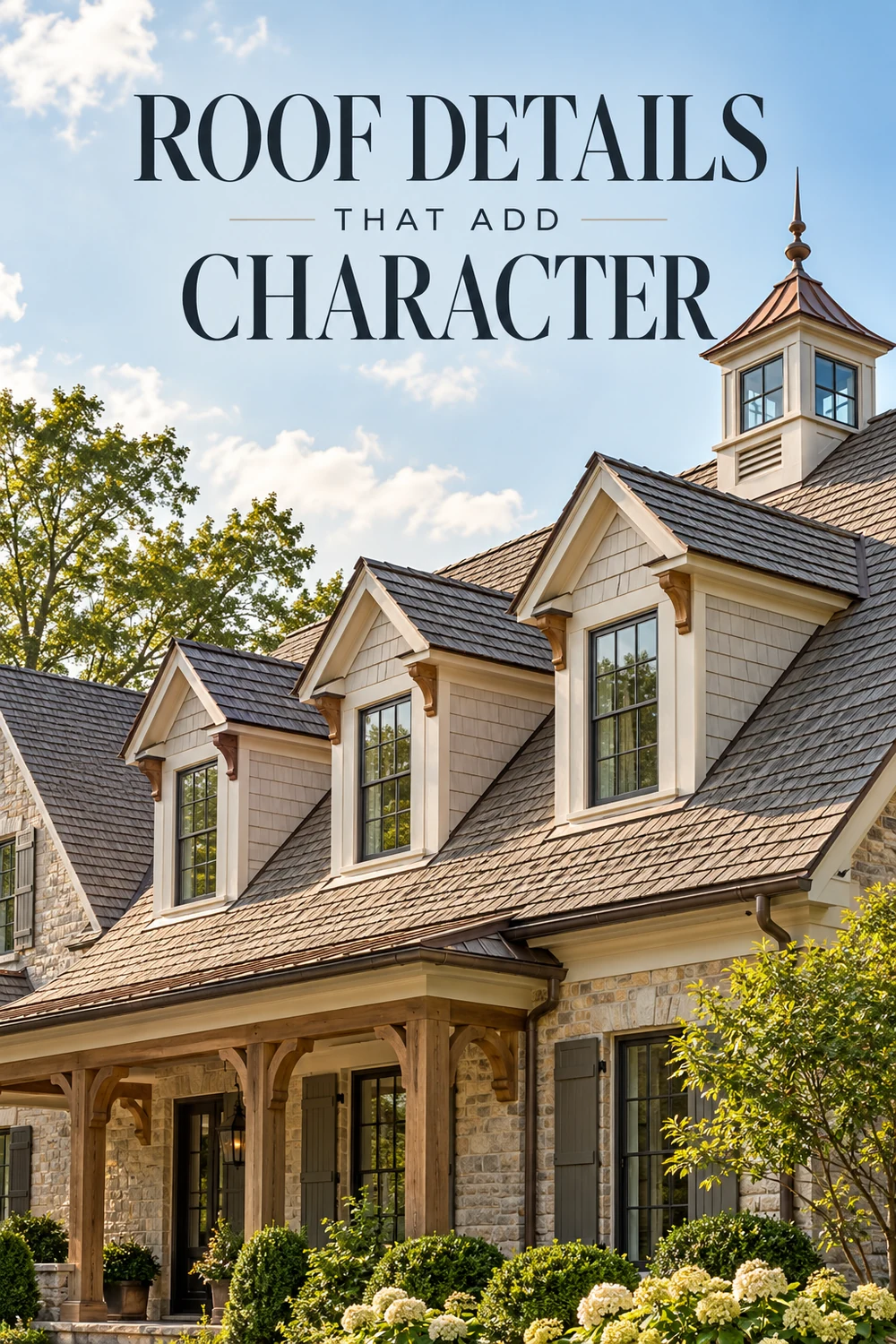
The 12 ideas below range from easy visual upgrades to structural changes that need professional planning. Use them as inspiration, then choose details that suit your home’s architecture, climate and existing roof system.
Quick design rule: choose one main roof material, one supporting accent material and one repeating trim color. Repeating those finishes at the gutters, porch roof or gables creates a coordinated exterior instead of a collection of unrelated details.
1. Add a Cupola as a Roofline Focal Point
A cupola is a small structure placed near the ridge of a roof. It can give a barn, garage, farmhouse or large traditional home a memorable silhouette. Louvered cupolas may also provide ventilation, while glazed versions can bring light into an upper space.
Scale matters. A cupola that is too small disappears against a broad roof, while one that is too large can overpower the facade. Match its roof material or trim color to another exterior feature so it feels connected to the house. Because a cupola penetrates or loads the roof structure, ask a qualified contractor to check framing, flashing, ventilation and local requirements before installation.
2. Use Decorative Barge Boards to Frame the Gables
Barge boards, sometimes called verge or rake boards, finish the sloping edges of a gable. Simple painted boards create a clean outline on contemporary homes, while scalloped, carved or layered profiles can suit Victorian, cottage and Craftsman exteriors.
This detail works best when its profile matches the architecture. A modern house usually benefits from crisp, restrained lines. A period-inspired home can carry more ornament. Use exterior-grade materials and keep every cut edge sealed, because this part of the roof is exposed to wind, sun and driven rain.
3. Add Gable Brackets or Gingerbread Trim
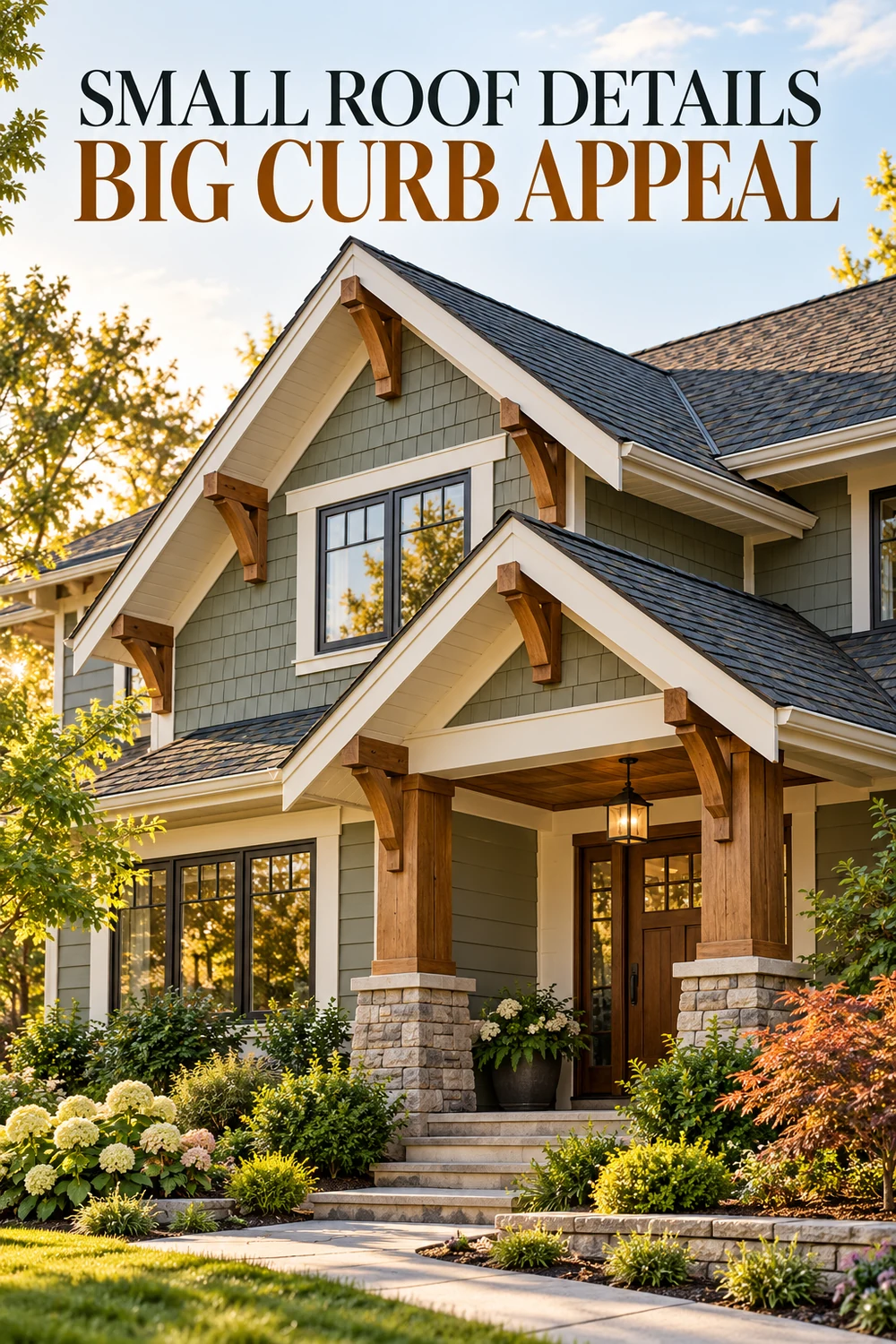
A bare gable can be a perfect place for timber brackets, trusses, gingerbread trim or a small decorative vent. These features draw the eye upward and give depth to a flat triangular wall. Warm timber looks especially effective against cream, beige, deep green or charcoal siding—colors that fit the warmer exterior palettes popular in 2026.
Decorative brackets should still look believable. Align them with rafters or other structural lines, repeat the same wood tone elsewhere and leave enough negative space around the feature. Too many small pieces can make the roofline look busy.
4. Add Dormers for Character, Light and Space
Dormers break up a wide roof plane and can bring daylight, headroom and ventilation into an attic or upper floor. Gabled dormers feel traditional, shed dormers suit Craftsman and modern homes, and eyebrow dormers add a softer architectural curve.
A dormer is more than decoration. Its framing, roof-to-wall intersections, sidewalls, windows and flashing all have to manage water correctly. Keep the dormer style consistent with the main roof pitch and align its windows with openings below where possible. That visual order makes even a new addition look as though it has always belonged.
5. Introduce a Standing-Seam Metal Accent Roof
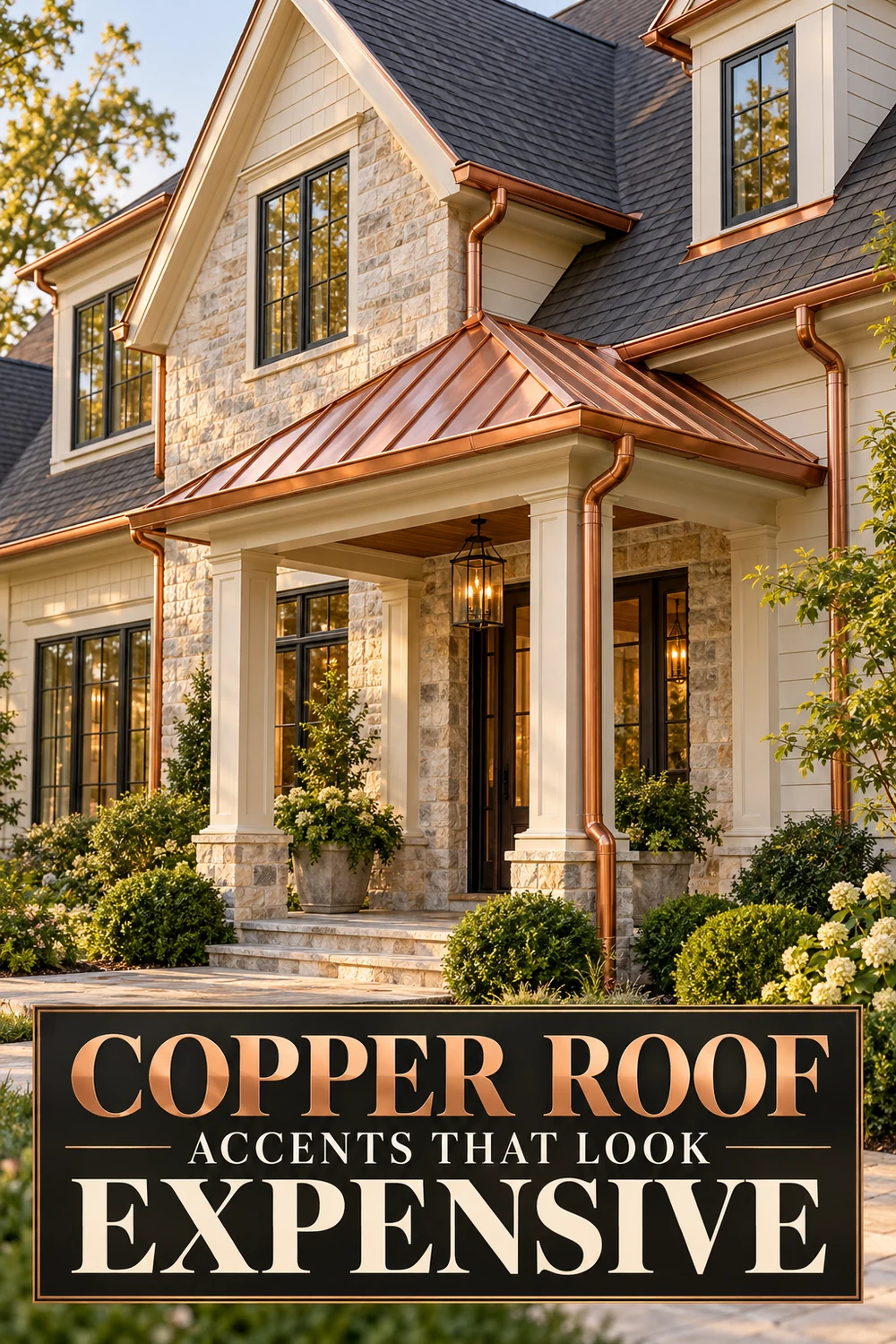
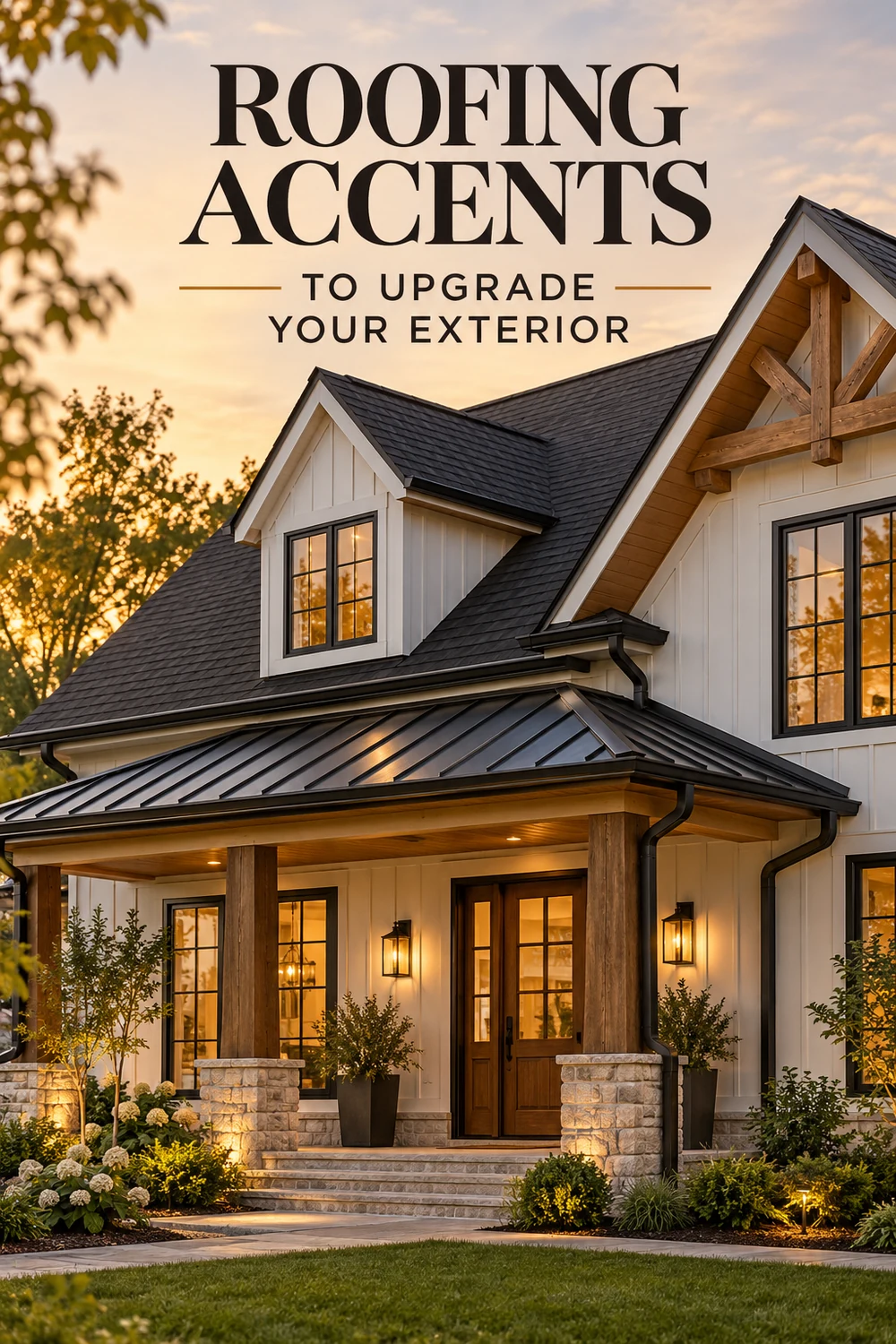
You do not need to replace the entire roof with metal to use it as a design feature. A standing-seam metal roof over a porch, bay window, dormer or entry can add a crisp line and a subtle change of texture beside asphalt shingles.
Charcoal, bronze and matte black offer a modern look, while copper introduces warmth and develops a natural patina over time. Keep the panel profile, flashing and fasteners compatible with the main roof. For a closer look at the material and installation process, see this guide to standing-seam metal roofing.
6. Upgrade Gutters and Downspouts
Gutters are functional roof accessories, but they also create one of the longest continuous lines on the exterior. Matching gutters to the fascia makes them visually quiet. Contrasting black, bronze or copper turns them into a deliberate outline.
Copper gutters work beautifully with stone, cream siding and dark shingles, but they cost more and change color as they weather. Painted aluminum offers a similar coordinated look at a lower cost. Whichever material you choose, size the system for local rainfall, direct downspouts away from the foundation and avoid mixing metals that may react with one another.
7. Highlight the Roofline With Exterior Lighting
Thoughtful lighting can reveal gables, brackets and porch roofs after sunset. Small downlights beneath deep eaves create a soft wash, while carefully aimed fixtures can highlight a cupola or textured stone without flooding the whole facade.
Use warm white light, shield the source to reduce glare and keep fixtures accessible for maintenance. Outdoor electrical work should be weather-rated and installed to code. More light is not always better; a few focused fixtures usually create a calmer and more expensive-looking result.
8. Choose Roof Color for Both Style and Climate
Roof color should connect the fixed materials on the home: brick, stone, siding, windows and trim. Charcoal and black create strong contrast on pale exteriors. Warm brown, weathered gray and muted green can soften traditional architecture. Before deciding, view full-size samples outdoors at different times of day.
Color also affects heat performance, but reflectance and emittance matter more than color alone. According to ENERGY STAR’s cool-roof guidance, reflective roofing can reduce roof surface temperature and the amount of heat transferred into a building. Modern products can provide higher reflectance in colors beyond bright white, so compare rated products instead of judging performance by appearance.
9. Treat Valleys and Flashing as Design-Sensitive Details
Open metal valleys can create a clean line between two roof planes, especially on slate, tile or premium shingle roofs. Coordinated copper or prefinished metal flashing may also complement gutters and porch roofing.
However, a valley is primarily a drainage detail—not a decorative strip. Water from two roof slopes concentrates there, which makes the underlayment, flashing width, seams and installation method critical. Do not introduce a contrasting material only for looks without confirming that it is compatible with the roofing manufacturer’s instructions and local conditions.
Protect the roof first
Dormers, skylights, cupolas and decorative penetrations create additional places where water can enter. A beautiful detail is only successful when its structure, flashing and drainage are correct.
10. Refresh Fascia and Soffit Details
Fascia and soffits form the finished edge beneath the roof. Fresh paint, wider trim, a contrasting fascia color or a wood-look soffit can make an older exterior feel sharper without changing the main roofing material.
These components also help protect rafter ends and support ventilation. Do not block existing intake vents with decorative panels or lighting. If you find peeling paint, soft wood, stains or sagging sections, solve the moisture or gutter problem before covering the area with new finishes.
11. Finish the Roof With Finials or a Weathervane
Finials, ridge ornaments and weathervanes add a small vertical detail at a prominent roof point. They work particularly well on cupolas, barns, coastal homes and period-inspired architecture. Choose one focal piece rather than repeating ornaments across every ridge.
Consider wind exposure, corrosion resistance and how the accessory attaches to the structure. Copper, coated steel and aluminum are common options. The finish should coordinate with other metalwork so the detail looks intentional even as it ages.
12. Bring in Daylight With Skylights or Roof Windows
A skylight or roof window can transform a dark stairwell, bathroom, loft or kitchen while adding a clean architectural element to the roof. Low-profile units are usually the least visually disruptive, while grouped roof windows can make a strong contemporary statement.
Placement should consider sun direction, interior heat gain, privacy, rafter spacing and drainage. Choose a flashing kit designed for the exact roofing material and roof pitch. Shades, solar-control glazing and ventilation options may improve comfort in sunny climates.
How to Choose Roofing Accents for Your Home
Start with the home’s architecture rather than a trend. Craftsman houses naturally suit timber brackets, deep eaves and mixed materials. Farmhouses pair well with simple dormers and standing-seam porch roofs. Victorian homes can carry more elaborate barge boards and finials, while contemporary houses usually look best with fewer details and stronger material contrast.
| Accent | Best for | Main consideration |
|---|---|---|
| Cupola or dormer | Large traditional rooflines | Structure and flashing |
| Metal accent roof | Porches, bays and entries | Material compatibility |
| Gable brackets | Craftsman and farmhouse styles | Scale and weather resistance |
| Copper gutters | Stone and premium exteriors | Cost, patina and metal reaction |
| Skylight | Dark upper-floor rooms | Heat, pitch and waterproofing |
What to Check Before Adding Roof Accessories
- Roof condition: repair leaks, rot and failing underlayment before adding decorative work.
- Structure: confirm that framing can support cupolas, dormers and other heavier additions.
- Water management: protect valleys, penetrations, gutters and roof-to-wall intersections.
- Material compatibility: avoid combinations that can cause corrosion, staining or warranty issues.
- Ventilation: do not cover soffit or ridge ventilation with trim, insulation or lighting.
- Rules and approvals: check permits, building codes, HOA requirements and historic-district restrictions.
- Maintenance: choose finishes you can safely inspect, clean and repair over time.
Frequently Asked Questions
What are roofing accents and accessories?
They are functional or decorative details that complement the main roof. Examples include dormers, cupolas, gutters, metal accent roofs, fascia, soffits, finials, skylights, flashing and roofline lighting.
Which roof accent adds the most curb appeal?
The strongest choice depends on the architecture. A metal porch roof or coordinated gutters can update many homes, while dormers and cupolas create a bigger visual change on large traditional rooflines. The best result usually comes from repeating one accent material in two or three places.
Can roofing accessories cause leaks?
Any penetration or roof-to-wall joint can leak when it is poorly designed or flashed. The accessory itself is not necessarily the problem; correct underlayment, flashing, drainage and installation are what protect the roof.
Can I add decorative roof accents without replacing the roof?
Often, yes. Gutters, trim, lighting, brackets and some metal accents may be added independently. Structural additions such as dormers, cupolas and skylights require a professional assessment and may be more economical during a reroof.
Should all exterior metals match?
They do not have to be identical, but they should look coordinated. Choose one dominant metal finish and repeat it at the roof, gutters, lighting or door hardware. Confirm technical compatibility before placing different metals in direct contact.
Final Thoughts
Roofing accents work best when they look like part of the architecture and continue to protect the home. Begin with one focal detail—a dormer, copper porch roof, cupola or timber gable—and support it with coordinated gutters, trim and lighting. Prioritize drainage, flashing and structure at every step. With that balance, even a few carefully chosen roof details can create a more polished exterior and lasting curb appeal.