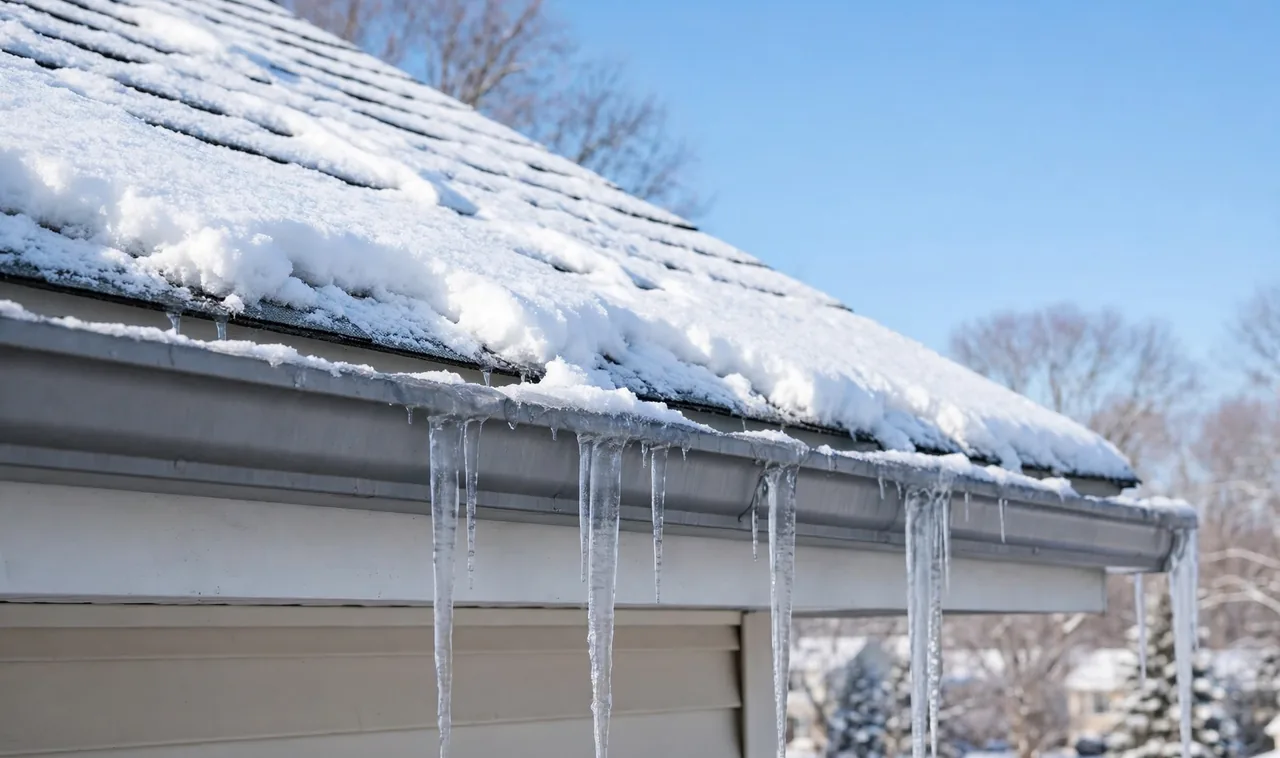
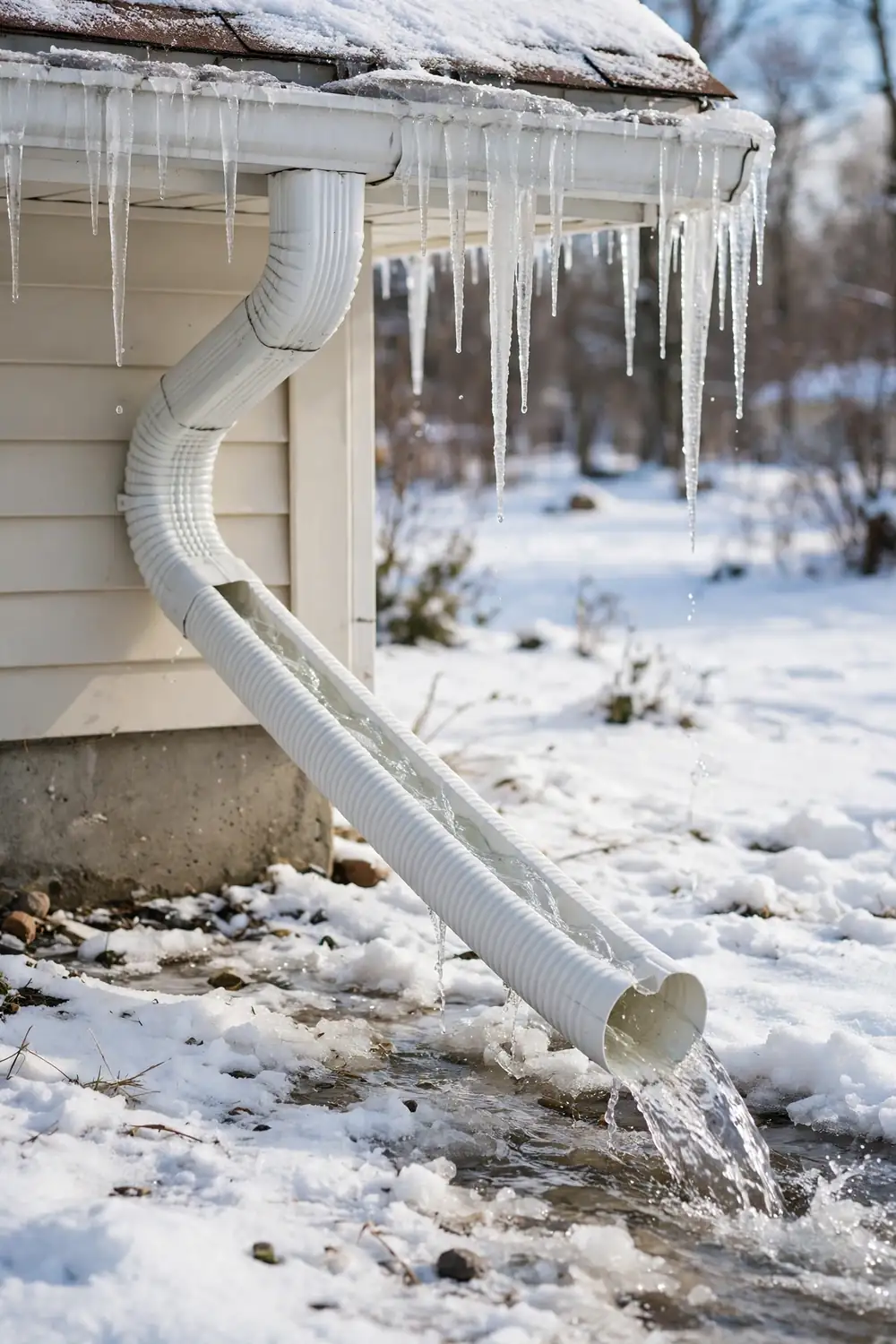
A frozen gutter looks harmless at first. A neat row of icicles, a little ice in the trough, nothing to worry about. Then the next thaw arrives, meltwater has nowhere to go, and it backs up under the shingles or spills over the edge and freezes on the walk below. That is how a small winter problem turns into stained ceilings and cracked gutters. This guide shows you How to Keep Gutters From Freezing with 12 clear steps you can finish over one weekend in fall, plus a few quick checks through the cold months.
Ice needs two things to take hold: standing water and a cold edge. Leaves and grit trap the water. Warm air leaking out of the house melts snow higher up the roof, and that meltwater runs down and refreezes at the cold eaves. Every step below removes one of those causes. Clean troughs drain fast. A sound slope keeps water moving. A sealed attic keeps the roof edge cold. Heat cables cover the cold snaps.
By the end, your gutters will drain freely, your downspouts will carry water clear of the house, and meltwater will run off instead of turning to ice. If the whole roof needs a seasonal once over first, read this guide on how to prepare your roof for winter, then come back here for the gutter work.
Total Time
One fall weekend, 4 to 6 hours
Active Time
3 to 4 hours on a ladder
Difficulty
Beginner, no special skills needed
What You Need
- Extension ladder with a stabilizer bar
- Work gloves and safety glasses
- Gutter scoop or a small garden trowel
- Bucket with a hook to hang from the ladder
- Garden hose with a spray nozzle
- Gutter sealant and a caulk gun
- Screwdriver or drill with spare gutter screws
- Gutter guards, mesh or screen style
- Caulk and spray foam for attic air leaks
- Downspout extensions, at least 4 feet long
- Self-regulating heat cable kit with clips
- Roof rake with an extension pole
- Calcium chloride ice melt
The 12 Steps at a Glance
- Clear every gutter by hand
- Flush gutters and downspouts
- Check the slope and fix low spots
- Seal leaks and tighten joints
- Fit gutter guards
- Seal attic air leaks
- Extend downspouts away from the house
- Install heat cables
- Rake snow off the lower roof
- Inspect after each snowfall
- Melt small ice blockages safely
- Run a late winter check
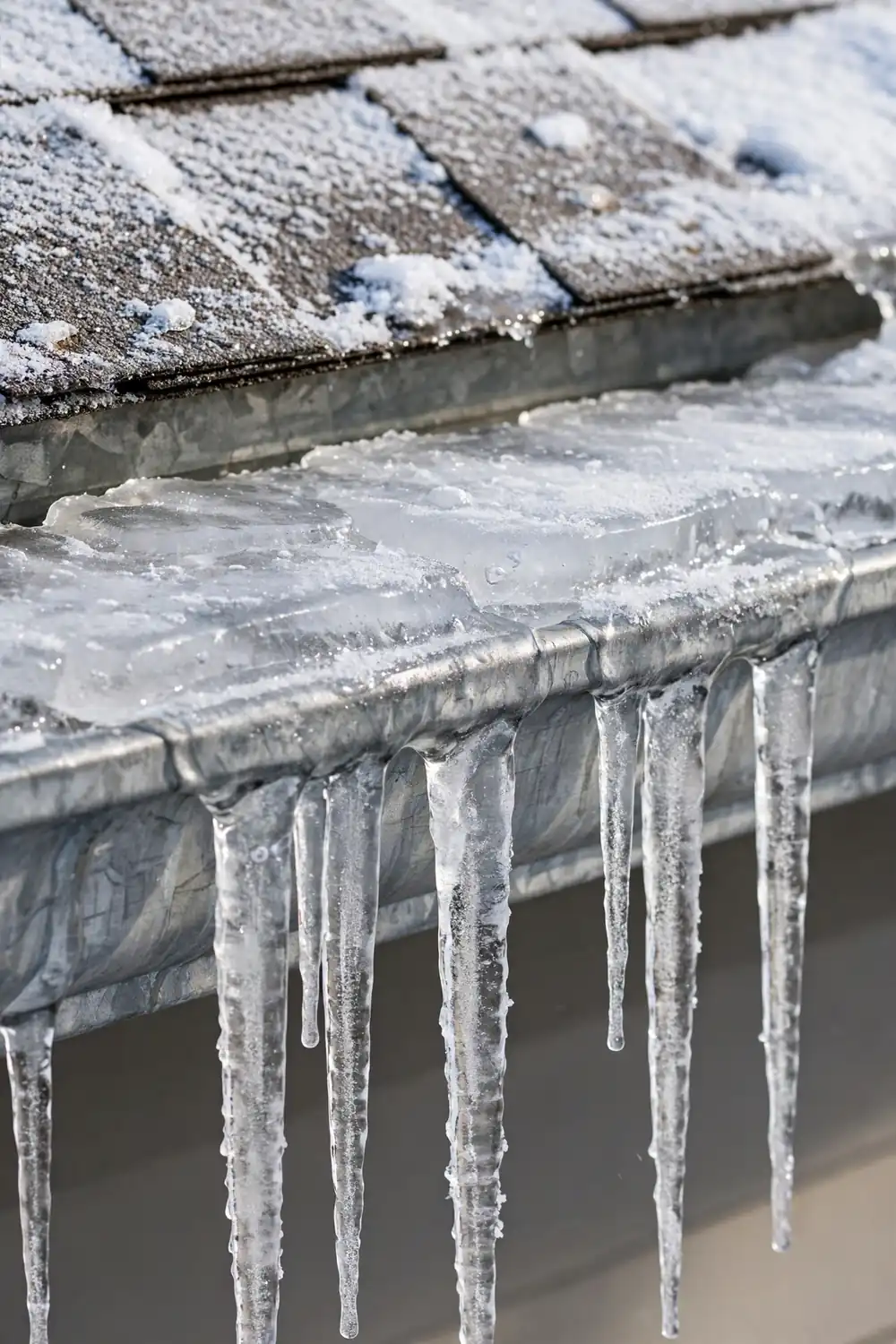
1. Clear every gutter by hand before the first freeze
Start at the downspout and work away from it, scooping leaves, twigs, and grit into the bucket with a gutter scoop or a small trowel. Wet leaves weigh far more than dry ones, so empty the bucket often instead of letting it drag the ladder sideways. Pay close attention to the downspout opening, since one packed clump there turns the whole run into a trough of standing water. Wear gloves, since hidden nails and sharp edges hide under that leaf layer. This is the step most frozen gutters skipped.
2. Flush gutters and downspouts with a garden hose
Run the hose from the far end toward the downspout and watch the water. A clear run drains in a steady stream within seconds. A slow trickle or a rising puddle means grit or a leaf mat is still lodged somewhere, usually in the elbow at the top of the downspout. Flush each section for 2 to 3 minutes and check that water exits the bottom of the downspout with force. If it does not, feed the hose nozzle up into the downspout from below until the blockage clears.
3. Check the slope and fix low spots
Gutters need a gentle fall toward the downspout, about 1/4 inch for every 10 feet of run. Less than that and water sits still, which is exactly what freezes first on a cold night. Test it with a bucket of water poured at the far end, then watch where it pools. Mark each low spot with tape, then loosen the hangers, lift the sagging section back into line, and tighten or replace the hangers. A long level helps, but the water test shows the truth even when a level says the run looks straight.
4. Seal leaks and tighten loose joints
Drips at seams and end caps look small in fall, but each one leaves a wet patch that freezes, widens the gap, and drips more the next time. Dry each joint with a rag, then press a bead of gutter sealant into the seam from the inside and smooth it with a gloved finger. Tighten every loose screw and replace any that spin without biting, since a wobbly joint opens again under ice. Give the sealant 24 hours to cure before rain is due, and check your forecast so the work stays dry overnight.
5. Fit gutter guards over open runs
Guards keep leaves out so the trough stays clear between cleanings, which matters most on runs under trees. Measure each run, cut the mesh to length with tin snips, and slide the top edge under the first row of shingles or screw it to the gutter lip. Mesh with holes around 1/4 inch blocks leaves while letting rain through. Guards cut cleaning work, they do not end it, so brush debris off the tops twice a year. Skip foam inserts in cold regions, since they hold water and freeze solid inside the trough.
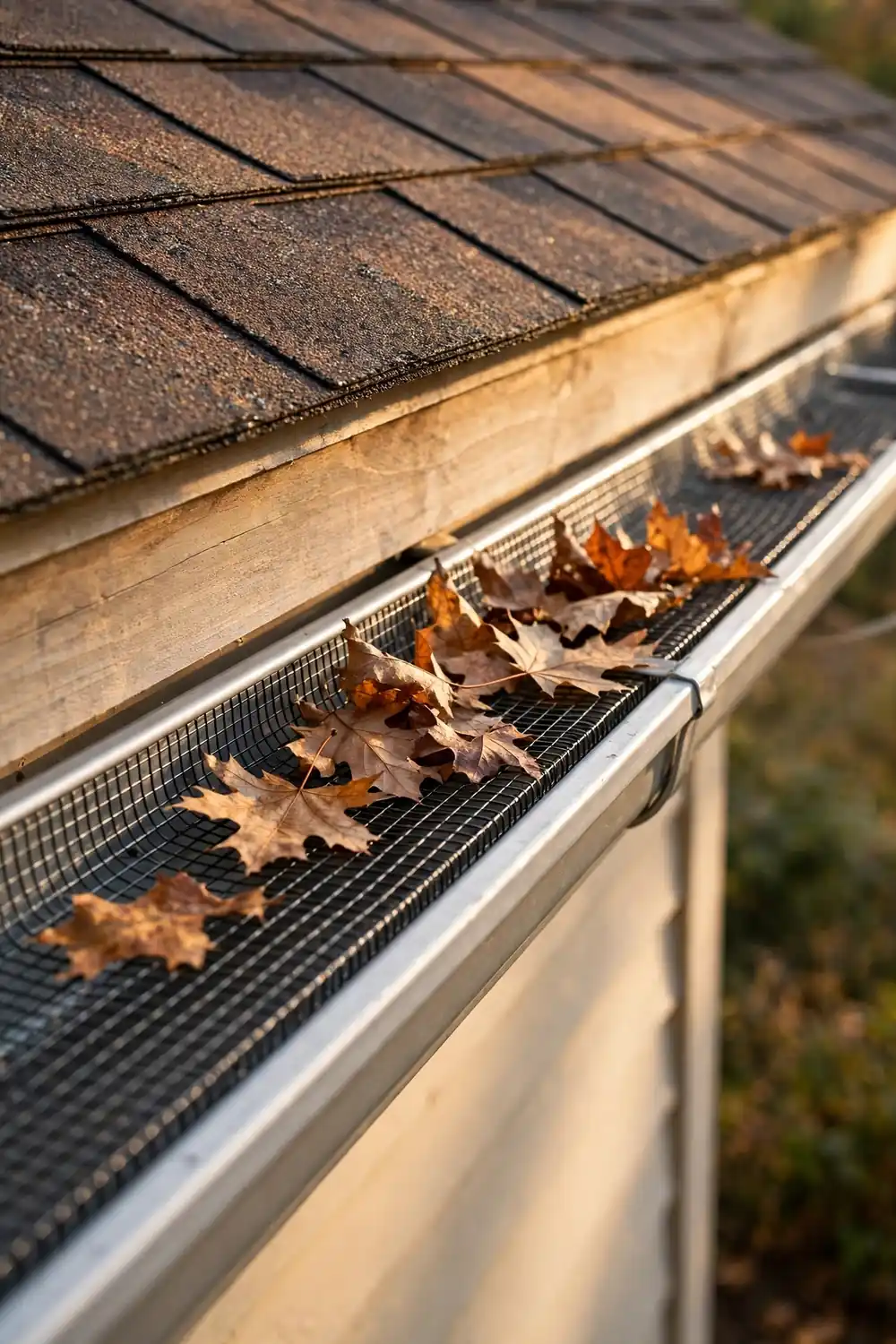
6. Seal attic air leaks above the eaves
Warm air escaping into the attic causes most ice trouble at the eaves. It melts snow higher up the roof, and that meltwater runs down and freezes at the cold edge. From inside the attic, seal gaps around pipes, wires, vents, and the chimney chase with caulk or spray foam, and cover the attic hatch tightly. Add insulation over the eaves where the layer is thin. This step does more than any other to stop ice dams at the source, and our guide on how to prevent ice dams walks through the full picture.
7. Extend downspouts at least 4 feet from the house
Water that drops at the base of the wall pools, freezes, and backs up into the downspout elbow on the next cold night. Clip a 4 foot extension onto each downspout and aim it down a gentle slope away from the house, the driveway, and the walkway. A splash block under the outlet stops the soil from washing away and keeps the stream from cutting a channel back toward the foundation. Check the aim after the first heavy rain, since extensions shift and a crooked one sends water back where it started.
8. Install heat cables to keep gutters from freezing
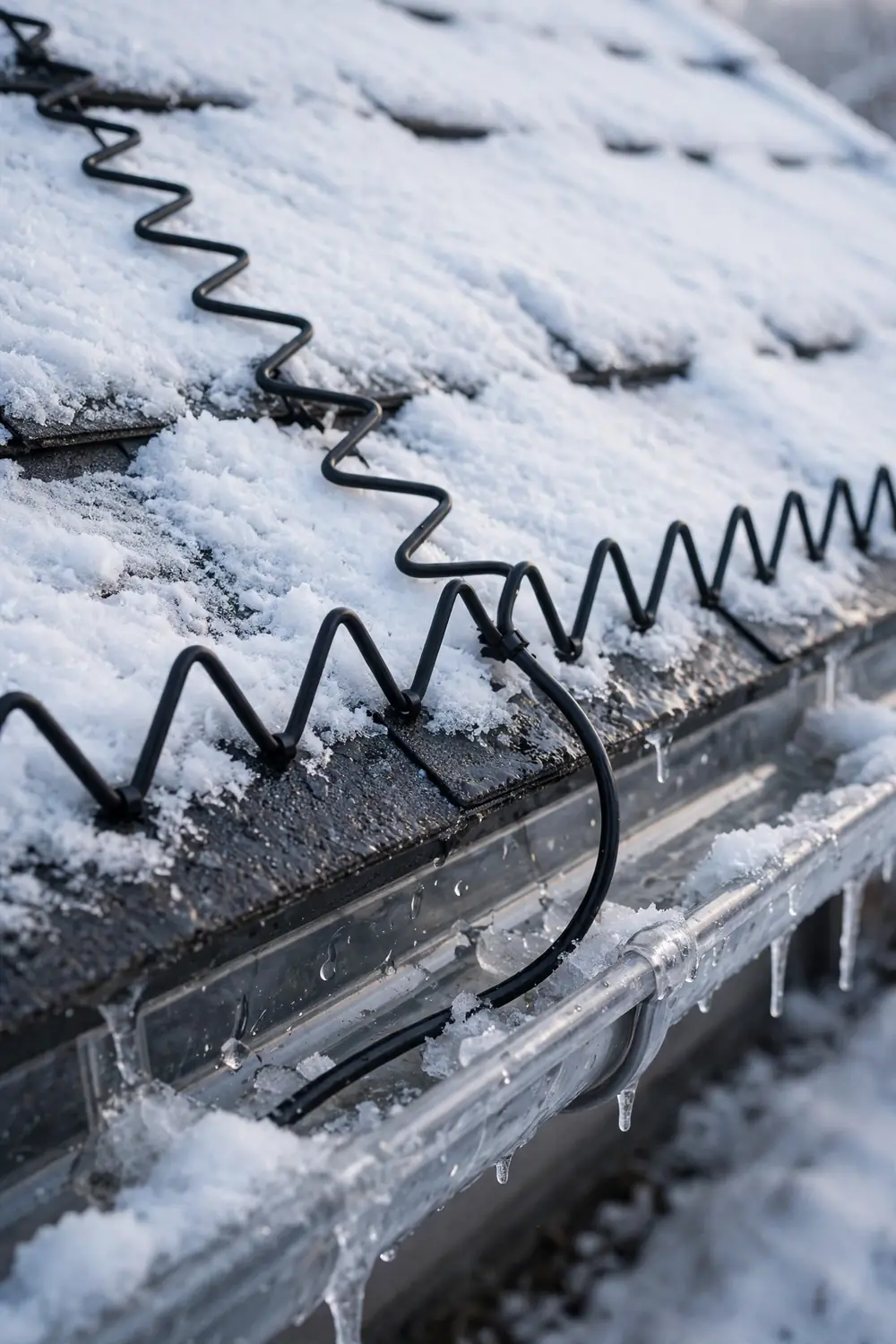
Heat cables are the safety net for shaded runs and north facing eaves. Measure the gutter length plus the downspout drop, then buy a self-regulating kit long enough to cover it in one run. Lay the cable in a zigzag along the lower roof edge, run it through the gutter, and drop it down inside the downspout so meltwater has a clear path all the way out. Clip it every 18 inches, plug it into a GFCI outlet, and switch it on before the first hard freeze. Cable that crosses over itself can overheat, so keep every loop separate and flat.
Heads Up
Never plug a heat cable into an indoor extension cord, and never leave a cable bunched or coiled while it is on. Both mistakes can overheat the cable and damage the roof. Use a GFCI protected outdoor outlet, and unplug the kit in spring.
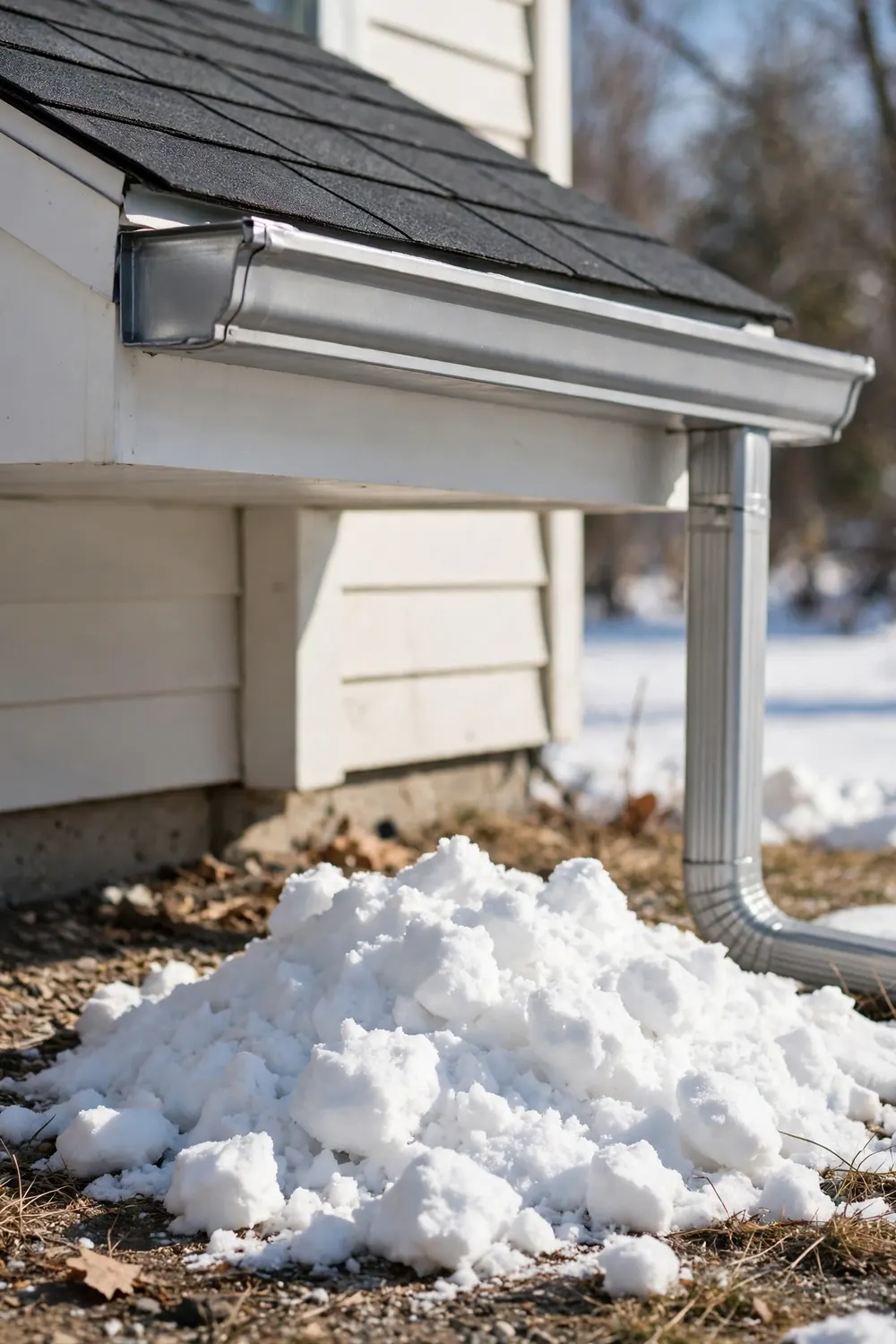
9. Rake snow off the lower three feet of roof
After any snowfall deeper than 6 inches, pull snow off the lower 3 feet of roof with a roof rake, working from the ground. That lower band is where meltwater refreezes, so clearing it removes the raw material for ice dams before they form. Leave the upper snow alone, since it melts slowly while the edge stays clear. Never climb onto an icy roof to shovel it, and never use a metal shovel on shingles. For the full method, see our guide on how to remove snow from a roof.
10. Inspect gutters after each snowfall
Ten minutes with binoculars from the ground catches problems while they are still small. Look for icicles forming in one spot, which points to a clog or a low spot right above them. Watch for water spilling over the edge during a thaw, sagging runs, and seams that drip after the rain has stopped. Fix small problems on the next dry day instead of waiting for a warm spell, because each freeze and thaw cycle makes a loose hanger looser and a small crack wider.
11. Melt small ice blockages with calcium chloride
A solid plug of ice needs melting, not force. Fill an old sock or a length of pantyhose with calcium chloride, tie off the end, and lay it across the ice so it melts a channel through. For a frozen elbow, pour warm water in slowly from the top. Never chip at ice with a hammer or an axe, since one missed blow dents the gutter or cracks a seam. Never use rock salt either, because sodium chloride corrodes aluminum and harms the plants below.
12. Run a late winter check before the spring thaw
Late February is the right moment for a last look before spring rain arrives. Check every hanger, seam, and end cap for damage from the weight of ice, and tighten or reseal anything that moved over winter. Look for bent runs, cracked sealant, and downspouts that pulled away from the wall. Fixing these now means the first spring downpour drains clean instead of finding every weak spot at once. Note anything that needs a full replacement for a dry weekend in spring.
| If This Happens | Try This |
|---|---|
| Icicles form in one spot only | Check for a clog or low spot above them, then clear it and reset the slope |
| Water spills over the edge in a thaw | Flush the downspout, since a blockage there backs water into the whole run |
| Gutter pulls away from the fascia | Re-secure hangers with longer screws into solid wood, not the old holes |
| Heat cable is on but ice still forms | Check the GFCI outlet and plug, then check the cable runs through the downspout too |
| Downspout elbow freezes solid | Pour warm water in slowly, then add an extension so water exits clear of the wall |
Frequently Asked Questions
Do gutter guards stop gutters from freezing completely?
No. Guards keep leaves out, which stops the clogs that trap water, but water can still freeze in a long cold spell. They work best with a sound slope, sealed attic leaks, and heat cables on shaded runs.
Should I knock icicles off my gutters?
Short, thin icicles can stay. Long, heavy ones strain the gutter and can fall on anyone below, so knock them down from the ground with a roof rake when the ice softens. Never pull at them from a ladder.
Can I put salt in my gutters to melt ice?
Only calcium chloride, in small amounts laid on the ice itself. Rock salt corrodes aluminum gutters, stains concrete, and harms nearby plants. Warm water works for small clogs and costs nothing.
When should I start this work?
Early fall, after most leaves have dropped but before the first hard freeze. That timing lets you clean once, fit guards and cables in dry weather, and seal joints while sealant still cures overnight.
A Winter With Clear Gutters
That is the full method for How to Keep Gutters From Freezing: clean troughs, a sound slope, sealed seams, a cold roof edge, and a little help from heat cables where shade wins. The spring check will take far less time than this first round did. Pin this guide to your fall weekend board so the steps are ready when the leaves start dropping.