
A roof is the first thing people see from the road, and on a farmhouse it carries more weight than any other single detail. Get the roof wrong and the whole house looks off, even with pretty siding and a tidy yard. Get it right and a plain house suddenly looks settled, like it has stood there for generations.
The trouble is that farmhouse style gets copied badly all the time. Roofs end up too flat, too busy, or covered in details that belong on a suburban build. Real farmhouse roofs are simpler than that. They rely on honest shapes, sturdy materials, and proportions that make sense.
The modern farmhouse roof ideas below stick to what has always worked on rural homes: steep gables, metal panels, deep overhangs, and porches sitting under their own low roofline. Some suit a new build, others work as a reroof on an older house. Each one keeps the exterior calm and timeless instead of trendy.
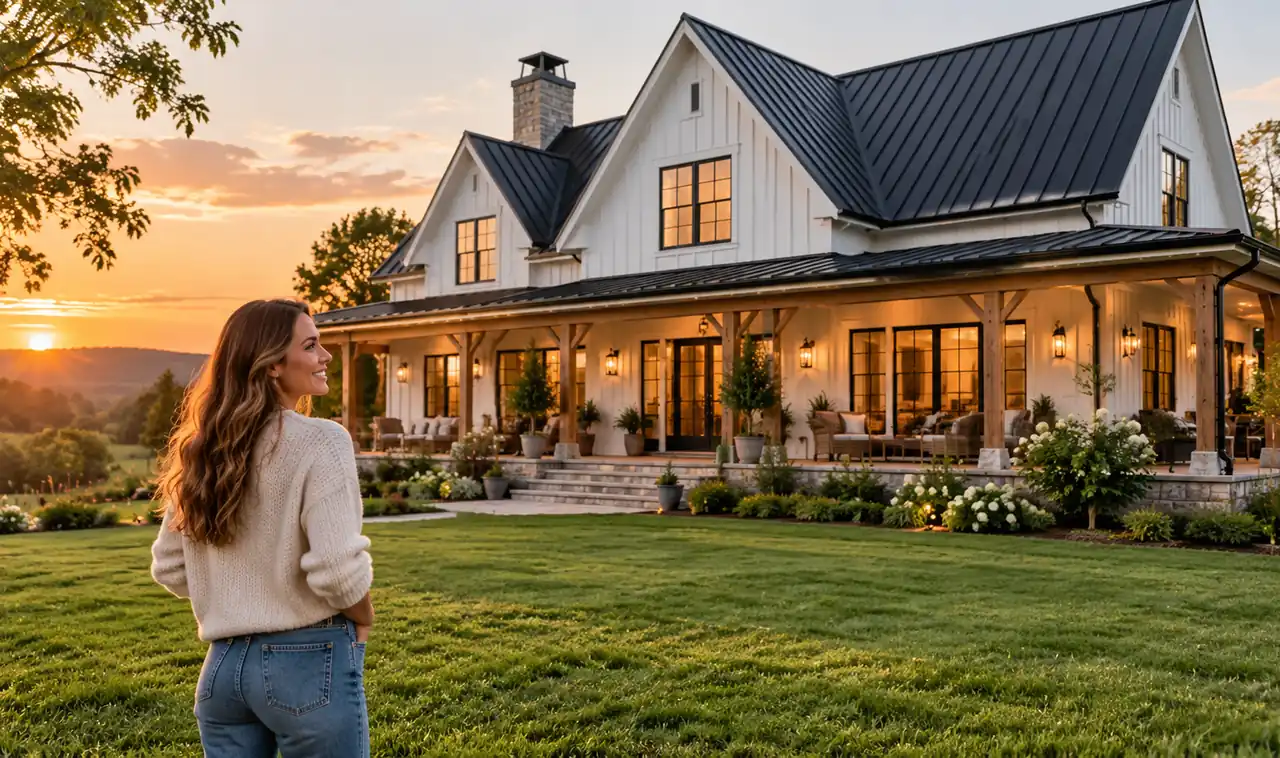
1. Matte Black Standing Seam Metal Roof
Stand far enough back and the dark roof does all the talking.
Long vertical seams run the full height of each slope with no breaks, and the matte finish keeps the surface from looking shiny or industrial. On white or pale siding, that dark cap is the whole farmhouse look in one move. Standing seam also sheds rain and snow well, and the raised seams hide the fasteners, so the roof stays clean looking.
It costs more than shingles up front, though the panels often outlast two shingle roofs. Choose a true matte finish, because gloss black can read harsh in bright midday sun.
2. Weathered Gray Architectural Shingles
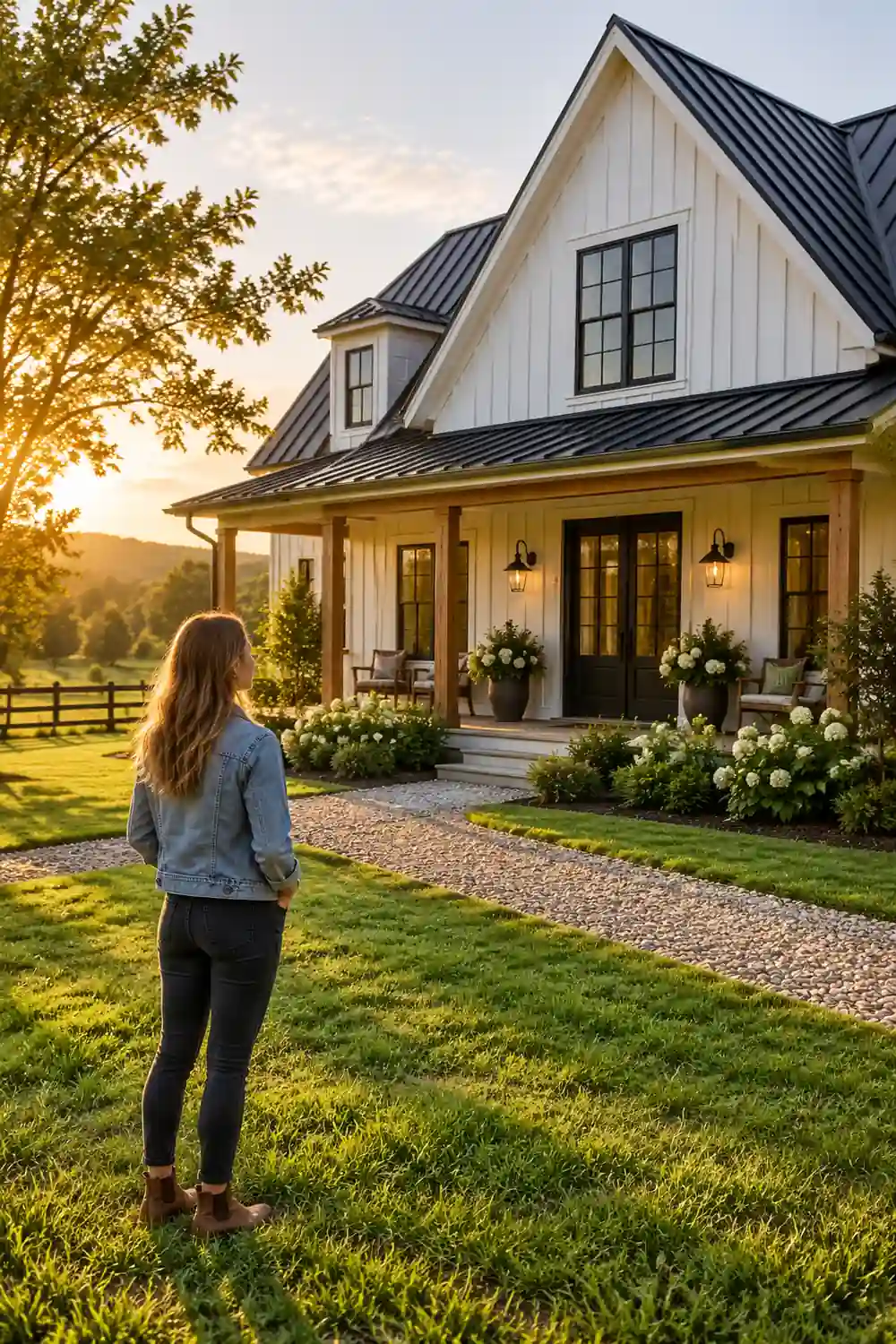
Not every farmhouse needs metal on top. Thick architectural shingles in a weathered gray give a softer, older look, closer to the cedar roofs farmhouses wore long ago. The layered tabs cast small shadows that keep a big roof plane from looking flat and dull.
Gray is forgiving, too. It hides dust, pollen, and the dark streaks that show up on north facing slopes. Pair it with white siding for a crisp read, or with warm wood tones if the house sits among trees. The shade matters more than the material here, and our roundup of roof color ideas shows how gray plays against different siding colors.
| Architectural Shingles | Standing Seam Metal |
|---|---|
| Lower cost up front, easier to repair in small sections. | Higher cost up front, very little upkeep once installed. |
| Soft, layered look that suits older farmhouses. | Crisp lined look that suits newer, cleaner builds. |
3. Steep Front Gable With a Smaller Cross Gable
Pitch is the farmhouse fingerprint.
A main gable pitched steeply, in the proportions of old barns and farm cottages, gives the house height and sheds weather the way rural roofs had to. A smaller cross gable breaking the front plane adds a second roofline, which keeps a wide house from looking like one long box.
Keep both gables in the same material and color. Mismatched roofing on crossing planes is the fastest way to make a farmhouse look patched together. Steep pitches also buy attic room for a future finished space.
4. Galvalume Silver Corrugated Panels
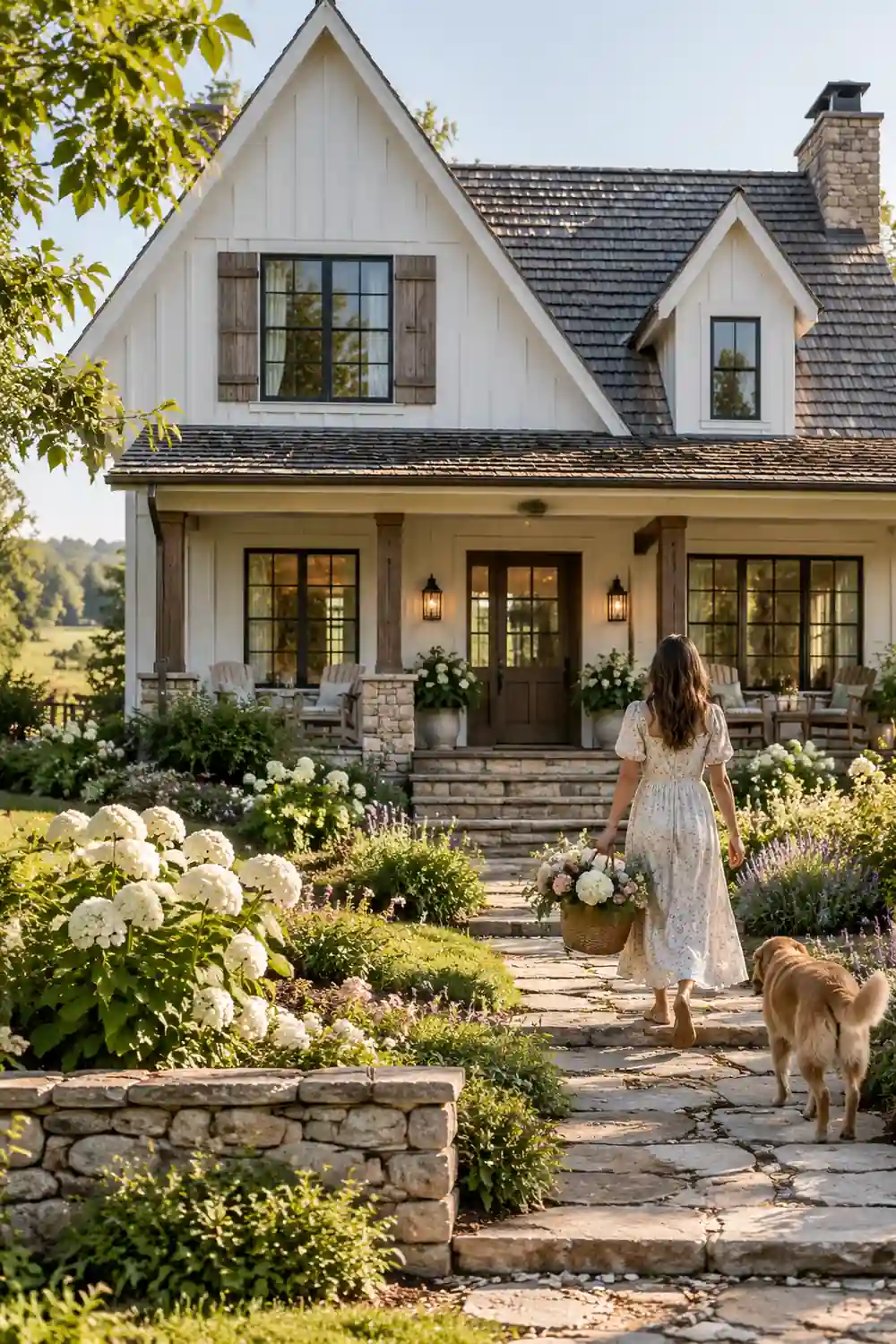
Plenty of people file corrugated metal under barns and sheds only. On a house, the bare silver finish of galvalume reads honest and rural, especially on a simple gable, where the ribs catch light in long lines.
The finish is aluminum and zinc over steel, left unpainted, and it weathers to a soft gray over the years. Rustic houses wear it best. On a polished exterior it can look unfinished.
One caution: bare metal shows hail dents more than painted panels do, and a south facing slope can glare at midday.
5. Wraparound Porch Roof at a Gentler Pitch
The porch is where farmhouse life actually happens, and its roof should sit lower and flatter than the main roof above it. That change in pitch is what makes the house feel welcoming instead of tall and stiff. A shallow shed roof over the porch, tucked under the main eaves, gives shade without darkening the front rooms.
Support it on plain square posts, keep the ceiling beadboard or painted wood, and let the porch run the full width of the house if the budget allows. Our guide to front porch roof ideas covers posts, ceilings, and pitches in more depth.
💡 Quick Tip
Roof the porch in the same material as the main roof. A matching porch roof ties the front together, while a third material makes it look added on later.
6. Cedar Shake Accents on Gable Ends
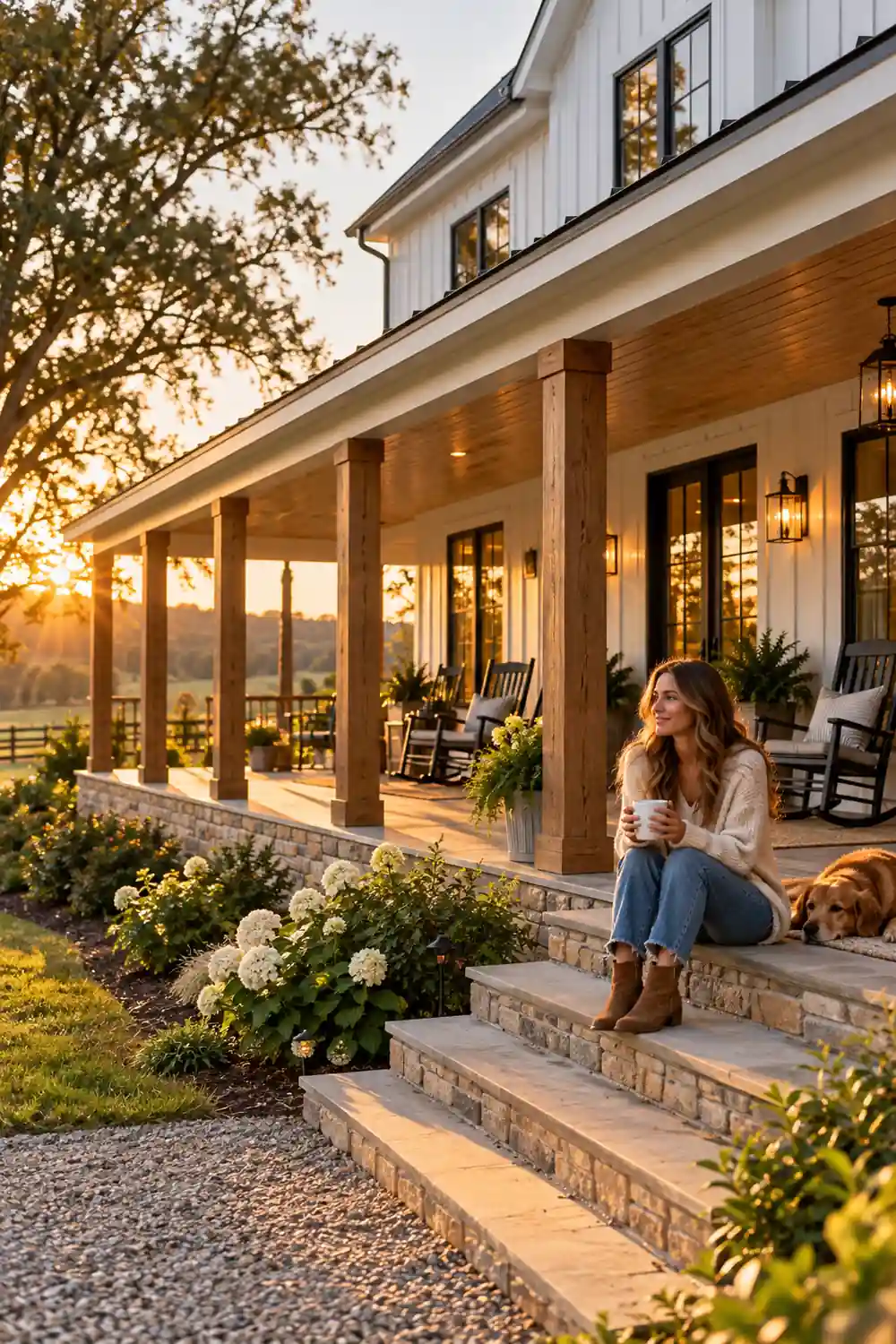
Covering a whole roof in cedar is a big spend, and the upkeep is real. Using shakes only on a gable end or a small dormer face gives you the texture without the full commitment. The rough, uneven edge of hand split shakes softens an otherwise crisp new build.
Real cedar grays out within a few seasons, which suits farmhouse colors well. Synthetic shakes copy the look with less upkeep, though up close they read a little too even.
Keep shakes off low, shaded slopes. They hold moisture there and grow moss where the sun never reaches.
7. Long Shed Dormer Across the Front
A steep farmhouse roof often wastes the whole upstairs, with ceilings sloping down to knee height. A long shed dormer fixes that in one move. It lifts a wide band of the front slope just enough to stand under, and from the road it reads as a natural part of the roof rather than an addition.
Run the dormer roof at a shallow pitch and face it with windows spaced like the rooms below. Finish the dormer cheeks in siding, not roofing, so it looks like a wall that grew upward.
8. Small Cupola Centered on the Ridge
A cupola is the smallest detail on this list and the one people photograph. Set at the center of the main ridge, it gives a long roof a focal point and nods to the barns these houses borrow from.
Size is where most people go wrong. A cupola that is too small looks like a toy, and one that is too large fights the house for attention. Louvers suggest ventilation, windows suggest a lit lantern at night. Pick one style and keep it simple, and let the cap echo the main roof material.
Before you order a cupola
9. Exposed Rafter Tails With Deep Overhangs
Look at the eaves of an old farmhouse and you will see the ends of the rafters marching along under the roof edge. Those exposed tails are both structure and decoration. Deep overhangs, a foot or more past the wall, throw shade in summer and keep rain off the siding all year.
Modern builds often fake the tails with applied blocks, and from the road nobody can tell. What matters is the rhythm: evenly spaced, painted the trim color, running the full length of the wall.
Shallow overhangs, by contrast, make a new farmhouse look clipped and cheap.
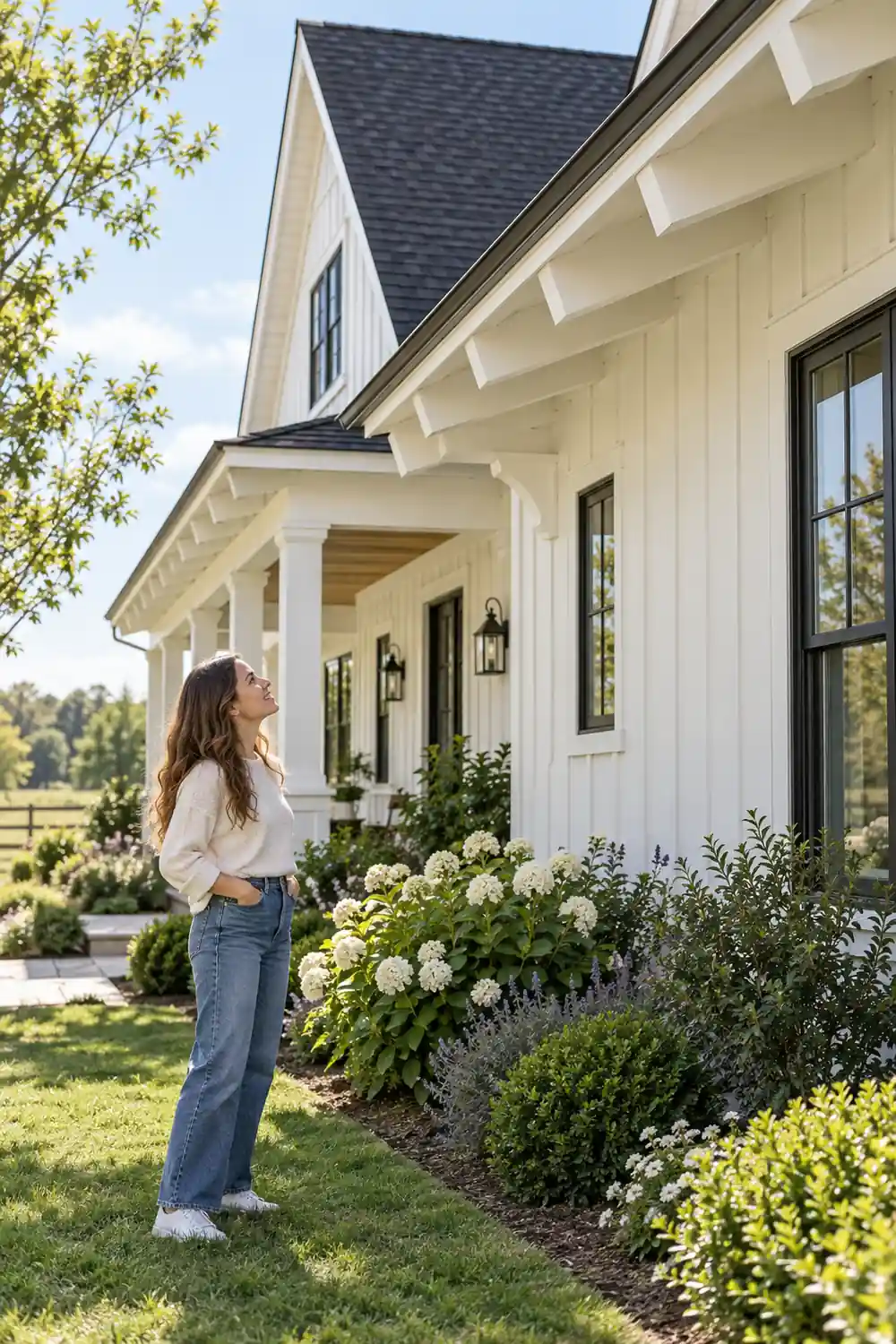
10. Standing Seam Accent Over the Porch, Shingles on the Main Roof
A full metal roof is not the only way to get the farmhouse metal look. Many older farmhouses mixed materials, with durable metal over the porch where the pitch was low and leaks were most likely. Copy that arrangement: standing seam on the porch roof and the entry gable, architectural shingles on the big main planes.
The mix saves real money, since the porch is a fraction of the total area, and adds detail one material cannot. Our roundup of metal roof ideas shows other ways panels pair with shingles and wood.
11. Gambrel Roof for a True Barn Profile
The gambrel is the barn roof: two slopes on each side, a steep lower pitch breaking to a shallow upper one. On a house it creates a huge, usable upper floor and the most rural silhouette on this list.
It suits wide lots, detached garages, and guest houses especially well. On a narrow suburban lot, the profile can overwhelm the house next door. Build the break between slopes cleanly, with the same shingle or metal running over both pitches. A material change right at the break draws the eye to the wrong place.
A plain gable garage reads as a storage shed, no matter how fresh the paint is.
The same footprint under a gambrel roof with matching shingles reads as a small barn that belongs with the house.
12. Charcoal Synthetic Slate
Slate belongs on old stone farmhouses in the northeast, and real slate is heavy enough that most roofs need extra framing to carry it. Synthetic slate copies the look, individual tabs with varied edges and thickness, at a weight a normal roof can hold.
Charcoal is the safest color in the range. It sits between black and gray, hides weathering well, and works with white, cream, or natural wood siding.
Ask to see a weathered sample before you commit. Some synthetics fade unevenly, and a roof is a long time to live with the wrong gray.
13. Low Lean-To Roof Over a Side Addition
Farmhouses grew one room at a time, and the lean-to roof is the mark of that growth. A single shallow slope drops off the main wall over a mudroom, kitchen bump out, or sunroom, sitting lower than everything else on the house.
Build it in the same material as the main roof so the addition looks planned rather than tacked on. Keep the pitch just steep enough to shed water well, because seams and shingles both suffer on a slope that is nearly flat.
From the street, that one low slope does more for farmhouse character than any decoration you could buy.
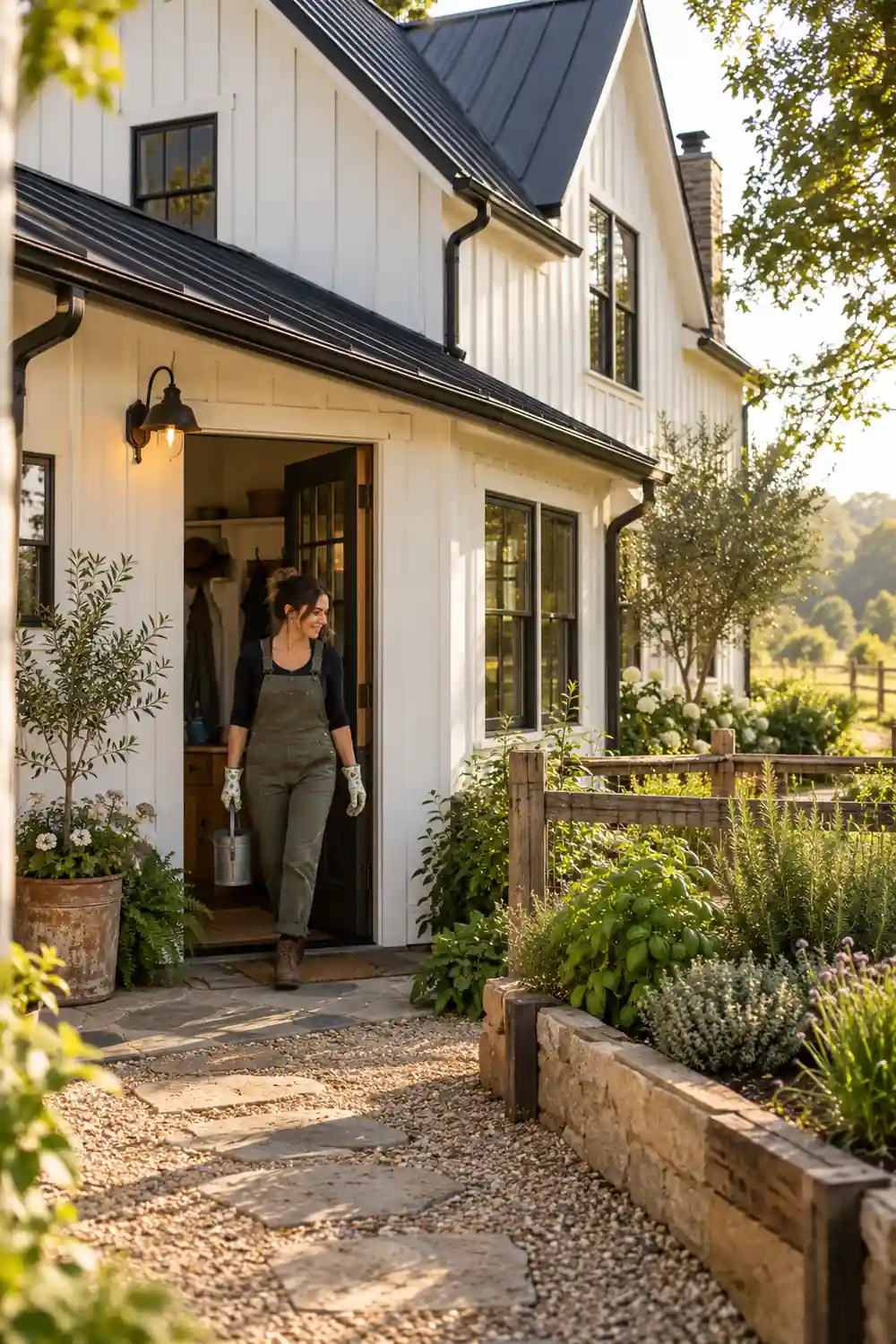
14. Warm Bronze Metal Panels Instead of Black
Black metal is the default modern farmhouse choice, which is exactly why bronze deserves a look. The warm brown tone sits better with cream siding, natural wood posts, and stone foundations, and it never looks as stark as black in winter light.
Bronze panels also show less pollen and dust than black ones, a small mercy in spring. The color sits closer to the weathered tin roofs on old tobacco barns than most people expect. Pair it with black window frames and the contrast still reads modern, just softer.
Choose the roof color from the house you have, its siding, stone, and light, not from the trend chart at the store.
15. One Clean Gable, Left Alone
The last idea is mostly restraint. Pick one simple front facing gable, roof it in a single honest material, and stop there. No fake dormers, no mixed shakes and metal on the same plane, no decorative crosses along the ridge.
Timeless farmhouses were built by people who spent money on size and shelter, not ornament. A plain gable with the right pitch, deep eaves, and a well chosen color will still look right in forty years.
If your house already has one good roofline, the best move might be a careful reroof and nothing more.
Wrapping Up
A timeless farmhouse exterior is rarely about one bold move. It is the roof pitch, the material, and a few honest details agreeing. Pick the shape first, then the covering, then the color, and let each choice make the next one easier.
Start with the modern farmhouse roof ideas that fit your house as it stands. A porch roof, a metal accent, or a well judged reroof can carry the whole exterior. Save this list before you talk to a roofer, and bring the photos that match your own roofline.
3 Responses