
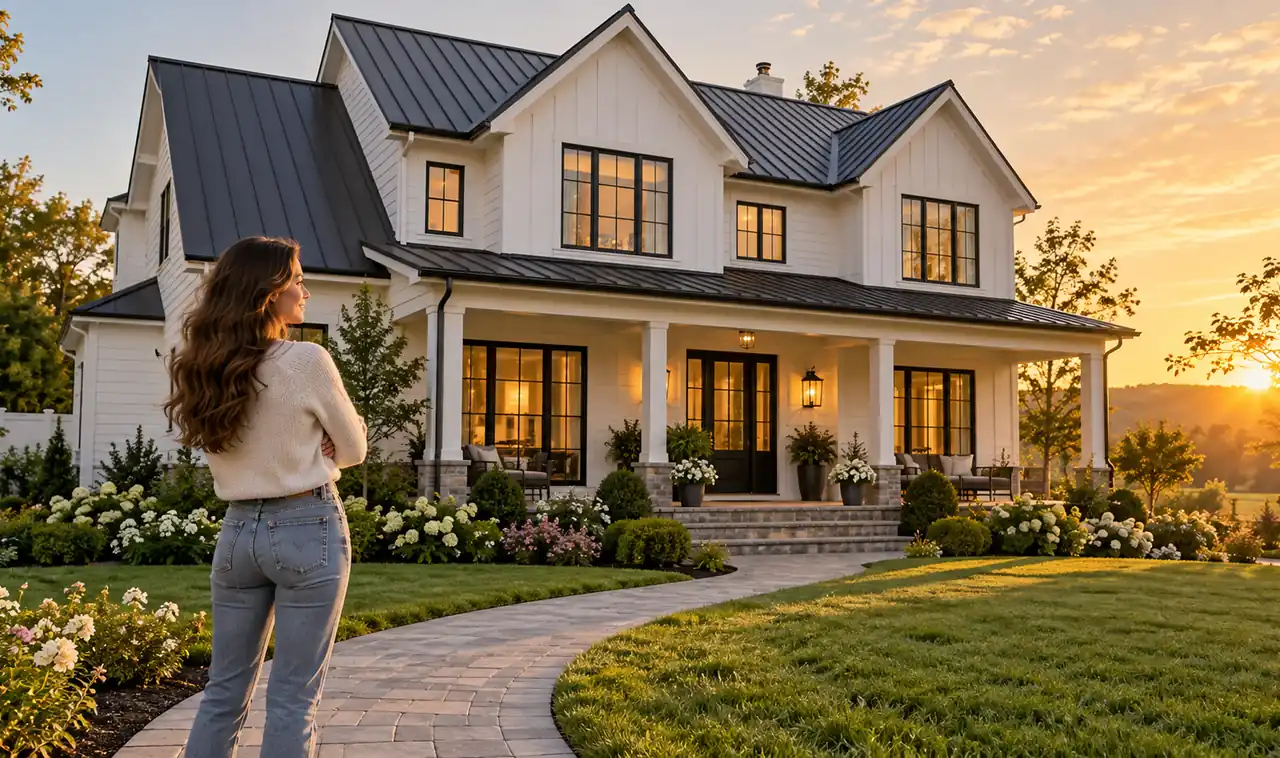
A roof covers more of your home’s face than the front door, the porch, and the windows combined, yet most people pick its style and color in about ten minutes. That rushed choice is why so many streets look the same. Metal Roof Ideas change the math, because metal comes in seams, ribs, shingles, and tiles, in finishes that run from raw galvanized silver to deep barn red. Every profile throws light and shadow differently.
The ideas below are about character, not specs. Each one names the profile, the finish, and the kind of house it flatters, plus the pairings that make it look planned. Some are bold. Most are simple changes you can picture on an ordinary two story. Half of this list works on plain suburban homes that just need a stronger top half.
1. Standing Seam in Matte Black
Standing seam is the profile people picture first, and matte black is its boldest finish. Long vertical ribs run from ridge to eave with no visible screws. On white or pale siding, the contrast is sharp and a little formal.
It suits modern farmhouses, plain colonials that need an edge, and homes with black window frames. One caution: black shows dust and pollen more than mid tones do.
2. Galvalume Silver Against Crisp White Siding
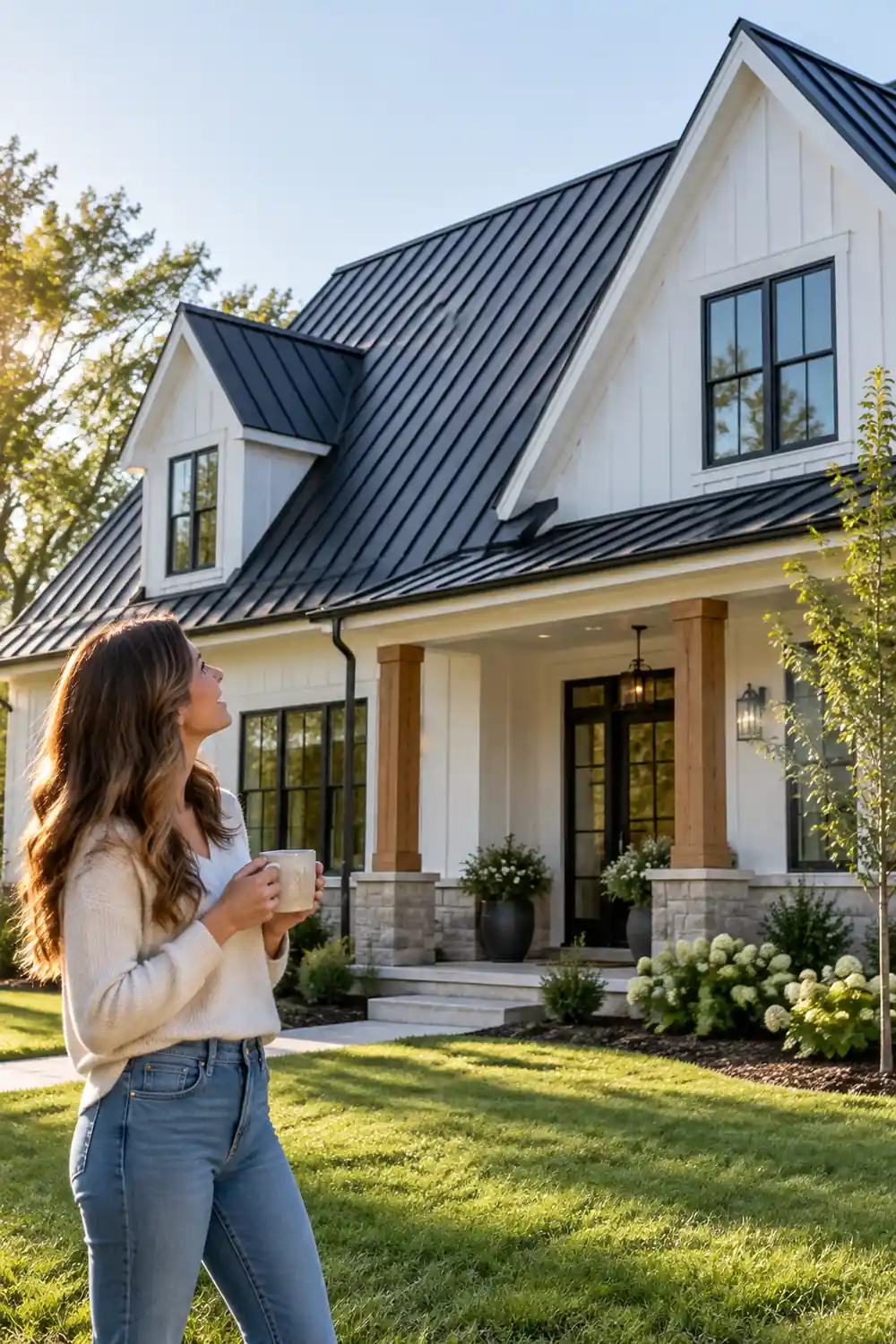
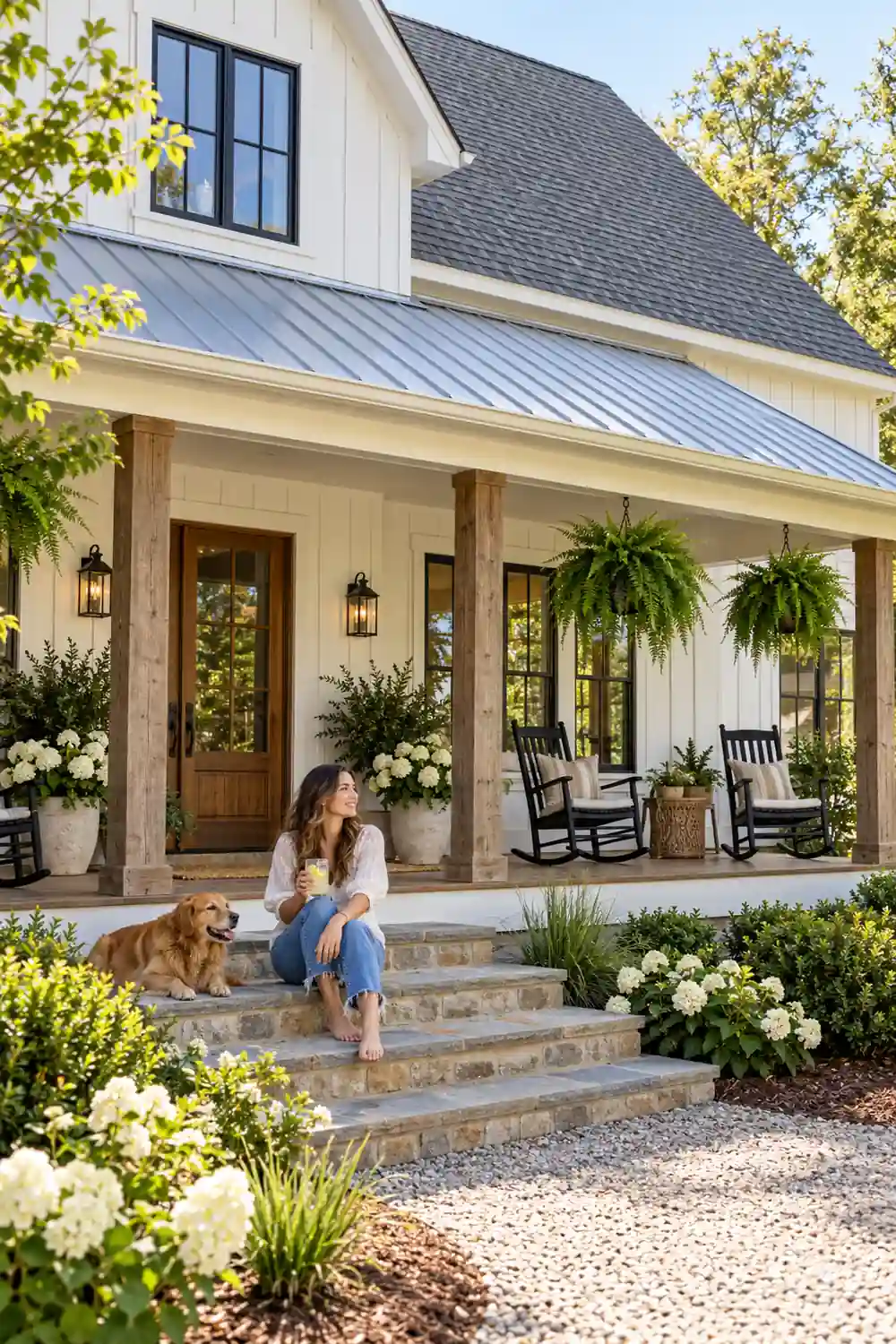
Galvalume has that raw, silvery finish you see on working barns. Against white board and batten siding it gives a house an honest, lived in feel instead of a polished one. The roof shifts from bright silver at noon to soft gray by evening.
If that direction appeals to you, browsing modern farmhouse roof ideas shows the same finish on gables, ranch lines, and shed roofs. Pair it with natural wood porch posts and the metal stops looking industrial.
3. Corrugated Panels With a Rustic Edge
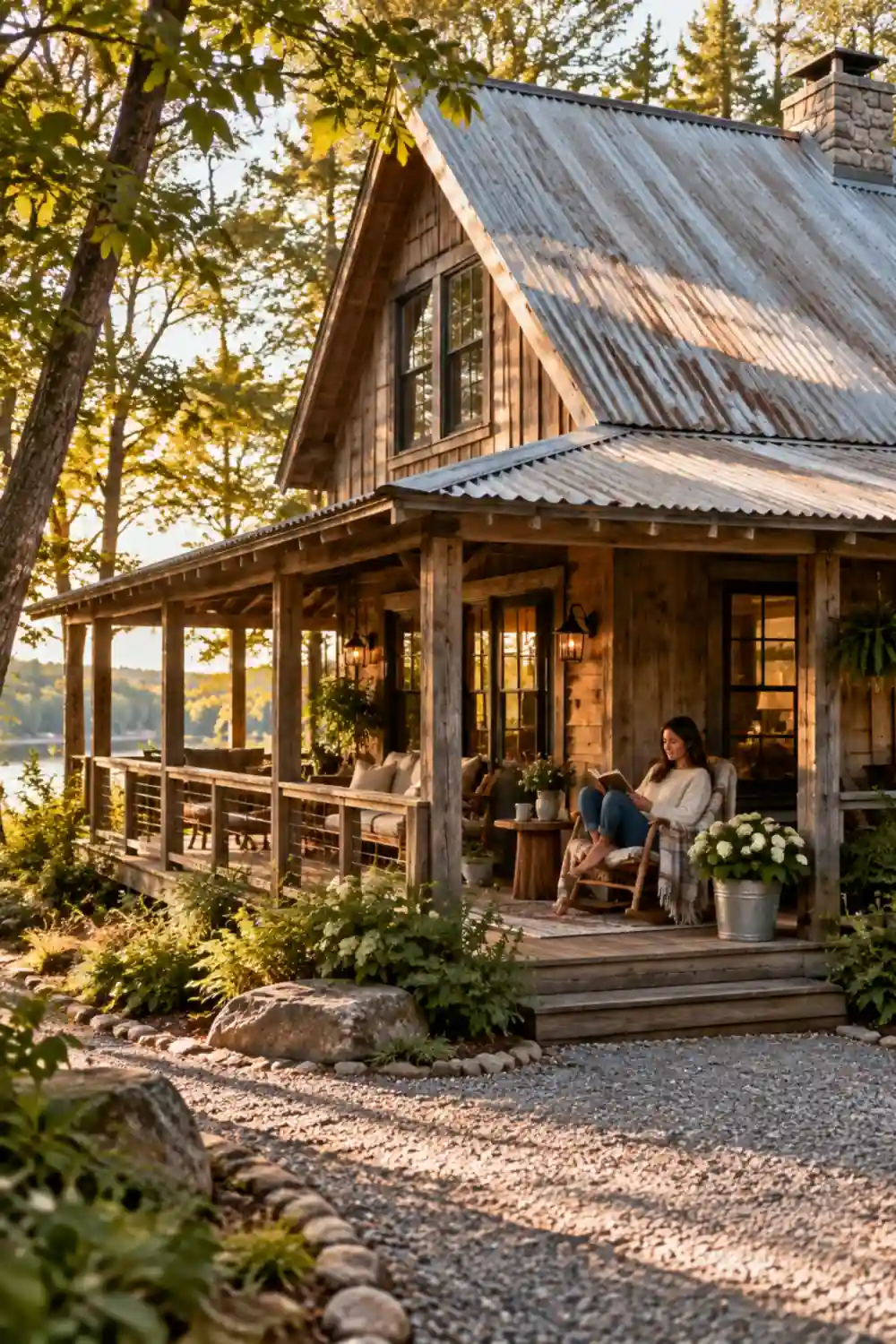
Corrugated metal has shallow waves instead of flat ribs. The wavy profile catches light in stripes and reads older, closer to a barn or a lake cabin than a new build. It works well on cottages, cabins, and houses with wood siding.
Leave it galvanized for a weathered look, or paint it deep green or charcoal to tidy it up. Corrugated panels use exposed screws, so the fastener lines become part of the pattern. Keep those rows dead straight and they look intentional.
| Corrugated | Standing Seam |
|---|---|
| Wavy profile, light breaks into stripes | Flat pans with raised ribs, clean lines |
| Exposed screws, lower material cost | Hidden fasteners, higher material cost |
| Best on cabins, cottages, farm buildings | Best on farmhouses, colonials, modern homes |
4. Weathered Zinc in Soft Blue Gray
Zinc starts out blue gray and softens over the years into a pale, chalky patina. No two roofs weather alike, which is the whole appeal. It looks settled, almost like the house has carried it for a century.
It sits comfortably beside stone, slate, and weathered wood, and it flatters coastal homes. It costs more than standard painted steel. If you like a roof that ages quietly instead of staying brand new, this one earns its price.
5. Copper Accents That Age Into Green
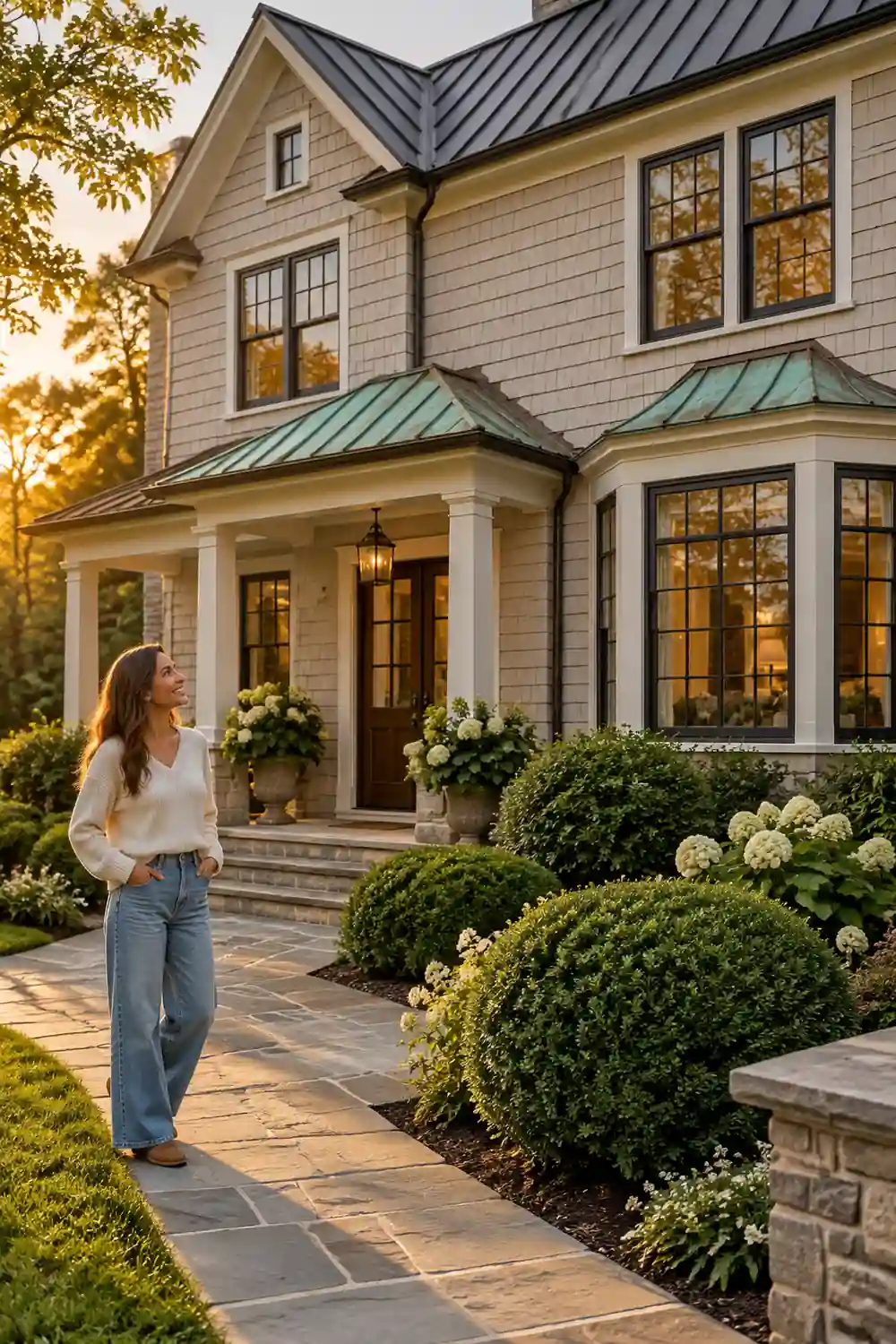
Solid copper over a whole roof is a serious budget item, but copper in small runs is where the character lives. A bay window cap, a porch roof, or a turret gives you the full show: bright penny color at first, then deep brown, then that soft green patina over the years.
Keep the main roof a quiet charcoal or weathered gray so the copper stays the jewelry. Mixing copper with a second bright metal usually looks busy. One accent, done well, reads as craftsmanship.
6. Classic Barn Red, Done Tastefully
Barn red metal has a reputation for looking loud, and on the wrong house it can. On the right one, a white farmhouse or a gray stone cottage, it looks like it was always meant to be there. The trick is choosing a deep brick or cranberry red, not a bright fire engine shade.
Support it with restraint everywhere else: white or cream trim, a simple front door, and the roof carrying the color story alone. Red also hides leaf stains better than pale finishes do, a small practical bonus every fall.
Before you commit to red
7. Deep Forest Green Ribbed Panels
Deep green ribbed panels settle a house into its landscape. Against trees, lawns, and stone, the roof almost disappears, and the walls and windows become the focus. It is a traditional choice on cottages, mountain homes, and older colonials.
Green pairs well with cream siding, natural cedar, and brick with brown running through it. Be careful with bright red brick, unless you want a holiday look all year. On shaded lots, it also helps melt light snow a little faster on sunny winter days.
8. Metal Shingles That Mimic Slate
Some homeowners want metal’s lifespan without the ribbed look. Metal shingles solve that. They are stamped and coated to copy slate, keeping the layered shadow lines while weighing far less than real stone.
From the street, most visitors will never spot the swap. Up close the pattern repeats more evenly than real slate, the one small tell. Choose a blended gray with some variation in the coating for the most convincing result. It is also the safest pick where neighborhood rules are strict.
9. Stone Coated Tiles in Warm Earth Tones
Stone coated steel tiles get their texture from crushed stone, so the surface looks granular, like clay or concrete tile. Warm tans, weathered browns, and dusty reds suit stucco, Mediterranean lines, and arched windows.
The rough finish also quiets a big roof plane, breaking up the expanse so it stops looking like one flat sheet. It sits at the higher end of metal pricing, though it weighs far less than the clay tile it imitates.
10. Bronze and Dark Brown for Craftsman Homes
Craftsman homes ask for earth tones, and dark bronze metal answers nicely. It sits between black and brown, warm enough to flatter stone porch columns and cedar gable accents. Standing seam and low rib profiles both work here.
Bronze also forgives. Dust, pollen, and water spots show less on it than on black or white finishes. Pair it with cream trim rather than bright white and the whole front stays soft.
💡 Quick Tip
Bronze shifts with the light, so check your sample on a sunny morning and again in shade. The same panel can read warm brown at noon and nearly black by evening.
11. A Metal Porch Roof Paired With a Shingle Main Roof
Not ready to redo the whole roof? Put metal only on the porch. A standing seam or corrugated porch roof under a shingle main roof is a classic farmhouse move, and it gives the entrance a finished look for a fraction of the cost.
The junction is where this idea succeeds or fails. Flashing, drip edge, and the way the two materials meet decide whether the mix looks planned or patched, so it pays to study the smaller roofing details before hiring it out. Match the porch metal to your door hardware or light fixtures and the combination looks deliberate.
12. Low Slope Standing Seam for Clean Modern Lines
Modern houses with low pitched roofs have fewer options, because basic shingles need more slope to shed water. Mechanically seamed standing seam handles shallow pitches well, and its long flat planes match the clean geometry of a modern front. Wide pans look calmer here than busy, tight profiles.
Keep the color part of the architecture: one tone across roof, fascia, and gutters for that single sculpted look. Then add one warm contrast, wood soffits or a stone wall, so the front does not turn flat and cold.
Choose wide pans with one slim rib line
Carry one tone across roof, fascia, and gutters
Add one warm material somewhere at eye level
Narrow, busy ribs on a wide flat plane
Three different metal colors on one front
A high gloss finish that shows every ripple
13. A Gentle Curve: Barrel Vault Metal on a Cottage
A gently curved metal roof softens a small house in a way no color change can. Barrel vault profiles arc over cottages and rounded entry roofs, and the curve throws a soft shadow line that shifts through the day. It reads storybook without tipping into cute.
Metal suits curves because panels bend cleanly and the seams follow the arc. Keep the profile simple and the color quiet: weathered silver, soft gray, or deep green. Busy ribs or a loud color on top of a curve is one idea too many.
14. Two Tone Roofs That Stay in One Family
Two tone roofs sound risky, but done with restraint they add depth. The common version pairs a main roof color with a slightly darker or lighter shade on the porch, the dormers, or a lower shed roof. That shift separates the parts of the house.
Stay inside one color family: charcoal over soft gray, bronze over brown, deep green over a paler sage. Jumping families rarely settles down. Paint chips side by side in daylight will tell you within a minute whether a pair behaves.
15. Terracotta Tiles With a Clay Roof Look
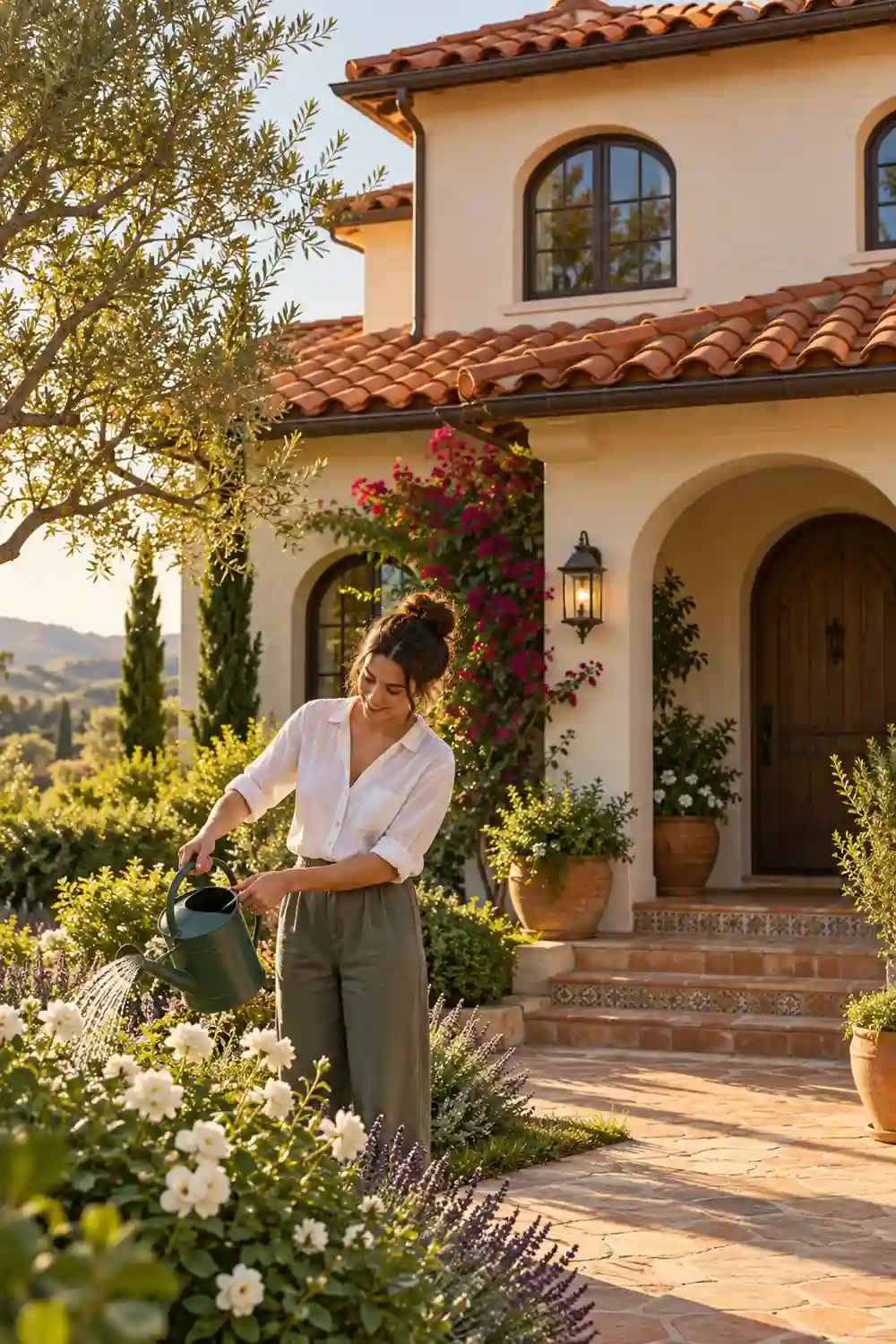
Terracotta metal tiles bring the warmth of a clay roof without the weight or the repair bills. The color flatters stucco, cream siding, and warm white brick, and it glows in late afternoon sun.
Choose a profile with real dimension, a barrel or S tile shape, so shadows sell the illusion. Flat panels painted terracotta just look like paint. A slightly varied, sun faded tone also reads more honest than one flat orange everywhere.
16. Budget Friendly Metal Roof Ideas With Exposed Fasteners
Exposed fastener panels are the lowest cost way into metal, and their honest look is the point. Rows of visible screws march across the ribs, giving the roof a working rhythm that suits farmhouses, converted workshops, and simple country builds.
The tradeoff is upkeep: the screws sit in rubber washers that age, so plan on a fastener check every decade or so. In return you get a roof that costs far less than standing seam and still outlasts basic shingles. Keep the panels one solid color and the screw rows straight.
On an exposed fastener roof, straight screw rows are the whole game. Neat lines read as farm tough. Wandering lines read as a rush job.
17. Swapping Tired Shingles for Standing Seam
The biggest character change on this list is also the simplest to describe: take off a tired shingle roof and put standing seam in its place. The lines of the house stay the same, but the long ribs and flat color give it posture. Neighbors tend to say the house looks newer and more expensive, though nothing else changed.
If you want proof before committing, scroll through roof before and after projects and notice how often the roof alone carries the transformation. Budget honestly, since tear off and disposal add to the bill, and pick the color as if you will live with it for forty years.
A metal roof is one of the longest commitments you will make to your house, which is why it deserves more than a ten minute decision. Pick the profile first, then the finish, then the color, and judge each one against your siding, your trim, and the homes around you. The right one of these metal roof ideas will do more for your front than a season of small projects.
Save this list for the day you start collecting quotes, and walk your street with it in hand. The right roof usually announces itself.
One Response