
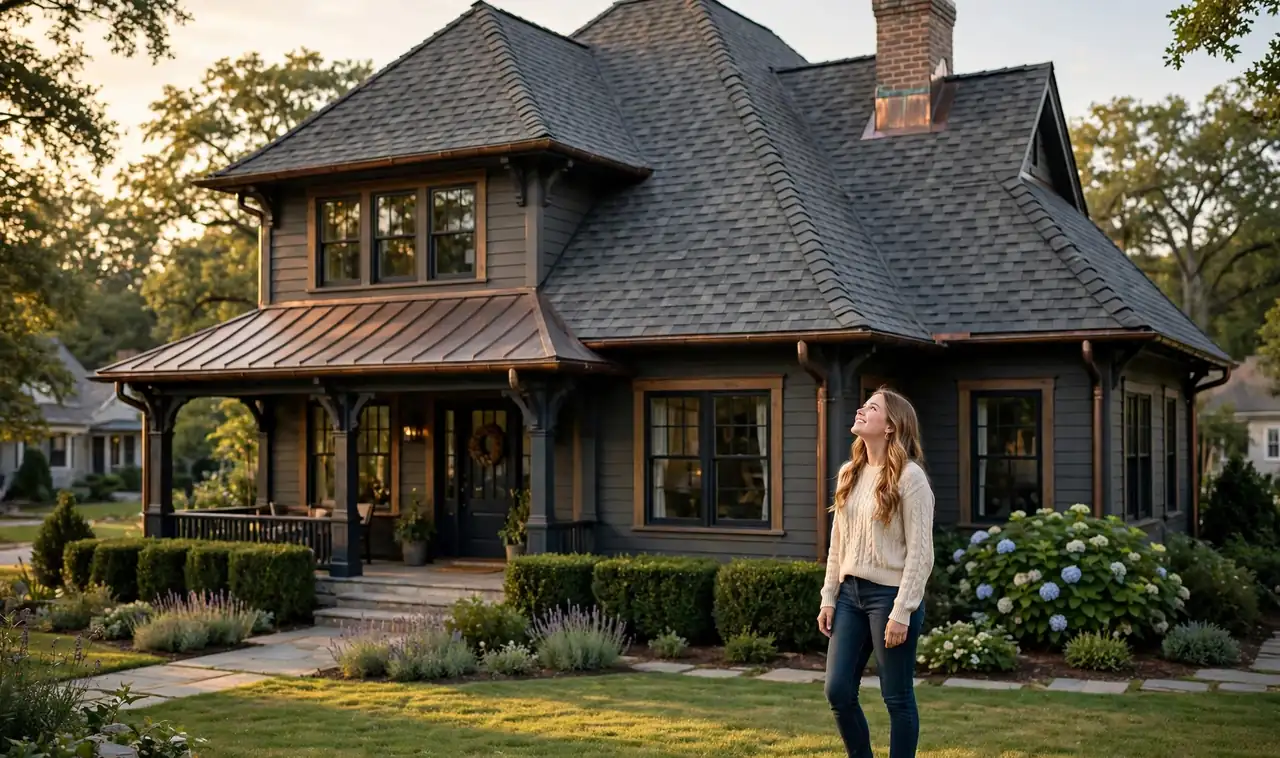
Drive past two houses with the same floor plan and the same paint color, and one will still look like it cost far more. The difference is rarely the size of the house or the price of the siding. It sits up top, in the small pieces most builders install at the cheapest default setting.
Roofing details are those pieces: the ridge caps, the flashing, the gutter profile, the trim at the eaves. Each one is small on its own. Together, they decide whether a roof looks covered or crafted. Most are swappable parts, not a full reroof, and many can be added during a repair, a repaint, or a gutter replacement.
Here are the seventeen worth knowing, from the peak down to the eaves.
1. Dimensional Ridge Cap Shingles Along the Peak
The ridge is the first line your eye reads, and the standard finish works against it.
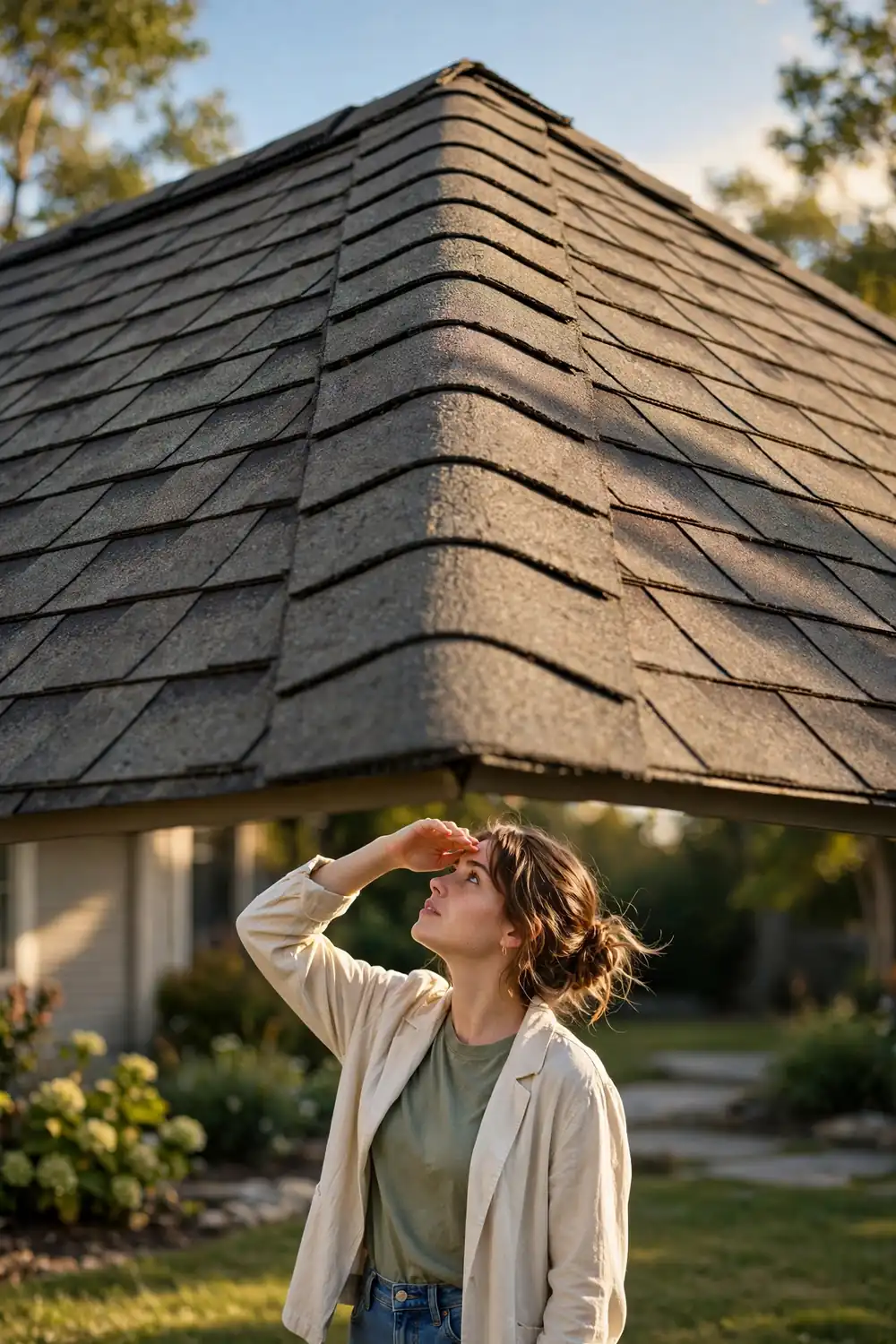
Most roofs get flat three tab strips bent over the peak, and they read as a thin, papery fold from the street. Dimensional ridge cap shingles are thicker, layered caps that sit higher and throw a small shadow onto the cap below. That shadow is the whole trick. It makes the peak look built, like a spine, instead of folded over and stapled down.
Ask for high profile caps in the same color family as the field shingles. It is a small line item on most quotes.
2. A Ridge in a Slightly Deeper Tone Than the Field
Expensive roofs are rarely one flat color from eave to peak.
Builders of custom homes often spec the ridge and hip caps one shade deeper than the main shingle field. Visitors never name the contrast, but it gives the roof a tailored, two tone read. It also hides the cap seams, so the ridge looks like one continuous piece.
💡 Quick Tip
Hold the cap sample against the field shingle in full sun, not in the showroom. Colors flatten outdoors, so pick a cap that looks almost too dark indoors.
3. A Standing Seam Metal Accent Over the Porch or Bay
One small metal roof can carry the whole front of a house.
Roofers call it an accent roof: a short standing seam section over the front porch, a bay window, or the entry bump out, while the main roof stays shingle. The raised seams catch light in clean vertical lines, and matte metal against textured shingle reads as deliberate design.
If a full metal roof is out of reach, browsing more metal roof ideas shows how much range these small sections have. Start with the porch. It is the piece every guest stands under.

4. Half Round Gutters With Round Downspouts
Gutters sound like a chore purchase. Their profile is not.
The standard K style gutter has a flat back and a molded front. A half round gutter is a smooth half circle hung on visible brackets, like the guttering on older estates and European homes. Paired with round downspouts instead of rectangular, the system looks like jewelry for the eave line.
Half rounds cost more and need bracket hangers, so budget for the front elevation only if money is tight. The street never sees the back.
5. Copper Flashing Where the Chimney Meets the Roof
Flashing is the metal you are not supposed to notice. Copper changes that on purpose.
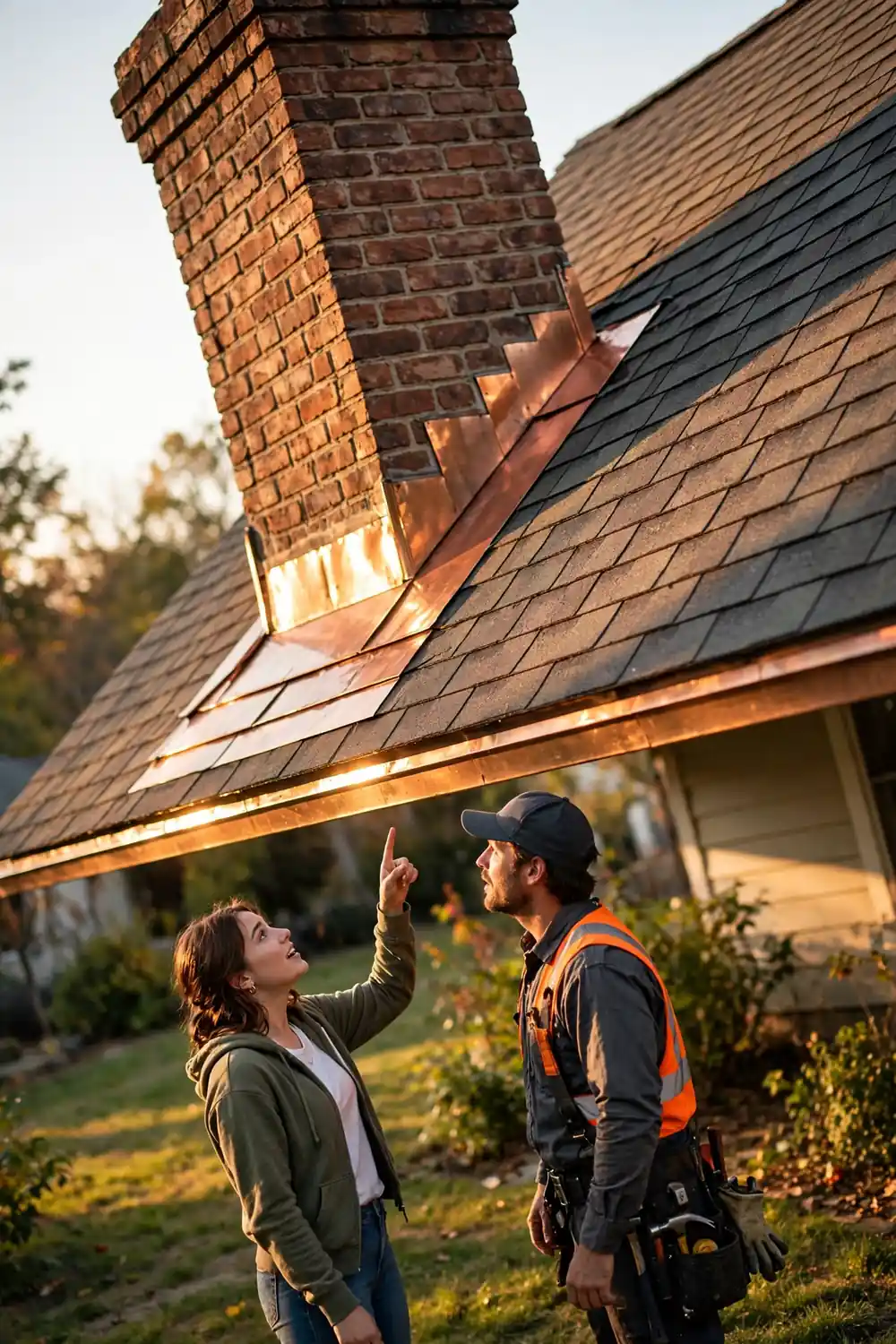
Standard chimney flashing is thin galvanized metal, often painted once and left to streak. Copper step flashing and a copper counter flashing strip stay bright for a season, then settle into a warm brown, and later into the soft green patina people pay to fake. Few roofing materials look better every year.
The practical bonus is real: copper outlasts the shingles around it, so it is the rare pretty upgrade that also closes a leak path for good.
6. A Rain Chain and Conductor Head at the Entry
At one corner near the front door, swap the downspout for something worth looking at.
A conductor head is the small box that collects water at the top of a downspout. Below it, a rain chain of linked copper or black cups guides water down in a visible stream instead of hiding it in a tube. In a storm it becomes a tiny water feature at the porch corner, landing in a stone basin or river rock bed.
7. Soffits That Look Like Wood Instead of Vinyl
Stand under the eaves and look up. That ceiling is part of the design.
Most homes get perforated vinyl soffit with visible seams every few inches, and it reads as plastic the moment light hits it. Smooth painted panels, beadboard, or a wood look composite give the eave a finished ceiling. The roof edge suddenly feels thicker and more solid.
Keep the venting your attic needs. Many smooth products hide vent slots along the fascia edge, so airflow does not cost you the look.
8. Wide Fascia Boards and Beefy Rake Trim
Thin trim makes a roof look like it balances on the walls.
Standard fascia is a narrow board, often six inches, wrapped in bent aluminum. Bumping fascia and rake trim on the gable ends up to eight or ten inches gives the roof a real frame. The edge reads stronger, shadows get deeper, and the house gains the proportions of older, heavier built homes.
This pairs naturally with the roofline ideas that reshape a plain gable, since wider trim is what makes those silhouettes show from the road.
9. Closed Cut Valleys With One Clean Line
Where two roof planes meet, the finish tells on the installer.
A woven valley shingles both sides through the joint, and the interlaced pattern can look busy and lumpy. A closed cut valley runs one plane straight through and cuts the other along a single chalk line. One crisp seam runs down the valley, calm and straight, the way a tailor finishes a join.
Ask for a closed cut valley, and check the chalk line is straight before shingles go down.
Run the cut on the plane that sheds less water, so the seam stays protected.
Do not accept a wavy cut line. It stays visible for the life of the roof.
10. Decorative Ridge Tiles or Cresting on Tile and Slate
On a tile or slate roof, the ridge is a place for ornament, and flat is a missed chance.
Barrel style ridge tiles, graduated slate ridge rows, and on steeper Victorian roofs a run of metal cresting give the peak a finished crown. Cresting is the lacy metal trim along old slate ridges. Reproductions keep the profile without the antique hunt.
Keep the ornament to the ridge only. One decorated line looks intentional. Decorating every edge tips the house toward gingerbread.
11. A Gable Vent Shaped to Match the House
The gable vent is a small billboard on your top wall.
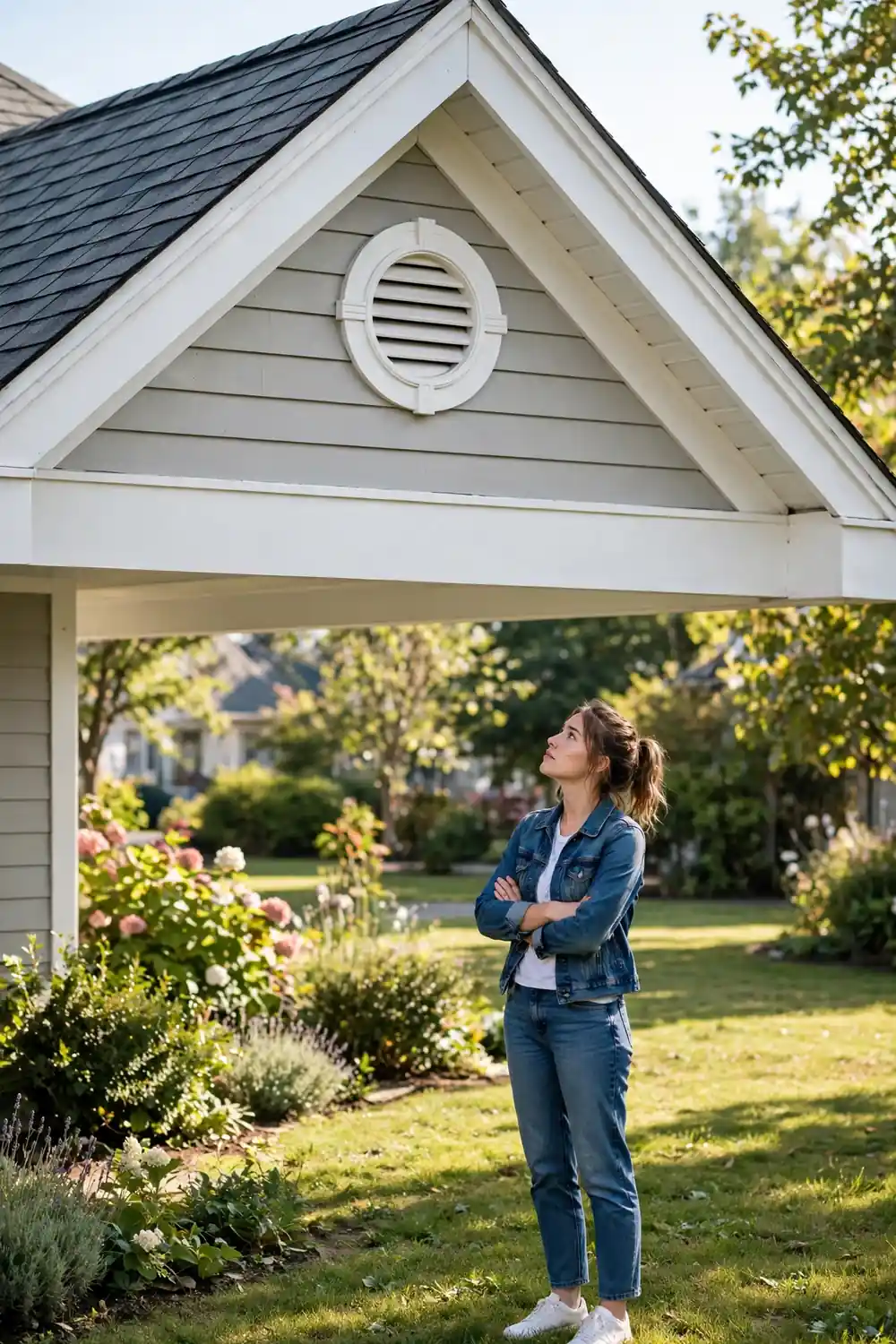
Builders default to a plain louvered rectangle in whatever size was on the truck. Swapping it for a round, octagonal, or arched vent that echoes a window shape lower on the house makes the gable look designed instead of vented. Trim it with a real frame on a traditional home, or keep it flush on a modern farmhouse.
Match the vent color to the trim, not the siding. It should read as part of the woodwork family, with a screen behind the louvers to keep pests out.
12. A Wide Metal Drip Edge, Finished to Match
The drip edge is a thin metal strip framing every roof line you own.
Standard drip edge is narrow, galvanized, and often left a dull silver that matches nothing. A wider profile in a finish matched to your gutters or trim, matte black, bronze, or crisp white, draws a clean outline where shingles end. From the ground, the roof looks underlined on purpose.
Narrow silver drip edge, slightly wavy, raw shingle ends hanging past it, streaks starting below.
Wide matte drip edge in one unbroken line, shingles cut flush, water thrown clear of the fascia.
It is usually replaced during a reroof, so put the finish choice in writing on the quote.
13. Pipe Boots and Vents Painted to Match the Shingles
Nothing cheapens a finished roof faster than a sky blue vent pipe.
Plumbing vents, exhaust caps, and pipe boots often arrive in whatever color the supplier stocks: bright white, galvanized silver, occasionally a random primary color. From the street, each one is a bright dot on a dark roof. Paint matched to the shingles makes them disappear, and the roof reads as one unbroken surface.
Use paint rated for exterior metal and plastic, and ask the roofer to spray the boots before install rather than brush them from a ladder.
14. Eave Returns That Give the Roof a Finished Corner
Where a gable roof meets the wall, most homes just stop.
An eave return continues the eave trim a short distance along the gable wall, ending in a small boxed corner. The classic Greek return wraps fully. Even a simple boxed return adds a shadow pocket at the corner that signals trim carpentry, not tract building. Visitors feel it more than see it.
Returns are easiest during residing or a trim repaint, when ladders and painters are already on site. Paint them with the trim color so the corner reads as one carved piece.
15. Straight Courses and Aligned Shingle Lines
The most expensive looking detail on this list is not a product. It is straightness.
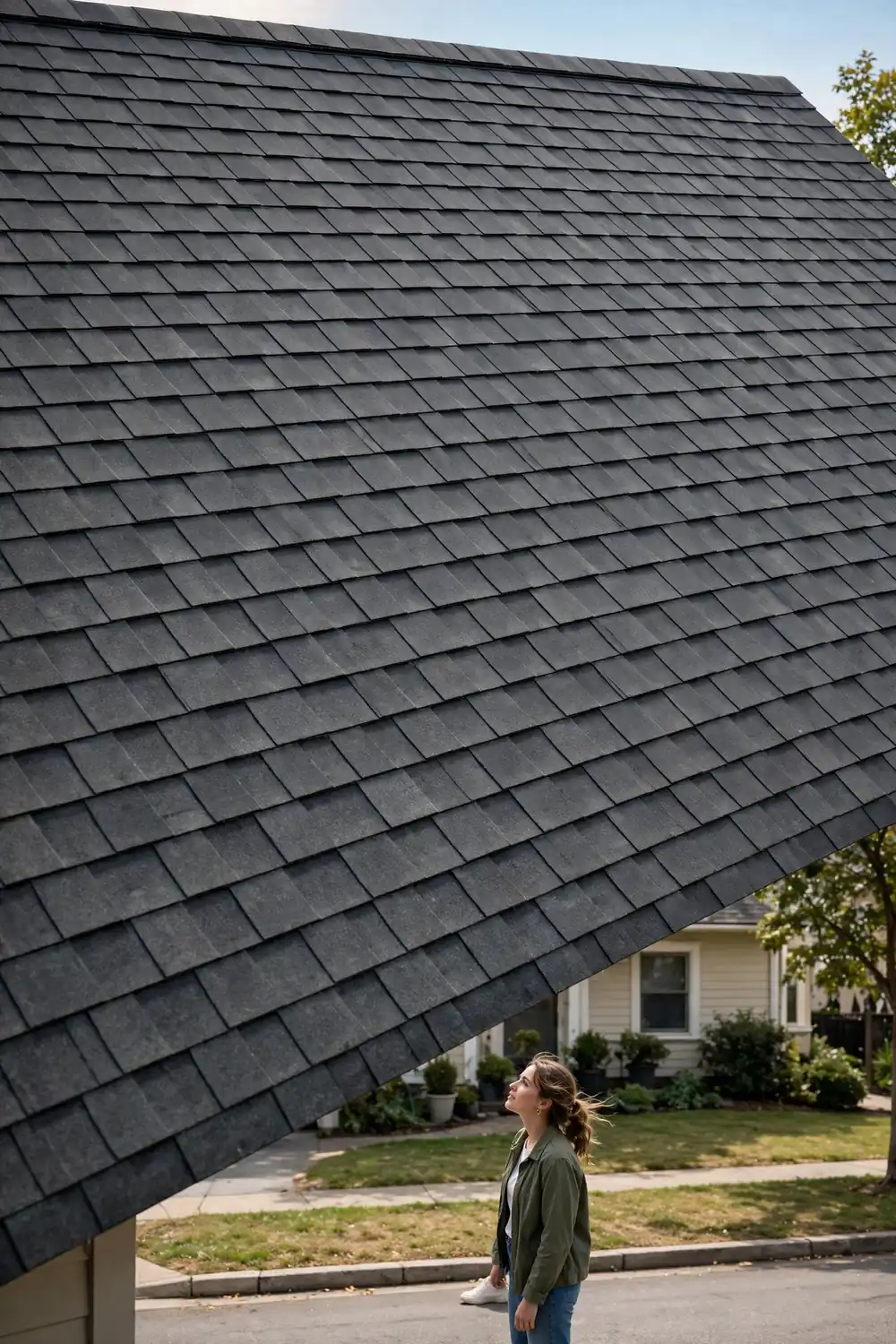
Quality crews snap chalk lines and keep every course level, with joints staggered tidily. Rushed work wanders: courses drift uphill, butt joints line up in columns, and the slope looks slightly seasick from the street. A straight roof photographs better, sells better, and quietly tells every inspector that the house was cared for.
Before signing a reroof contract, drive past two of the crew’s recent jobs and sight along the courses from the curb.
16. Decorative Snow Guards on Steep or Metal Roofs
In snow country, the little cleats above the door are a design detail too.
Snow guards keep roof snow from sliding off in one sheet. The cheap versions are clear plastic pads. The good looking ones are metal, shaped like small fences or cleats in a finish that matches the roof, in a neat staggered pattern over entries and walkways. On metal, a continuous snow rail does the same job with a cleaner line.
Shops that stock roofing accents and accessories carry both styles, so you can match the finish to your gutters instead of settling for whatever was in the truck.
17. A Chimney Cap That Matches the Rest of the House
The last piece sits at the very top, and it is usually a rusty afterthought.
A decorative chimney cap or shroud in black steel, copper, or a finish matched to your light fixtures closes the roof the way a finial closes a fence post. Shrouds hide a plain metal flue and give a masonry profile to homes that never had brick. Paired with the copper flashing from earlier on this list, the chimney looks like a feature the architect drew.
Expensive looking roofs are not about costly materials. They are about finished edges, matched metals, and straight lines, repeated across the whole roof.
No single item on this list will fool anyone into thinking you built a custom estate. That is not the point. Stack five or six of these roofing details together, keep every metal the same finish, and the roof reads as planned rather than purchased. Start with whatever your next repair touches: vents during a reroof, gutters during a replacement, trim during a repaint. Save this list for the next time a contractor asks what you want, and you can point instead of describing.



One Response