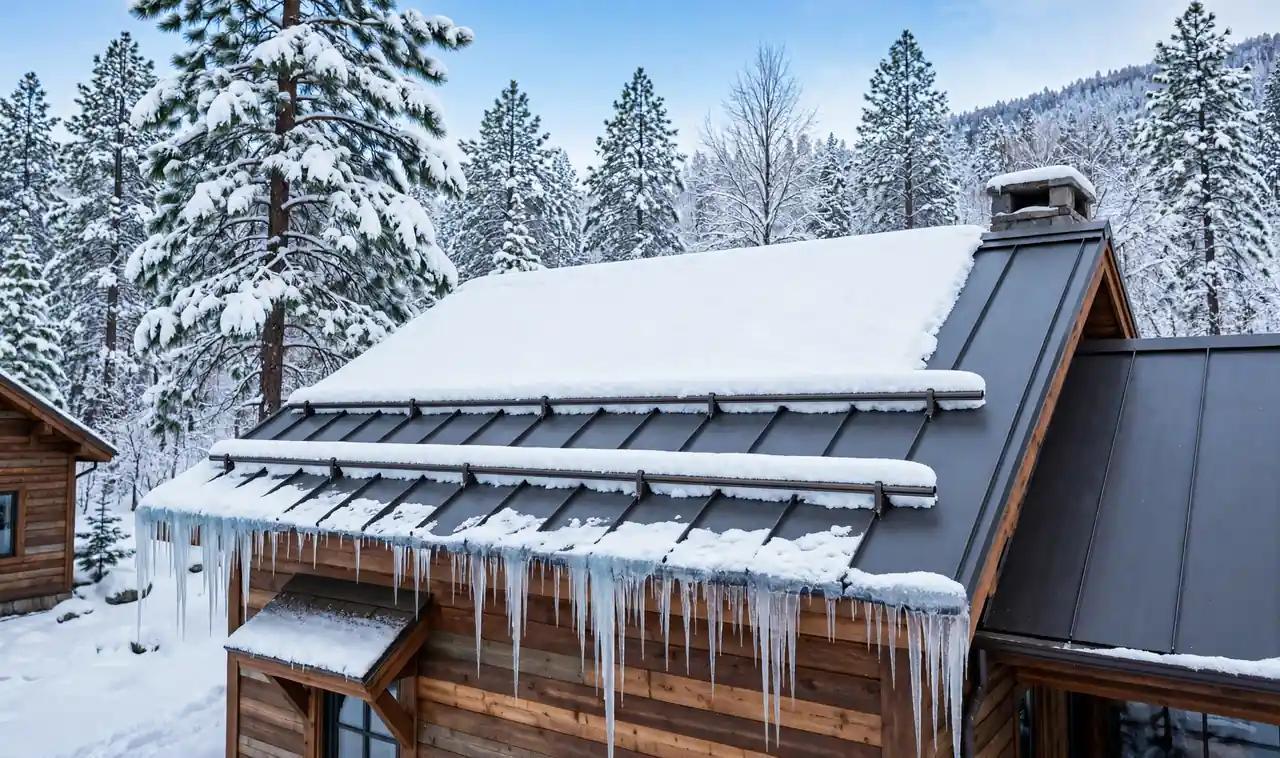
A metal roof sheds snow fast. That is the whole point of the smooth surface, and it is also the problem. A big sheet of snow can let go all at once and slide down like a freight train, taking gutters, vent pipes, and anything parked below with it. If you have ever heard that low rumble on a sunny morning after a storm, you know the sound.
Snow Guards for Metal Roofs are the fix. They hold the snow in place so it melts slowly and drains away instead of avalanching onto your walkway, your car, or your shrubs. They come in more styles than most homeowners expect, and the right choice depends on your roof profile, your snowfall, and how much you care about looks. Here are 19 ideas that cover every roof and every budget.
1. Two Row Bar System on a Standing Seam Roof
A two row bar system is the workhorse for standing seam metal roofs. Two parallel bars run across the roof, held by clamps that grip the seams without a single hole. The lower bar catches the main slide, and the upper bar breaks up the load behind it.
This setup suits heavy snow country, where one row alone gets overwhelmed. Space the rows a few feet apart and keep the lowest row above your doors and walkways.
2. Single Rail Guard Above the Front Door
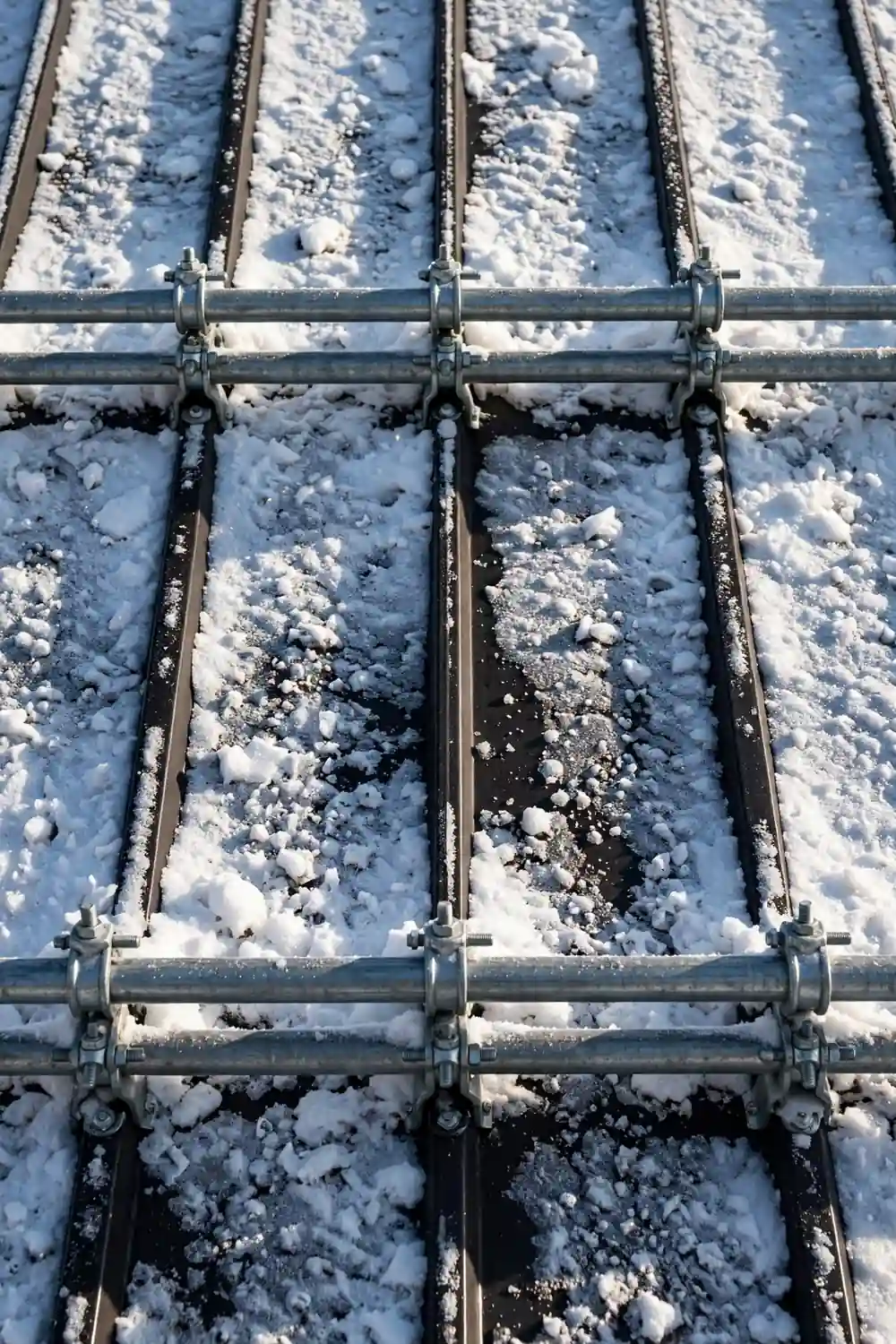
Sometimes you do not need to guard the whole roof. A single rail guard above the front door, the garage door, or the back steps protects the places where people actually walk. It is the simplest, cheapest entry point into snow retention.
Mount it just above the danger zone, not at the very eave. Snow needs a few feet of roof above the guard to settle against it.
3. Color Matched Pad Guards That Blend In
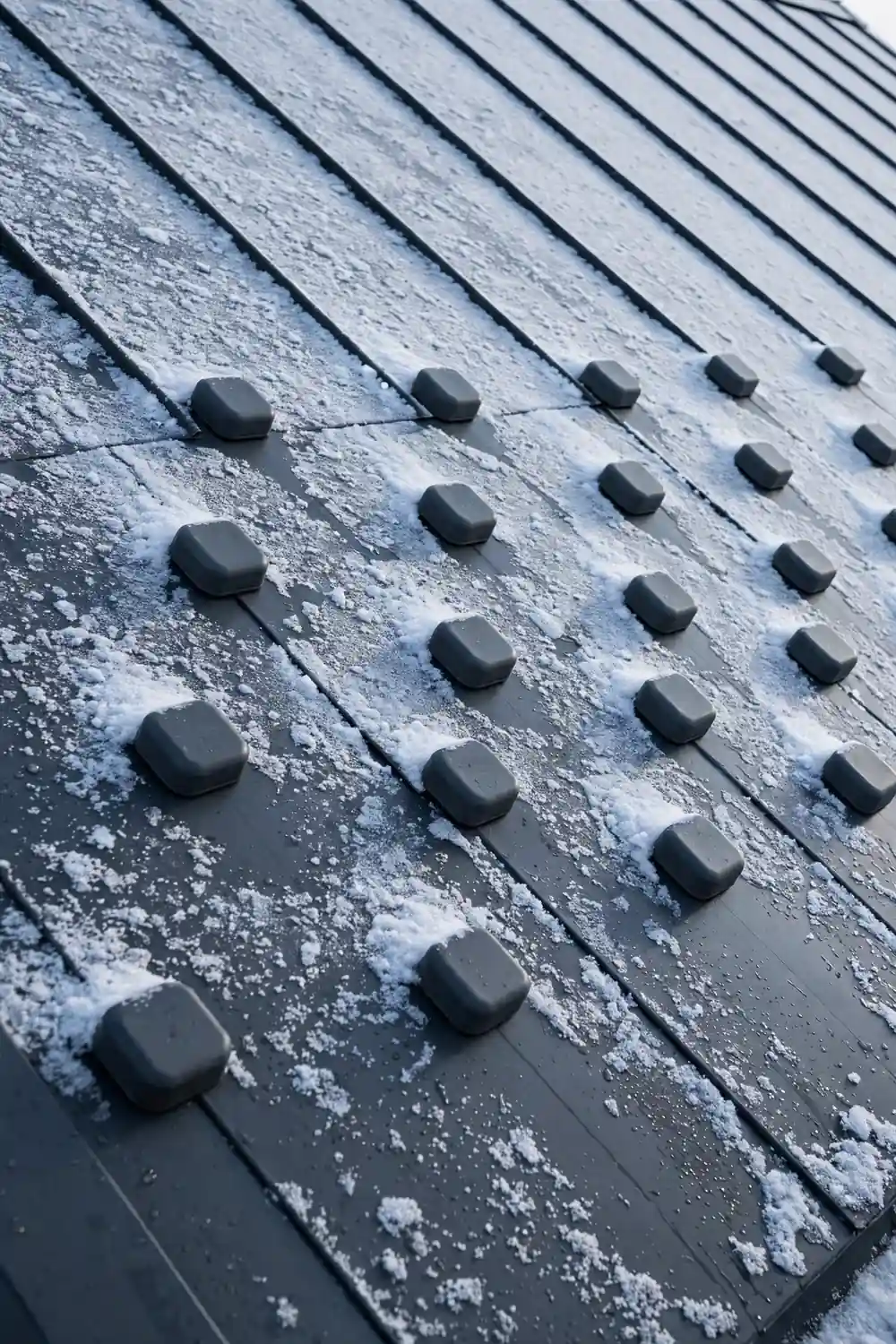
Pad guards are small, individual guards placed in a staggered pattern across the roof. When they match your roof color, they nearly disappear from the street. That makes them a strong pick for homeowners who want protection without changing the look of the house.
They work best on moderate snow loads and shorter slopes. On a steep roof in heavy snow country, pair them with a bar system on the lowest section.
Before you order pad guards, check these three things
4. Clamp On Guards for Standing Seam Panels
Clamp on guards attach with a set screw that grips the raised seam, so the roof surface stays untouched. That matters, because every screw hole in a metal roof is a future leak point. No holes also means your roof warranty usually stays intact.
Check your seam height and shape before ordering, since clamps are made for specific profiles. Tighten to the maker’s torque spec, not by feel, and recheck the set screws after the first winter.
5. Screw Down Snow Fences for Corrugated Roofs
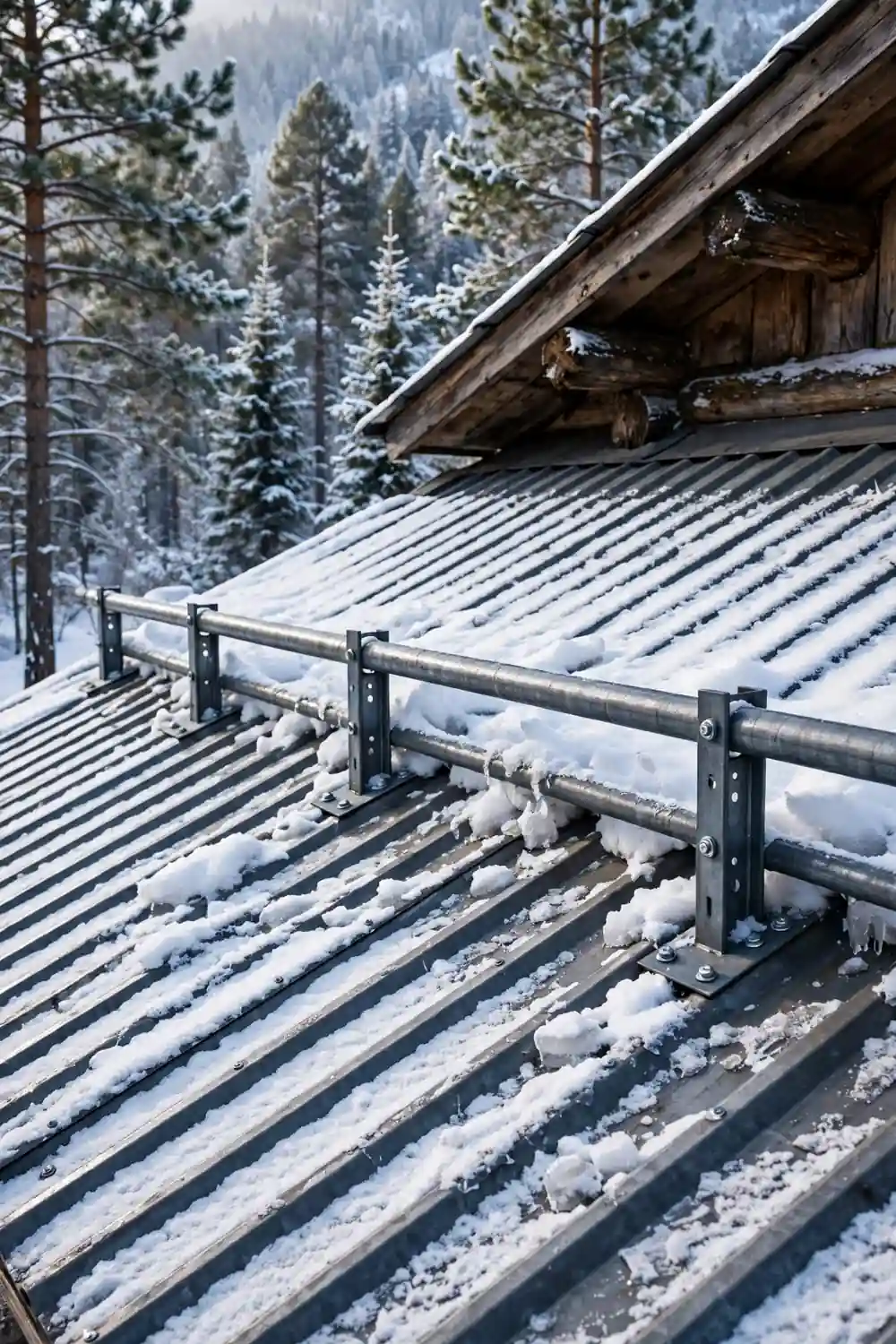
Corrugated and exposed fastener roofs do not have standing seams to clamp to, so screw down fences are the standard here. The fence brackets screw through the panel into the decking or purlins below, and a horizontal rail ties them together.
Seal every fastener with the right washer and sealant, and drive screws into solid framing, not just the thin panel. A fence held only by sheet metal will pull out under a heavy load.
6. Snow Retention Above Solar Panels
Solar panels sit on top of a metal roof, and a sliding snow sheet can hit them hard or pile up against their lower edge. A row of guards above the array keeps the snow load off the panels and the mounting hardware.
Place the guard row above the top edge of the panels, not between rows of modules. Snow that melts off the warm panels still needs a clear path to the gutters.
7. Copper Snow Guards on a Copper Roof
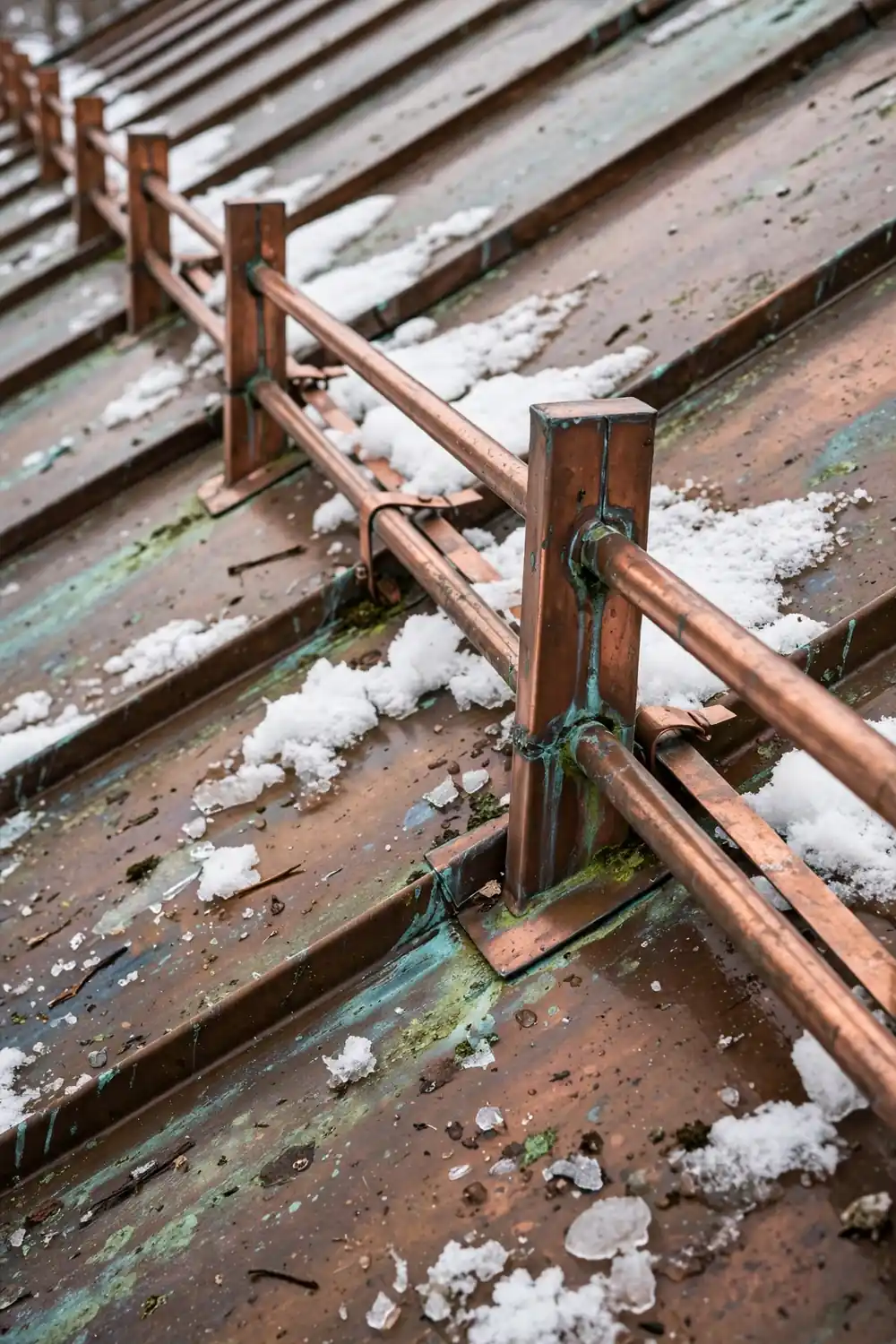
A copper roof deserves copper guards. The metal ages together, weathering to the same warm brown and then the same green patina over the years. Mixing metals here causes galvanic corrosion, so matching the material is not just about looks.
Copper guards cost more than aluminum or steel, but they last as long as the roof itself. Ask your roofer about copper compatible fasteners so no stray metal starts a reaction.
8. Snow Guards Paired With Heated Gutters
Snow guards hold snow on the roof, but the meltwater still has to go somewhere. In freezing weather it can refreeze in the gutters and form ice dams at the eave. Heated gutter cables melt a channel through that ice so water keeps draining.
Run the cables in the gutter and down the downspout, and pair them with a guard row set back from the eave. If ice dams are already a yearly battle, read our guide on how to prevent ice dams before winter sets in.
Snow slides off in one heavy sheet, rips gutters loose, buries the walkway, and leaves ice ridges at the eave.
Snow stays put, melts slowly, drains through clear gutters, and the ground below stays safe and passable.
9. Decorative Cast Snow Birds on a Slate Look Roof
Snow birds are small cast metal guards shaped like birds, stars, or scrolls. They started on slate roofs a century ago, and they still look right on metal roofs designed to mimic slate or tile. They are functional, but they are also a piece of roof jewelry.
Place them in a staggered grid across the slope, denser near the eaves. They hold less snow than a bar system, so they suit regions with moderate snowfall.

10. Full Perimeter System for a Steep A Frame
Steep A frame roofs shed snow with real force, and the eaves often sit close to the ground where people walk. A full perimeter system, with guards on every slope and every eave, is the safe call here.
Use two rows on the longest slopes and a single row on the short ones. Pay special attention to the sides above entries and decks.
11. Snow Stops Over a Garage Door
Garage doors take a beating from sliding snow. A heavy sheet can dent panels, bend tracks, and bury the driveway entrance. A short guard run above the garage is one of the highest value spots on the whole house.
Size the run to cover the full width of the door plus a foot on each side. Snow slides sideways as well as down, and a guard that is too short leaves the corners exposed.
12. Pipe Style Snow Fences for Heavy Snow Loads
Pipe style fences use two or three steel pipes held by tall brackets, and they are built for the deepest snow. The pipes spread the load across many brackets, so no single point takes the full weight of a sliding sheet.
They are common in mountain towns and on commercial buildings, but they work just as well on a house that sees serious winters. Choose galvanized or powder coated pipe so it does not rust in a few seasons.
13. Snow Guards on a Metal Roof Porch
Porch roofs are low, and the snow that slides off them lands right where you step out the door. A guard row on the porch roof keeps the entry clear and protects the porch furniture and planters below.
Porch slopes are often short, so one row is usually enough. Match the guard style to the main roof so the two look like one system. For more ideas on porch roof styles, see our front porch roof ideas.
💡 Quick Tip
Install porch guards in autumn, before the first freeze. Cold panels are harder to work with, and sealant does not cure well below freezing.
14. Retrofitting Guards on an Older Metal Roof
Older metal roofs often have no snow retention at all, and adding guards later is completely doable. Clamp on systems are the easiest retrofit for standing seam roofs, since they need no holes and no access to the attic.
Start by inspecting the roof for loose fasteners, worn sealant, and panels that have shifted. Fix those first, because guards add load to a roof that is already working hard.
15. Snow Guards With a Gutter Protection Strip
Even with guards, some snow and ice still reaches the eave, and gutters are the first thing in its path. A gutter protection strip, a metal apron that angles snow over the gutter lip, works alongside the guards to keep the gutter intact.
Install the strip under the lowest guard row so the two form a path for meltwater, not a dam. Clean the gutters before winter so the strip has a clear channel to feed.
16. Low Profile Guards for a Modern Minimal Roof
Modern homes with flat or low slope metal roofs do not want chunky hardware on display. Low profile guards sit close to the panel, often in the same color, and read as part of the roof rather than an add on.
They hold less snow per guard, so use more of them in a tighter pattern. The trade off is worth it on a design led home where a tall fence would break the clean lines.
17. Snow Retention Around Roof Vents and Chimneys
Vents, pipes, and chimneys poke through the roof right in the path of sliding snow. A moving sheet can snap a vent pipe clean off or crack the flashing around a chimney. Short guard runs above each penetration stop the slide before it reaches them.
Place a guard or two just uphill of every vent, and a short bar above the chimney. This is cheap insurance compared to a plumbing repair or a roof leak in January.
18. Budget Friendly DIY Pad Guard Kit
If the budget is tight, a DIY pad guard kit is a solid starting point. Kits come with the pads, adhesive or screws, and a layout guide, and a handy homeowner can install them on a low, safe roof in a weekend.
Stick to roofs you can reach safely from a ladder, and never work on a wet or icy roof. Adhesive pads need warm, dry weather to bond, so plan the job for early autumn. For a full prep checklist before the cold arrives, our guide on how to prepare your roof for winter covers the rest of the seasonal jobs in one place.
| Guard type | Best for |
|---|---|
| Bar and rail system | Heavy snow, long slopes, standing seam roofs |
| Pad guards | Moderate snow, looks matter, DIY install |
| Pipe snow fence | Deepest snow, mountain homes, commercial roofs |
19. A Full Engineered System for a New Build
If you are building new, snow retention belongs in the roof plan from day one. An engineered system is sized to your exact roof pitch, panel type, and local snow load, with the guard layout drawn on the roof plan before a single panel goes up.
Your roofer or the guard maker can run the numbers, and the cost folds into the build instead of showing up as a surprise later. For a new metal roof, this is the cleanest way to get it right.
Match the guard to your roof profile and your snow load first. Style comes second, and the right system does both.
Snow Guards for Metal Roofs are one of those upgrades you forget about until the first big storm, and then you are glad they are there. The snow stays where it belongs, the gutters stay attached, and the walkway stays clear. Start with the spots that matter most, the doors, the driveway, and the vents, and build out from there. Save this list for your next roofing project.